Cauvery · central water commission · Dams · Disasters · Floods · Karnataka · Tamil Nadu

Cauvery is facing very serious flood risk, but CWC is in slumber

(The figure above is screen shot of CWC Flood forecasting site showing no warning signs even at 5 pm on 230718)

Almost all the big dams in Cauvery Basin are full on the earlier ever monsoon date this year. This includes Krishnaraj Sagar, Mettur, Kabini, Harangi, Hemavathi and Bhavanisagar. They are almost full and have started releasing large flows to the downstream areas. This is when we are past just about six weeks of South West Monsoon, the North East monsoon would come after that. It means that the basin is facing major risk of floods in next 2-5 months. And yet Central Water Commission, India’s flood forecasting agency, seems to be in deep slumber. It has not even bothered to update the flood readings on its designated sites from the 2017 figures.  Continue reading “Cauvery is facing very serious flood risk, but CWC is in slumber”

DRP News Bulletin

DRP News Bulletin May 7, 2018: WESTERN GHATS FORESTS ARE VITAL FOR SOUTH WEST MONSOON RAINS IN TAMIL NADU

W Ghats Forests vital for Tamil Nadu SW Monsoon Rains Researchers have found that the dense vegetation in the Western Ghats determines the amount of rainfall that Tamil Nadu gets during the summer monsoon. A team led by Prof. Subimal Ghosh from the Department of Civil Engineering at the Indian Institute of Technology (IIT) Bombay has found that dense forests of the Western Ghats contribute as much as 40% of moisture to the southwest monsoon rainfall over Tamil Nadu during normal monsoon years. The average contribution is 25-30%. But during monsoon deficit years, the contribution increases to as high as 50%. Continue reading “DRP News Bulletin May 7, 2018: WESTERN GHATS FORESTS ARE VITAL FOR SOUTH WEST MONSOON RAINS IN TAMIL NADU”

Cauvery · Inter State Water Disputes · Karnataka · Tamil Nadu

Supreme Court Judgment on Cauvery Dispute: Does it change anything?

Supreme Court of India passed the much awaited 465-page Judgment on Cauvery Water Dispute on Feb 16, 2018[i]. After the Cauvery Water Disputes Tribunal declared its award on Feb 5, 2007, a number of Appeals were filed in the SC, challenging the Tribunal Award, including those by Karnataka and Tamil Nadu. By this Judgment, the SC has partially allowed the Karnataka Appeal (Civil Appeal 2453 of 2007) and disposed off all the appeals. The Award was published in gazette only in 2013, following an earlier SC order. The SC Judgment provides additional 14.75 TMC (Thousand Million Cubic Feet) of water to Karnataka and thus reduces Tamil Nadu’s share to that extent.

Continue reading “Supreme Court Judgment on Cauvery Dispute: Does it change anything?”

Dams · DRP News Bulletin

DRP News Bulletin 12 February 2018 (With Innovative Ideas Hyderabad, Chennai & Delhi Are Reviving Its Wetlands)

This week there are exemplary and encouraging wetlands revival stories from three metro cities of Chennai, Hyderabad and Delhi.  In the first example from Hyderabad, meticulously chosen plant species such as tulsi, aswagandha, citronella and hibiscus have been used to create an artificial island to clean Neknampur Lake. The treatment islands are composed of four layers of which the bamboo base keeps the entire structure afloat. Based on soil-less hydroponics, these floating treatment wetlands absorb excess nitrates, thereby reducing the chemical content of the lake water. Microorganisms present in the wetland break down organic matter while the root systems filter out pollutants and sediments. https://www.thenewsminute.com/article/3500-saplings-floating-islands-help-rejuvenate-hyd-neknampur-lake-75819 (The News Minute, 3 Feb. 2018)

Image by: Madhulika Choudhary

Similarly, Chennai-based Care Earth Trust along with the public works department (PWD) and the civic body has managed to restore three urban lakes. While many of the smaller wetlands have vanished over time, many mid-sized wetlands seem to have shrunk by almost 65 percent. Thanks to their joint effort, invasive hyacinth was removed from the Narayanapuram Lake in Pallikaranai, while sewer lines, which emptied into the Perungalathur Lake, have now been plugged. A detailed restoration proposal has been forwarded to the PWD regarding the Korattur-Madhavaram-Ambattur lakes. https://timesofindia.indiatimes.com/city/chennai/hyacinth-out-sewer-line-plugged-three-water-bodies-restored/articleshow/62748110.cms (The Times of India, 2 Feb. 2018)

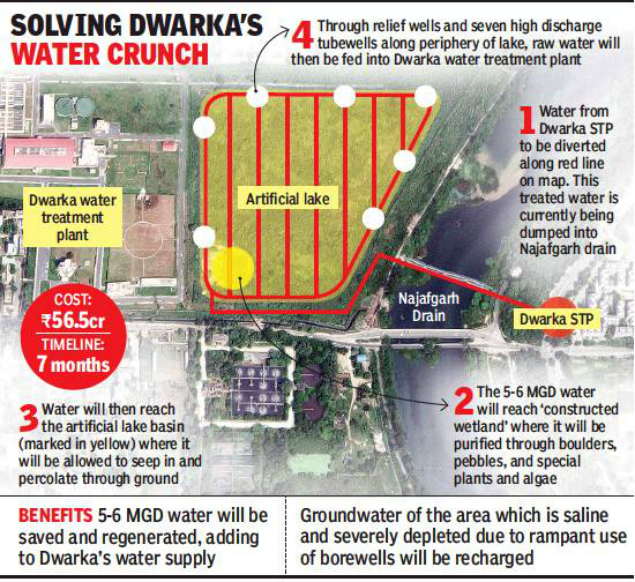
Meanwhile, Delhi Jal Board (DJB) has taken up interesting new project of creating an artificial lake in Dwarka. The project will supply water in sub-city and improve ground water level too. DJB has approved Rs. 56 crore for the project which will be completed in next seven months.  This would the first model project wherein a lake will be used to augment water supply. The special lake is being created next to the Dwarka water treatment plant (WTP) will have a sand bed to allow maximum percolation of water into the ground. It will have a capacity of 10 million gallons (MGD). The project is expected to add supply of 5-6 million gallons water to Dwarka every day.

Continue reading “DRP News Bulletin 12 February 2018 (With Innovative Ideas Hyderabad, Chennai & Delhi Are Reviving Its Wetlands)”

Dams

Krishnagiri Dam Breach Is Wake Call For Dam Safety In Tamil Nadu And Elsewhere

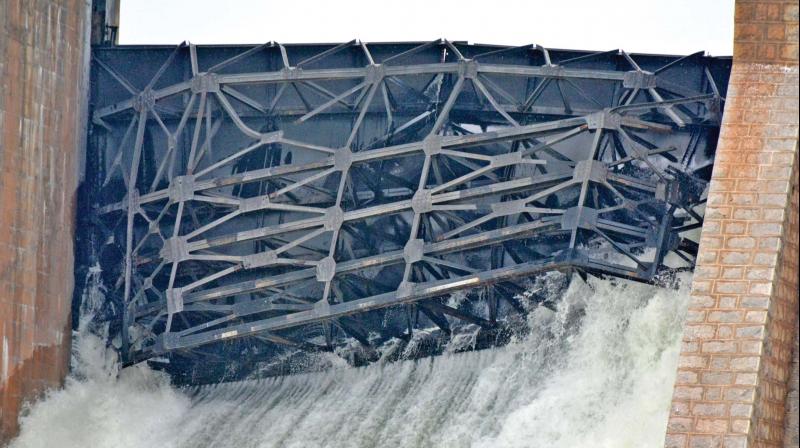
On the evening of November 29, 2017, a shutter of Krishnagiri Reservoir Project[I] (KRP) dam in Krishnagiri district, Tamil Nadu has breached sounding flash flood alarm in downstream areas. The Collector C. Kathiravan has also put five districts of Krishnagiri, Tiruvannamalai, Dharmapuri, Vellore, and Villupuram on high alert following the sudden breach. The disaster management and rescue department have been called in to assess the situation. Leading a high level expert team Murugu Subramaniam Chief Engineer (CE) Public Works Department (PWD) responsible for operation and maintenance of the dam has also inspected the site which was followed by M Thambidurai. Deputy Speaker of the Lok Sabha.

Krishnagiri KRP Dam First Door Damage Viral Video

Interestingly KRP dam project is listed in the Central Water Commission’s national registry of large dams. It is also covered under Dam Rehabilitation and Improvement Project (DRIP) and there was an Emergency Action Plan (EAP) workshop at the dam site only in 2016. Surprisingly, the incident has occurred just a year after all the 8 shutters were repaired at a cost of ₹1.10 crore reports The Hindu.[II]

The flash flood would impact the downstream villagers particularly riverbed farmers. As the dam was storing water for rabi crops, the breach is also bound to affect dependent farmers. Worsening the situation further, India Meteorological Department (IMD) has warned of heavy rains in the state due to ongoing cyclone Ockhi.

In fact, the KRP dam breach has raised many questions and issues which need to be answered and addressed immediately.

Continue reading “Krishnagiri Dam Breach Is Wake Call For Dam Safety In Tamil Nadu And Elsewhere”

Dams · Sand Mining

River Sand Mining in India in 2016

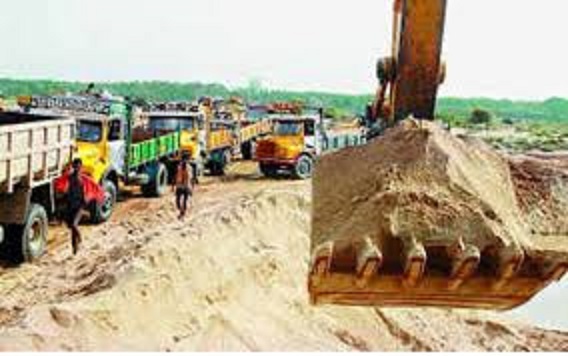
For past many years, incidents of illegal river sand mining across the country are on the rise. Given its resultant and adverse impact on river system and dependent communities, various state and central governments continue to go through the motions of devising a mechanism for judicious excavation of this minor mineral. But there seems no will to achieve compliance. At the same the time, people and concerned groups affected by illegitimate riverbed mining practices are approaching judiciary seeking legal intervention to curb the unsustainable mining of the natural resource.   

In this backdrop, continuing[1] tracking of this issue (like in 2015) SANDRP is providing an overview of various aspects related abstraction of the finite grit material from the rivers through a three part blog series. The first part of the series presents description of the most of the illegal riverbed sand mining incidents that have taken place in different Indian States through the year 2016. The second part of the blog gives account of the measures taken by governments at States and Central level to check the pilferage of this natural resource. The third part will highlight on the legal interventions by respective courts including Honorable Supreme Court (SC) and National Green Tribunal (NGT) to regulate unscientific quarrying of riverbeds.

Continue reading “River Sand Mining in India in 2016”

Cauvery · Inter State Water Disputes

Cauvery: Is there will for way forward? Will constitution of CMB help?

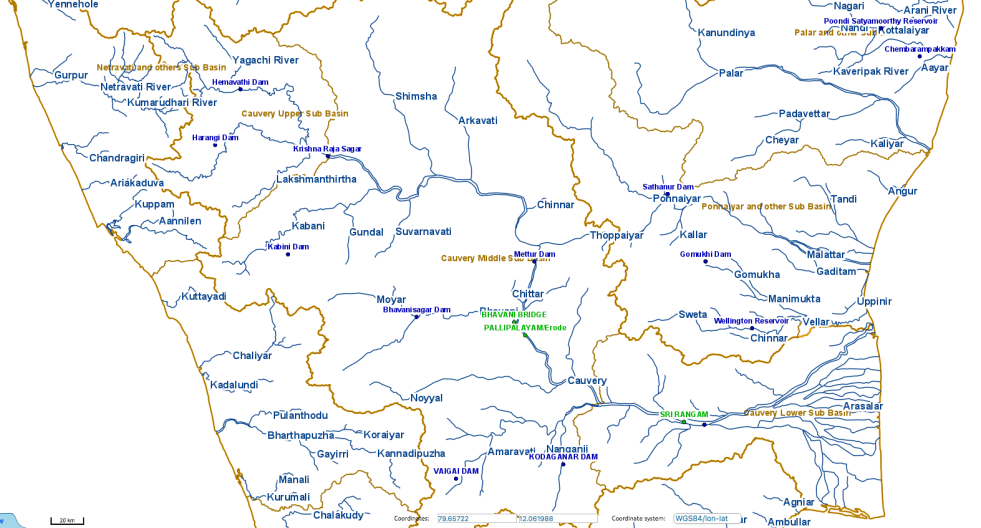
Above Map of Cauvery basin from Indian Express, Sept 22, 2016

Higher demands than availability is the key problem in Cauvery basin. transparent, participatory, democratic, rule based management of demands over supply is the key need. Unfortunately, we do not have that. Greater misfortune is that the Cauvery Water Disputes Tribunal Award of Feb 2007, even as it is significantly flawed, is yet to be implemented since the Special Leave Petitions of Karnataka and Tamil Nadu, admitted in the Supreme Court, remain pending for over nine years now. The Supreme Court, in the meantime, (through its orders of Sept 5, 12 and 20) deals with the issue in a manner, that seems ad hoc in absence of clarity as to how all the relevant factors have been taken into account.  Continue reading “Cauvery: Is there will for way forward? Will constitution of CMB help?”

DRP News Bulletin

DRP News Bulletin 5 Sept 2016: Is there hope for India’s Environment from Mr Anil Dave?

ENVIRONMENT GOVERNANCE

Is there hope for India’s Environment from Mr Anil Dave? Most shocking statements from India’s environment Minister. He says let us do Ken Betwa link when the project has NONE of the statutory clearances from his own ministries. The independent committees are yet to appraise the project and yet he is saying: “This Ken-Betwa river link we should do it and have an impact assessment after five years. If it is good, then great, if not they don’t go for other linkages.” Is there any hope for India’s environment? As he says, YE SAB CHALTA HAI!!

http://www.dnaindia.com/india/interview-won-t-put-a-cap-on-new-dams-in-uttarakhand-river-linking-should-go-ahead-anil-dave-2251391 Continue reading “DRP News Bulletin 5 Sept 2016: Is there hope for India’s Environment from Mr Anil Dave?”

Dams

GROUND WATER CRISIS DEEPENED IN INDIA IN 2015

Groundwater issues made news repeatedly in the year 2015. The year saw a 14 per cent deficit in southwest monsoon increasing the dependence on ground water for agricultural, industrial and domestic use. The falling water table and pollution of surface and ground water sources made the situation critical in various parts of the country. Competing demands on the ground water led to protests and litigation. The National Green Tribunal (NGT) tried to safeguard the ground water and pushed the State machinery into action through its orders in various matters. Towards the end of the year, the Central Ground Water Authority (CGWA) came up with revised guidelines for evaluation of proposals for ground water abstraction.

Continue reading “GROUND WATER CRISIS DEEPENED IN INDIA IN 2015”

Tamil Nadu

Cheyyur Ultra Mega Thermal Power Project in Tamil Nadu will harm water & agriculture security of the area: study

PRESS RELEASE – 14 July, 2014

Study report can be downloaded at: https://cheyyur.files.wordpress.com/2014/07/report-cheyyur-hydrology.pdf

The Cheyyur power project will damage water reserves, harm agriculture and interfere with local drainage routes leading to increased flooding in some areas and reduced rain water flow to vital irrigation tanks, according to a study titled “Hydrological Implications of the 4000 MW coal-fired Ultra Mega Power Project in Cheyyur, Tamil Nadu.” The report finds that the water bodies and water flows in the Cheyyur area render it unsuitable for hosting a large coal-fired power plant.

Site selection for the power plant has completely ignored the project’s impacts on Cheyyur’s rich surface water resources such as eris (tanks) and ponds and the interconnected network of streams,” said Prof. S. Janakarajan, one of the authors of the study. Janakarajan works extensively on water management, and is currently mapping the water bodies of Thiruvallur and Kancheepuram districts, Tamil Nadu, as a part of the project funded by the Department of Science and Technology, Government of India.

Thermal power plants are water abusers. Krishnapatnam, in Nellore district, which was as water rich as Cheyyur is now starving for water,” said Shripad Dharmadhikari, an IIT-Bombay graduate who is currently researching the water-related impacts of coastal power plants in Tamil Nadu and Andhra Pradesh. His organisation Manthan Adhyayan Kendra conducts research on water and energy. “Unfortunately, with coal-fired plants, Tamil Nadu will have to make a choice between water and electricity. Particularly in places like Cheyyur, you can’t have both,” he said.

Vedal temple

Not locating the project here keeps open the option of developing this area for its agriculture and hydrological potential. The network of irrigation tanks need to be maintained, not abandoned or diverted for other uses, if Tamil Nadu is interested in some long-term water security for its fast urbanising population,” the report concluded. (both the photos are from internet)

The study, which included computer modelling of rain water flows, found that the site for dumping toxic flyash is located up-gradient of at least seven irrigation tanks with a command area of more than 5000 acres. Noting that the flyash will be mixed with seawater and transported to the ash dump in a slurry form, the report warns of salinisation of groundwater and surface water flows down-gradient of the ash pond.

Relying on RTI records from the Revenue Department, the report pointed out that the plant and ash pond sites enclose more than 150 acres of water bodies, including backwaters, streams and ponds.

The project proponents have failed to study the impacts of key components of the project – such as a proposed 4 km road to East Coast Road, a coal conveyor corridor, a storm water drain and a 25-km railway line – on local drainage and flooding, the study reports.

The study was conducted by Community Environmental Monitoring, a project of The Other Media, Prof. S. Janakarajan, Siddharth Hande and Nityanand Jayaraman.

For more information, contact: Nityanand Jayaraman – 9444082401

Community Environmental Monitoring

92, Thiruvalluvar Nagar 3rd Cross, Besant Nagar, Chennai 600 090