
Centre Suggestions invited on Draft National Water Framework Bill and Draft Model Bill for Conservation, Protection, Regulation and Management of Ground Water Ministry of Water Resources, River Development and Ganga Rejuvenation has uploaded the draft national water framework bill and draft model bill for conservation, protection, regulation and management of ground water on its website (http://mowr.gov.in). The Draft National Water Framework Bill provides an overarching national legal framework based on principles for protection, conservation, regulation and management of water as a vital and stressed natural resource, under which legislation and executive action on water at all levels of governance can take place. The comments/suggestions/views from all Individuals/Experts /Organizations/Institutions on the above bill may be sent to jspp-mowr@nic.in or sjcpp-mowr@nic.in latest by June 25, 2016. The Draft Ground Water Model Bill is based on the principles of subsidarity, equitable distribution in an integrated approach. The State should act as a public trustee of ground water, which should be treated as a common pool resource to make sure that groundwater is protected, conserved, regulated and managed. The comments/suggestions/views from all Individuals/Experts/Organizations/Institutions on the above bill may be sent to dirgw-mowr@nic.in or pratul.saxena@nic.in latest by June 25, 2016.
Tag: SANDRP

DRP: 13 June 2016(Minister Threatens Stir Over Delay In Ken-Betwa Clearances)
Uma threatens stir over delay in Ken-Betwa interlinking Water Minister Uma Bharti on June 07 threatened an agitation if there were further delays to the wildlife clearances necessary for the storied Ken-Betwa river-interlinking project. This is TOO Much! Union Minister threatening to go on Fast, demanding environment clearance to Ken Betwa link! Calling it a national crime to stop clearance to Ken Betwa link. Saying if the project is not cleared in next meeting, she will go on fast! Claiming that the link will help Marathwada!! It wont help even Bundelkhand, but the Union Minister seems to be setting completely wrong, precedent, which also ultra legal. On the other hand The Hindu has been consistently underplaying the impacts of the Ken Betwa project and over playing the official lines. Very strange to see this from THE HINDU. Before this in its June 02 meeting the expert appraisal committee (EAC) of environment ministry has deferred environment clearance for the ambitious Rs.10,000cr Ken-Betwa river linking project in its last meeting on June 2, and has sought more clarity on its wildlife & hydrological impact. The meeting could not come to a conclusion as the members of the EAC had several doubts regarding the project’s hydrological feasibility, its impact on hydrology and wildlife too and found that many serious issues related to the project are yet to resolved. In the last week of May 2016, SANDRP in a letter to EAC has written about Ken-Betwa project & why EAC should not clear this. Please help us spread the word and urgently write to EAC if you agree. Himanshu Thakkar coordinator SANDRP points out that the Ken-Betwa link, in essence, Ken-Betwa link will facilitate transfer of water from the Ken River Basin (Bundelkhand) to Upper Betwa Basin (outside Bundelkhand), so it is actually exporting water out of Bundelkhand.
Continue reading “DRP: 13 June 2016(Minister Threatens Stir Over Delay In Ken-Betwa Clearances)”

DRP: 6 June 2016 (India to be power surplus for next 3 yrs: why govt continue to pursue hydro projects)
India will not have power deficit situation in FY17 India won’t need any new power plants for the next three years as it is flush with generation capacity, according to a government assessment. The country can manage for the next three years with existing plants that are currently under-utilised, and those that are under construction and upcoming renewable energy projects, assessment made by the power ministry for reviewing the National Electricity Policy shows. Govt declares for the first time in history that India is POWER SURPLUS in 2016-17 with 3.1% power surplus in peak hours and 1.1% power surplus in off peak hours, both figures in 2015-16 were -3.2% during peak hours and -2.1% in peak hours. The western and Southern regions will be power surplus, but Northern, Eastern and Northeastern regions will have deficits. At the same time Power Minister Piyush Goyal says that Big hydro power units may come under renewable energy According to Minister the Centre has begun studies to decide whether to include big hydro power plants under the ambit of renewable energy. When India will be energy surplus for next three years why then Govt. of India is continue to pursue disastrous hydro projects on ground. Where ASSOCHAM is asking Arunachal govt. to do away with adverse tax policies on Hydro power to boost construction of hydro projects in the State. NHPC has also raised relief amount for Kishanganga HEP around Rs 60 lakh and Rs 70 lakh to each family for the land acquired. And despite Delhi Govt. openly rejecting water from Renuka dam NGT panel has visited the area to look into the rehabilitation issue.
Continue reading “DRP: 6 June 2016 (India to be power surplus for next 3 yrs: why govt continue to pursue hydro projects)”DRP: 30 May 2016 (Centre’s new wetland protection rules reinforces the stereotype: wetlands = wastelands)
Centre’s new wetland protection rules reinforces the stereotype that govts see wetlands as wastelands The draft Wetlands (Conservation and Management) Rules, 2016 which replace the existing Wetland (Conservation and Management) Rules, 2010, are up for public comments till June 6, 2016. While wetlands nationwide are threatened by encroachment, pollution, catchment degradation and mindless development, the Narendra Modi government’s draft rules show no indications of acknowledging this threat. The draft rules, environmentalists say, reinforces the stereotype that governments see wetlands as wastelands. The essence of the new rules is to decentralise wetlands management to states. The Centre will have a say only in ‘exceptional cases’ While the 2010 rules gave some role to states, the draft rules gives them all powers. But in the process, the whole conservation process has been weakened. The period for public comments on the draft notification ends by the month. Several organisations, including BHNS, WWF, LIFE, International Rivers, INTACH, YJA & SANDRP have sent, or are in the process of sending, representations to the environment ministry. Among the concerns is that the 2010 rules itself were barely getting implemented. No state has identified a wetland yet, and few have made state-level nodal agencies mandated by the 2010 rules. In an ongoing case before the NGT, it emerged that states had not notified wetlands under the 2010 regulations. This forced the tribunal to demand that states begin to do so in at least 5-10 districts in a time-bound fashion. The Union meanwhile has proposed to substantially change the existing regulations. The new regulations do away with the elaborate list of activities that are prohibited or restricted. It prohibits reclamation of wetlands, conversion to non-wetlands, diversion or impediment of inflows and outflows from the wetland and ‘any activity having or likely to have adverse impact on ecological character of the wetland’. The need for the environmental impact assessment before permitting such activities is to be done away with. The earlier regulations allowed appeals against the decisions of the central wetlands authority with the NGT. This, too, is to be done away with, though aggrieved entities could continue to file cases against violations of these rules. The concerns were also raised during a discussion organized in Jodhpur on May 23 by three NGOs EIA Resource and Response Centre, Libra India and Life on Draft Wetland Rules 2016 issued recently by the environment ministry seeking suggestions and comments.
Landmark Supreme Court Order on Govt Failure in Tackling Drought
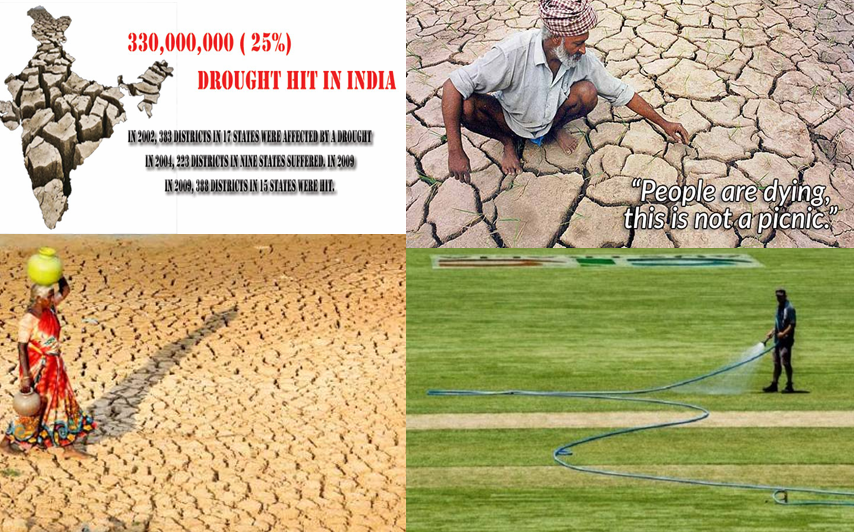
A PIL under Article 32 was filed by the NGO, Swaraj Abhiyan praying for directions for declaration of drought and relief in affected areas. The apex court came out with a 3 part judgment earlier this month – the first one dealt with the issue of drought and the latter judgments took up the poor implementation of the National Food Security Act, 200513 (NFSA) and the Mahatma Gandhi National Rural Employment Guarantee Act, 2005 (NREGA). These directions largely signify the failure of the governance in tackling drought and suggest actions to be taken hence, we need to be thankful to the petitioners and apex court for this. We also hope the apex court continues to monitor the implementation of the directions.
Continue reading “Landmark Supreme Court Order on Govt Failure in Tackling Drought”

Odisha Drought Profile-2016
Odisha has many rivers, vast forest cover and it receives above average rainfall annually. But, greed for minerals beneath the land and destruction wreaked by industries hungry to exploit the resources of the state have slowly choked the natural environment of the state. Most farm holdings are small or marginal dependent on the rains for irrigation. The deficit rains in 2015-16 pushed the state over the edge. The state is facing extensive crop loss and severe water shortage. Even after exploiting its resources to the hilt, the people of the state have not been provided with piped water supply. In many ways, the drought in Odisha is man made.
Andhra Pradesh Drought 2016
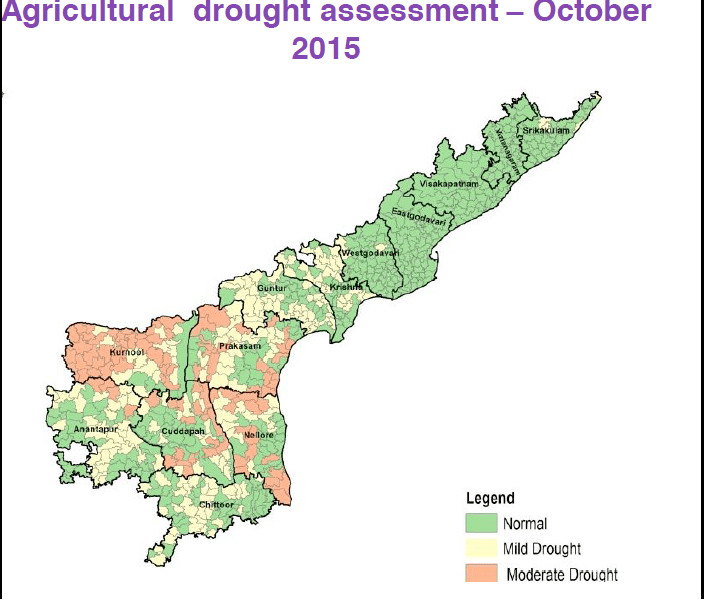
On Oct 28, 2015, the Andhra Pradesh government declared 196 mandals in seven districts, as drought-affected during the Kharif season 2015. The districts were Srikakulam (10 mandals), Prakasam (21), Nellore (14), Chittoor (39), Kadapa (33), Anantapur (39) and Kurnool (40). Consequent to the declaration of drought, the government directed the concerned district Collectors to notify the specific drought-hit areas in the District Gazette to enable farmers to avail credit facilities. On Nov 22, 2015, the Govt. added 163 mandals to the list of drought hit bringing the number up to 359 mandals. This included mandals in Guntur, Krishna, Vizianagaram. Drought was declared in 10 out of 13 districts. Crop loan and relief measures were to be taken up in these mandals as per guidelines. The state demanded central assistance of Rs 2,000 crore.

Telangana Drought 2016
The severe drought in Telangana has caused acute shortage of drinking water and worsened the agriculture crisis in the state.
On Nov 24, 2015, the Telangana government declared drought in 7 out of 10 districts. It declared 231 out of 443 rural mandals (blocks) in the State as drought-affected and sought an immediate assistance of Rs. 1000 crore from the Centre. All the mandals in Mahabubnagar (64), Medak (46) and Nizamabad (36) districts were declared drought-hit. Other mandals declared drought-hit included 33 out of 37 in Ranga Reddy, 19 of 57 in Karimnagar, 22 of 59 in Nalgonda, and 11 of 51 in Warangal. None of the mandals in Adilabad (52) and Khammam (41) districts were on the list.
DRP: 16 May 2016 (Water conservation: Lessons from ancient India)
Water conservation: Lessons from ancient India As drought-like conditions have gripped many parts of India this year, the pressure to drill borewells in search of increasingly scarce groundwater has escalated. Many regions are in the grip of a vicious cycle of drilling causing the water table to sink further. There is an urgent need to explore what benefits water conservation can bring, whether through modern or ancient water storage structures. This report explains, ecologically safe engineering marvels of water conservation have existed in India for nearly 1,500 years, including traditional systems of water harvesting, such as the bawari, jhalara, nadi, tanka, and khadin. Even today these systems remain viable and cost-effective alternatives to rejuvenate depleted groundwater aquifers, according to experts. With govt support, these structures could be upgraded and productively combined with modern rainwater-saving techniques such as anicuts, percolation tanks, injection wells and subsurface barriers. This may be a far more sustainable approach to alleviating the water scarcity crisis across India. Ultimately, water conservation has to be a key element of any strategy to bring an end to India’s perennial swings between drought and flood.
Continue reading “DRP: 16 May 2016 (Water conservation: Lessons from ancient India)”
DRP: 25 APRIL 2016 (One Year After Nepal Earthquake, Has the World Learnt Any Lesson?)
On this day in 2015, the massive Nepal earthquake of 7.9 intensity (Richter scale) shook the scenic Himalayan Nation. The earthquake left a major trail of destruction affecting over 20 districts and killing over 9 thousand people. According to expert Dave Petley, Langtang rock and ice avalanche was the most dramatic and significant landslide, that killed the most individuals. The earthquake killed over 9000 people, with 255 still missing. The severity of the quake can be gauged from the fact that more than a third of the disaster related deaths in 2015 occurred in Nepal’s April 25 earthquake. The earthquake-induced flash floods, landslides and aftershocks also damaged up to 15 hydropower plants, which has not been still restored fully. Surprisingly despite the increasing number of disasters taking place across the globe, world only spends less than a fifth of the money on Disaster Risk Reduction Compared to Disaster management. Nepal will still take years from recovering socio-economic losses caused by the quake. But it is pertinent that in the wake of the quake and other disasters, human civilisation must learn its lesson. It’s true that development and disaster cannot be stopped but we must make our developmental decisions more informed, rule based and democratic so that it helps us deal better with disasters by decreasing their intensity and velocity and our short-sighted developmental choices do not get translated into a disaster itself. Continue reading “DRP: 25 APRIL 2016 (One Year After Nepal Earthquake, Has the World Learnt Any Lesson?)”
 SANDRP