Gangetic Dolphins

2024: Dams, Mining, Construction Damaging Gangetic Dolphin Habitats

Continue reading “2024: Dams, Mining, Construction Damaging Gangetic Dolphin Habitats”
DRP News Bulletin

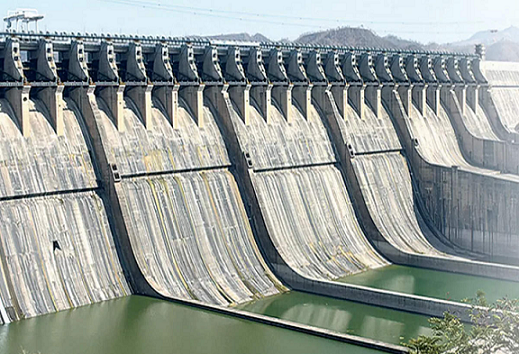
DRP NB 170624: Sardar Sarovar Power House to operate to reduce Dam Water level in anticipation of surplus rains: Welcome, but…

Continue reading “DRP NB 170624: Sardar Sarovar Power House to operate to reduce Dam Water level in anticipation of surplus rains: Welcome, but…”
DRP News Bulletin

DRP NB 301023: Top scientist Rajeev Raghavan emphasizes need to conserve River Fish

Continue reading “DRP NB 301023: Top scientist Rajeev Raghavan emphasizes need to conserve River Fish”
DRP News Bulletin

DRP NB 190623: Ten years of Uttarakhand Flood disaster

(Feature Image: Thousands of people have been rescued but the inability of rescue teams to navigate disaster-struck areas has left over 60,000 people stranded in Uttarakhand. The Hindu, 19 June 2013)

This week marks ten years since the Uttarakhand flood disaster of June 2013, the worst recorded disaster in the state. The deaths and destruction in the disaster were unprecedented. Large parts of the deaths and destruction were due to man-made causes. Climate Change played its anthropogenic role too as the unprecedented rainfall happened even before the monsoon was set in. Even the Supreme Court took suo motu cognizance of the disaster and ordered halt to all hydropower projects and independent review of them. One of the major human causes that worsened the disaster was the lack of credible disaster prevention and management systems.

One expected that we and particularly our all powerful governments in the state and the Centre would learn lessons from such an unprecedented, such a massive destructive disaster. The first step to that would have been credible reporting of what exactly happened during the disaster, which agencies played what role and how the destruction could have been reduced. That such a report does not exist even today says a lot.

Continue reading “DRP NB 190623: Ten years of Uttarakhand Flood disaster”
DRP News Bulletin

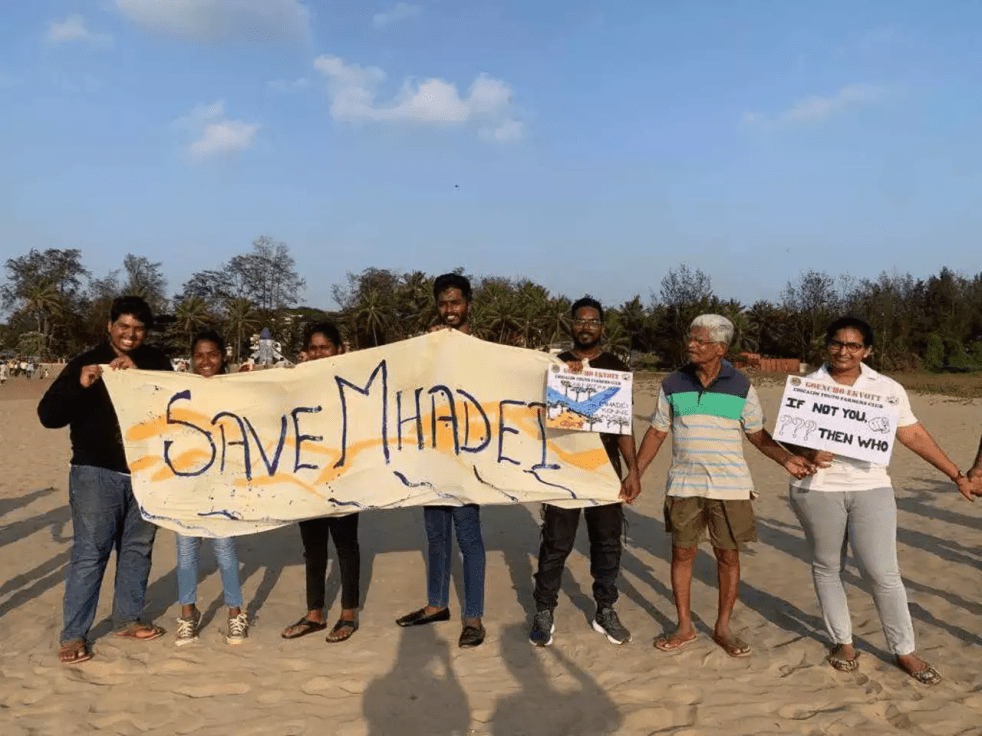
DRP NB 290523: Goa Fights to save Mahadayi River

(Feature Image: Thousands form human chain along Mhadei river to celebrate #MahadaiAmchiMai festival. Source: ToI)

On May 20, 2023 when thousands of people of Goa, Rakhondars (protectors) came out to form a 7 km long human chain to save Mhadei or Mahadayi river, they were not only celebrating Goa’s unique Mahadayi River festival, but were also coming together to declare their resolve save and rejuvenate the River that is lifeline of Goa.

A large number of organizations came together, including Earthivist Collective, Goa Heritage Action Group, Save Mhadei Save Goa front, among many others. It was a unique attempt to reconnect with the river, its history, its soul. The people from all kinds of art forms and all walks of life came together in a state where the connection with the river has always been strong for the people.

One hopes their tribe multiplies and they succeed in saving the river from dam building plans and other river affecting activities. That success will provide an example and impetus for river conservation activities elsewhere too.

Continue reading “DRP NB 290523: Goa Fights to save Mahadayi River”
DRP News Bulletin

DRP NB 150523: Will the govt listen to caveats against Ken Betwa Project?

The following report raises three caveats regarding Ken Betwa River Link Project, among others. Firstly it urges that the substantial impact of climate change on the rivers needs to be taken into account, particularly the need for accurate hydrological assessment. It underlines that the project themselves are accelerating the climate change impact on monsoons as they are reducing freshwater flows to the oceans, which in turn has an impact on the ocean’s thermal and salinity gradients, both of which are drivers of monsoon.

Secondly, it rightly says that the impact of projects on adaptive capacity of areas like Bundelkhand needs to be taken into account. In Bundelkhand, climate adaptation can be harnessed using rain water harvesting, rejuvenation of traditional water systems, less water intensive crops and alternative agricultural practices. Thirdly, the water sharing issues that may worsen with both climate change and big projects, need to be kept in mind while taking up mega projects, particularly its impact on water and other security issues.

Continue reading “DRP NB 150523: Will the govt listen to caveats against Ken Betwa Project?”
DRP News Bulletin

DRP NB 170423:Forecast of Indian SW Monsoon & definition of normal monsoon

The India Meteorological Department (IMD) has on April 11, 2023 forecast that rainfall at national level in four months of June-Sept 2023 Southwest Monsoon will be 96% of Long Period Average (LPA). IMD considers Indian Monsoon rainfall as normal based on just one parameter of total rainfall in these four months at national level is between 96% and 104% of LPA, with model error of +/- 5%. This raises large number of questions as media has rightly raised post the IMD announcement.

Firstly, in a strange turn of events, on April 12, an update jointly by US weather agencies under the National Oceanic & Atmospheric Administration (NOAA), contradicted a number of assumptions of IMD the previous day, including the period when El Nino will become active and probability of it being a strong event, both of which have a strong bearing on the Indian Monsoon in an adverse way. So the first question that arises is, did the IMD not have the benefit of the observations on April 11 based on which NOAA made the forecast very next day? Or was it an attempt at providing an unjustified feel good monsoon forecast? This question arises as in the past too questions have been raised about such attempts by IMD. This question also becomes important as only a day or two before IMD’s forecast, private forecaster had predicted that monsoon rainfall is likely to be deficient and not normal.

Continue reading “DRP NB 170423:Forecast of Indian SW Monsoon & definition of normal monsoon”
DRP News Bulletin

DRP NB 270223: How much Pump Storage Hydro capacity is required in India?

(Feature Image: State steps up pumped hydro storage projects amid coal crisis. Source: EQ Mag Pro/ May 2022)

On Feb 15, 2023, Union Ministry of Power issued draft guidelines for Pump Storage Projects, inviting comments from stakeholders in 15 days to the email id – hydro2-mop@gov.in. The guidelines say that more Pump Storage Projects (PSPs) are required in view of increasing solar and wind power capacity connected to the grid, to stabilize the grid, store the power to make it available during non-solar and non-wind power hours and for peaking power, reactive power, etc. It describes the PSP as “clean, green, safe, and non-explosive” and “environment friendly” option. No studies or basis are provided for this sweeping conclusion.

Continue reading “DRP NB 270223: How much Pump Storage Hydro capacity is required in India?”
DRP News Bulletin

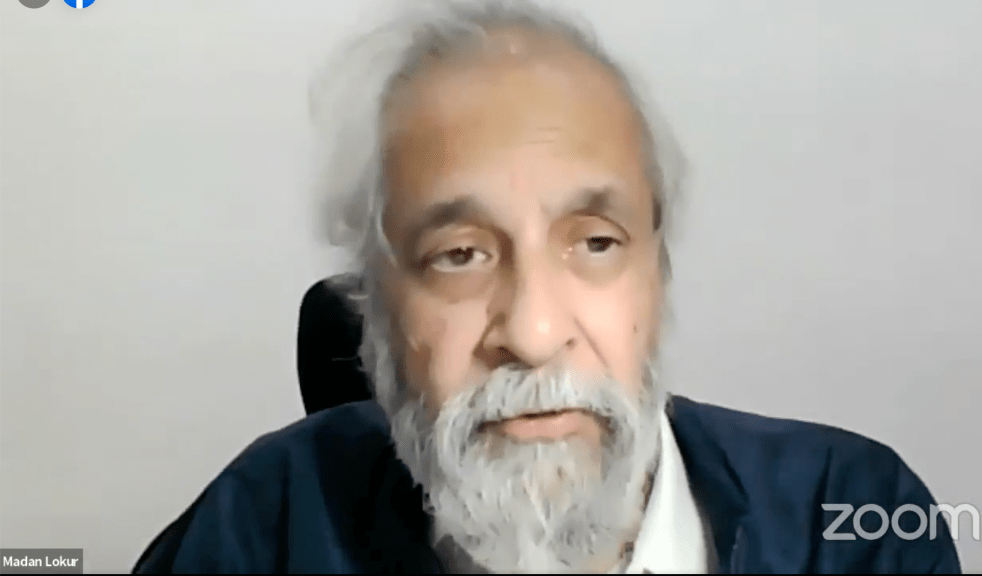
DRP NB 281122: Justice Lokur at IRW 2022: We need to be vocally more aggressive to make a difference

In his key note address at the final session of India Rivers Week 2022, Justice Madan Lokur, former judge of Supreme Court of India said, “Time has come we need to be a little more active and aggressive vocally to ensure that we are listened to about the problems we all are facing. Farmers struggle, the CAA amendment etc. are good examples. There is need for a political will to bring about any change. How do we generate such a political will is the issue.”

Among other messages Justice Lokur gave in his key note address at the final session of India Rivers Week 2022 on Nov 27, 2022 included: “Rivers belong to all, not a select few… We need to ensure that we are effective in our work, our messages.”

The two day, five session India Rivers Week 2022 function focused on use of rivers as waterways, organized in collaboration between India Rivers Forum (IRF is constituted by ten organizations now) and Manthan Adhyayan Kendra ended on Nov 27, 2022. The IRW 2022 sessions had a number of highlights, we will try to bring them to you in separate articles.

Continue reading “DRP NB 281122: Justice Lokur at IRW 2022: We need to be vocally more aggressive to make a difference”
DRP News Bulletin

DRP NB 14 Nov 2022: Jal Shakti Ministry says: Groundwater extraction down, recharge up???

(Feature Image: The report also states that the monitoring of the groundwater resources was affected by the Covid-19 outbreak in the country. Source: Bloomberg/TIE)

This sounds so counter intuitive. The Ministry Jal Shakti on Nov 9, 2022 made some findings of its latest “National Compilation on Dynamic Ground Water Resources of India, 2022 public, strangely, without making the report public. It is not clear why the govt did not make the report public, though the counter intuitive nature of the findings provide some hint. The report claims that at all India macro level, the ministry claimed that the groundwater extraction is the lowest in 2022 since 2004, or 18 years and that the groundwater recharge has gone up.

These are counter intuitive findings, even if at macro level for a number of reasons. It is also unclear what methodology is used to arrive at these conclusions and if there has been any independent scrutiny of the same. Since groundwater extraction has been going up for over six decades now, this reversal will need plausible reasons. There are no indications that there is any reduction in this groundwater use. Secondly, the groundwater recharge mechanisms are under attack all over India, and thus the finding that there is increase in recharge raises questions. Particularly since the efforts at groundwater recharge through rainwater harvesting are far from convincing.

More importantly, the real story is at micro level, since groundwater occurs in decentralised aquifers and any significant reduction in use, increase in recharge has to happen at the aquifer level and the assessment also needs to be done and made available at aquifer level for it to have any impact on future regulation of groundwater. In fact the only regulatory body working for groundwater regulation, the CGWA, works in a centralised way and its work has been far from confidence inspiring. That makes this whole findings questionable. Moreover, it would also be useful to see if the extraction has reduced in over exploited areas and if the recharge has increased where it is required most: in over exploited areas. Too many questions and no answers, unfortunately.

Continue reading DRP NB 14 Nov 2022: Jal Shakti Ministry says: Groundwater extraction down, recharge up???