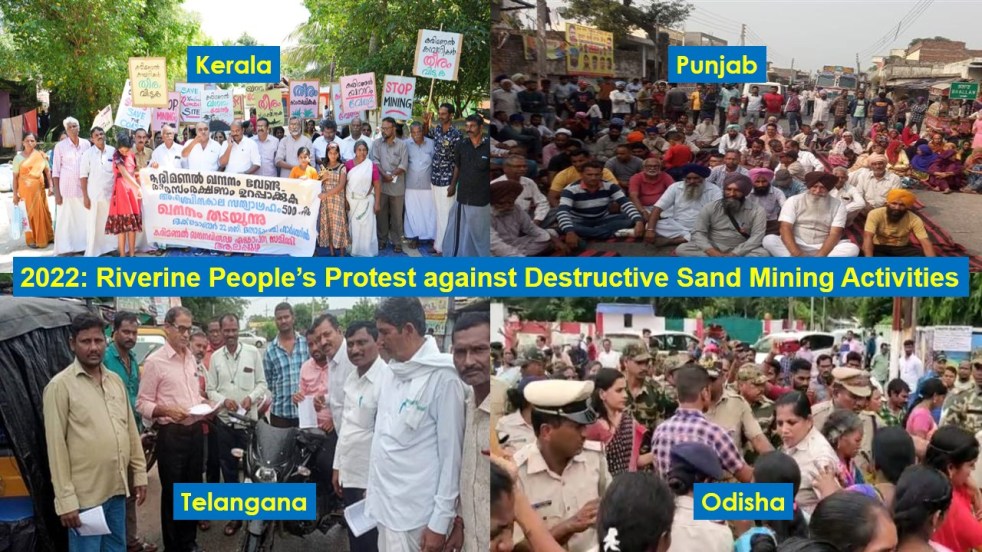
The rampant riverbed mining in India have reached the alarming stage where the adverse impacts on river’s eco-system, river based environmental services including fishing, groundwater recharge, potable and irrigational water supply schemes have started affecting the riverine communities in multiple ways. Given the poor track records of responsible agencies in addressing their plight, the dependent, affected and concerned people have been left with no option but to resist. Like in past years, there have been several incidents of riverine people strongly opposing the destructive mining practices in many states in 2022. This overview compiles some such incidents which we could track. The first part of the overview highlighting the adverse impacts of riverbed mining on river eco-system and freshwater species can be seen here.
Continue reading “2022: Riverine People’s Protest against Destructive Sand Mining Activities”Tag: River Aquatic Biodiversity

2022: Riverbed Mining Destroying Indian River Eco-system & Freshwater Species
(Feature image sources: Clock wise (1) Mahseer fish/ Mongabay India, April 2022. (2) Gharials in Chambal/India Today, July 2022. (3) Gangetic dolphin/ECO NE. (4) Smooth-coated Otters in Cauvery/Round Glass, Jan. 2023.)
Indiscriminate mining of riverbeds for sand, gravel, pebbles have been rampant across the country increasingly damaging India’s rivers. The incidents of illegal sand mining, mafias, administrative actions & inactions, govt policies and court cases are routinely covered by the media. However the irreversible impacts of destructive riverbed mining operations on fresh water species and river eco-system are little understood, least explored, rarely covered by media and fails to attract the required attention from govts, judiciary and public at large.
To some extent, we have been monitoring and highlighting the loop holes in sand mining governance. As part of our annual overview, in 2022 we have complied this separate report underlining the adverse impacts of riverbed mining on rivers and on aquatic life, fresh water species including endangered gharials, dolphins, turtles, fish etc.
Continue reading “2022: Riverbed Mining Destroying Indian River Eco-system & Freshwater Species”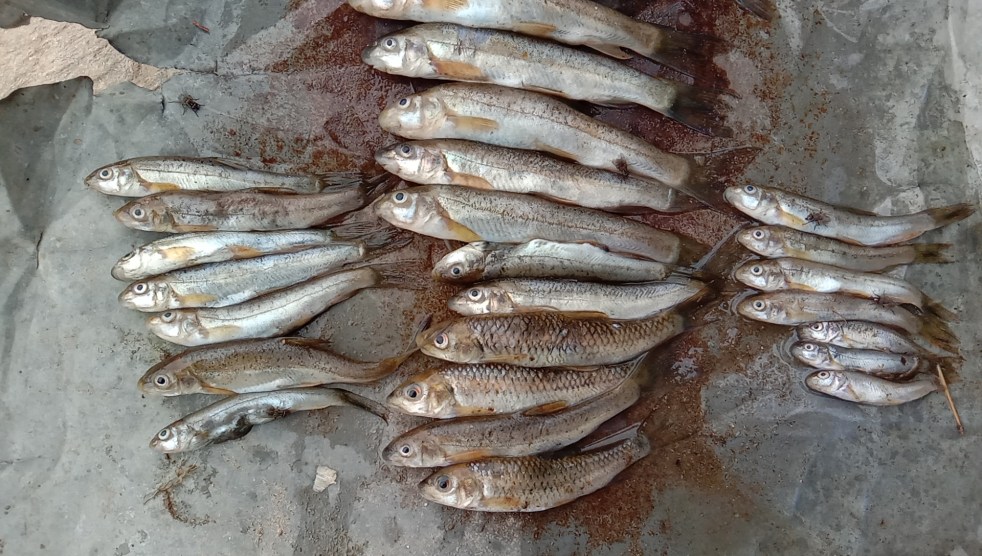
WFD 2022: Protect Aquatic Biodiversity for Fish to prosper
(Feature image: Fish species caught in small Ramganga stream in Pauri Garhwal. Bhim Singh Rawat/SANDRP)
On the occasion of World Fisheries Day (WFD) 2022, this report by SANDRP tracks developments related to aquatic biodiversity in India over the last year. The first, second, third and fourth parts of the WFD 2022 reports covered positive reports on rivers’ fish and fishermen; mass fish deaths in rivers and emerging threats; mass fish kills in lakes, ponds in the country and issues concerning rights & livelihoods of inland & coastal fishers reported during the past one year.
Continue reading “WFD 2022: Protect Aquatic Biodiversity for Fish to prosper“
Dams, Rivers & People 2020 through the DRP LEAD STORIES
In SANDRP’s weekly News Bulletins, we select lead story each week. Here we try to look back and take stock of major happenings of 2020 through a compilation of DRP lead stories to recapitulate major happenings related Dams, Rivers, Water and Environment. While doing this we are aware that this may not completely capture all the key happenings in this sector, since not all the major developments are captured by the media and their headlines. However, it does provide some idea about what were the major developments in this sector in the just outgoing year 2020. We have divided the lead stories under several key classifications like River Management, Environment Governance, Dams, Hydropower projects, Flood management, groundwater management etc.
Continue reading “Dams, Rivers & People 2020 through the DRP LEAD STORIES”
DRP: 15 Jan 2018 (Do We Care About Rivers’ Aquatic Bio-diversity?)
Great to see this focus on aquatic biodiversity (unfortunately the article keeps using the word marine biodiversity, not using the word aquatic or freshwater biodiversity even once) along the 120 km long Sindhudurg Coast line, one of the 11 ecologically sensitive habitats identified along India’s coasts.
The FIRST study of local Otter Population by Ela Foundation identified upto 591 Smooth coated otters (strangely article does not mention about existence of small clawed Otters in Sindhudurg), 561 Indo Pacific humpbacked dolphins, among many others. The coast is particularly river rich with some twelve creeks/ rivers including Shanti, Piyali, Naringre, Achra, Gad, Talavade, Otawane and Pithdhaval Rivers.
The biodiversity here is facing multiple threats including rapid urbanisation, tourism onslaught with attendant plastic and sewage disposal, unregulated fishing trawlers, illegal sand mining, and global warming. It also underlines the need to do assessment of any interventions done in the area, of impacts on the aquatic biodiversity. http://www.hindustantimes.com/india-news/orphans-in-the-wild-what-the-otter-s-trying-to-tell-us-about-our-oceans/story-IfRFFi63Q8nV7UkUK4c16O.html (The Hindustan Times, 14 January 2018)
Continue reading “DRP: 15 Jan 2018 (Do We Care About Rivers’ Aquatic Bio-diversity?)” SANDRP