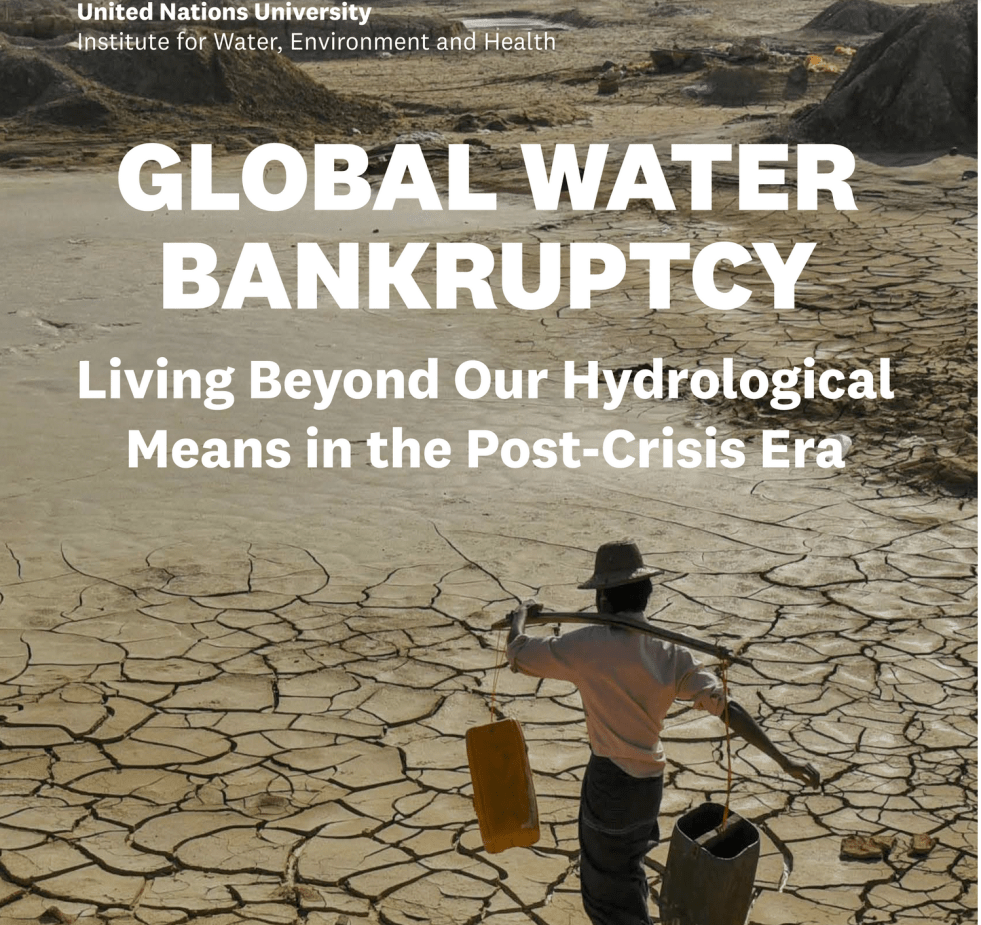
The new report released by United Nations University last week describing the global water situation in climate change context as water bankruptcy may seem like a bit of exaggeration for many places. In any case, it is not possible to describe the water situation across the globe in a couple of words.
Continue reading “DRP 270126: Climate Crisis and Water Bankruptcy”Tag: Polavaram
2025: Polavaram Project Developments
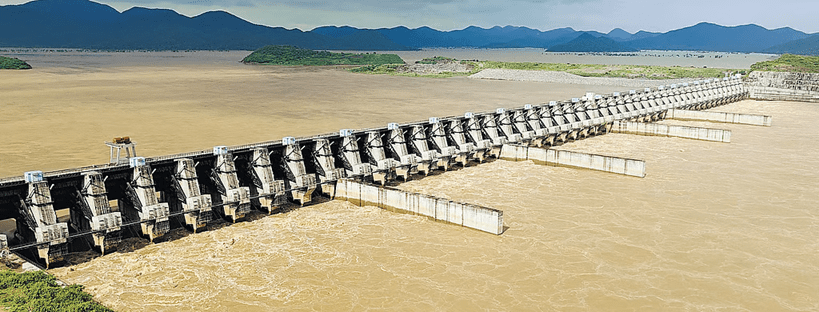
(Feature Image: Godavari river in flood spate at Polavaram project site in Aug 2025. Source)
Amid concerns over safety and construction quality, the Polavaram project work has moved during 2025 to achieve Dec. 2027 completion target. However, not much progress has been made regarding the backwater study and addressing the issues of affected tribals and areas in Telangana, Odisha and Chhattisgarh. Meanwhile, after failing to push PBLP (Polavaram Banakacherla Link Project), the Andhra govt has proposed another contentious PNLP to divert Godavari River waters. The Stop Work order issued by the MoEF in 2011 remains suspended for all these years, making a mockery of the MoEF regulations. Wrapping up the available information, this overview shares the year-round updates on safety, progress, backwater study and linking plans related to the controversial Polavaram dam project in 2025. Our previous overview on the project can be seen here.
Continue reading “2025: Polavaram Project Developments”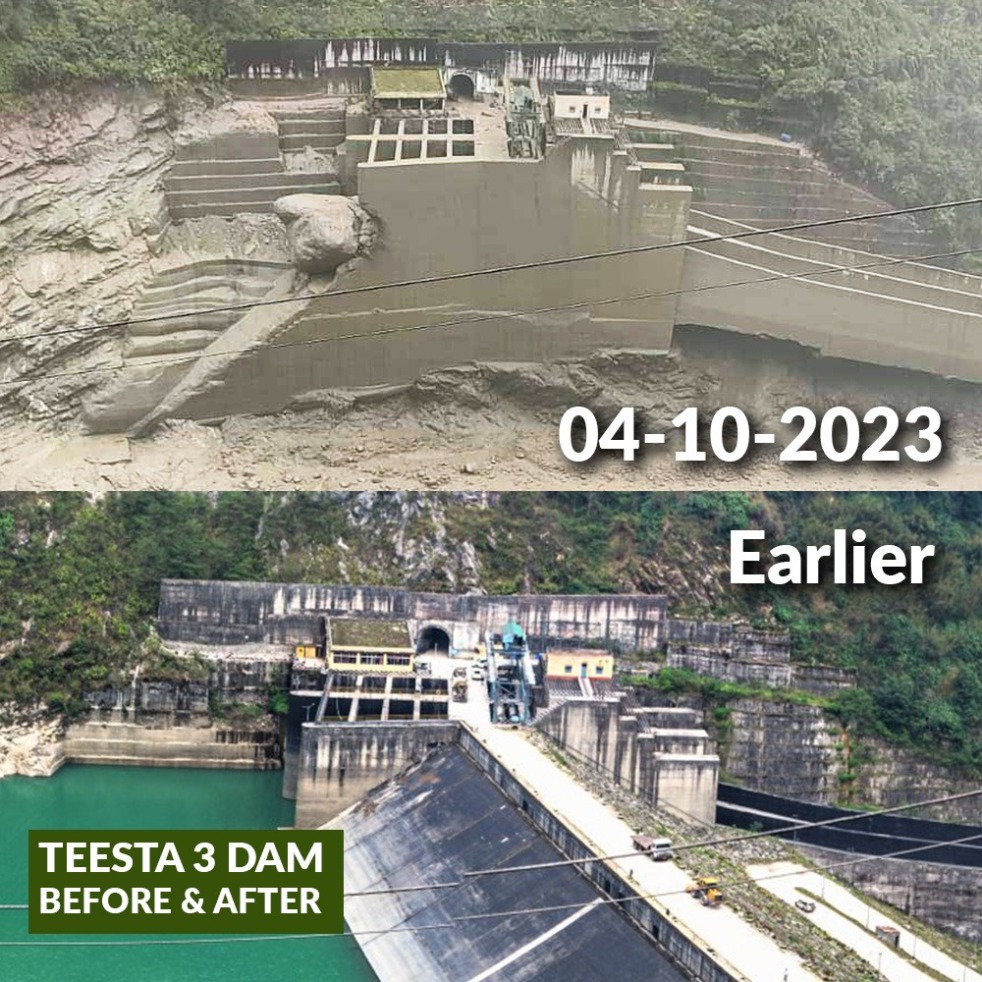
DRP Nov 3 2025: Safety Assessment of 5000 Indian dams pending
At a recent meeting in Pune, Secretary of Union Ministry of Jal Shakti said that safety assessment of about 5000 large dams, out of total around 6000 in India is pending as per the following PIB press release. He went on to urge acceleration of dam safety assessments across the country. This is a worrying situation, coming straight from the secretary of the concerned Union Ministry. It again underlines the sorry situation regarding dam safety in India.
Continue reading “DRP Nov 3 2025: Safety Assessment of 5000 Indian dams pending”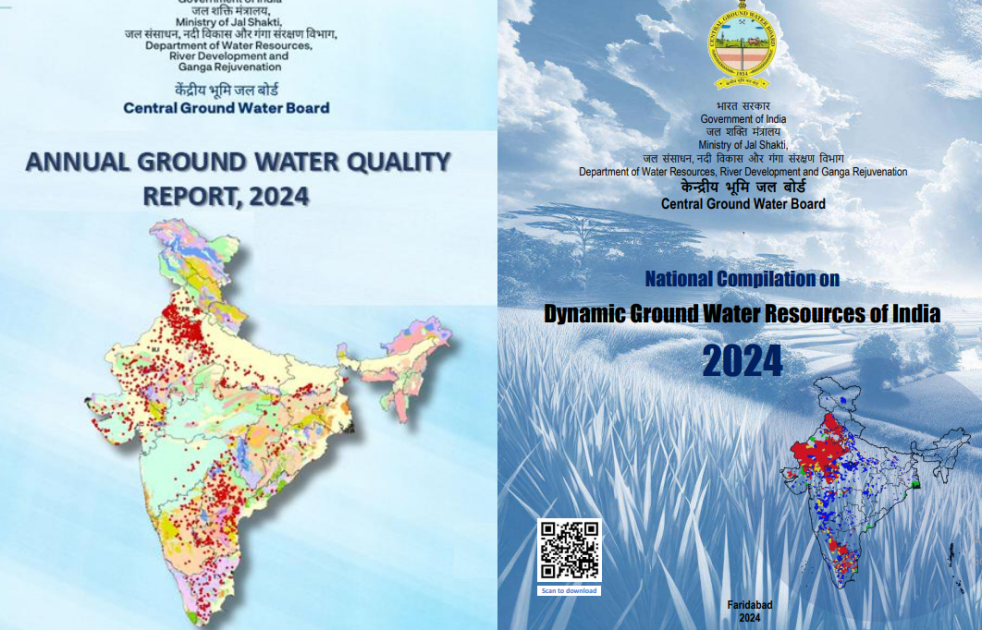
DRP 060125: Concerns about & Contradictions in CGWB’s Reports
The Central Ground Water Board (CGWB) released two important reports last week. While the Annual Ground Water Quality Report 2024 reveals rise in nitrate fluoride, arsenic and uranium contimination of groundwater resource in India, the Dynamic Groundwater Resource Assessment Report 2024 claims substantial rise in annual groundwater recharge and decline in extraction of the resource.
As per the first report, the number of districts affected by high nitrate levels in groundwater has gone up to 440 (near 56% of all 779 districts in country) from 359 found in 2017 assessment which means in 7 years 81 more districts have been found having excessive nitrate levels in groundwater. This should concern us from a number of points of view.
Continue reading “DRP 060125: Concerns about & Contradictions in CGWB’s Reports”
2024: Has NDSA made our dams any safer?
(Feature Image: Srisailam dam in Telangana. Source: Telangana Today)
This annual overview focusses on the functioning of National Dam Safety Authority (NDSA) and related institutions in 2024 to understand if the functioning of these institutions have made Indian Dams any safer? Here functioning of Central Water Commission (CWC) is also important as CWC people head all the dam safety panels. The dam safety related institutions were formed following the passage of Dam Safety Act 2021 and hence there were promises and hopes that these institutions will make our dams safer.
Continue reading “2024: Has NDSA made our dams any safer?”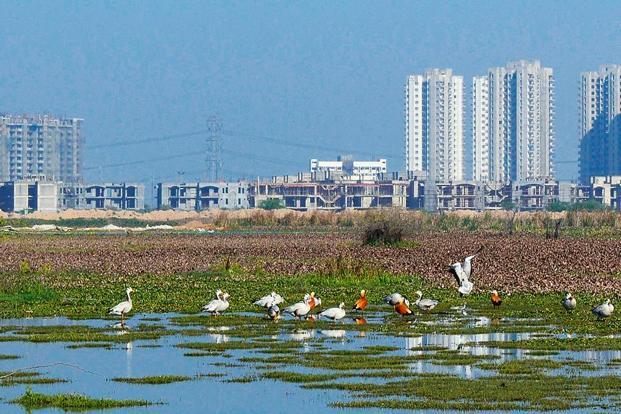
DRP 231224: Can we expect the Supreme Court to be more effective this time on Wetlands?
(Feature Image: The Basai wetlands in Gurugram. Photo by Pankaj Gupta at Live Mint)
It is indeed good to see an Editorial in a newspaper on the important issue of wetlands protection and rejuvenation. The Supreme Court’s order on wetlands last week shows its concern over the threat to wetlands as a natural feature of the environment that is under serious threat. The court ordered the protection of about 30,000 wetlands (each with area more than 2.25 ha) over the 201,503 protected by an order which it issued in 2017, and asked states to ensure their demarcation and ground-truthing which involves closer verification, within three months.
The order is in response to a PIL that said the Central government had abdicated its functions under the Environment Protection Act, 1986, to protect the wetlands. The petition also sought the identification and protection of around 5,55,557 wetlands which are less than 2.25 hectares in size. The court is likely to consider the proposal in March. One hopes the SC also gives effective orders for their protection.
Continue reading “DRP 231224: Can we expect the Supreme Court to be more effective this time on Wetlands?”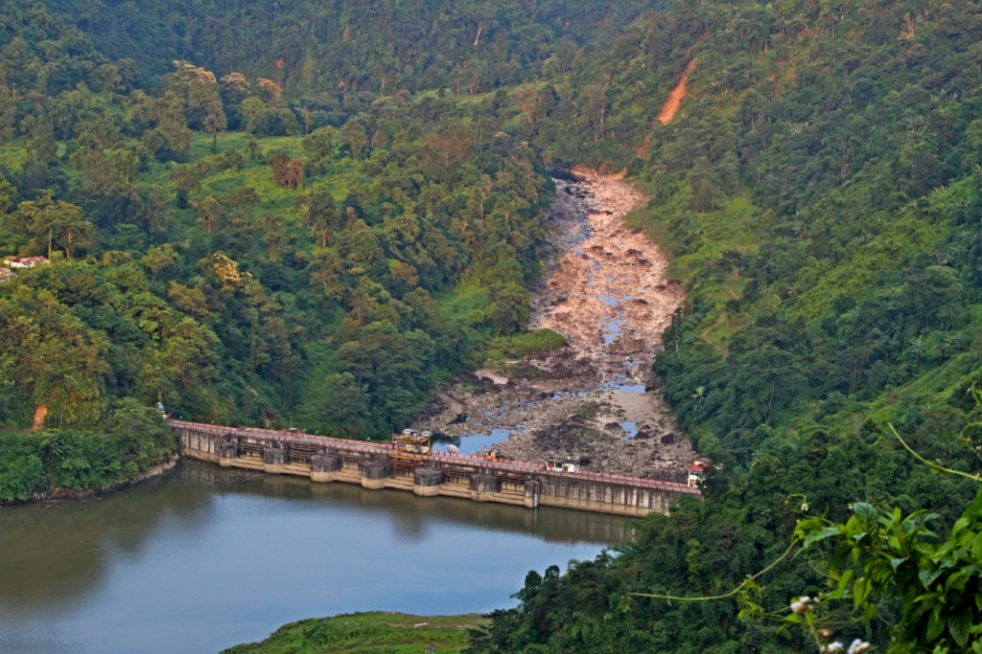
DRP 28×24: Hydropower Impacts on Biodiversity
(Feature Image: The Ranganadi dam in Arunachal Pradesh. In February 2019 the dam released an unprecedented amount of silt, with severe impacts for the river’s biodiversity and the livelihoods of people who live along its banks. Image Credit: Karen Conniff / Flickr, CC BY-NC 2.0/Source: Dialogue Earth)
A new study of available scientific publications on impact of Hydropower projects on biodiversity provides a thorough review of the subject. The review does not directly give a call not to construct more such destructive projects. But it is useful for anyone concerned about the impact of dam projects on rivers.
The study discusses the impacts of hydropower projects on both aquatic and semi-aquatic species in riverine ecosystem and cumulative impacts spatially and temporally across river basins. Dams disrupt longitudinal connectivity and act as physical barriers in upstream-downstream movement of species. Upstream of dam, there is static water environment rather than flowing river environment. In the downstream, the hydropower projects adversely affect the water flow, sediment flow, thermal regimes, affecting water quality and environmental cues for the fish movement. All these also affect the floodplains both upstream and downstream.
Continue reading “DRP 28×24: Hydropower Impacts on Biodiversity”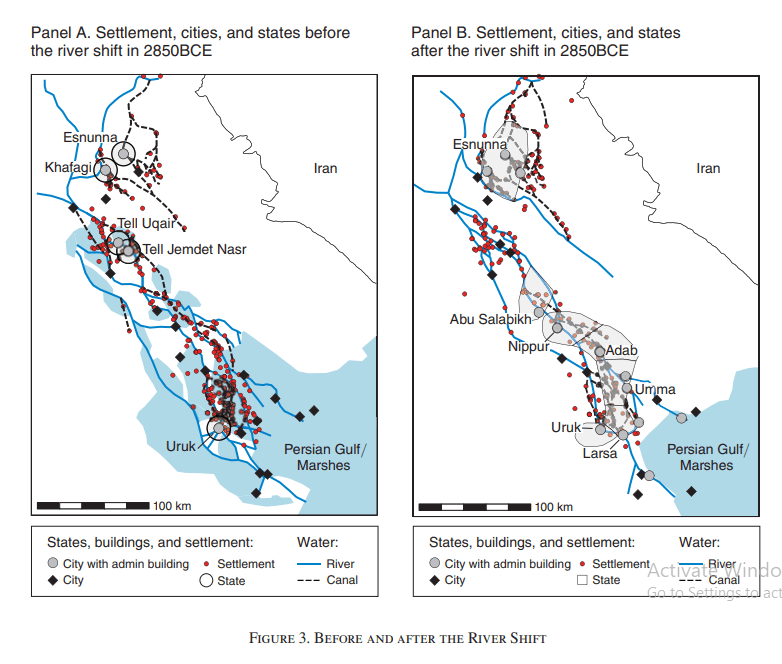
DRP 230924: Role of rivers in the birth of governments
(Feature Image Source: The Economic Origins of Govt)
Interesting research published in 2023 suggests that archaeologists and economists are now learning that dynamic, shifting rivers also created conditions that triggered people to develop some of the first organized govts on the planet.
In the research published in The American Economic Review Robert Allen and two co-authors found that Agriculture and large settlements emerged alongside rivers because they could tap into the gifts of rivers: close access to water and fertile soil. But rivers can move and take those gifts away. So, society developed organized govts to work collectively to regain their access to those gifts.
Continue reading “DRP 230924: Role of rivers in the birth of governments”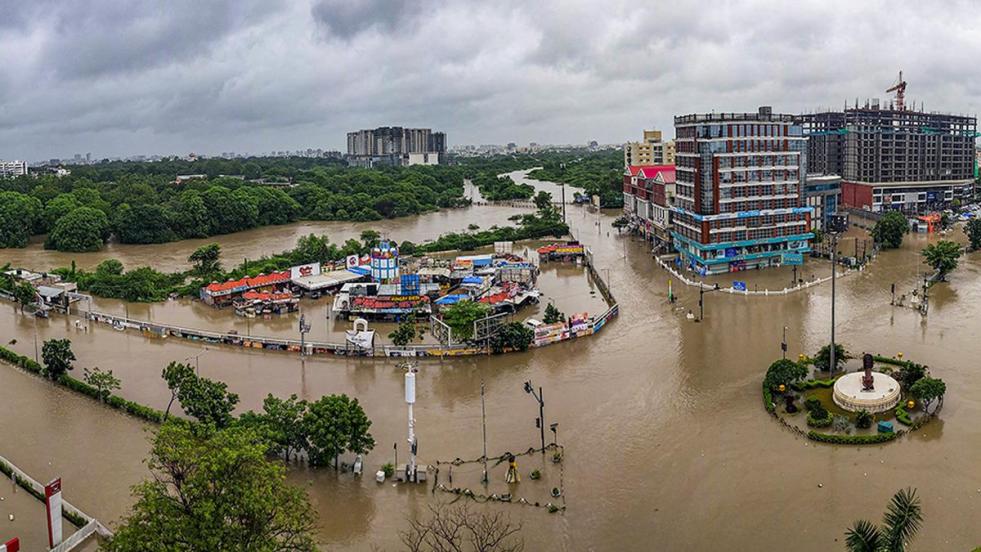
DRP 160924: Urban Flood lessons from Vadodara, Vijaywada
(Feature Image: Vadodara: A flooded area after heavy monsoon rainfall, in Vadodara, Aug. 27). Photo Credit: PTI/The Hindu)
Like every monsoon, a number of cities have faced catastrophic floods in SW monsoon this year. Vadodara and Vijaywada have got the media attention more than any other city for urban floods this year. In both cases a number of factors are common: role of upstream dams, encroachment on water bodies including rivers, lakes, streams, role of illegal sand mining particularly in Vijaywada, not having learnt any lessons from past flood disasters.
It is interesting to see Andhra Pradesh CM hinting at bringing HYDRAA like enforcement institution to remove encroachments on Budameru and other water bodies. Considering the nature of his politics and track record, it is doubtful if this NDA CM will take such a bold step, but it is certainly worthy of consideration for almost all urban areas in India.
Continue reading “DRP 160924: Urban Flood lessons from Vadodara, Vijaywada”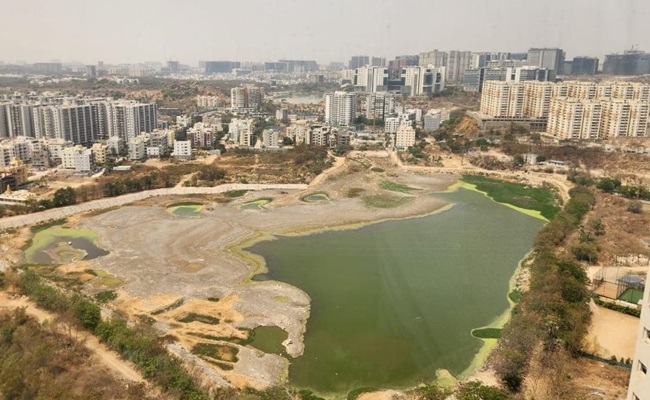
DRP 020924: HYDRA to protect water bodies in Hyderabad – a landmark move?
(Feature Image: An analysis of satellite imaging of 54 lakes taken in 1979 and 2023, secured by the HYDRAA from the NRSA shows that 40 lakes or nearly 75 per cent of lakes have shrunk by half. (Image: Twitter/DC)
The Hyderabad Disaster Response and Asset Monitoring and Protection Agency, or Hydra was established under GO 99, dated July 19 2024. A task the agency has taken up in all seriousness is protection of water bodies in the Hyderabad Capital Region (it includes 4 districts). To begin with it has started demolition of buildings illegally built inside the Full Tank Area (FTL) and Buffer area of the water bodies.
In July, Telangana Chief Minister Revanth Reddy replaced the Enforcement, Vigilance and Disaster Management (EVDM) wing of the government with Hydra, a body mandated to tackle illegal encroachment on water bodies in the Greater Hyderabad Municipal Corporation (GHMC) limits and surrounding areas. Its strength was upgraded from around 800 to 2,200 and its officials came directly under the principal secretary, municipal administration and urban development or the CM himself. “Hydra will also ensure the protection of water bodies in and around Hyderabad,” former EVDM commissioner and Hydra chief A V Ranganath said during its inception.
Continue reading “DRP 020924: HYDRA to protect water bodies in Hyderabad – a landmark move?” SANDRP