Dam levels down, ‘rain dance’ for Holi dropped Pune district, where a water cut is in effect due to depleting water levels in the dams, will not have any kind of “rain dance” functions this Holi. As water reserved in the dams is to be used only for drinking purposes as per the district administration’s instructions, the collectorate has urged people to go for a “Dry Holi” this year and will ensure that there are no such functions during Holi. With dam levels coming down to as much as 23% of their capacity, the entertainment department of the collectorate will ensure that permissions are not given for events like the “rain dance” during the festival. Meanwhile, a BJP legislator in Mumbai has written to the Brihanmumbai Municipal Commissioner seeking a ban on “rain dance” functions in Mumbai in the metro during Holi. Ameet Satam, in a letter to the BMC, said that the civic body should ban rain dance and even asked the corporation to slap a fine of Rs 50,000 on those who indulge in waste of water.
Tag: People
DRP: 7 March 2016 (Sudden water discharge from Chamera-II hydro Project in Himachal killed 2 Air Force jawans)
Sudden water discharge from Chamera-II hydro project killed 2 IAF jawans In the evening of 05 March, 2 Indian Air Force (IAF) personnel posted at the Pathankot airbase were washed away by sudden rise in Ravi’s water level from Chamera-II hydro project in Chamba, Himachal Pradesh while 3 other personnel had a close shave. According to Sudesh Mokhta Deputy Commissioner Chamba the 5 IAF personnel on a weekend holiday trip were clicking pictures on the river bank at the time of the incident when the water of the river rose suddenly after discharge from upstream Chamera-II project. The incident happened around 6.30 pm and due to darkness, the search operation remained unsuccessful. It was only on 06 March that the bodies were fished out. Mokhta further stated that a magisterial probe has been ordered to ascertain if the NHPC authorities, which man the Chamera-II project, followed the guidelines laid down by the high court for the discharge of water. On 08 June 2014 also during a similar accident, 24 students from Hyderabad were killed by sudden discharge of water from Larji hydel project dam in Mandi district.

DRP: 29 Feb. 2016 (4 decades on, Siruvani dam displaced tribals wait for justice)
Kerala 4 decades on, Siruvani dam displaced tribals wait for justice During 1970s, of Muthikulam triblas of Siruvani hills in Kerala were forced to relocate themselves to Chingampara forests area. This was how a settlement constituted 24 Muduga tribes families facilitated the construction of the Siruvani dam, a major source of drinking water for Coimbatore city and its surrounding areas in Tamil Nadu. Four decades later, the Muduga tribe has volumes to talk about the breach of official promises. Their houses are in ruins and the tribal people have to walk about 3km to fetch water from the reservoir as the decades-old water supply mechanism stopped functioning years ago. Most of the children in the Chingampara colony do not attend school as the nearest school is about 20 km away. The old school at Muthikulam got submerged in the dam waters. Now the colony has only an Anganwadi. Rajan, a differently-abled member of colony reported that the new reservoir came up in the area from where our families had been forced to move out. The dam was commissioned in 1984, but our settlement remains neglected. The tribals are still awaiting justice even after four decades. Except for the once-in-a-week visit of a junior public health nurse, there is no health care facility for the people. Biju another affected stated that in 1971 we were promised pucca housing with water and power connections and toilets, besides compensation of Rs.10,000 but nothing happened. He felt that their rehabilitation was a mockery and they deserve a decent rehabilitation as compensation.
Continue reading “DRP: 29 Feb. 2016 (4 decades on, Siruvani dam displaced tribals wait for justice)”
DRP: 22 Feb. 16 (Unprecedented water crisis in Delhi due to Jat quota stir)
Unprecedented water crisis in Delhi due to Jat stir Terming the water crisis in the national capital as “unprecedented”, Delhi minister Kapil Mishra has warned that the situation might worsen in the next few days if the supply from Haryana is not immediately restored. He said the Delhi Jal Board (DJB) had almost run out of water and advised people to use water judiciously. Delhi gets its bulk of water supply from Haryana and the stir has affected 65% of water supply in Delhi has been cut with the shutting down of seven water treatment plants— Wazirabad, Chandrawal, Dwarka, Okhla, Haiderpur, Nangloi and Bawana which provide around 500 million gallons per day (MGD). In all Delhi has nine water treatment plants which together produce 820 MGD of potable water. Of these, only two Sonia Vihar and Bhagirathi fed by water from Uttar Pradesh are operational. The current production is only 240 MGD. Among the areas affected were Dwarka, Janakpuri, Munirka, Palam, Rajouri Garden, Punjabi Bagh, Vasant Kunj, Saket, Green Park and Lodhi Colony, where residents complained of little or no water. In another news report DJB is reported to have made 140 water filling points functional to feed tankers which would be sent across the city, reeling under an unprecedented water crisis. Water Minister Kapil Mishra reviewed the contingency plan for water management in West, North, North-west, Outer and Central Delhi and said tankers will deliver water at 663 points to partially meet the shortage of 480 MGD. These points will keep rotating. Plan is to cover around 2,000 points by Monday evening. The DJB supplies around 900 MGD of water daily out of which around 600 MGD of raw water come from Munak Canal. Even if Haryana releases water immediately, it will take at least 24 hours to restore the supply. Meanwhile Supreme Court on 22 Feb.16 scolded Delhi government. for approaching the court instead of resolving the water crisis with Haryana. The Kejriwal government had approached the top court on in view of the severe water crisis in the national capital after Jat protesters blocked water supply through Munak canal in Sonipat. During the hearing on government’s plea, the court took strong objection to Water Minister Kapil Mishra’s presence inside the courtroom. On the other hand, the minister accuses Haryana & Central Government for providing no official information on the crisis He said the Delhi government was “repeatedly trying to communicate” with the two governments to find out when will the supply resume, but without much success. Also see Jat quota stir: Water supply cut, Delhi may go dry
Continue reading “DRP: 22 Feb. 16 (Unprecedented water crisis in Delhi due to Jat quota stir)”

DRP: 15 Feb. 2016 (Govt plans National Water Commission)
Govt plans National Water Commission In one of the most significant reforms in the water sector in a long time, the govt is in the process of ordering a complete restructuring of the organisations responsible for regulating the use of water resources, with the objective of bringing in greater efficiency, better planning and increased emphasis on conservation of water. According to news report the Central Water Commission (CWC), which oversees irrigation projects, flood management and drinking water supply, and the Central Ground Water Board (CGWB) are likely to be disbanded, and a National Water Commission is proposed to be set up in their place. A few other smaller organisations with specialised mandate like data gathering and analysis are also likely to be created.
A team under Mihir Shah, a former member of the then Planning Commission of India, is already preparing a blueprint for better management of water resources. The idea of institutional restructuring is said to have the backing of this panel. It is likely to submit its report in the next two months. In the new scheme of things, more emphasis is being given to judicious use, and conservation, of ground water. It is estimated that despite elaborate irrigation projects, about 60 per cent of irrigation during the non-rainy season is still done by pumping out ground water. The large irrigation projects, meanwhile, have given sub-optimal results.
A large number of sewage treatment plants, being built as part of the Clean Ganga initiative that will eventually spread to other rivers as well, will provide a new source of water that is fit not only for industrial use but also for irrigation and many other purposes. The river rejuvenation plans, not just of Ganga but others as well, will become an integral part of overall water resources management. Apart from reducing pollution in the rivers, and maintaining a minimum ecological flow, the rejuvenation plans would also ensure that the rivers are able to adequately recharge the aquifers in its basins.
Allocation of water resources to each state is also on the agenda. But this process is likely to take time as it would involve extensive consultations with the state governments. Once a consensus emerges, a central legislation on allocation of water resources is planned to be brought in. This is aimed at reducing inter-state water disputes.
Continue reading “DRP: 15 Feb. 2016 (Govt plans National Water Commission)”

DRP: 25 Jan. 2016 (FAO supports SRI)
“Save & Grow” FAO supports SRI A new FAO book out on 18 Jan.16 takes a close look at how the world’s major cereals maize, rice and wheat can be grown in ways that respect and even leverage natural ecosystems. FAO also underscores that “Save and Grow” farming systems are knowledge-intensive, and need to be built on local knowledge and needs, recognizing the important role of farmers as innovators. GREAT to see that this FAO publication (http://www.fao.org/3/a-i4009e.pdf ) contains a very detailed discussion and presentation on SRI, the first time that there has been such an endorsement of SRI (System Rice Intensification). With this publication, FAO joins the World Bank (http://info.worldbank.org/etools/docs/library/245848/) and IFAD (http://www.ifad.org/english/sri/ and http://www.ifad.org/english/sri/documents.html).

DRP: 18 Jan. 2016 (MoEF Expert Committee on Dams continues to ignore democratic norms)
MoEF Expert Committee on Dams continues to ignore democratic norms The minutes of the 90th meeting of the Expert Appraisal Committee on River Valley and Hydropower projects held on Dec 22-23, 2015, made available today (January 18, 2016, see: http://environmentclearance.nic.in/writereaddata/Form-1A/Minutes/0_0_11118122212121Minutes-90EAC.pdf), shows how the committee continues to ignore basic democratic norms. Here are some key issues about the minutes of this latest meeting:
DRP: 11 Jan. 2016 (Punjab Villagers oppose Dam on Ghaggar River)
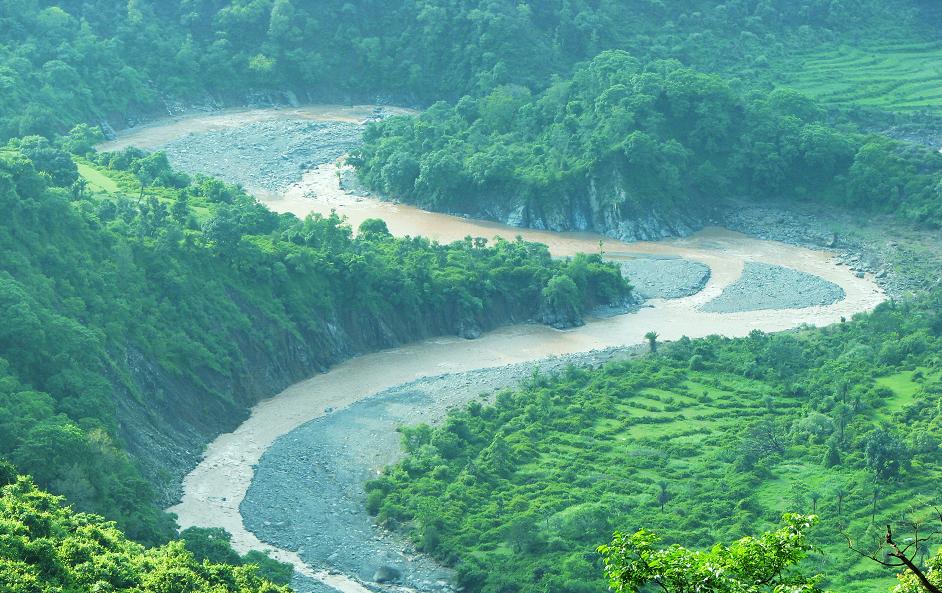
86 Villages rise in protest against dam on Ghaggar A dam is proposed to be constructed on the Ghaggar, near Banur, at a cost of Rs 75 crore. An agreement was signed between representatives of various villages located downstream and the Irrigation Department in 2006 promising 200 cusecsto irrigate fields in thesevillages. Villagers now fear that they will not get the promised 200 cusecs after the construction of the dam. Their claim is that the water flow in the river is much lower than 400 cusecs, as claimed by the irrigation department. The department, on the other hand, sticks to its stand that the water flow in the river is sufficient enough to feed the canal and the villages downstream. However, a perusal of the monthly average discharge data of the river for the past 10 years, defies the department’s claim. It revealed that the average yearly discharge barely crossed 400-cusec mark over the past 10 years, excluding the peak period (July to September). Interestingly NABARD and the State Irrigation department had separately conducted studies of the project well before giving it a green signal.
Continue reading “DRP: 11 Jan. 2016 (Punjab Villagers oppose Dam on Ghaggar River)”
DRP: 04 Jan. 2016 (Rivers are soul of India: PM Narendra Modi)
Rivers are soul of India: Prime Minister Narendra Modi Excerpts From text of PM’s inaugural address at 103rd session of Indian Science Congress, Mysuru Rivers have played as important a role in human history as oceans. Civilisations have been nurtured by rivers. And, rivers will remain critical for our future. So, revival of rivers is an essential part of my commitment for a cleaner and healthier future for our society, economic opportunities for our people, and renewal of our heritage. We need regulations, policy, investments and management to achieve our objective. But, we will succeed only when we integrate technology, engineering and innovation into our efforts, not just to clean our rivers now but to keep them healthy in the future as well. For this, we also need scientific understanding of the impact of urbanisation, farming, industrialisation and groundwater use and contamination on the river eco-system. River is the soul of Nature. Their renewal must be an element of a larger effort to sustain Nature.
Continue reading “DRP: 04 Jan. 2016 (Rivers are soul of India: PM Narendra Modi)”

DRP: 28 Dec. 2015 (Farmers field school in Jharkhand shows the way in integrated farming)
AGRICULTURE
Farmers field school in Jharkhand shows the way in integrated farming The School has taught farmers how to use waste from their farms as inputs in their farming system. Other organic practices have improved the soil profile and water holding capacity of the fields. The schools are run throughout the cropping season. Farmers receive training on how to manage crops, waste and pests. Meaningful discussions are held in the farms on crop growth, climate, soil conditions and constraints to crop production. Based on these observations, farmers make informed decisions to increase yields and improve the soil fertility of their fields. These schools now serve as the training ground for new farmers. Indeed, improving water holding capacity of the soil is much neglected issue.
Organic manure saves crop from floods For the second year in succession, Velu, a farmer in Morappakkam near Madurantakam, has become the envy of other farmers as the organic crop raised by him survived the inundation during the recent rains. Continue reading “DRP: 28 Dec. 2015 (Farmers field school in Jharkhand shows the way in integrated farming)”
 SANDRP