Dams · DRP News Bulletin

DRP: 10 April 2017 (Activists from 40 countries & all continents meet for RIVER GATHERING in Georgia)

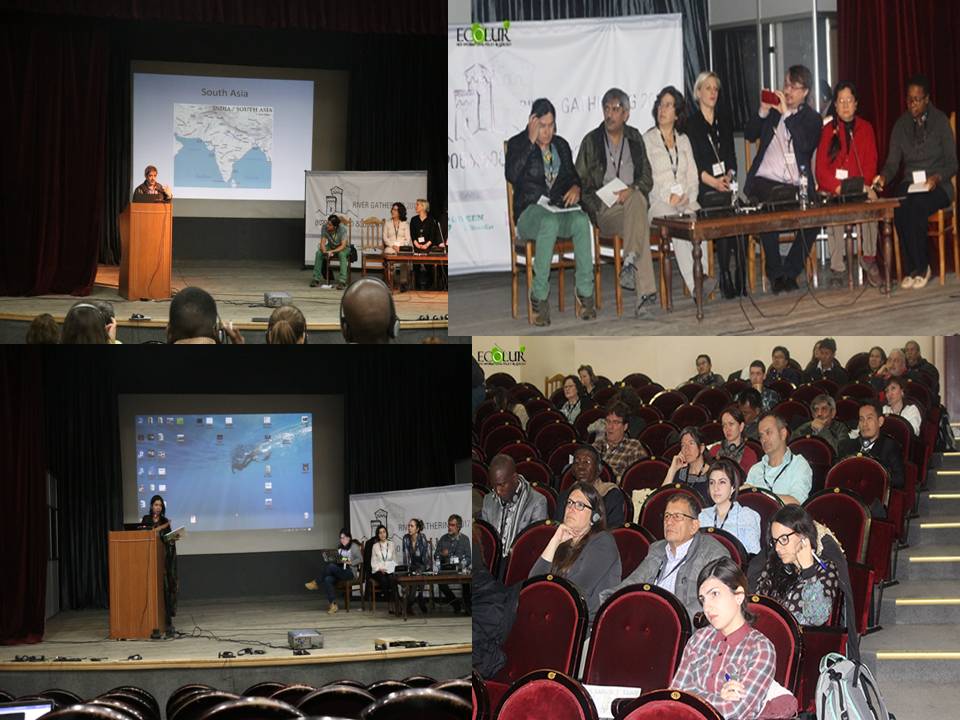
In a most significant event, some 85 river and dam activists from 40 countries and all continents gathered in Tbilisi, Georgia (on border between Asia and Europe, between Black and Caspian Sea) during March 27-31, 2017 to share experiences about their efforts to protect the world’s rivers and join their struggles against destructive hydropower projects. The meeting was organized by CEE BankWatch Network (active in 12 countries in Eastern and Central Europe) and International Rivers.

dahlich

Eight persons from South Asia, including those from India, Pakistan, Nepal and Bangladesh joined the meeting to share experiences from the region. Indian participant included SANDRP coordinator (who was also in steering committee of the meeting) and Associate Coordinator Parineeta Dandekar. A number of participants from neighboring and nearby countries like China, Myanmar, Thailand, Cambodia, Mongolia and Russia also participated. Issues related to trans-boundary rivers, small hydropower projects and multiple projects on the same rivers, decommissioning of the dams, how to achieve free flowing rivers and importance of rivers in changing climate were some of the key issues discussed at the meeting.

Continue reading “DRP: 10 April 2017 (Activists from 40 countries & all continents meet for RIVER GATHERING in Georgia)”
Dams · Rivers

Rivers of Stories

Above: Sohni in Chenab, painitng by Manjit Bawa

To say that rivers hold great cultural significance for South Asia is stating the obvious. Also obvious is that the cultural legacy of rivers overpowers the religious narrative… which too, is not tied only to Vedic Hinduism. All faiths in the subcontinent have a deep connection with rivers which manifests in stories, lore, songs and poetry. While Suktas in Rigveda eulogizing rivers are known, actually breathtaking is the lyrical beauty of the verses which describe Sindhu or Indus as a “wild, magnificent white stallion, roaring and galloping through the Himalayas into the plains” or sometimes as a “loving mother cow, its calves following her from the steep mountain paths”. Continue reading “Rivers of Stories”

Dams · DRP News Bulletin

DRP: 13 March 2017 (20 Big Hydro Projects Costing Over 30K Crore, Stalled & Stressed: Piyush Goyal)

20 hydro projects stalled or stressed  The Power Minister Piyush Goyal on March 09, 2017 in a written statement has informed the parliament that as many as 20 under construction HPPs totalling 6,329 MW are either stalled or stressed in the country and Rs 30,147.08 crore has already been spent on them. These projects include 2,000 MW Subansiri Lower of NHPC Ltd, 500 Mw Teesta VI of Lanco Teesta Hydro Power Ltd, 120 MW Rangit-IV of Jal Power Corp, 300 Mw Panan of Himagiri Hydro Energy Pvt Ltd, 850 MW Ratle of GVK Ratle HEP Pvt Ltd, 100 Mw Sorang of Himachal Sorang Power Ltd and 960 MW Polavaram of Polavaram Project Authority.

Continue reading “DRP: 13 March 2017 (20 Big Hydro Projects Costing Over 30K Crore, Stalled & Stressed: Piyush Goyal)”
Dams · DRP News Bulletin

DRP: 6 Feb 2017 (MSPCB Directs Reduction in Water Supply to Polluting Industries)

Maharashtra SPCB cuts 40% water supply to Taloja industries After the pollution board identified that chemical effluents from common effluent treatment plant (CETP) at Taloja were polluting the Kasadi river, the Maharashtra Pollution Control Board (MPCB) have directed to Maharashtra Industrial Development Corporation (MIDC) to cut 40 per cent of the water supply to industrial plants from February 1.

According to the letter issued to the industrial plants, earlier they were receiving 24-hour water supply but after MPCB’s directive, the plants would not receive water from 12am to 8am, effective from February 1.

Last year fishermen from the local Koli community had complained of decline in 90 per cent of fish catch from Kasadi river due to pollution. They had also alleged of inaction by authorities despite several complaints.

To highlight their plight, the fishermen then collected water samples in August 2016 from the Taloja CETP pipeline areas discharging treated waste and samples from the banks of the Kasadi river, and submitted them for a water quality test at Navi Mumbai Municipal Corporation’s (NMMC) environmental laboratory.

The samples were found failing several crucial parameters and having high levels of chloride , which is toxic to aquatic life and impacts vegetation and wildlife. Several reports had also mentioned that the pumping of industrial waste into the river had raised pollution levels 13 times higher than the safe limit. 

Taking cognizance of the complaints, MPCB issued a notice to MIDC highlighting the pollution problem on Jan. 31 2017 and informing the MIDC that until the Taloja industrial area does not start online pollution monitoring, adequate water supply would not be provided to them. The plants have two months to comply or else further action would be taken.

Continue reading “DRP: 6 Feb 2017 (MSPCB Directs Reduction in Water Supply to Polluting Industries)”
Dams · DRP News Bulletin

DRP: 9 Jan 2017 (India Groundwater Continues to Decline: Govt Report)

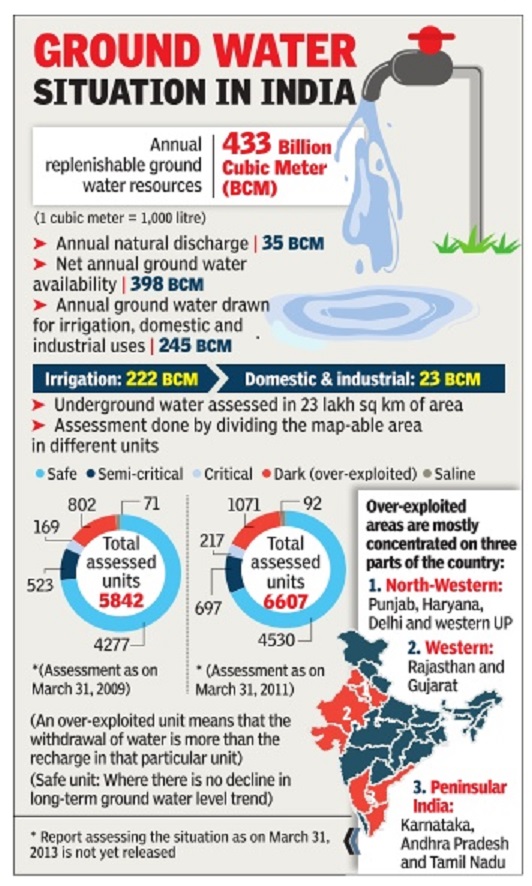
Ground water recharge plan is a non-starter Though the latest report, covering assessment of ground level situation as on March, 2013, is still being compiled, sources in the Central Ground Water Board (CGWB) hinted at further increase in the number of `dark’ (over-exploited) units. Decline in ground water level due to over exploitation of available resources had prompted the Centre in 2013 to come out with a master plan for artificial recharge of ground water, specifying how different states would go about it on priority. But majority of the states have, so far, not implemented the master plan. Only six states -MP, Gujarat, W-Bengal, UP, Chhattisgarh and Karnataka have taken follow-up actions despite the fact that the number of `dark’ units increased from 802 in March, 2009 to 1,071 in March, 2011. This not only says what the title mentions, but also shows how slow our official agencies are in even coming up with groundwater data, the latest data is for March 2011! 

Continue reading “DRP: 9 Jan 2017 (India Groundwater Continues to Decline: Govt Report)”
Dams · Sand Mining

River Sand Mining in India in 2016–III – Judicial Interventions

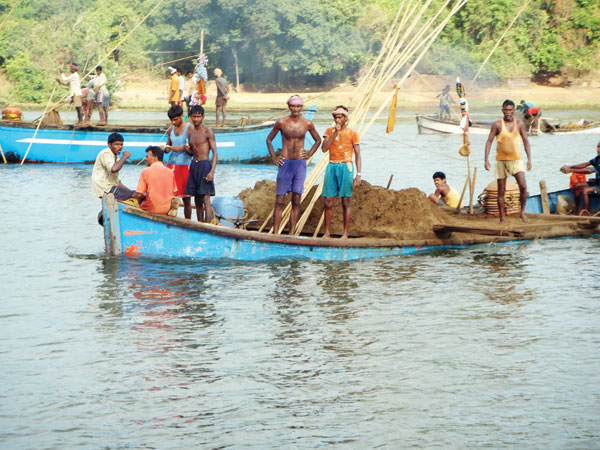
Ever since its land mark judgment[1] on February 27, 2012, the Supreme Court (SC) of India is not hearing any particular case pertaining to River sand mining regulation. In 2012 judgment SC had directed all Union Territories and State Governments to seek Environmental Clearances (EC) from Ministry of Environment, Forest & Climate Change (MoEF&CC) for mining minor minerals even in less than 5 ha or renew the same after prior approval from the MoEF&CC. Before this order, mining areas of less than 5 ha were exempted from EC enacted under Environmental Impact Assessment (EIA)-2006[2].

On Aug 5, 2013, the National Green Tribunal (NGT), has passed an important decision[3] ordering a ban on sand excavation across the country without permission from State Environment Impact Assessment Authority (SEIAA) and MoEF&CC. Further in November 2013, interpreting environment as Central Government subject and directing MoEF&CC to frame uniform sand extraction rules, the NGT prohibited State Governments[4] to form mining rules separately.

Since then, in pursuit of compliance to aforesaid orders, NGT and the High Court (HC) in several States have been frequently directing respective Government agencies to facilitate sustainable River sand removal. In this context, these courts have issued a number of orders and decisions all through 2016.

In fact, the sustained hearings in SC and NGT have resulted in first to Sustainable Sand Mining Policy draft 2016[5] and then to formation of Sustainable Sand Mining Guidelines 2016[6].

Continue reading “River Sand Mining in India in 2016–III – Judicial Interventions”

Dams · Rivers

Kirtinasha to Vidrupa: The Lesser River Goddesses of South Asia

Above: Narmada at Khalghat Photo: Parineeta Dandekar

“Ahalya, you will be an eternal dry river. Your path will be rocky and parched. You will receive water only when you meet the pious Godavari. That will be your only redemption”.

ahalya-1_072315084754
Ahalya by Raja Ravi Varma Source: Wikimedia Commons

Thus spoke Sage Gautam, pushing his wife Ahalya into a quagmire of dark desperation for ages. Ironically, it was Indra who, driven by lust, impersonated Sage Gautam and met Ahalya. In some versions of the story Gautam curses Ahalya into a stone slab, in some she becomes uncultivable, barren land. Till date, there exists a marriage custom in certain communities where the newly wed girl touches a dry stone by her feet.. it should remind her of her fate if she “strays” like Ahalya. But that is another story.

In the Western Ghats of Maharashtra where the Godavari rises, there is a tiny river called Ahalya meeting Godavari at the Trimbakeshwar Temple. If women and even Goddesses were made to suffer at the hands of patriarchy, how can rivers, the sacred feminine, be far behind?

Ahalya is “redeemed” now by her children. Sewage of Trimbakeshwar temple town flows in her. And she is covered under concrete. Ahilya Teerth Sangam is a holy place: it is unbearably filthy. Continue reading “Kirtinasha to Vidrupa: The Lesser River Goddesses of South Asia”

Dams · DRP News Bulletin

DRP: 31 Oct. 2016 (North to South India: Pharma Firms’ Waste Poisoning Rivers, People & Animals)

National The cost of cheap drugs The Bollaram-Patancheru region in Hyderabad, Telengana is famous for being one of the most polluted industrial areas in India. The periphery around the area has become so toxic one that 2001 article recommended that “most of the soils should be removed from agricultural production” in Patancheru. There is an increase in higher abortion rates to birth defects and stunted growth in children, as well as greater incidence of skin diseases in the region. In the district of Medak in the state of Telangana, Greenpeace in its several reports has identified that people, animals, crops and land have been afflicted by the pollution of industrial waste. Villagers report many serious health issues, including miscarriages, skin disorders, cancers and intestinal problems. The livestock suffer from the same problems. Most, not to say all, food grown in the village is unfit for human consumption. An inspection report published by CSE in November 2015 noted that most companies in Pattancheru-Bollaram were manufacturing pharmaceutical ingredients for which they did not have permission; using more water than the permitted limit and dumping more hazardous waste than allowed. Two of the units were operating without clearance from authorities.

In the case of the Ghaggar river in Punjab, all along its river course, one can witness foul smell, contamination of subsoil water, spread of water borne diseases and chances of damage of crop due to the presence of industrial chemical waste due to industrial waste from the industries in Punjab and Himachal. Media reports report similar occurrences around the Bhiwadi belt, where pharmaceutical companies discharge untreated effluents into drainages which then seep into the groundwater, making way into drinking water supply and agricultural land, resulting in environmental and health risks of unimaginable proportions.

In many low and middle income countries, weak laws and ineffective regulatory bodies have led to rising incidences of industrial waste flowing into ponds, lakes and rivers. If we examine the causes, the role of the pharmaceutical industry is similar to printing, chemical and paint industries. Pharma effluents contain hazardous chemicals which are leading to antimicrobial resistance or AMR where the human body is resistant to antibiotics, and thus, becomes susceptible to common infections. The very same ingredients used to manufacture antibiotics get mixed up with the bacteria during waste disposal, through our waters. Studies have shown that high levels of antibiotics are found in streams and lakes in the area close to many plant than in the body of human beings. The phenomenon is such that it is assuming the form of a serious public health issue in developing as well as developed countries. Over 700,000 people die every year because of antimicrobial resistance (AMR) all over the world. If this trend persists and resistance continues, McKinsey studies has shown that by 2050, around 10 million people globally will die because of AMR (Antimicrobial Resistance)

It is pertinent to note that New Delhi metallo-beta-lactamase superbug (NDM-1), a bacteria, first found in New Delhi’s public water supply in 2008, is resistant to almost all known antibiotics and has spread to over 70 countries in the world.

On the other hand, scientists from multiple institutes having done a detailed study on river pollution concluded that arsenic in the study areas poses potential health risk to the residents and indicates that the “ingestion of water over a long time could magnify the probabilities of cancer.  They collected and assessed concentrations of 27 trace elements in surface water samples from 48 sites of waterways (lakes, canals, and tributaries of major rivers) in four states: Karnataka, Tamil Nadu, Kerala, and Telangana. Analysis revealed that elements such as chromium, selenium, arsenic, iron, and manganese are the major pollutants, as their concentrations exceeded the acceptable national and international water quality standards in several sites of Vrishabhavathi, Ennore, Adyar, Cooum and Periyar rivers. Further, statistical analysis revealed that the Cauvery, Ennore, Adyar, Cooum and Periyar river basins are affected by various anthropogenic activities, leading to moderate-to-high pollution by arsenic, chromium, manganese, iron, and selenium. According to the scientists, potential pollution sources are industrial waste, sewage intrusion, paint industry waste, and automobile runoff. 

Continue reading “DRP: 31 Oct. 2016 (North to South India: Pharma Firms’ Waste Poisoning Rivers, People & Animals)”
Dams

Happy? Birthday? Narmada Bachao Andolan – Salutes to a 31-year-old movement

Above: 8-column front page top photo of Yatra carried by THE INDEPENDENT in Dec 1990

अब तो है तुमसे हर खुशी अपनी, तुम पे मरना है ज़िंदगी अपनी..”

"फिर चाहे जो भी कहे हमको ज़माना, कोई बनाये बातें चाहे अब जितनी"

Several times Ive felt that these lines from famous hindi song[i] from film Abhimaan sum up the feelings of many activists like me..  Majrooh Sultanpuri’s lyrics came to mind again as I thought of writing about the Narmada Bachao Andolan on Aug 16, 2016, after all it was completing 31 years! Continue reading “Happy? Birthday? Narmada Bachao Andolan – Salutes to a 31-year-old movement”

Dams · DRP News Bulletin

DRP: 16 Aug 2016 (When shall We Start Respecting Our Rivers & Provide Space to Them)

In absence of clear and strict laws to define the rivers zone and demarcate flood plains, our rivers are increasingly becoming subject to exploitation. When the river spaces of our National River Ganga & Yamuna River which flow through National Capital are not well protected, then the plight of other rivers across country can be understood.

This week, there are two news reports which again are highlighting this cause. Interestingly in both cases, legal fight is going on in green tribunal which indirectly deals with the issue though with no success so far. In  fist case, NGT has directed Govt. of Uttarakhand to demarcate floodplains of Ganga river from its origin in Gomukh till Roorkee, a 65-km long stretch in the state. The tribunal has posted the matter for the next hearing on Oct 20 and asked the state government to submit its compliance report by then. The bench also sought a report on the total number of hotels on the 65-km stretch from the govt. The green panel allowed the state govt to take the help of Roorkee-based National Institute of Hydrology for identification of flood plains. Construction on flood plains and inside river zones is a sure invitation to disaster such as Kedar Nath Floods in 2013 when human made infrastructures erected very much inside river zones were raised down like sand dunes  by enraged rivers. It is sad and even more worrisome that we have learnt nothing from such events.  

In second incident Govt. of Uttar Pradesh has drawn green tribunal’s ire over constructions in floodplainsThe apex court for environmental issues, expressed its dissatisfaction over the manner in which State Govt filed its report on the distance of various real estate projects from the Yamuna flood plain zone in the city. Coming down heavily in the state govt and various Agra authorities, Agra Development Authority (ADA) & irrigation department, it stated that “authorities were expected to act fairly and judicially while complying with its directions.” The tribunal appointed registrar general Mukesh Kumar Gupta as local commissioner and asked him to file a correct position of flood plains and the distances of the various projects. Meanwhile,  ADA has been asked to produce the original records before the tribunal on the next date of hearing, Aug 19.

Floods & floodplains are integral part of a river eco-system. Both has essential role to play in smooth functioning of multiple ecological processes that takes place throughout  the journey of a river. It is abused of floodplains that our cities are facing flood threats. It is surprising to see how govts have so far failed in protection of flood plain.

With incidents of excess rainfall, cloud burst & land slides happening at increased frequency, it is time to define our river zone and flood plain clearly in the own interest of human being.

Continue reading “DRP: 16 Aug 2016 (When shall We Start Respecting Our Rivers & Provide Space to Them)”