Dams · DRP News Bulletin

DRP: 1 Jan 2018 (NGT Ordered Com on Subansiri: MoEF Again Fails To Understand Conflict of Interest)

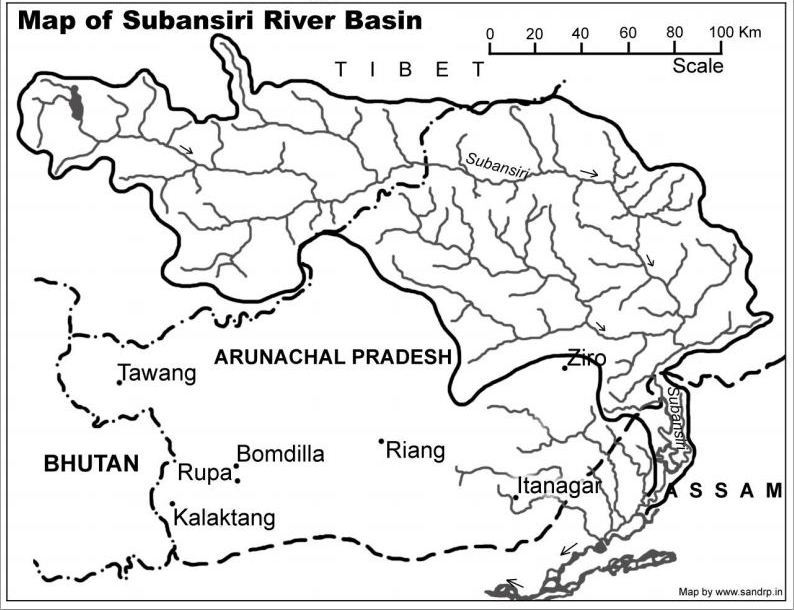
As per NGT’s October 16, order, the Ministry of Environment & Forest (MoEF) was asked to set up a “neutral” panel to objectively consider conflicting recommendations that have stalled the 2,000-MW Subansiri Lower Hydroelectric Project (HEP) on the Arunachal Pradesh-Assam border and come up with an “independent opinion” in three months.

The NGT said this was the only way to break the six-year logjam that has stalled a project vital to the “national interest.”

Contrary to this, MoEF on November 16, 2017 has set up a three-member panel with experts -who or their organisations- have all backed NHPC’s positions on the project in the past: Prabhas Pande, I D Gupta and P M Scott.

Continue reading “DRP: 1 Jan 2018 (NGT Ordered Com on Subansiri: MoEF Again Fails To Understand Conflict of Interest)”
Dams · DRP News Bulletin

DRP: 25 Dec 2017 (CAG Report Shows Ganga River Has No Hope Under NMCG)

Apart from mentioning Govt failure in checking Ganga pollution, the Comptroller & Auditor General’s (CAG) performance audit report on Ganga rejuvenation tabled in Parliament on December 19, 2017 specifically mentions that National Mission for Clean Ganga (NMCG) “could not finalize the long-term action plans even after more than six-and-a-half years of signing of agreement with the consortium of Indian Institutes of Technology”. The fact that NMCG does not have a “river basin management plan even after a lapse of more than 8 years of National Ganga River Basin Authority notification”, mentioned in the report also has great significance. 

It is surprising that NMCG is working without a river basin management plan or a long-term action plan. The CAG performance audit is also lacking. It rightly mentions that infrastructure to treat pollution has not been created but does no assessment whether the creation of infrastructure alone would revive the river.

Further, CAG audit does not look into the issues if lessons from past failures have been learnt, corrections done, independent scrutiny institutionalised, participatory governance achieved, and if this business as usual approach is going to achieve any better results even if all the money were spent, all the DPRs were sanctioned, all the meetings happened, all the manpower available and all the STPs constructed?

Hence it critical that CAG performance audit should have tried to address these issues. Can the state of Ganga improve without improving the state of tributaries? CAG does not even look at this issue.

The CAG report shows that this programme provides no real hope for better future of Ganga and Modi and his government will have a lot to answer when they go to polls in less than 1.5 years. It’s a serious indictment for the govt in general and Modi in particular since he has said right from the beginning that Ganga is their priority and all that they have tried is audited here. http://www.livemint.com/Politics/KW6MIOrOvMvZvEGeozwifJ/CAG-slams-Centre-for-failing-to-utilize-funds-for-Ganga-reju.html;                                 http://indianexpress.com/article/india/ganga-pollution-hc-orders-uttarakhand-govt-to-seal-establishments-polluting-rivers-4991923/; https://timesofindia.indiatimes.com/city/dehradun/building-of-ghats-crematoria-on-ganga-misses-nov-deadline/articleshow/62234114.cms https://www.nationalheraldindia.com/environment/pm-modi-fails-to-clean-up-his-mother-ganga

Continue reading “DRP: 25 Dec 2017 (CAG Report Shows Ganga River Has No Hope Under NMCG)”
Dams · Sand Mining

Riverbed Mining 2017 -II- States Look To Centre, Centre Dilutes Norms

In the first part we see, how under business as usual scenario, incidences of illegal riverbed mining going on unabated across the country. Reports suggest that Uttar Pardesh, Uttarakhand, Punjab, Madhya Pradesh, Maharashtra, Tamil Nadu, Karnataka, Andhra Pradesh, Telangana and Goa have emerged leading states affected by illegal sand mining.

In 2017, countless reports have exposed politicians-officials-mafia nexus responsible behind mindless plundering of scarce natural resource in open violations of norms. Similarly, throughout the year, there have been several violent attacks on villagers, activists, government officials by sand mafia. In a whole more than 26 people are killed in incidences involving illegal extraction of sand.

In this detailed second part, SANDRP presents account of various measures taken by different State Governments and Central Government to check the unsustainable riverbed mining practices. The third and concluding part would cover legal interventions initiated by respective Judicial bodies to reign in the unsustainable, unlawful sand mining activities across India.

Continue reading “Riverbed Mining 2017 -II- States Look To Centre, Centre Dilutes Norms”

Dams · DRP News Bulletin

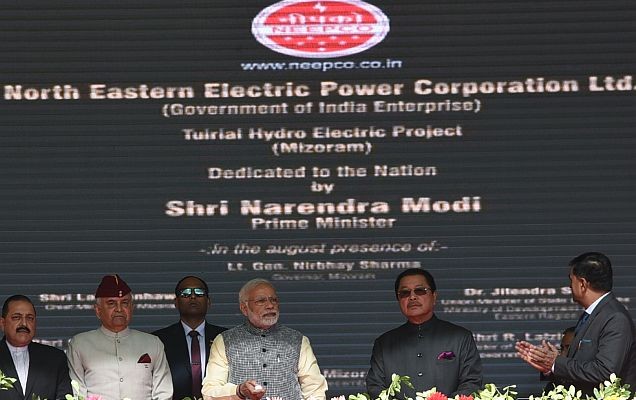
DRP: 18 Dec 2017 (Also Needed To Mention This About Turial HEP)

The Prime Minister, on Dec 16, 2017, while dedicating to nation the 60 MW Turial HEP, should have also mentioned:

– PUBLIC PROTESTS: The project faced strong protests from local people, so much so that work had to be stopped for over 7 years from 2004 to 2011. Even a day before PM dedicated the project, people took out a protest march.

– NO PUBLIC CONSULTATION:  One of the reasons people protested was that the project did not have any proper public consultation.

– NO PROPER IMPACT ASSESSMENT: Another reason for people’s anger was no proper environment or social impact assessment, or proper compensation and rehabilitation.

– HIGH COST: The project cost was Rs 368.72 Crores, but now already has gone above Rs 1441 crores officially, likely to go up further. That means per MW cost is already above Rs 24 crores, one of the highest in the country. WHO WILL PAY THE HIGH COST OF ELECTRICITY FROM THE PROJECT?

– HUGE COST ESCALATION from Rs 369 crores to over Rs 1440 crores

– HUGE TIME OVER RUN: The project was supposed to be completed many decades back but  has seen huge time over run, not only because of protests, but also because of inadequate mobilisation by the contractor, poor approach road, power house slope failure, among many other reasons.

This latest project once again shows that big hydro is no longer viable, one wishes, the Prime Minister would also highlight these realities in his speeches.

Continue reading “DRP: 18 Dec 2017 (Also Needed To Mention This About Turial HEP)”
Dams · DRP News Bulletin

DRP: 4 Dec 2017 (Protests Against Pancheshwar Dam in Champawat, Pithoragarh, Almora, Delhi)

Protests and controversies around Pancheshwar Multipurpose Project (PMP) are only growing louder and wider. While Expert Appraisal Committee (EAC) Rivers Valley Project in unnecessary hurry considering the project tomorrow (05 Dec. 2017)  http://environmentclearance.nic.in/writereaddata/Form-1A/Agenda/2811201745T4GD5I10thAgendaEACHydro05122017.pdf

Villagers and local groups people also continue raising their concerns and objections against 5040 Mw dam project. Today, scores of villagers, environmental groups including regional political party have protested at Jhulaghat in Champawat, Pithoragarh, Almora and in Delhi demanding EAC to listen to the voices of local people and groups.

Continue reading “DRP: 4 Dec 2017 (Protests Against Pancheshwar Dam in Champawat, Pithoragarh, Almora, Delhi)”
Dams · DRP News Bulletin

DRP: 20 Nov 2017 (GLOBAL SLOW DOWN IN HYDRO POWER PROJECTS)

It is getting increasingly clear that days of large hydro power projects are coming to an end. While in India large numbers of big hydro power projects are stalled, this week there was news from Meghalaya, Arunachal Pradesh, Sikkim and rest of North East India of cancellation or stoppage of hydro power projects. http://www.sentinelassam.com/story/main-news/0/subansiri-project-not-to-see-light-for-4-years/2017-11-12/1/325720#.WgpysVuCzIV

Pancheshwar project on India Nepal border continues to face opposition. https://timesofindia.indiatimes.com/city/dehradun/traders-oppose-pancheshwar-dam/articleshow/61705308.cms  

Nepal this week cancelled the agreement for 1200 MW Budhi Gandaki hydropower project. In Bhutan, the Prime Minister declared that they are in no hurry to go ahead with new hydropower projects. http://kathmandupost.ekantipur.com/news/2017-11-13/govt-scraps-budhigandaki-project-with-chinese-company.html  

In Pakistan, the agreement for the massive 4500 MW Diamer Bhasha hydropower company with China has fallen through. https://economictimes.indiatimes.com/news/defence/chinas-strict-conditions-force-pakistan-not-to-include-diamer-bhasha-dam-in-cpec-officials/articleshow/61660935.cms

In Mynmar, too the agreement with China for massive hydropower project stands cancelled. http://www.reuters.com/article/us-china-myanmar-energy/china-says-will-keep-talking-to-myanmar-over-stalled-dam-scheme-idUSKBN1D80X4?il=0

This is further reinforced by study by Dr. Luke Gibson, Honorary Assistant Professor of the School of Biological Sciences at the University of Hong Kong, which concludes that among so called green energy sources, hydropower is most dangerous. https://phys.org/news/2017-10-green-energy-hydropower-dangerous.html#jCp

Continue reading “DRP: 20 Nov 2017 (GLOBAL SLOW DOWN IN HYDRO POWER PROJECTS)”
Dams · DRP News Bulletin

DRP: 13 Nov 2017 (EAC Defers To Clear Pancheshwar Dam But Ignores People’s Voices)

The minutes of expert appraisal committee (EAC) shows that Environmental Clearance  (EC) for the Pancheshwar Multipurpose Project has been deferred. The minutes were uploaded after 16 days of EAC meeting conducted on Oct 24, 2017. http://environmentclearance.nic.in/writereaddata/Form-1A/Minutes/09112017PCU6UH80Finalminutesof9thEACmeeting1.pdf

In the minutes, the EAC said that it would require to study the Environmental Impact Assessment (EIA) report for the Nepal portion of the project to get a holistic view. It also directed the project proponent to obtain wildlife clearance as the project was located 300 metres from the Ascot Wildlife Sanctuary. 

It is worth to mention that the Pancheshwar dam with a height of 315 meters is world’s second tallest dam proposed in ecologically sensitive region. Scores of media reports have underlined the unfair and politically influenced Environment Public Hearing (EPH) process, conducted during peak monsoon month in landslide ridden and disaster prone region. The venue of the EPH was also several kms away from villages going to be affected thus depriving the local people participation in essential decision making process. As a result the concerns and voices of villagers to have their voices heard. The EIA report of the project has also not mentioned several grave environmental issues of GOLFs events, cloud bursts, earthquakes etc in the catchment of the dam let alone the question of impact on endangered wildlife like Mahseer fish. 

Continue reading “DRP: 13 Nov 2017 (EAC Defers To Clear Pancheshwar Dam But Ignores People’s Voices)”
Dams · DRP News Bulletin

DRP: 6 Nov 2017 (NGT Asks For Fresh Appraisal Of Lower Subansiri Hydro Project)

In a remarkable development, the National Green Tribunal (NGT) on October 24 has suspended the clearances given to the 1750-megawatt (MW) Demwe Lower Hydroelectric Project  (HEP) planned on the Lohit river in Arunachal Pradesh.

In its detailed order, released on October 27, the NGT ruled that the Environment Minister as Chairperson of the National Board for Wildlife (NWBL), a statutory body constituted under the Wildlife Protection Act, 1972, could not “just brush aside” the views of the majority of NBWL standing committee members.

Suspending the clearances given by the Centre and the state govt, the NGT order added that “the decision taken by the Standing Committee is not in accordance with established principles of law and hence the Standing Committee shall reconsider the issue and pass appropriate orders within a period of six months from the date of the judgment”.

Environmental clearance for the project was given by the Union environment ministry’s Expert Appraisal Committee (EAC) for river valley and hydroelectric projects back in 2009. An in-principle forest clearance for the Lower project was given in February 2012 and agreed upon in 2013.

However, the in-principle clearance of the project was opposed by a majority of the Standing Committee of the NBWL but subsequently cleared by the then-environment minister of state (independent charge), Jayanthi Natarajan, who was also the chairperson of the Standing Committee.

Natarajan is currently under the CBI’s scanner for alleged anomalies in clearance given for diversion of land in Saranda forest in Singhbhum district, Jharkhand to mining company Electrosteel during the previous UPA regime.

The NGT said that it is “of the view that either the Chairperson (Natarajan) should have given a proper reason for rejecting the objection of the majority of the non-official members or the decision ought to have been arrived at based on the opinion of the majority of the members. Even though the Standing Committee is a recommendatory body, the same being a statutory committee, is bound by the laudable principles of justice and fair play”.

Continue reading “DRP: 6 Nov 2017 (NGT Asks For Fresh Appraisal Of Lower Subansiri Hydro Project)”
Dams · DRP News Bulletin

DRP: 30 Oct 2017 (Residents of Chennai Rally & Form Human Chain to Protect Wetlands)

Over 250 residents along with environmentalists, activists and members of civil societies formed a human chain at Elliot’s beach on Oct 28, asking State Govt to protect the wetlands, rivers, environment in Ennore creek area from willful destruction of govt agencies and industries. The human chain was joined by all the walk of society irrespective of age group from kids to senior citizens who were holding placards that explain the sorry state of Ennore Creek. http://www.thenewsminute.com/article/residents-chennai-form-human-chain-save-ennore-creek-70724

The Coastal Resource Centre and members of the Save Ennore campaign organized the human chain to raise awareness in the city ahead of the monsoons about the encroachments in Ennore Creek, a backwater located in Thiruvallur district. Residents from all 52 villages in Ennore, who have witnessed the ecology die a slow death, also joined the rally, hoping that the govt would react.

Industrial effluents from the thermal power stations here and domestic sewage from North Chennai have killed various fish species. More than 1000 acres of Kosasthalaiyar River’s backwaters have already been lost due to the deposition of fly ash by the Tangedco units. http://chennai.citizenmatters.in/chennai-human-chain-ennore-creek-encroachment-2862

As per the online petition, ten Lakh Chennai residents are at higher risk of disastrous flooding because Govt of Tamil Nadu has allowed Kamarajar Port to convert 1000 acres of Ennore wetlands into industrial real estate. Chennai has barely recovered from the 2015 floods. Don’t let Chennai get flooded again.

Continue reading “DRP: 30 Oct 2017 (Residents of Chennai Rally & Form Human Chain to Protect Wetlands)”
Dams · DRP News Bulletin

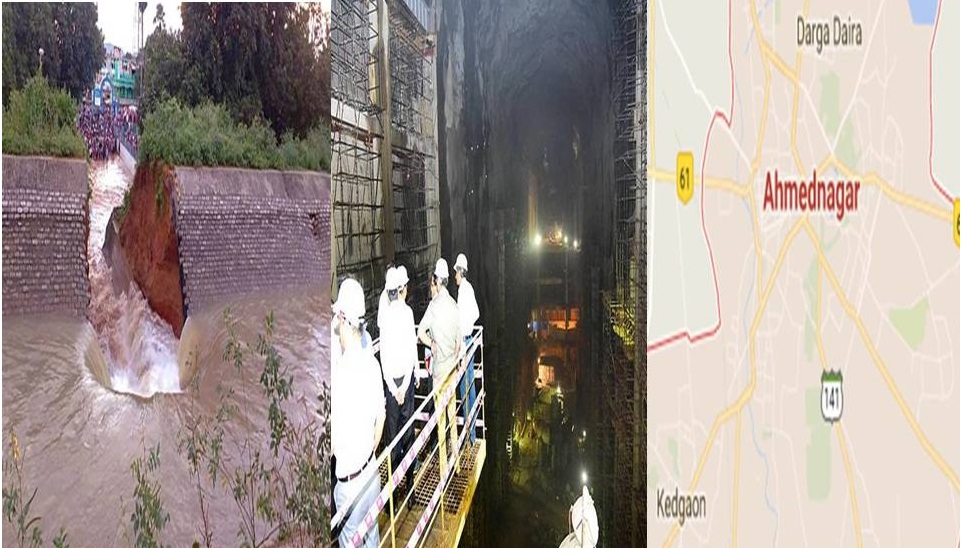
DRP: 25 September 2017 (Three Incidents of Canals & Dam Breach In Two Days, Who Is Responsible?)

This week there have been three incidents of canals and dam breach in three States raising concern over quality of construction of dams and canals in India. 

All these incidents are a result of negligence exercised by concerned departments. These incidents also proves that the quality of construction of dams and canals in India is not as par standard. 

It is surprising that no government official or private contractor has been held responsible for these avoidable incidents. To avoid recurrence of such incidents, governments of these states bring the involved officials and persons to justice. It also strictly monitor the quality of construction to avoid wastage of public money. The safety of the public is also uncompromising and hence should not rush through the irrigation projects without proper consultation care. 

Continue reading “DRP: 25 September 2017 (Three Incidents of Canals & Dam Breach In Two Days, Who Is Responsible?)”