A detailed review of functioning of Union Ministry of Environment and Forests’ (MoEF) Expert Appraisal Committee (EAC) on River Valley Projects (RVP) for 2024 by SANDRP shows that the committee or for that matter MoEF has almost non-existent rejection rate. Even when a project is not cleared, when it applies again, it gets clearance, whether the application if for stage I (Terms of Reference) or Stage II (Environment Clearance- EC) clearance. Even in some cases like Pump Storage Projects (PSP) in Western Ghats or the Hydropower projects in disaster prone Himalayas, including the disaster-stricken projects like the 1200 MW Teesta III projects in Sikkim, the scrutiny including field visits by the EAC Sub committees is minimal, not worthy calling even scrutiny.
Continue reading “DRP 200125: Whither Env Clearance Rejection rate from Expert Appraisal Committee or MoEF?”Tag: Interlinking of Rivers
DRP 130125: Will Judiciary take these matters to logical conclusion?
There are at least four cases in this past week where the judiciary has used strong words or taken up crucial issues in water, dams, hydropower projects, wetlands and riverbed mining related issues. In the case related to the safety of Mullaperiyar dam on Kerala-TN border, the Supreme Court has prodded the Centre to wake up from the slumber to ensure that National Dam Safety Authority quickly forms a panel to examine the project. This case has wide ranging repercussions not only about this project, but also functioning of NDSA and other bodies under the Dam Safety Act 2021. Indeed, there is huge question mark as to what extent NDSA and DSA has made our dams any safer.
Continue reading “DRP 130125: Will Judiciary take these matters to logical conclusion?”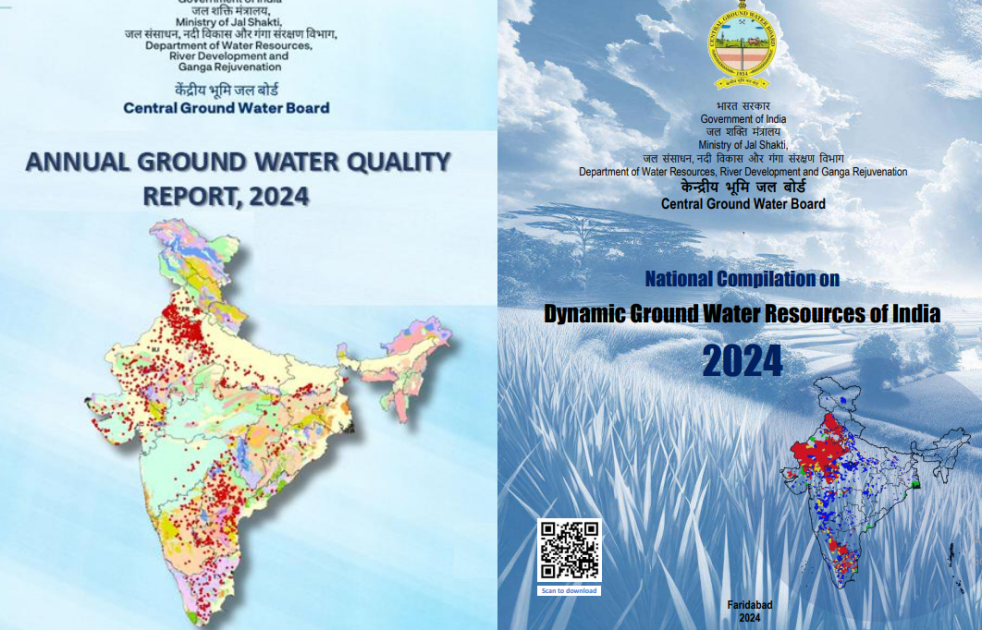
DRP 060125: Concerns about & Contradictions in CGWB’s Reports
The Central Ground Water Board (CGWB) released two important reports last week. While the Annual Ground Water Quality Report 2024 reveals rise in nitrate fluoride, arsenic and uranium contimination of groundwater resource in India, the Dynamic Groundwater Resource Assessment Report 2024 claims substantial rise in annual groundwater recharge and decline in extraction of the resource.
As per the first report, the number of districts affected by high nitrate levels in groundwater has gone up to 440 (near 56% of all 779 districts in country) from 359 found in 2017 assessment which means in 7 years 81 more districts have been found having excessive nitrate levels in groundwater. This should concern us from a number of points of view.
Continue reading “DRP 060125: Concerns about & Contradictions in CGWB’s Reports”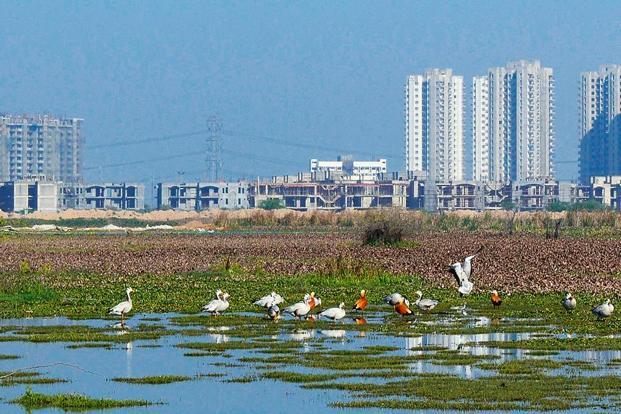
DRP 231224: Can we expect the Supreme Court to be more effective this time on Wetlands?
(Feature Image: The Basai wetlands in Gurugram. Photo by Pankaj Gupta at Live Mint)
It is indeed good to see an Editorial in a newspaper on the important issue of wetlands protection and rejuvenation. The Supreme Court’s order on wetlands last week shows its concern over the threat to wetlands as a natural feature of the environment that is under serious threat. The court ordered the protection of about 30,000 wetlands (each with area more than 2.25 ha) over the 201,503 protected by an order which it issued in 2017, and asked states to ensure their demarcation and ground-truthing which involves closer verification, within three months.
The order is in response to a PIL that said the Central government had abdicated its functions under the Environment Protection Act, 1986, to protect the wetlands. The petition also sought the identification and protection of around 5,55,557 wetlands which are less than 2.25 hectares in size. The court is likely to consider the proposal in March. One hopes the SC also gives effective orders for their protection.
Continue reading “DRP 231224: Can we expect the Supreme Court to be more effective this time on Wetlands?”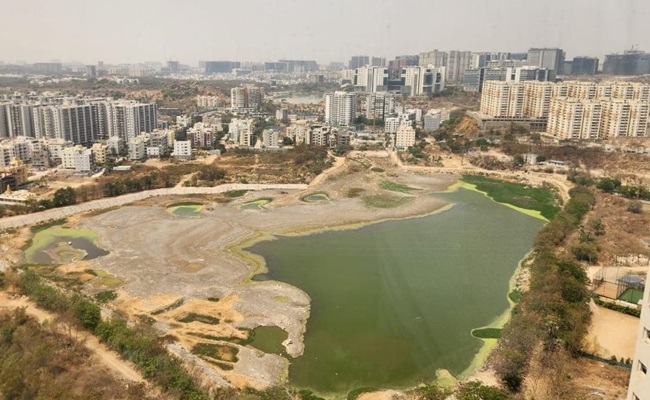
DRP 020924: HYDRA to protect water bodies in Hyderabad – a landmark move?
(Feature Image: An analysis of satellite imaging of 54 lakes taken in 1979 and 2023, secured by the HYDRAA from the NRSA shows that 40 lakes or nearly 75 per cent of lakes have shrunk by half. (Image: Twitter/DC)
The Hyderabad Disaster Response and Asset Monitoring and Protection Agency, or Hydra was established under GO 99, dated July 19 2024. A task the agency has taken up in all seriousness is protection of water bodies in the Hyderabad Capital Region (it includes 4 districts). To begin with it has started demolition of buildings illegally built inside the Full Tank Area (FTL) and Buffer area of the water bodies.
In July, Telangana Chief Minister Revanth Reddy replaced the Enforcement, Vigilance and Disaster Management (EVDM) wing of the government with Hydra, a body mandated to tackle illegal encroachment on water bodies in the Greater Hyderabad Municipal Corporation (GHMC) limits and surrounding areas. Its strength was upgraded from around 800 to 2,200 and its officials came directly under the principal secretary, municipal administration and urban development or the CM himself. “Hydra will also ensure the protection of water bodies in and around Hyderabad,” former EVDM commissioner and Hydra chief A V Ranganath said during its inception.
Continue reading “DRP 020924: HYDRA to protect water bodies in Hyderabad – a landmark move?”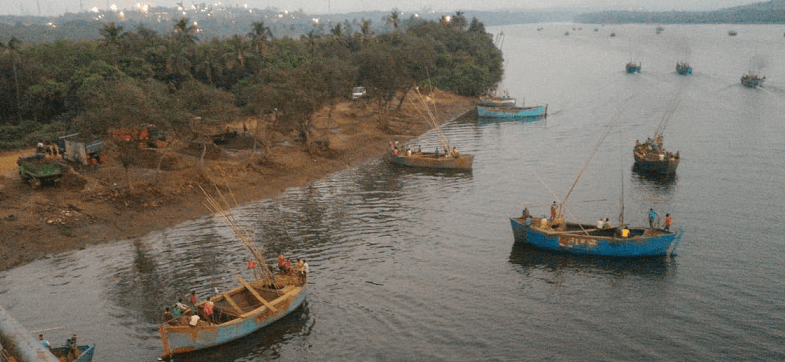
DRP 190824: Goa River group win important battle against illegal sand mining
(Feature Image: Sand extraction in Mandovi river near Candola bridge. Image Credit: GRSPN)
This is indeed a rare and important victory by Goa River Sand Protectors’ Network (GRSPN) in their long fight against illegal river sand mining in Goa. Following a petition in the National Green Tribunal the state government has agreed to recall all the environment clearances granted by the State Environment Impact Assessment Authority.
Goa government has agreed since these clearances were given without a District Survey Report (DSR) as required under the sustainable sand mining guidelines of MoEF. While this may sound like a temporary respite based on some technical violation, the fact is most sand mining clearances across India are given without a credible DSR, but it has not been possible to stop such violations elsewhere.
Continue reading “DRP 190824: Goa River group win important battle against illegal sand mining”
DRP 010724: Time for independent review of Polavaram Project?
(Feature Image: Work going on Polavaram Project at Polavaram in West Godavari. DC Image: Narayana Rao, Dec. 2020)
The sequence of events over the last two decades that ended this week with white paper on Polavaram project being released by the newly elected Andhra Pradesh govt underlines urgent need for an independent assessment of the multi-state Polavaram Project on Godavari River in Andhra Pradesh.
The story of the project similar to, though a bit longer than that of the ill-fated Kaleshwaram Project of the neighbor Telugu speaking state of Telangana. Both are ill-conceived, expensive, high impact projects on same Godavari River, both taken forward without sufficient studies and implemented without sufficient checks and balances.
Continue reading “DRP 010724: Time for independent review of Polavaram Project?”
DRP 240624: India to help Bangladesh conserve Teesta River
The news this week that India and Bangladesh have agreed for India to help Bangladesh conserve the Teesta River that flows from India to Bangladesh. We hope this development is taken to its logical conclusion soon in terms of implementation of the project as soon as possible. This has the potential to not only two nations working together on conservation and rejuvenation of the Teesta River, but also possibly other 53 shared rivers. However, it would have been better if the W Bengal government would have been briefed, taken into confidence and involved in the discussions. History tells us that the cooperation efforts do not succeed without the involvement of all the stakeholders.
The formation of Joint Technical Committee to initiate discussions for the renewal of the Ganges Water Sharing treaty 1996 that will expire in 2026. One hopes that all these happen with a benevolent disposition from India as this has the potential of creating a much stronger bond between the two countries. A good example is the 1996 Ganga treaty that was also signed with a benevolent disposition. This move can also help strengthen the relations across South Asia as both Nepal and Bhutan are hoping to export hydro-electricity to Bangladesh via India.
Continue reading “DRP 240624: India to help Bangladesh conserve Teesta River”
DRP 120224: Report of Parl Com on Yamuna wants 23 cumecs water in the river
(Feature Image: Flowless Yamuna downstream Vyasi HEP, Dehradun in June 2023. Bhim Singh Rawat/SANDRP)
In a welcome move, the Parliamentary Committee report on Yamuna River has suggested at least 23 cumecs (Cubic Meters for Second) water needs to be released from Hathnikund barrage at least in nine non monsoon months from Oct to June as per the recommendation of the National Institute of Hydrology, a govt of India body. The report has said that almost no water is being released for the river from the Wazirabad barrage in Delhi.
The 10 cumecs water now being released (how regularly even this is being released is also a question) is inadequate as most of it evaporates or percolates soon after it is released. The committee has asked the Union Jal Shakti Minister to take urgent steps in this direction. In fact, the committee should have given a time limit for this. We hope these urgent steps will be taken soon.
Continue reading “DRP 120224: Report of Parl Com on Yamuna wants 23 cumecs water in the river”
DRP 290124: Wetlands and Human Wellbeing: So little reflected in wetlands governance
(Chest nut clutivators removing water hycinth from Giri taal of Kashipur in US Nagar, Uttarakhand in April 2023. Bhim Singh Rawat/SANDRP)
As the world approaches the World Wetlands Day on Feb 2, we notice a proliferation of news related to wetlands, but mostly bad news in this week’s DRP NB: Loktak lake in Manipur facing impact of inland waterways project, the Supreme Court having to intervene for the Futula lake in Nagpur, TN Govt telling NGT that 38% of Pallikaranai marshland is under encroachment, in Bangalore, NGT is asking for response from KSPCB and others regarding the lake buffer zone encroachment. There is also a lot of bad news about the worsening state of our rivers, including Ganga.
One piece of good news is that people have come out with their own plan for restoration of Ennore wetland in TN. In Assam, Maguri Motapung Bill is regaining biodiversity after earlier being polluted by oil spill, but that is only control of damage earlier. Similarly, while it is good news that SC has intervened to protect Futula lake in Nagpur, but the fact that the govt wanted to encroach on it in the name of “temporary” construction is not at all good news.
Continue reading “DRP 290124: Wetlands and Human Wellbeing: So little reflected in wetlands governance” SANDRP