River Biodiversity

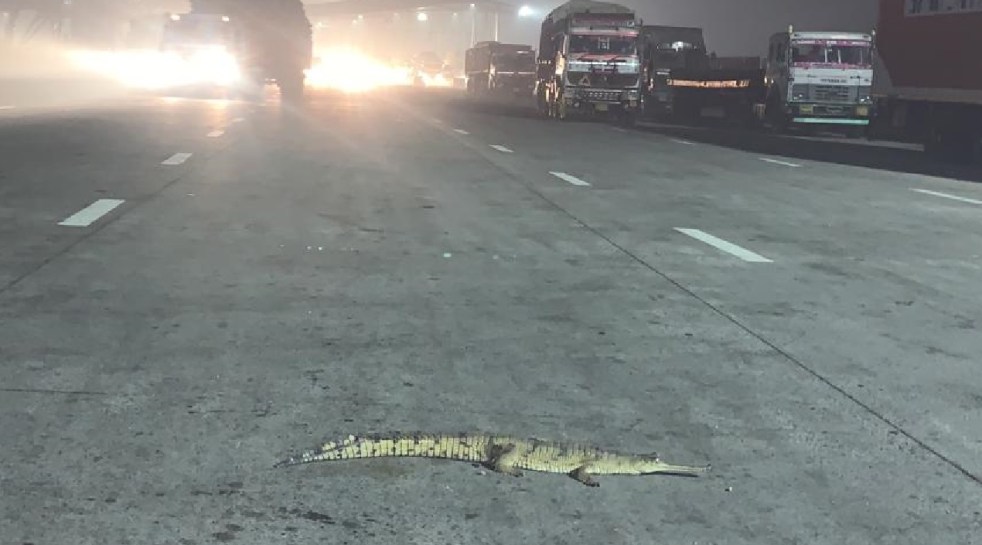
When a gharial landed in a cow shelter in Delhi

It’s been more than six months since I got a Whatsapp video forward from my friend Yayati Bhardwaj along with a message in Hindi about some cow vigilant rescuing a ‘crocodile’ from Swaroop Nagar area of Delhi and sending it to a cow shelter in Narela, a bustling town in North West Delhi bordering Haryana.

It was around 07:00 pm on November 12, 2021 when busy in market, I had quick glance over the video. It was not very clear and shot with loud Punjabi music playing in the background. It showed some monitor lizard kind reptile lying motionlessly on ground with wheat grains scattered around it. At first sight, I found nothing to be surprised or worth responding.

Continue reading “When a gharial landed in a cow shelter in Delhi”
DRP News Bulletin

DRP NB 30 May 2022: Govt not serious about Rain Water Harvesting

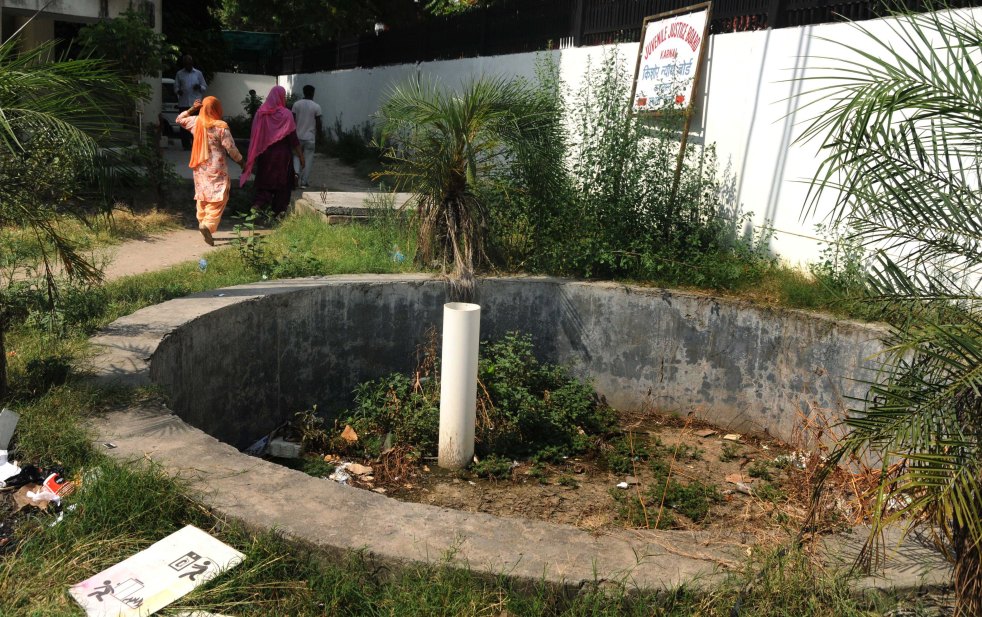
(Feature image: Condition of a RWH structure in Karnal. The Tribune)

As India Meteorological Department (IMD) declared onset of 4 month South West Monsoon in Kerala on May 29, 2022 and published map of monsoon onset in rest of the country, key highlight of the news this week is how callous, non-serious is the govt in harvesting the rain where it falls. This is in spite of all the sloganeering about harvesting rain where and when it falls right from Prime Minister to downstairs. As they say, our actions speak louder than our words. The news came from Delhi and Karnal (Haryana) that in both states the rainwater systems even in government premises are lying defunct if all built.

The story would be similar from rest of the country. This also shows how serious is the government in working towards sustaining groundwater, India’s water lifeline as the biggest help GW can get is from harvesting rain where it falls, when it falls. This is particularly pertinent in the context of changing rainfall pattern with changing climate. If we had systems in place to harvest rain when and where it falls, it would also help reduce the flood peaks significantly. But until the government shows it is serious through demonstrable evidence of functioning rain water harvesting systems all across the river basins across India, there will be little morale authority in government pushing rest of us working to harvest rain, where and when it falls.

Continue reading “DRP NB 30 May 2022: Govt not serious about Rain Water Harvesting”
Wetlands

Uttar Pradesh Govt Builds University in Suraha Tal Wetlands

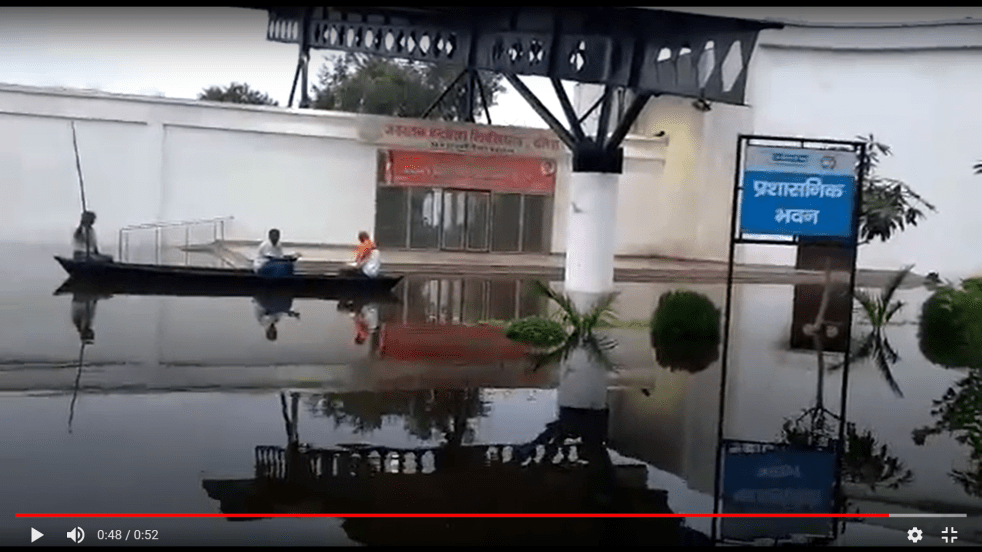
(Feature Image: Screen shot of video report showing boats plying inside flooded JNCU campus in Oct. 2019. Source: Balia Express)

In blatant defiance of Wildlife Protection Act, 1972, Wetlands (Conservation & Management) Rules, 2017, Suraha Tal Eco-Sensitive Zone Notification 2019, National Mission for Clean Ganga Notification 2016, the Uttar Pradesh State Government has allowed and funded construction of a college in core zone of Suraha Tal wetlands, a notified bird sanctuary in Balia District.

Continue reading “Uttar Pradesh Govt Builds University in Suraha Tal Wetlands”
DRP News Bulletin

DRP News Bulletin 16 May 2022: Welcome effort at Groundwater monitoring in India’s villages

(Feature Image: Women use an open source groundwater monitoring tool that enables collection of water level data of wells and its collation on a web platform for easy access by all. Source: FES/IWP)

The Groundwater (its closer to dug well monitoring than full GW monitoring) Monitoring Campaign using the Groundwater Monitoring Tool (an App) across the villages in India started two years ago by the Foundation for Ecological Security (FES) as reported by the India Water Portal seems like a much needed kind of campaign to monitor groundwater levels (& quality where that is also being monitored) across the villages in India. The presentation on the India Observatory (an initiative of FES) website lists some 40 very highly credible organisations from across India in 2020 when the GWM campaign started. This is certainly very welcome initiative that has huge potential to improve India’s groundwater management.

Continue reading “DRP News Bulletin 16 May 2022: Welcome effort at Groundwater monitoring in India’s villages”
DRP News Bulletin

DRP NB 9 May 2022: Forensic Team report: Michigan 2020 Dams failures were preventable

A Forensic engineering Team appointed by the USA’s Federal Energy Regulatory Commission post the May 19, 2020 failure of Edinville and Sanford Dams in Michigan state of USA has published a 502 page comprehensive report on the dam failure within less than two years of the disaster. The full report published on May 4, 2022 is in public domain and has concluded that the dam failures were foreseeable and preventable.

There are a number of things we can learn from this. Firstly that there are such credible independent assessment of dam failures, we have none in India even after multiple dam failures each year. Secondly, such assessments are promptly in public domain. Thirdly, the reports are completed in less then two years. We have none of these. Even the Dam Safety Act passed by the parliament does not have provisions for any of these.

There are a lot of implications for India here. It means for example that we will never know the real reasons for the dam related disasters. Secondly, we won’t be able to learn any lessons. Thirdly we will never be able to improve the governance of our dams and rivers. Fourthly, we won’t be able to fix accountability.

There is so much at stake related to governance of our dams, but we seem completely unconcerned about it. There is a lot we can learn from others here.

Continue reading “DRP NB 9 May 2022: Forensic Team report: Michigan 2020 Dams failures were preventable”
DRP News Bulletin

DRP NB 2 May 2022: Sand a strategic resource like water, rethink its exploitation: UN

A United Nations report released this week on Apr 26, 2022 has recommended that river sand needs to be considered by the governments as a strategic resource like water for its multiple roles in the environment and its extraction and use needs to be rethought. The UNEP report says sand is the second most exploited resource. And yet there are no credible governance guidelines or policies for the exploitation and use of this report, nor assessment of impact of unsustainable exploitation.

The report says: “Extracting sand where it plays an active role, such as rivers, and coastal or marine ecosystems, can lead to erosion, salination of aquifers, loss of protection against storm surges and impacts on biodiversity, which pose a threat to livelihoods through, among other things, water supply, food production, fisheries, or to the tourism industry.”

Continue reading “DRP NB 2 May 2022: Sand a strategic resource like water, rethink its exploitation: UN”
Dams · Ganga

11 Gangetic Dolphins Found Dead since Jan 2021

Despite being declared National Aquatic Animal and provided highest level of protection under schedule I of Wildlife Protection Act, 1972, there are frequent incidents causing unnatural deaths to Gangetic river dolphins (Platanista Gangetica) in India.  

Previously SANDRP documented deaths for 10 Gangetic dolphins due to man-made reasons including getting trapped in canals, fishing nets and hunting during 2020. Here we are tracking the issue January 2021 onwards.

Continue reading “11 Gangetic Dolphins Found Dead since Jan 2021”
DRP News Bulletin

DRP NB 18 April 2022: Clean Hydro does not make much sense in India: Experts

(Feature image:- Following massive landslides in Kinnaur, Himachal Pradesh sees growing protests against hydropower projects. DTE)

As the following report from Energy Monitor this week says, according to international experts, the idea that hydro is clean does not make sense. They say that for a number of reasons including for the social risks, environmental risks and the increased emissions of methane due to rotting of organic matter flowing in the river and settling in the reservoirs. In spite of some apparent inherent misconceptions, this part of the report is sound and should be a wakeup call for the supporters of big hydro in India. As the report suggests this is particularly true in the context of climate change. Indeed, this has been our own experience in India with increasing disasters related to hydro projects and the increasing unviability of the hydro projects in India.

Continue reading “DRP NB 18 April 2022: Clean Hydro does not make much sense in India: Experts”
Sand Mining

North India: 136 people killed in sand mining violence & accidents in 16 months

(Feature Image: 1 killed, 17 injured after a sand truck toppled in mine pit in Kosi river, Ram Nagar. Source Amar Ujala, 30 Jan. 2021)

Among the many issues affecting Riverbed sand mining is the issue of violence of various types. Stories of such violence keeps coming up from all across the country all the time. However, there is no comprehensive picture emerging about this violence. SANDRP has been trying to compile available information about instances of various types of violence related to river bed mining since last few years.

Tracking the issue, this year we have prepared detailed accounts along with summary reports in a Zone wise format. This first part is a summary report of the detailed account on North Zone states including Uttar Pradesh, Haryana, Uttarakhand, Punjab, Delhi, Jammu & Kashmir and Chandigarh and covers sand mining violence and deaths that took place between December 2020 and March 2022, following after our earlier report that carried the figures for period upto Nov 2020. The successive parts will cover East & North East, West and South Zones. SANDRP’s previous report detailing nearly 193 human deaths between January 2019 and November 2020 on account of illegal sand mining activities can be seen here.

Continue reading “North India: 136 people killed in sand mining violence & accidents in 16 months”
Dams, Rivers & People

DRP NB 28 Mar 2022: Is Climate Change making big dams MORE dangerous?

That big dams are dangerous, disaster prone is well known, the parliament having passed the Dam Safety Act is just one of the clear evidence of it. However, are big dams becoming even MORE dangerous in changing climate? All the science and also practical evidence seems to suggest that. This is also what the SCROLL report mentioned below concludes.

What is shocking is that the CWC (Central Water Commission), India’s premier technical body on dams and water, when asked about this through an RTI, is in slumber. CWC told the journalist that there are no such cases! This should be worrying for everyone concerned including those in the risk zone of the dams, the beneficiaries of the dams and also the dam operators. This also exposes how weak is the mechanism set up by the Dam Safety Act passed recently by the Parliament is. This is because under the act, CWC Is the main organisation responsible dam safety in India. Can CWC really save us from unsafe dams, structurally unsafe or operationally unsafe? The SCROLL article illustrates through the example of Andhra Pradesh dams that CWC has not. It also quotes the compilation of SANDRP where to the frequency of disasters are only going up and there is again no confidence inspiring role from CWC.

Continue reading “DRP NB 28 Mar 2022: Is Climate Change making big dams MORE dangerous?”