DRP News Bulletin

DRP NB 010523: Water bodies census welcome, but how reliable?

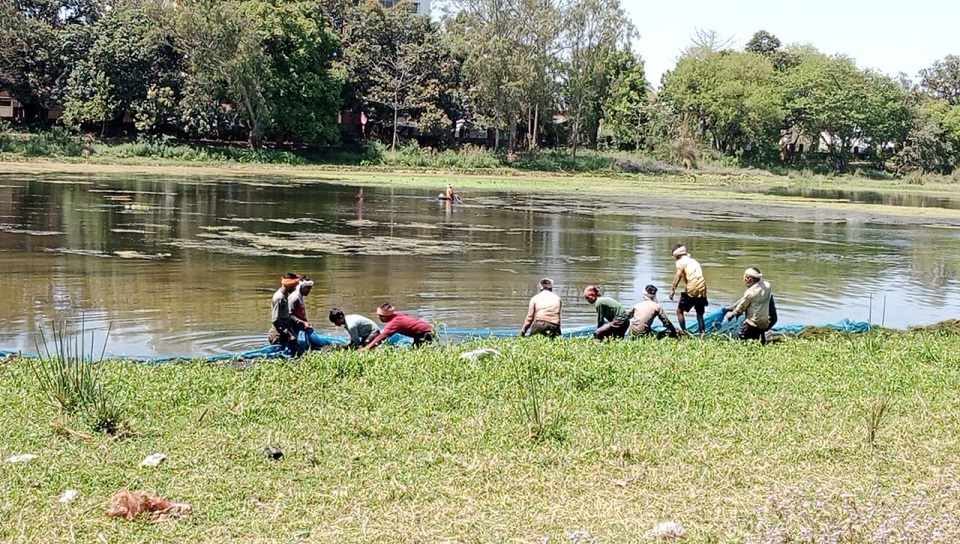
While the publication by the Union Jal Shakti Ministry of the first water body census of India is not only welcome but urgently required, the usefulness of the census findings will depend on the quality of the information in the report. Firstly, such a census should have been conducted in a bottom up way, starting from villages in rural areas and ward in urban areas. That way, the census findings would have not only been more reliable, but also the process would have helped create greater awareness about the water bodies and issues surrounding them.

In case of Karnataka, as the report below shows the survey by the Tank Conservation and Development Authority and Karnataka Public Land Corporation in 2021 showed the state had 40483 water bodies, whereas the Jal Shakti Ministry census of 2022 says the state has just 26994 water bodies, a huge 13489 less than the 2021 census. Clearly so many water bodies cannot disappear in a year. As some experts from Karnataka have asked, is the Jal Shakti Census a deliberate attempt to show that a much lower number of water bodies exist, allowing encroachers to go ahead to destroy water bodies not registered in the census?

Continue reading “DRP NB 010523: Water bodies census welcome, but how reliable?”
DRP News Bulletin

DRP NB 060323: India’s regulators blind to increasing threats in Himalayas

This week the weekly DRP bulletin brings news of increasing threats from changing climate in inherently disaster prone Himalayas. The news come from Ladakh in the NW to Nagaland in the NE, and includes Uttarakhand among others. The news is about retreating glaciers, increasing threats of Glacial Lake Outburst floods and landslides. The news also notes that factors like indiscriminate infrastructure development and lack of drainage are worsening the disaster potential of the Himalayan states. Most importantly, implicitly more than explicitly, the news reports highlight complete inattention of the regulators to these increasing threats and risks in inherently vulnerable Himalayas while considering new infrastructure projects like Highways, Railways, Hydropower projects, Dams and urbanization and also in terms of disaster management laws and practices.

It underlines that the threats and risks in the Himalayan states is also increasing due to changing rainfall patterns due to changing climate. This trinity of inherent vulnerability, changing climate and inattention to the risks of indiscriminate infrastructure projects is clearly very very dangerous, but there is little hope for any immediate change. One clear indication is the handling of the Joshimath disaster, a clear case of how not to handle communication as Dave Petley has noted. The Prime Minister’s office is sitting on the report submitted by the investigating agencies several weeks ago. Why should this report be a secret or will we get a negotiated report?

Continue reading “DRP NB 060323: India’s regulators blind to increasing threats in Himalayas”
DRP News Bulletin

DRP NB 200223: US EPA starts reporting methane emissions from dams

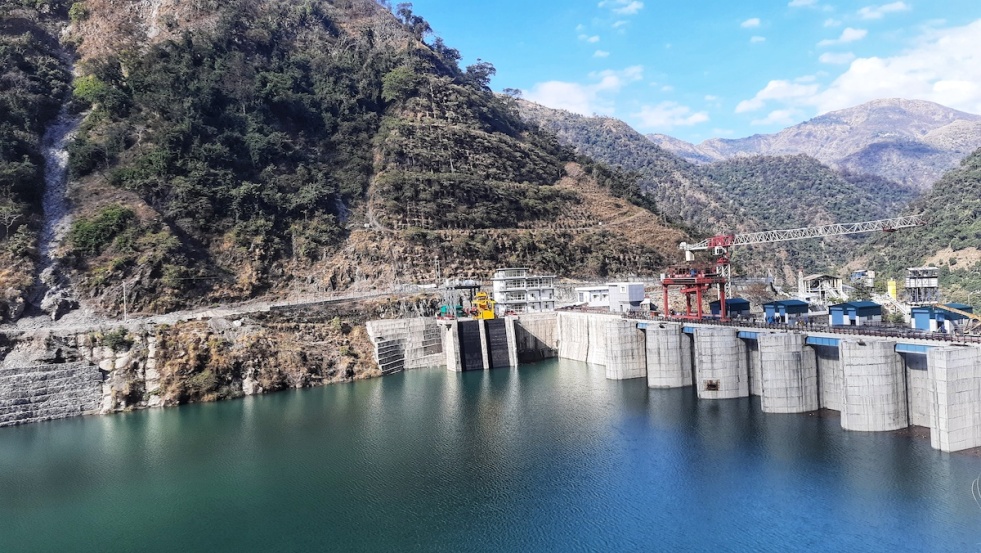
(Feature Image:-Vyasi HEP dam reservoir on Yamuna river in Dehradun. Credit: Varsha Singh/Third Pole, Jan. 2022)

In a landmark move, United States Environment Protection Agency has started reporting methane emissions from dams and hydropower projects in its annual reporting to UN in 2022. It needs to go a step further and make it mandatory for all dams and hydropower projects to annually report such emissions on their websites. This will not only help clear the mistaken notion that hydropower projects are climate friendly, it will also help take right policy measures and project construction or decommissioning decisions. It will also lead to more scientific accounting of global warming causing emissions. It will also give the consumer right picture about GHG emissions from such projects when they look at options for electricity supply. There is a lot that India and rest of the world that needs to learn from this and implement on urgent basis as US EPA seems to be the first agency to do this.  

Continue reading “DRP NB 200223: US EPA starts reporting methane emissions from dams”
DRP News Bulletin

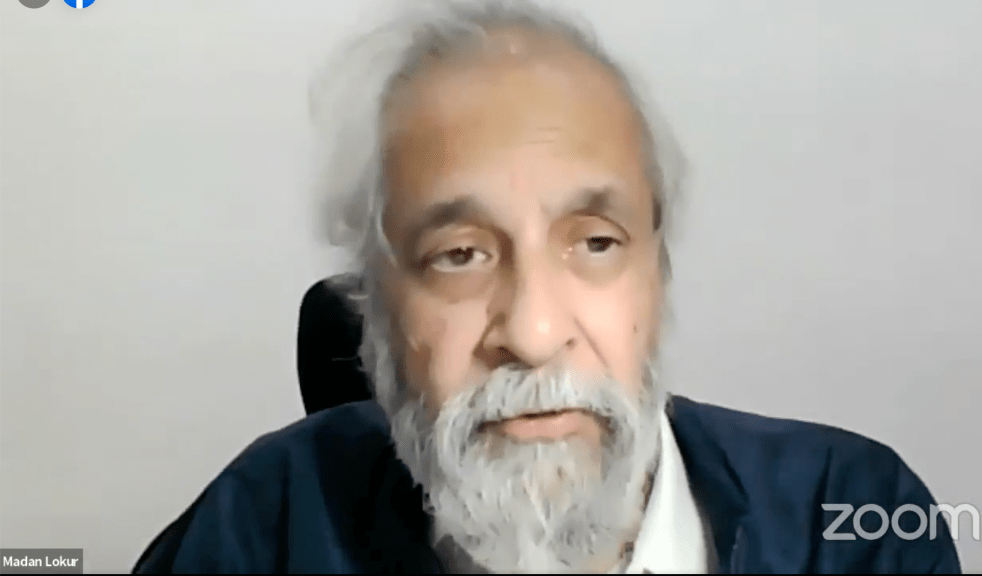
DRP 281122: Justice Lokur at IRW 2022: We need to be vocally more aggressive to make a difference

In his key note address at the final session of India Rivers Week 2022, Justice Madan Lokur, former judge of Supreme Court of India said, “Time has come we need to be a little more active and aggressive vocally to ensure that we are listened to about the problems we all are facing. Farmers struggle, the CAA amendment etc. are good examples. There is need for a political will to bring about any change. How do we generate such a political will is the issue.”

Among other messages Justice Lokur gave in his key note address at the final session of India Rivers Week 2022 on Nov 27, 2022 included: “Rivers belong to all, not a select few… We need to ensure that we are effective in our work, our messages.”

The two day, five session India Rivers Week 2022 function focused on use of rivers as waterways, organized in collaboration between India Rivers Forum (IRF is constituted by ten organizations now) and Manthan Adhyayan Kendra ended on Nov 27, 2022. The IRW 2022 sessions had a number of highlights, we will try to bring them to you in separate articles.

Continue reading “DRP 281122: Justice Lokur at IRW 2022: We need to be vocally more aggressive to make a difference”
DRP News Bulletin

DRP 211122: IRF focus on Rivers as waterways as the World celebrates Fisheries Day

As the World Celebrates Fisheries day today, the India Rivers Forum (IRF) focusses this week on use of Rivers as waterways in its annual program. Spread over five sessions, the online event on Nov 26-27, 2022 is co-organised by Manthan Adhyayan Kendra and IRF. Riverine fisheries and fisherfolk are adversely affected by the current waterways program of the government, and as usual, the government does not even find it necessary to assess the impact of the program on these poorest, weakest, most neglected and most vulnerable section of our population, leave aside the question of compensating them or involving them in the program. The IRF program “Rivers as Waterways in India: Bane or Boon?” will highlight this and many other aspects of the waterways initiative of the government, which aims to include 111 rivers across the length and breadth of the countries.

The five sessions of the IRF program will be titled: “Overview of Indian Inland Waterways”, “Viability of Indian Inland Waterways”, “Impacts of Indian Waterways”, “Governance of Indian Waterways” and “Rivers as Waterways in India: Bane or Boon?”. The two event will have more than 25 speakers. The final session will be chaired by former judge of Supreme Court of India, Justice (Retired) Madan Lokur. Justice Lokur will also give away the Bhagirath Prayas Samman awards of 2022 and Anupam Mishra Medal 2022, the names of the recipients this year will be shared in that final session on Nov 27, 2022.

Continue reading DRP 211122: IRF focus on Rivers as waterways as the World celebrates Fisheries Day
DRP News Bulletin

DRP 141122: Jal Shakti Ministry says: Groundwater extraction down, recharge up???

This sounds so counter intuitive. The Ministry Jal Shakti on Nov 9, 2022 made some findings of its latest “National Compilation on Dynamic Ground Water Resources of India, 2022 public, strangely, without making the report public. It is not clear why the govt did not make the report public, though the counter intuitive nature of the findings provide some hint. The report claims that at all India macro level, the ministry claimed that the groundwater extraction is the lowest in 2022 since 2004, or 18 years and that the groundwater recharge has gone up.

Continue reading DRP 141122: Jal Shakti Ministry says: Groundwater extraction down, recharge up???
DRP News Bulletin

DRP NB 31×22: Unviable Hydro Projects rejected in Himachal, Arunachal Pradesh, Assam

(Feature Image: Group photo during No Means No campaign in April 2022 against destructive hydro power projects in Kinnaur, Himachal Pradesh. Source: The Pahari Zone, You Tube)

A number of developments this week once again show how unviable large hydropower projects are facing rejection in a number of states. In Kinnaur (Himachal Pradesh) the local youth are demanding that the candidates in the state assembly elections to be held in November 2022 promise to work against the hydropower projects in the district.

In Arunachal Pradesh, the state government has told that High Court that they have cancelled all the 44 large hydropower projects proposed in Siang basin when locals alleged in the petition “the projects have been initiated in a reckless manner without any regard to the consequences of the same and without following any scientific research”.

In Assam with new accidents, the commissioning of the 2000 MW Lower Subansiri HEP has been pushed back further, making the over Rs 20000 crore project even more unviable. In J&K, the landslides killing 4 people at the under construction Ratel Hydropower project in Kishtwar district on Chenab River has again rung a warning as to what is in store for future if proper appraisal studies are not done. In Uttarakhand, the bid to take over the Lanco Hydropower project on Mandakini river, now undergoing bankruptcy case in the court have been rejected and same is likely to be the fate for the revised bid.

Continue reading DRP NB 31×22: Unviable Hydro Projects rejected in Himachal, Arunachal Pradesh, Assam
DRP News Bulletin

DRP NB2 24X2022: Stay on Shimla Draft Development Plan 2041 A Right Step by NGT

(Feature Image:- Locals gather near the debris of the building which collapsed at Kachi Ghati in Shimla. Credit Amit Kanwar/ The Tribune Oct. 2021)

In a welcome development, National Green Tribunal (NGT) has put Shimla Draft Development Plan (SDDP) 2041 on hold finding it ill-conceived and in directly violation of its earlier order of regulating haphazard construction activity in the state capital. This is a major set back of present government which had been hoodwinking the judiciary to provide relief to unauthorized structures with Shimla Planning Area in view of upcoming state assembly election.

To push the SDDP, the government went on to challenge NGT’s judicial power and even approached Supreme Court and chose to ignore the principle of sustainable development.  The NGT order is a validation of the crusade launched by environmentalists and social organizations to save the Queen of Hills from further concretization and degradation.

The government has failed to get any relief from NGT, High Court and Supreme Court on the issue. Its time, the government wake up to the gravity of concerns and fragility of the hill station which has also been struggling to meet potable water demand and performing poorly on solid and liquid waste treatment front.

Continue reading “DRP NB2 24X2022: Stay on Shimla Draft Development Plan 2041 A Right Step by NGT”
DRP News Bulletin

DRP NB 17×22: SSP Fails To Provide Promised Water, Rehabilitation: Former Gujarat CM from BJP 

(Feature Image: An aerial view of Narmada river downstream Sardar Sarovar Project in Oct. 2018. Source: CMO Gujarat twitter handle)

With Gujarat state assembly election round the corner, Bhartiya Janta Party (BJP) the party ruling the state and Centre has been evoking the Sardar Sarovar Project as a big achievement in the face of contrasting ground realities as suggested by no less than former Gujarat Chief Minister of BJP Shri Suresh Mehta. The project has failed to provide promised irrigation water to farmers of Kutch and Saurashtra in whose name the dam was pushed as the canal system remains not fully built. The people of Kutch, in whose name Gujarat got 9 Million Acre Feet of water, disproportionate to its catchment area at SSP, were incidentally last to get the water and not first as it should have been. Kutch canals remains largely unfinished and command area largely unirrigated. Who stopped this area to get the water over a decade after the water started flowing from the dam is a question, Gujarat rulers refuse to answer.

Similarly, thousands of project affected people continue to struggle for rehabilitation and compensation despite court orders. The Gujarat rulers have gone silent over unending and unfolding ecological and hydrological impacts of the dam on Narmada river system downstream from the dam including delta area. Thousands of villagers living in miserable conditions submerged in backwater of the dam but have not been officially recognized as project affected people. At this moment, the timely, just rehabilitation and compensation of these villages and project affected families should be top priority of concerned governments including the Central government.

Continue reading DRP NB 17×22: SSP Fails To Provide Promised Water, Rehabilitation: Former Gujarat CM from BJP 
DRP News Bulletin

DRP NB 10×22: All Pervasiveness of Climate Change and Anthropocene Impacts

(Feature Image:- Odisha: 10 stranded in flash flood after sudden release of water from Gohira dam. Source: TNIE )

A large number of reports in this week’s news bulletin from SANDRP are tied by a common threat. The report in NYT about how the South Asian Monsoon is becoming more intense. How the droughts like the one in western US are becoming more likely.

In Bengal people killed in October rains while they were doing visarjan of Durga idols and in Odisha people stuck by sudden release of water from a dam. In these cases of W Bengal and Odisha, strangely, there was no warning and no one is even asking why. In both cases it is the destruction of the river in the that led to create the crisis, but again no questions are being asked.

The report of death by avalanches, the more frequent landslides in monsoons are also in the same league. The SW Monsoon is officially over as per India Meteorological Department, but even as we write, the extreme floods in Uttarakhand, Uttar Pradesh and Madhya Pradesh are breaching the Highest Flood Levels in several rivers.

Continue reading DRP NB 10×22: All Pervasiveness of Climate Change and Anthropocene Impacts