Dams

Union Budget 2018: Looking for farmers, rivers or environment

Finance Minister Arun Jaitely presented the last full budget of the Modi led NDA govt at centre on Feb 1, 2018. Considering the impending elections and the prospects of facing the elections next year (possibly earlier as some speculate), one thought the Budget will try to do justice to the promises the BJP made to the people in 2014 elections, particularly to farmers, about Ganga and other rivers. Modi has just returned from Davos where he said climate change is one of the biggest challenges of future, so one expected that the budget will also have something on environment and climate change. Even the ECONOMIC SERVEY 2017 put out on Jan 29, 2018 was focused on climate change impact on farmers. Considering the Rural distress that got reflected in Gujarat election results in Dec 2017, one expected credible and substantial better deal for villages and agriculture.

Unfortunately, we are mostly disappointed in all these aspects. Continue reading “Union Budget 2018: Looking for farmers, rivers or environment”

Dams · DRP News Bulletin

DRP: 10 July 2017 (Private Companies Exit Unviable Large Hydro Projects)

In a remarkable trend emerging in hydro sector in Himachal Pradesh, many leading private companies have started surrendering hydro power projects allotted to them by State Govt. As per the news report, Tata Group, Reliance, Jindal and Larsen & Toubro have either surrendered or are in process of surrendering numbers of hydro projects given to them over past one and half decade. These companies are now increasingly terming the projects as  non-viable and unprofitable. 

In the last week of June, 2017, Tata group reportedly has written to Directorate Energy, expressing its desire to surrender the 450 MW Duggar power project in Pangi area of Chamba district. The project had been allotted to them in 2007-08 and post feasibility study done by its consultants the group has found the unviable. http://www.tribuneindia.com/news/himachal/tatas-give-up-chamba-power-project/428456.html

Before this the Reliance group had declined to set up  300 Mw Purty and 130 Mw Sumte Kothan hydro projects in Spiti. Following this, the State Cabinet on June 24, 2017 meeting agreed to return Rs 85 crore paid as upfront money by Reliance group. 

Similarly in recent past, the Jindal group, which was allotted the 250 MW Kutehar power project in Chamba, put the project on hold for some time without citing specific reasons. http://www.tribuneindia.com/news/himachal/reliance-power-to-get-back-rs-85-cr-it-paid-to-govt-for-2-projects/427112.html

In the latest incident, anticipating problems in evacuating power, with the market being very grim as far as buyers and power rates are concerned, Larsen and Toubro (L&T) is reported to have urged the state govt to enter into a power-purchase agreement (PPA) with it for two of its hydel projects — Reoli Dugli (Lahaul-Spiti) and Sach Khas (Pangi), located in the arduous Chenab basin.

Continue reading “DRP: 10 July 2017 (Private Companies Exit Unviable Large Hydro Projects)”
Dams · DRP News Bulletin

DRP: 8 May 2017 (Inspiring: How Kerala Panchayat brings a dying river back to life)

The Kuttamperoor stream in Kerala, connecting the Pampa and Achankovil rivers, had been a nearly stagnant, shrunken cesspool of dumped waste and weeds for more than a decade. Some weeks ago, it was resuscitated as a flowing river, thanks to the will of the Budhanur gram panchayat in Alappuzha district, and the commitment of 700 local men and women who worked to bring the river back to life under the MGNREGA.

The Kuttamperoor was once a full 12 kilometres long and, at places, over 100 feet wide. The river originates from Achankovil at Ulunthi, near Mavelikkara, and flows through Ennackad, Budhanur, Kuttamperoor, Mannar, and Pandanad before merging with the Pampa at Nakkida near Parumala in Pathanamthitta district.

Continue reading “DRP: 8 May 2017 (Inspiring: How Kerala Panchayat brings a dying river back to life)”
Dams · DRP News Bulletin

DRP: 1 May 2017 (Ken Betwa won’t help, here is what CAN help Bundelkhand)

Union Water Ministry has launched an extensive water conservation program for drought prone areas of Bundelkhand, Marathwada, Kalahandi, Bolangir and Koraput in Odisha on April 28, 2017 at Bandri, Sagar Madhya Pradesh. As per report, the Water Ministry has prepared a master plan for artificial recharge of ground water in Bundelkhand region.

In UP region of Bundelkhand, around 1100 percolation tanks, 14000 small check dams/Nala bunds and 7200 Recharge pits/shafts have been identified. In MP region of Bundelkhand, around 2000 percolation tanks, 55000 small check dams/Nala bunds and 17000 Recharge shafts have been identified. She said as a part of ground water exploration, 234 wells in UP are proposed to be constructed in five districts of Bundelkhand i.e., Banda, Hamirpur, Jalaun, Chitrakoot and Mahoba. As a part of ground water exploration, 259 wells in MP are proposed to be constructed in six districts of Bundelkhand.

Continue reading “DRP: 1 May 2017 (Ken Betwa won’t help, here is what CAN help Bundelkhand)”
Dams · DRP News Bulletin

DRP: 26 Dec 2016 (Corruption & Fraud in 600 MW Kameng HEP in NE India)

In addition to allegations of fraud related to inflated bills, the officials report of Satish Verma the former chief vigilance officer (CVO) of North Eastern Electric Power Corporation (NEEPCO) mentioned that there have been numerous instances of top government officials allegedly accepting hospitality and gifts that cost the PSU lakhs of rupees. These include gifts for officials in the Ministry of Power: a teak wood cabinet for the Personal Secretary to the Union Power Minister; an iPad Air 2 for the Secretary; payment of a Vodafone bill for a Special Secretary; and a mobile handset for an Additional Secretary.

Continue reading “DRP: 26 Dec 2016 (Corruption & Fraud in 600 MW Kameng HEP in NE India)”
Dams · DRP News Bulletin

DRP: 11 Oct 2016 (Is there any justification for DESTRUCTION of Panna Tiger Reserve?)

Is there any justification for DESTRUCTION of Panna Tiger Reserve? Can we save our Natural Heritage like the Panna Tiger Reserve (PTR) from being destroyed in the name of baseless, questionable, non transparent, undemocratic and manipulated projects like Ken Betwa inter linking ? It will facilitate export of water from Bundelkhand to OUTSIDE Bundelkhand. Whatever little benefits are claimed, some of them are already available and much more can become available at much lower costs, faster and without destroying the Forests and Tiger Reserve. The project will actually lead to destruction of Ken catchment and hence the Ken River itself. Watch this FASCINATING, AWESOME story of tigers of PTR. This BBC film where Raghu Chandawat is the story teller and Pradip Kishen is lending his voice, tells the story of Tigers of Panna till 2003, it seems. Please watch and let us all try to save it from destruction that is now writ large in terms of Ken-Betwa Link Project (KBLP). One more short film by wildlife biologist Koustubh Sharma illustrates how the Daudhan Dam under KBLP will submerge and destroy the PTR.

Meanwhile, a new analysis of rainfall data reveals that monsoon shortages are growing in river basins with surplus water and falling in those with scarcities, raising questions about India’s Rs 11 lakh crore plan to transfer water from “surplus” to “deficit” basins. According to Himanshu Thakkar of SANDRP river basin interlinking should be considered only after exhausting the local potential for harvesting rain, recharging groundwater, watershed development, introducing better cropping patterns (non water-intensive crops) and methods (such as rice intensification), improving the soil moisture-holding capacity and saving and storing water. Raising alarm over significant increase in ground water use, increasing reliance and fast declining ground water table, he warns that inter-basin links would actually reduce groundwater recharge because forests would be destroyed, the river flow stopped and the local systems neglected.

Continue reading “DRP: 11 Oct 2016 (Is there any justification for DESTRUCTION of Panna Tiger Reserve?)”
Agriculture · Dams · Irrigation · Maharashtra · Marathwada

This is the time to protect Pulse Farmers in Marathwada

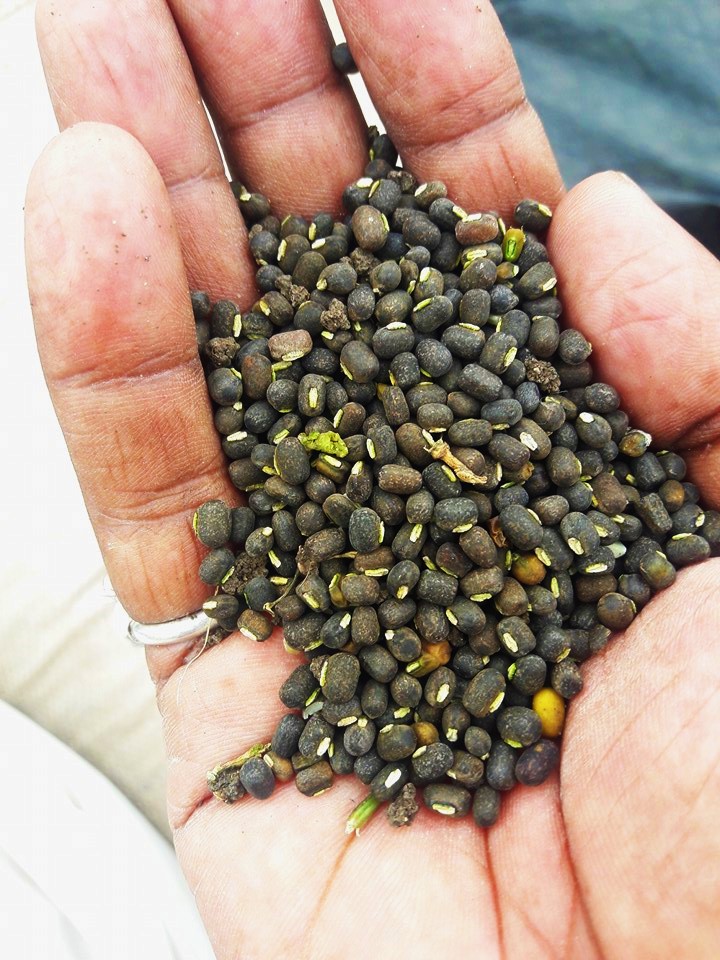
I have harvested Moong (green gram) from my farm, now I’m harvesting Udad (black gram). Their price is crashing each day…I may not get even the Minimum Support Price (MSP)…But I’m not supposed to care about the price… its solely the farmer’s responsibility to reduce inflation and make India a superpower.”

…says Ashok Bhau, a dry land farmer dependent on rainfall and groundwater in the heart of Marathwada: Osmanabad.

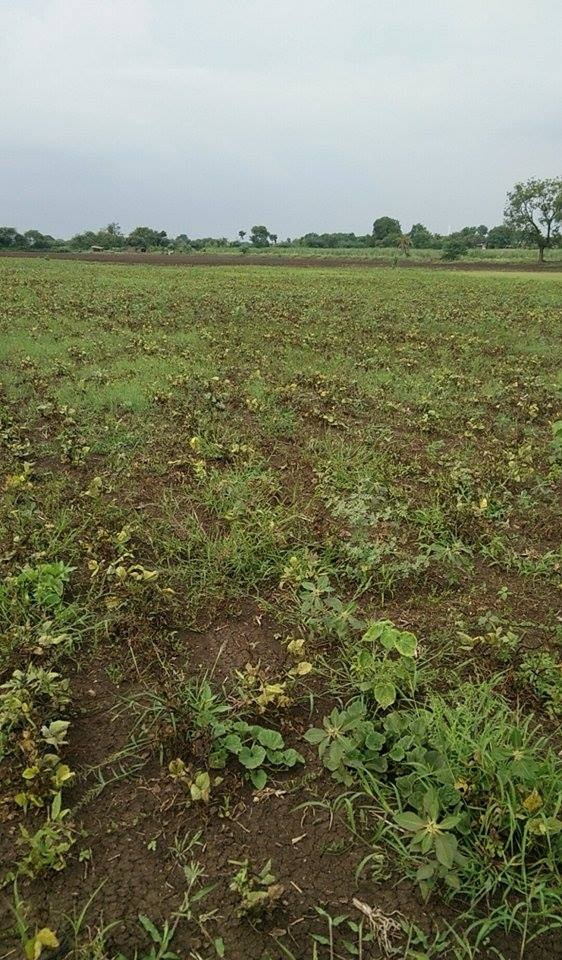
Last year his Moong failed completely, there was no seed development and although his Tur (Pegion Pea/Arhar) fetched a very good price, it did not mean anything for the family as the productivity was dismally low following three droughts and dry wells[i]. Like many farmers in Marathwada, he burned his sugarcane on 4 acres after watering it for many months… finally there was no water to sustain it. We had written about soaring pulses last year.udad (1).jpg Continue reading “This is the time to protect Pulse Farmers in Marathwada”

Dams · DRP News Bulletin

DRP: 4 July 2016 (In Proposed Hydro Policy, Govt Pushing Hydro Through Subsidies)

New Hydro Policy: Govt unjustifiably pushing hydro through subsidies A comprehensive policy to promote hydropower generation is set to be announced by September—with viability gap funding for projects, compulsory hydropower purchase obligations for distribution companies and a set of good practices that states have to follow. The idea is to address factors that currently drive hydropower costs up way above those of other sources of power and give policy support in its market development, according to a government official, who asked not to be named. The policy being prepared by the power ministry will have provisions for viability gap funding, which will help in meeting the shortfall in project costs and reducing hydroelectricity tariffs for consumers. Hydropower is expensive and in some cases more than double the cost of power from coal-based thermal plants, which is available at Rs.3-5 per unit.The ministry will also expand the scope of power distribution companies’ renewable power purchase obligations to include hydropower from projects with a capacity greater than 25 Mw. At the moment only power from those with less than 25MW is considered renewable power. According to officials, compulsory hydropower purchase from large projects will either be made part of the existing renewable power purchase obligation of distribution companies or a separate requirement, so that its inclusion does not affect the market for other renewable sources of energy like wind, solar or biomass. Govt unjustifiably pushing hydro through subsidies in proposed new hydro policy can be lead story. It is not going to help push hydro.  

Continue reading “DRP: 4 July 2016 (In Proposed Hydro Policy, Govt Pushing Hydro Through Subsidies)”
Dams · DRP News Bulletin

DRP: 21 March 2016 (‘Towards Noyyal’ A people’s initiative to restore a river’s glory)

Tamil Nadu A people’s initiative to restore a river’s glory The Noyyal River Restoration Federation will launch ‘Noyyalai Nokki’ (Towards Noyyal), a people’s initiative to restore the Noyyal river system on 26 March. Social activist Anna Hazare will launch the project at Kooduthurai in Alandurai in Coimbatore district. The river originates in the Western Ghats and runs through the four districts to join the Cauvery at Noyyal village. Known as Jungle stream, in olden times as many as 34 streams used to feed water into it and the river would flow throughout the year with two or three annual flood spell.  But now, just 4 or 5 streams feed the river. In many places, the river is encroached upon, sewage is let into it, or the river needs to be desilted. The river is all set to regain its glory with the ‘Noyyalai Nokki’ initiative. What is encouraging is the willingness of the public to be part of it. The project proposes to divide the river into segments of 500 metres for restoration and maintenance. Ownership groups will be formed for every 500 metres and it will consist of the local people, experts and patrons (divide-distribute-develop model).

Continue reading “DRP: 21 March 2016 (‘Towards Noyyal’ A people’s initiative to restore a river’s glory)”

Dams · DRP News Bulletin

DRP: 14 March 2016 (No Rain Dance, Only Dry Holy This Time: Pune District Administration)

Dam levels down, ‘rain dance’ for Holi dropped Pune district, where a water cut is in effect due to depleting water levels in the dams, will not have any kind of “rain dance” functions this Holi. As water reserved in the dams is to be used only for drinking purposes as per the district administration’s instructions, the collectorate has urged people to go for a “Dry Holi” this year and will ensure that there are no such functions during Holi. With dam levels coming down to as much as 23% of their capacity, the entertainment department of the collectorate will ensure that permissions are not given for events like the “rain dance” during the festival. Meanwhile, a BJP legislator in Mumbai has written to the Brihanmumbai Municipal Commissioner seeking a ban on “rain dance” functions in Mumbai in the metro during Holi. Ameet Satam, in a letter to the BMC, said that the civic body should ban rain dance and even asked the corporation to slap a fine of Rs 50,000 on those who indulge in waste of water.

Continue reading “DRP: 14 March 2016 (No Rain Dance, Only Dry Holy This Time: Pune District Administration)”