On August 13, 2013, while disposing off a bunch of petitions[i] regarding the controversial 330 MW Srinagar Hydropower Project on AlaknandaRiver in Uttarakhand, the Supreme Court bench of Justice K S Radhakrishnan and Dipak Misra have given some welcome directions on the Uttarakhand hydropower projects.
Perusal of the full judgment[ii] shows that the decision is disappointing on the Srinagar project issue, since the court has directed that the project be completed and disposed off all objections to that, while asking for implementation of the Environment Managemnet Plan and conditions etc. However, there are several contradictions in this regard that seems to have escaped the attention of the court, and a review petition on that part could be field by the petitioners. Importantly, Prof Bharat Jhunjhunwala, who argued the case in person, should be thanked for the role he played in this case.
Courts’s concerns on Uttarakhand Hydro Projects However, the most pertinent and interesting part of the order starts at the bottom on p 62 with the title “Court’s concerns” and goes on till the end of the order on p 72.
In these pages, the order notes that AHEC (Alernate Hydro Energy Centre at IIT Rurkee) has not done the cumulative impact assessment it was asked to do. This is very important to note. The order says, (para 46), “We have gone through the Reports and, prima facie, we are of the view that the AHEC Report has not made any in-depth study on the cumulative impact of all project components like construction of dam, tunnels, blasting, power-house, Muck disposal, mining, deforestation etc. by the various projects in question and its consequences on Alaknanda as well as Bhagirathi river basins so also on Ganga which is a pristine river.” After this clear statement from the Highest Court, no one should rely on this report now on.
We are glad that this statement of Supreme Court supports what SANDRP has been saying for years[iii].
This part the order also refers to the BK Chaturvedi Committee (appointed by the National Ganga River Basin Authority in June 2012) report submitted in April 2013 to emphasise that, “The River Ganga has over a period of years suffered environmental degradation due to various factors.” The court should have directed that the MoEF should make the report of the BK Chaturvedi committee report public since the MoEF has not yet done that. The committee itself stands discredited[iv] since none of the independent members of the committee accepted the report.
The operative part of the order says:
“(1) We direct the MoEF as well as State of Uttarakhand not to grant any further environmental clearance or forest clearance for any hydroelectric power project in the State of Uttarakhand, until further orders.”
This means that environment or forest clearance to any hydropower projects of any size in Uttarakhand cannot be given either by MoEF or by the Government of Uttarakhand till further orders.
“(2) MoEF is directed to constitute an Expert Body consisting of representatives of the State Government, WII, Central Electricity Authority, Central Water Commission and other expert bodies to make a detailed study as to whether Hydroelectric Power Projects existing and under construction have contributed to the environmental degradation, if so, to what extent and also whether it has contributed to the present tragedy occurred at Uttarakhand in the month of June 2013.”
This direction has two parts: A. assessment of cumulative impacts of existing and under construction hydropower projects[v] to the environment degradation in Uttarakhand and B. Whether the projects have contributed to the Uttarakhand flood disaster, if so to what extent.
Only a credible independent panel with sufficient number of independent members can provide a credible report in this regard, the committee should be chaired by a non government person of the stature of Prof Madhav Gadgil. We hope the MoEF will soon constitute such an expert body and also ask the expert body to hold public hearings at various relevant places and seek wider public consultation. The mandate of the committee should be for the entire Uttarakhand and not just Bhagirathi and Alaknanda sub basins. The committee should have credible and independent geologist, sociologist, environmentalist, river expert and disaster management expert.
“(3) MoEF is directed to examine, as noticed by WII in its report, as to whether the proposed 24 projects are causing significant impact on the biodiversity of Alaknanda and BhagirathRiver basins.”
Here it may be remembered that it was MoEF that had asked Wildlife Institute of India to submit a report on the cumulative impact of the hydropower projects in Uttarakhand on aquatic and terrestrial biodiversity. It should also be remembered that WII is one of the credible institutes and is also a centre of excellence of the MoEF. There is no reason for MoEF to reject the clear recommendation of the WII report that the 24 projects listed by it should be dropped. The clearances given to the projects like the 300 MW Alaknanda Badrinath HEP of GMR should be suspended immediately keeping this direction in mind.
“(4) The Disaster Management Authority, Uttarakhand would submit a Report to this Court as to whether they had any Disaster Management Plan is in place in the State of Uttarakhand and how effective that plan was for combating the present unprecedented tragedy at Uttarakhand.”
This direction should have also been for the National Disaster Management Authority since preparation of proper State Disaster Management Plan and ensuring setting up of required machinery for its implementation is also a mandate of the NDMA. This is particularly important in view of the failure also of NDMA as reported by the Comptroller and Auditor General of India report of March 2013. Since the court has asked in para 52 that, “Reports would be submitted within a period of three months. Communicate the order to the Central and State Disaster Management Authority, Uttarakhand.”, it is implied that NDMA is also to submit a report.
Since the original petitions and applications are disposed off, it is not clear if the original petition survives or a new case will be registered. It is also not clear if the original petitioners survive. In such cases it is the normal practice of the court to appoint and Amicus Curie and it would be interesting to see whom the court appoints for such a purpose.
These orders are indeed welcome in view of the fact that hydropower projects in Uttarakhand have certainly played big role in increasing the disaster potential and disaster proportions in Uttarakhand floods in June 2013. More than twenty groups and individuals of Uttarakhand, Himachal Pradesh and other states have already written to the MoEF in July 2013[vi], asking for suspension of such hydropower projects that have prime facie played such a role and set up an independent enquiry. The MoEF has not yet responded to this letter. We are glad now SC has asked for such an inquiry.
[i] These includes Civil Appeal No 6736 of 2013, Special Leave Petition no 362 of 2012, Civil Appeal nos 6746-47 of 2013 (arising out of SLP (Civil) nos 5849-50 of 2012 and Transfer cases (C) (National Green Tribunal) numbers 55 to 57 of 2013.
IMPACT OF UTTARKHAND FLASH FLOODS IN MID JUNE 2013 ON LOCAL PEOPLE AT KHARADI VILLAGE (BARKOT BLOCK) IN UTTARKASHI DISTRICT RESULTING FROM A DIVERSION/ REDIRECTION OF THE YAMUNA RIVER TOWARDS POPULATED BANK OF THE RIVER DUE TO THE 8 MW GANGANI HEP. IMPACT IS ALSO THERE ON THE HEP INFRASTRUCTURE ITSELF PUTTING A QUESTION MARK ON ITS QUALITY OF CONSTRUCTION AS ON ITS SUSTAINABILITY.
YAMUNA JIYE ABHIYAAN, JULY 2013 Text by Manoj Mishra
Kharadi is a small road side market place on river Yamuna, some 40 km short of the holy shrine of Yamunotri. It is also a popular night halt site on the Char Dham Yatra route. Resultantly over the period of time a number of hotels and residential properties have come up along the road and the river side.
Redirection of the river to the left due to the project head. All Photos taken on 20 July 2013, by Bhim Rawat, Yamuna Jiye Abhiyaan
Some time in 2008-09 works, started by a pvt firm called Regency Gangani Energy Private Limited, immediately upstream of the Kharadi village for the construction of a 8 MW run of the river HEP. The works involved a diversion head, laying of pipes to convey the diverted river water and a power house around 5 km down stream of Kharadi at a place called Gangani. It is notable that the planned HEP is on the proper river Yamuna
By the year 2012, construction works had progressed to a considerable extent, when on the night of 3 August 2012 a cloud burst at Hanuman Chatti area resulted in a flash flood in the river Yamuna. Flow of Yamuna was obstructed by the diversion head of the HEP and was diverted towards its more populated left bank. This diversion swept away of around 9 hotels and residential properties of the local people at Kharadi. It also resulted in damages to the pipes laid in and near the river bed by the HEP.
If the above was not enough then on 17 June 2013, another cloud burst and heavy rains over most of higher reaches of Uttarakhand led to yet another diversion of the river and sweeping away of around 28 properties (see list at the end of this report) in the market village of Kharadi.
Washing away of structures in Kharadi some 500 m downstream from the river diversion head of the Gangani HEP by the flash flood in the river Yamuna on 17 June 2013
The Project also applied for Clean Development Mechanism (CDM) status under United Nations Framework Convention on Climate Change to get Carbon Emission Reduction Credits. Yamuna Jiye Abhiyaan and others have objected to this application at the Validation stage earlier and at registration stage now in August 2013 as the project is not only unsustainable, but its application was full of contradictions and misleading claims. The project is in any case not a sustainable Development Project, is business as usual project and hence non additional as per UNFCCC criteria. The project is also not sustainable development project, but India’s National CDM Authority, namely the Union Ministry of Environment and Forests, has never done credible assessment of this, and never rejected any application of CDM hydro projects!
Road and structures washed away by the flash flood in the Yamuna river downstream from diversion head of the Gangani HEP.Damaged pipes (meant to carry the river water to the Gangani HEP power plant some 3 km d/s from the diversion head) and the damaged approach bridge on the river
List of Hotels and residential properties destroyed in Kharadi village by the flash floods in river Yamuna made worse due to the diversion head of the HEP upstream of the Kharadi village on the night of 16 and morning of 17 June 2013 and on the night of 3 August 2012 around 11 PM made worse (as per local people) due to the Gangnani HEP structure (head) in the river upstream of the village
Property/Hotel Owner Name Father’s Name Village Name No. of Rooms
1 Neel Kanth Hukum Singh Rawat, Sri Lal Singh Khanera Three Storey, 20 rooms
2 Unnamed Jagdish, Chandar Mohan, Ajay Sri Attar Singh Khanera 2 rooms + Provision Shop
3 Yamuna Darshan Jaidev Singh Rana Sri Jandar Singh Khanera 25 rooms
4 Bhupendar Place Rajendar Singh Chouhan, Sri Narendar Singh Syalna 12 Rooms
5 Bhupendar Palace (Joint) Gajendar Singh , Sri Narendar Singh Syalna 04 Rooms
6 Bhupendar Palace (Joint) Arjun Singh, Kesar Singh Syalna 04 Rooms
7 Amit Restaurant Jogindar singh, Sri Chandan Singh Bhansadi 05 Rooms
8 Govind Palace Janak Singh Sri Ranjor Singh Khanera 12 rooms 9 Him Darshan (August 12) Atol Singh, Sri Jai Singh Chouhan Nagon Gaon 22 Rooms
10 Naveen Palace Jag Mohan Chouhan, Sri Jhoon Singh Khanera 06 Rooms
11 Naveen Palace Man Mohan Singh, Sri Jhoon Singh Khanera 04
12 Naveen Palace Dharmendar , Sri Jhoon Singh Khanera 04
13 Vijay Restaurant Vijay Chouhan, Sri Jhoon Singh Khanera 1 Hall, 1 Cottage
14 Naveen Palace Darmyan Singh, Sri Kamal Singh Syalna 07
15 Provision Singh Jagveer Singh chouhan Sri Surveer Chouhan Khanera Provision Shop
16 Ravindar Palace Ravindar Singh Sri Budhi Singh Khanera 04 Rooms 17 Kahniya Palace Shailendar Singh Sri Shiv Singh Khanera 04 Rooms + Restaurant 18 Rana Place Kitab Singh Rana Sri Surb Singh Rana Khanera 04 Rooms
19 Residence Gabar Singh Sri Sultan Singh Khanera 04 Rooms 20 Residence Bijendar Singh Sri Sabal Singh Khanera 07 Rooms
21 Residence Brij Mohan Sri Jogolia Khanera 06 Cottages
23 Residence Chojen Lal Sri Kuta Singh Syalna 04 Rooms 24 Residence Basant Lal Sri Khelan Singh Khanera 03 Rooms 25 Residence Trepan Lal Sri Sadhu Lal Syalna 02 Rooms 26 Residence Jogi Lal Sri Jhapuliyan Khanera 02 Rooms
27 Aneesh Place Aneesh Sri Janbeer Khanera 06 Rooms
28 Residence Jendar Singh Sri Keval Singh Khanera 02 Rooms
29 Residence Praveen Singh Sri Jandar Singh Khanera 02 Rooms
30 Residence Jagendar Singh Sri Keval Singh Khanera 02 Rooms 31 Narayan Place Kendar Singh Payal Sri Ram Singh Syalna 05 Rooms
32 Residence Chain Singh Sri Rompal Singh Syalna 04 Rooms
33 Residence Ispal Singh Sri Khajan Singh Syalna 04 Rooms 34 Narayan Palace (Joint) Ranbeer Singh Sri Ghayan Chand Syalna 04 Cottage
35 Narayan Palace (Joint) Chain Singh Sri Daya Ram Singh Khanera 02 Rooms + Canteen= 02 cottage (About to fall)
36 Giri Ashram Saint Giri Kharadi
37 Trishul Hotel Kandra Singh Payal Sri Ram Singh Syalna Verandah Damaged Bold entry relates to properties washed away in Aug 2012.
NOTE:
About 25 additional Households have now (after June 2013 floods) come with in the slip zone, which can now slip or get washed away any time in the event of high rainfall or another flood.
Entire Kharadi village has now been declared as disaster affected by the District Administration.
YAMUNA JIYE ABHIYAAN, JULY 2013 (Text by Manoj Mishra)
Institute independent enquiry into the role of HEPs in increasing the disaster
in Uttarakhand
July 20, 2013
To
1. Union Minister of State (IC) of Environment and Forests
Paryavaran Bhawan, CGO Complex,
Lodhi Road, New Delhi11003
2. Secretary,
Union Ministry of Environment and Forests
Paryavaran Bhawan, CGO Complex,
Lodhi Road, New Delhi11003
Respected Minister and Secretary,
Sub: Suspend ECs to Hydropower Projects in Uttarakhand
Institute independent enquiry into the role of HEPs in increasing the disaster
in Uttarakhand
1. Uttarakhand Disaster and Hydropower projects It is now beyond doubt that existing and under construction hydropower projects in Uttarakhand have played a significant role in increasing the proportions of disaster in Uttarakhand this June 2013. Here are a few examples just to illustrate:
Þ Srinagar HEP This 330 MW project under construction had been illegally dumping the muck into the river or piling heaps on the slope without an adequate retaining wall. Moreover, it is learnt that the project closed the gates of the dam on the evening of June 16, 2013, but opened them up suddenly in the early hours of next morning, which led to flooding of hundreds of houses and buildings in the downstream Srinagar town. The piled muck heaps were washed into the town. The town was submerged in not only water, but also 10-30 feet of muck. The project itself has suffered damages.
Þ Singoli Bhatwari and Phata Byung HEPs on Mandakini river The 99 MW Singoli Bhatwari and the 76 MW Phata Byung HEPs are both under construction projects on Mandakini river in Rudraprayag district. Both projects have been illegally dumping muck along the river banks, which was carried by the river to the downstream villages and towns upto Rudrapayag and beyond. Both the projects have suffered severe damages. Water levels in the MandakiniRiver rose 30 to 40 feet at various locations, destroying roads, private and public properties. All bridges downstram of the S-B project were washed away snapping links across the river and causing enormous hardships to the local people, rescue, relief anf rehabilitation efforts.
Þ Vishnuprayag HEP on Alaknanda River The operators of the 400 MW project did not open the gates in time, leading to the reservoir behind the gates filled with boulders, see before and after photos at: http://matuganga.blogspot.in/2013/06/press-note-30-6-2013.html. The river than bypassed the project and created a new path as can be seen in the photos, firstly, creating a huge flash flood in the downstream area and also eroding the banks and the road. Lambagad market and Govindghat township have suffered massive destruction of private property and public property, including the bridge to the Hemkund Sahib trek, endangering the lives of pilgrims and tourists.
Þ Maneri Bhali I and II Due to lack of protection wall and lack of timely opening of the gates, the people residing on the banks of the project suffered huge flood disaster, large number of houses were washed away and lives lost. Maneri Bhali I is itself damaged and yet to start generation, even Maneri Bhali II started generation only after July 12, 2013.
Þ Dhouliganga HEP This 280 MW Dhouliganga HEP of NHPC is also being held responsible for floods in the downstream area, the power house of the project itself was submerged and project is yet to start generation.
Þ Small HEPs A large number of small HEPs have suffered damages and are also being held responsible for increased disaster impacts. Such projects include 4 MW Kaliganga I and 10 MW Kaliganga II, 9.5 MW Madhyamaheshwar HEP, 5 MW Motighat HEP, Assiganga I and II HEPs, among others. We have been urging the MoEF to amend the EIA notification to include all hydro projects above 1 MW under category B1 so that they all have EIAs, EMPs, ECs, EAC sanction and public consultation process. Kindly make this change urgently.
2. List of Uttarakhand Hydropower projects with EC on the MoEF webiste As per the legal norms under the EPA 1986 and EIA notifications of 1994 and Sept 2006 (both are relevant since some of the projects got clearance under earlier notification), the developers are supposed to send six monthly compliance reports to MoEF and it is also legal obligation of MoEF to put such compliance reports on the MoEF website, see section 10(i) and (ii) of the EIA notification of Sept 2006. It is very important to note that these reports are supposed to reflect the extent to which the projects are complying with the conditions of environment clearance and environment management plans. These reports are an important mechanism for MoEF to know about the status of compliance of the projects. A perusal of the Environment clearance site of the MoEF (See: http://environmentclearance.nic.in/Search.aspx) and looking for the Uttarakhand river valley projects granted Environment clearance, we find that the site displays a list of seven hydro projects, in which since Srinagar project figures twice, the site effectively contains only six names. In the first place this is the first illegality of MoEF, since this is not a complete list. To illustrate, the 76 MW Phata Byung HEP under construction on Mandakini river does not figure on this, there are other projects too that does not figure on this list. We urge MoEF to kindly put up the full list here and also fix responsibility for this legal lapse for not putting up full list.
3. Compliance reports of Under Construction of HEPs not available Since full list of under construction HEPs of Uttarakhand is not displayed on MoEF website, the MoEF is also unable to fulfill its legal duty of putting up compliance reports. Even among the project displayed on the MoEF website, latest compliance report is available only for one project, namely Singoli Bhatwari HEP (it is file of massive size at 30 MB, most people wont be able to download this, MoEF should ask for file size of 1 MB or below and upload them in smaller size segments). So for the rest of the projects there is no compliance report on the MoEF website. This is clearly a serious violations on the part of the MoEF and MoEF needs to urgently hold accountable those who are responsible for this serious legal lapse. The MoEF also needs to take urgent action against those that have not submitted the reports as required, suspension of their environment clearance can be the first step.
4. Suspend Environment Clearance of the projects prime facie responsible for disaster damages MoEF should urgently suspend environment clearance of those projects that have been found to be prime facie responsible for the damages. We urge MoEF to suspend the clearances of following projects: Singoli Bhatwari, Phata Byung, Srinagar (all under construction projects), Vishnuprayag, Dhouliganga, Maneri Bhali I and II (all operating projects), for the reasons described in para 1 above. As a direct consequence there off, MoEF should also ask these projects to suspend their work including repair and reconstruction work till further orders. These are also required from the point of view of future safety of the downstream people and areas and also revisit the features of the projects from this perspective.
Such suspension is also necessary since the projects need a review considering that following issues have not been considered by giving clearances to the projects:
1. Change in climate due to HEPs leading to, among other changes, more erosion and landslides, more irregular rainfall patterns, more violent cloudbursts.
2 Inadequate assessment of landslide impacts of the project by GSI and MoEF.
3 The only norm for use of explosives has been made by Director General of Mines Safety for mines and pucca houses. These norms are being mindlessly applied to the fragile Uttarakhand hills and structures there.
4 Impact on forests of explosives via (1) losening of soil; (2) depletion of aquifers.
5 Impact on global warming by deforestation and depletion of aquifers.
6 Impact of project on disaster potential and implied cost of disaster.
7 Reservoir Induced Seismicity. NCSDP only looks at the safety of the dam structure. There is not agency that looks into the impact on the area, including hills, forests, water sources, houses and other structures.
8. The performance of the projects in view of changing climate, receding glaciers, possibilities of increased flashfloods, landslides and so on.
5. Institute credible, independent enquiry MoEF should urgently institute credible, independent enquiry into the disaster impacts due to the wrong and illegal functioning of the projects mentioned in first para above, including the impacts on people, their lives and property, on the property of the state and other institutions. This should be done on urgent basis so that an assessment of the existing situation can be done urgently before the ground realities change significantly and while the memory of the events are fresh in everyone’s mind.
6. Change EIA notification to include all hydro projects above 1 MW As noted in last bullet points in para 1 above, we urge the MoEF to amend the EIA notification to include all hydro projects above 1 MW under category B1 so that they all have EIAs, EMPs, ECs, EAC sanction and public consultation process.
7. Change EIA notification to include commissioned projects to send six monthly compliance reports and also undergo 5 yearly review For example, in US, the Federal Electricity Regulatory Commission has detailed regulations as to what happens once a project undergoes such emergency situation, see: http://www.ferc.gov/industries/hydropower/gen-info/regulation/dam-safety.asp. This includes, “Every 5 years an independent consulting engineer, approved by the Commission, must inspect and evaluate projects with dams higher than 32.8 feet (10 meters), or with a total storage capacity of more than 2,000 acre-feet (2.5 million cubic meters)… The Commission staff also evaluates the effects of potential and actual large floods on the safety of dams. During and following floods, the Commission staff visits project dams and licensed projects, determines the extent of damage, if any, and directs any necessary studies or remedial measures the licensee must undertake.”
Most hydropower projects of Uttarakhand would come under above description and MoEF as a regulator should be following similar review process for all projects sanctioned by it every five years and also ensure that even projects once commissioned also send six monthly reports to MoEF ensuring compliance of the norms. Such a mechanism has also been recommended by the BK Chaturvedi committee.
Hence we urge MoEF to urgently review the EIA notification to ensure submission of six monthly compliance reports for commissioned projects and also ensure 5 yearly review of the environment clearances.
We will look forward to your urgent response on these issues.
As Uttarakhand faced unprecedented flood disaster and as the issue of contribution of hydropower projects in this disaster was debated, questions for which there have been no clear answers were, how many hydropower projects are there in various river basins of Uttarakhand? How many of them are operating hydropower projects, how many are under construction and how many more are planned? How many projects are large (over 25 MW installed capacity), small (1-25 MW) and mini-micro (less than 1 MW installed capacity) in various basins at various stages?
This document tries to give a picture of the status of various hydropower projects in various sub basins in Uttarakhand, giving a break up of projects at various stages, As per available information in July 2013.
River Basins in Uttarakhand Entire Uttarakhand is part of the larger Ganga basin. The Ganga River is a trans-boundary river, shared between India and Bangladesh. The 2,525 kms long river rises in the western Himalayas in the Indian state of Uttarakhand, and flows south and east through the Gangetic Plain of North India into Bangladesh, where it empties into the Bay of Bengal. The Ganga begins at the confluence of the Bhagirathi and Alaknanda rivers and forms what we have called Ganga sub basin till it exits Uttarakhand. Besides Bhagirathi, Alaknanda and Ganga sub basin, other river basins of Uttarakhand include: Yamuna, Ramganga (Western Ramganga is taken as Ramganga basin in this document, eastern Ramganga is considered part of Sharda basin) and Sharda. Sharda sub basin includes eastern Ramganga, Goriganga, Dhauliganga, Kaliganga and part of Mahakali basin.
Destroyed 400 MW Vishnuprayag HEP on Alaknanda. Photo: Matu Jan Sangathan
Existing hydropower projects in Uttarakhand In the table below we have given the sub basin-wise list of existing hydropower projects in Uttarakhand along with their capacities. The list has been prepared based on various sources including Central Electricity Authority, Uttarakhand Jal Vidhyut Nigam (UJVNL), Uttarakhand Renewable Energy Development Authority (UREDA) and Report of Inter Ministerial Group on Ganga basin.
Existing Hydropower projects in Uttarakhand
Projects
Installed Capacity (MW)
Projects in Alaknanda River Basin
1. Vishnu Prayag (P)
400
2. Tilwara
0.2
3. Soneprayag
0.5
4. Urgam
3
5. Badrinath II
1.25
6. Rajwakti (P)
3.6
7. Tapowan
1
8. Jummagad
1.2
9. Birahi Ganga (P)
7.2
10. Deval (P Chamoli Hydro P Ltd on Pinder)
5
11. Rishiganga (P)
13.5
12. Vanala (P Hima Urja P Ltd Banala stream)
15
13. Kaliganga I (ADB)
4
Alaknanda Total
455.45
Projects in Bhagirathi River Basin
14. Maneri Bhali-1 (Tiloth)
90
15. Maneri Bahli-2
304
16. Tehri St-I
1000
17. Koteshwar
400
18. Harsil
0.2
19. Pilangad
2.25
20. Agunda Thati (P Gunsola hydro Balganga river)
3
21. Bhilangana (P – Swasti)
22.5
22. Bhilangana III (P – Polyplex)
24
23. Hanuman Ganga (P – Regency Aqua)
4.95
Bhagirathi Total
1850.9
Projects in Ganga River sub basin downstream of confluence of Bhagirathi and Alaknanda
24. Chilla
144
25. Pathri
20.4
26. Mohamadpur
9.3
Ganga sub basin Total
173.7
Projects in Ramganga basin
27. Ramganga
198
28. Surag
7
29. Loharkhet (P Parvatiya Power P Ltd Bageshwar)
4.8
30. Kotabagh
0.2
31. Sapteshwar
0.3
32. Gauri
0.2
Ramganga Total
210.5
Projects in Sharda River Basin
33. Dhauliganga
280
34. Tanakpur
94.2
35. Khatima
41.4
36. Chirkilla
1.5
37. Taleshwar
0.6
38. Suringad
0.8
39. Relagad
3
40. Garaon
0.3
41 Charandev
0.4
42. Barar
0.75
43. Kulagad
1.2
44. Kanchauti
2
Sharda Total
426.15
Projects in Yamuna River Basin
45. Chibro
240
46. Dhakrani
33.75
47. Dhalipur
51
48. Kulhal
30
49. Khodri
120
50. Galogi
3
51. Tharali
0.4
Yamuna Total
478.15
Grand Total
3594.85
Note: (P) in the bracket suggests the project is in private sector, throughout this document. The eastern Ramganga river, which is part of Sharda basin, is included in Sharda basin. Where-ever Ramganga river is mentioned in this document, it refers to Western Ramganga, which is a tributary of Ganga.
Alaknanda flowing beyond the destroyed 400 MW Vishnuprayag Project Photo: Matu Jan Sangathan
In the next table we have given available list of existing mini and micro hydropower projects in Uttarakhand, based on UREDA information.
List of projects up to 1 MW under operation:
SN
Project
Ins Cap (MW)
Dist
Basin
1
Milkhet
0.1
Chamoli
Alaknanda
2
Bamiyal
*
Chamoli
Alaknanda
3
Bursol
0.2
Chamoli
Alaknanda
4
Choting
0.1
Chamoli
Alaknanda
5
Ghagaria
0.1
Chamoli
Alaknanda
6
Ghagaria Extension
*
Chamoli
Alaknanda
7
Ghes
0.1
Chamoli
Alaknanda
8
Gulari
0.2
Chamoli
Alaknanda
9
Niti
0.025
Chamoli
Alaknanda
10
Sarma
0.1
Chamoli
Alaknanda Nandakini/ Maini Gad
11
Wan
0.05
Chamoli
Alaknanda
12
Bank
0.10
Chamoli
Alaknanda Pinder
13
Gamsali Bampa
0.05
Chamoli
Alaknanda Dhauliganga/Ganesh Ganga
14
Kedarnath II
0.2
Rudraprayag
Alaknanda
15
Badiyakot
0.1
Bageshwar
Alaknanda
16
Kunwari
0.05
Bageshwar
Alaknanda
17
Borbalada
0.025
Bageshwar
Alaknanda Pindar/ Chhiyaldi Gad
18
Dokti
0.02
Bageshwar
Alaknanda
19
Dior IInd Phase
*
Pauri
Alaknanda/ Ganga
20
Chandrabhaga Gad
*
Tehri
Bhagirathi
21
Jakhana
0.1
Tehri
Bhagirathi Bhilangana/Balganga
22
Gangotri-I
0.1
UttarKashi
Bhagirathi Kedar Ganga
23
Kanwashram
0.1
Pauri
Ganga
24
Bilkot
0.05
Pauri
Ramganga
25
Dior Ist Phase
0.1
Pauri
Ramganga
26
Gogina II
0.05
Bageshwar
Ramganga
27
Sattshwar
0.05
Bageshwar
Ramganga
28
Toli
*
Bageshwar
Ramganga
29
Ramgarh
0.1
Nainital
Ramganga
30
Lathi
0.1
Bageshwar
E Ramganga/Sharda
31
Liti
0.05
Bageshwar
E Ramganga/Sharda
32
Liti-II
0.05
Bageshwar
E Ramganga/Sharda
33
Ratmoli
0.05
Bageshwar
E Ramganga/Sharda
34
Baghar
0.05
Bageshwar
E Ramganga/Sharda
35
Baicham
0.1
Bageshwar
E Ramganga/Sharda
36
Jugthana
0.1
Bageshwar
E Ramganga/Sharda
37
Kanol gad
0.1
Bageshwar
E Ramganga/Sharda
38
Karmi
0.05
Bageshwar
E Ramganga/Sharda
39
Karmi -III
0.05
Bageshwar
E Ramganga/Sharda
40
Karmi-II
0.05
Bageshwar
E Ramganga/Sharda
41
Bhikuriya Gad
0.5
Pithoragarh
Sharda
42
Kanchauti
*
Pithoragarh
Sharda
43
Lamabager
0.20
Bageshwar
Sharda Saryu
44
Lamchula
0.05
Bageshwar
Sharda Saryu
45
Tarula
0.10
Almora
Sharda Saryu/Jataya Ganga
46
Taluka
0.025
Uttarkashi
Yamuna Tons/ Gattu Gad
47
Bhadri Gad
0.02
Tehri
Yamuna
From http://ahec.org.in/, capacity of some of the projects is as per the UJVNL website. The capacity comes to 3.815 MW for the 41 projects for which capacity is available, for six mini-micro HEPs in Uttarakhand listed above, this information is not available..
5 MW Motigad Project in Pithorgarh District destroyed by the floods. Photo: Emmanuel Theophilus, Himal Prakriti
Based on above two tables, in the following table we have provided an overview of operating hydropower projects and their capacity, with basin wise and size wise break up.
Uttarakhand has total of 98 existing hydropower projects, with total installed capacity of close to 3600 MW. At least eleven of these projects are in private sector with total capacity of over 503 MW. An additional about 1800 MW capacity is in central sector. It means that majority of the power generation capacity in the state is not owned by the state and there is no guarantee how much of that power would be available to the state.
Basin wise number of operating hydro projects in Uttarakhand
Basin
Large Hydro projects (above 25 MW)
Small Hydro projects (1-25 MW)
Mini-micro Hydro projects (below 1 MW)
Total Hydro projects
No of projects
Capacity, MW
No of Projects
Capacity, MW
No of Projects
Capacity, MW
No of Projects
Capacity, MW
Alaknanda
1
400
10
54.75
21
2.22
32
456.97
Bhagirathi
4
1794
5
56.7
4
0.4
13
1851.1
Ganga Sub basin
1
144
2
29.7
1
0.1
4
173.8
Ramganga
1
198
2
11.8
9
1.05
12
210.85
Sharda
3
415.6
4
7.7
21
4.45
28
427.75
Yamuna
5
474.75
1
3
3
0.445
9
478.195
TOTAL
15
3426.35
24
163.65
59
8.665
98
3598.665
Here we should note that as per the Union Ministry of New and Renewable Energy sources, in Uttarakhand, by March 2013, 98 small hydro schemes has been installed with total capacity of 170.82 MW. If we add the small and mini-micro projects in above table, we have 83 operating schemes with installed capacity of 172.315 MW. This mis-match is not possible to resolve since MNRE does not provide full list of operating SHPs in Uttarakhand.
Under Construction Hydropower projects in Uttarakhand In the table below we have given available list of under construction hydropower projects in Uttarakhand. Actual list of under construction projects is likely to be larger than this, since clear and uptodate information is not available on official website. Please note that this does not include the list of mini and micro hydropower projects that are under construction. Even in case of small hydro projects (1-25 MW capacity), the list is not complete. According to this list, 41 projects with 2378.115 MW capacity are under construction in Uttarakhand. 6 of them are large hydropower projects and rest 35 are small or mini-micro hydro projects. Of the 6 large hydropower projects, three are in private sector and three are in central sector, none in state sector.
Mountains of Muck generated by under construction 330 MW Shrinagar Hydel Project
List of under construction projects:
SN
Project
Ins Cap (MW)
Dist
Sub-Basin
1
Srinagar
330
Pauri
Alaknanda
2
Phata- Byung
76
Rudraprayag
Alaknanda
3
Singoli-Bhatwari
99
Rudraprayag
Alaknanda
4
Lata Tapovan
171
Chamoli
Alaknanda
5
Tapovan Vishnugad
520
Chamoli
Alaknanda
6
Madhmaheshwar (ADB)
10
Rudrprayag
Alaknanda
7
Kaliganga-II (ADB)
6
Rudrprayag
Alaknanda
8
Bgyunderganga (P)
24.3
Chamoli
Alaknanda
9
Birahi Ganga-I (P)
24
Chamoli
Alaknanda
10
Devali (P)
13
Chamoli
Alaknanda
11
Kail ganga
5
Chamoli Pinder
Alaknanda
12
Khiraoganga (P)
4
Uttarkashi
Alaknanda
13
Sobla I
8
Pithoragarh
Alaknanda
14
Hafla
0.2
Chamoli
Alaknanda Hafla Gad
15
Nigol Gad
0.1
Chamoli
Alaknanda Nigal Gad
16
Wachham
0.50
Bageshwar
Alaknanda Pindar/SunderDhunga Gad
17
Tehri stage-II
1000
Tehri
Bhagirathi
18
Asiganga-I
4.5
Uttarkashi
Bhagirathi
19
Asiganga-II
4.5
Uttarkashi
Bhagirathi
20
Suwarigad
2
Uttarkashi
Bhagirathi
21
Limchagad
3.5
Uttarkashi
Bhagirathi
22
Kaldigad (ADB)
9
Uttarkashi
Bhagirathi
23
Balganga-II
7
Tehri Garhwal
Bhagirathi
24
Jalandhari Gad (P)
24
Uttarkashi
Bhagirathi
25
Kakora Gad (P)
12.5
Uttarkashi
Bhagirathi
26
Kot-Buda Kedar (P)
6
Tehri
Bhagirathi
27
Siyangad (P)
11.5
Uttarkashi
Bhagirathi
28
KotiJhala
0.2
Tehri
Bhagirathi Bal Ganga
29
Pinsward
0.05
Tehri
Bhagirathi Bal Ganga
30
Dunao
1.5
Pauri
Ganga sub basin
31
Gaudi Chida
0.25
Pauri
Ganga sub basin E Nayar
32
Rotan
0.05
Pithoragarh
Sharda E Ramganga/Rotan
33
Duktu
0.025
Pithoragarh
Sharda Kali/ Nati Yanki
34
Nagling
0.05
Pithoragarh
Sharda Kali/ Nagling Yanki
35
Sela
0.05
Pithoragarh
Sharda Dhauli Ganga/ Seal Gad
36
Kutty
0.05
Pithoragarh
Sharda Kali
37
Napalchu
0.05
Pithoragarh
Sharda Kali/ Piear Yanki
38
Bundi
0.05
Pithoragarh
Sharda Kali/ Pulung Gad
39
Rongkong
0.05
Pithoragarh
Sharda Kali/ Dangiang Yanki
40
Chiludgad
0.10
Uttarakashi
Yamuna Supin/Chilude Gad
41
Khapu Gad
0.04
Uttarakashi
Yamuna Supin/Khapu Gad
Total Under Construction 2378.115 MW
Note: Projects like Loharinag Pala, Pala Maneri, Bhairoghati and other projects along Bhagirathi upstream of Uttarkashi along the Eco Sensitive zone have been dropped from this list. Rest of the list is from the IMG report or from UJVNL website. P in the bracket indicates the project is in the private sector. ADB in the bracket indicates that the project is funded by the Asian Development Bank.
Proposed hydropower projects in Uttarakhand In following tables we have provided available list of proposed hydropower projects in the Alaknanda, Bhagirathi, Yamuna, Sharda and Ramganga basins in Uttarakhand. The list is likely to be longer than the list in these tables since full and upto-date information is not available. Also there are different agencies involved in proposing, sanctioning and executing these projects and there is no single agency which can provide comprehensive picture of what is happening in the basin. However, even this available list is frightening.
List of proposed projects in Alaknanda Basin
SN
Project
Ins Cap (MW)
Dist
Sub-Basin
Status
1
Vishnugad Pipalkoti (WB)
444
Chamoli
Alaknanda
Construction to be started
2
Kotli Bhel (IB)
320
Pauri
Alaknanda
EAC ok/FAC u/consideration
3
Alaknanda (P Badrinath)
300
Chamoli
Alaknanda
EC & FC ok IA not signed
4
Devsari Dam
252
Chamoli
Alaknanda
EC & FC ok CEA concrnce?
5
Kotli Bhel II
530
Pauri
Ganga sub basin
EAC ok/FAC u/consideration
6
Bowla Nandprayag
300
Chamoli
Alaknanda
EAC TOR Approved
7
Tamak Lata
280
Chamoli
Alaknanda
EC ok, DPR under revision
8
Nand Prayag
100
Alaknanda
DPR returned
9
Jelam Tamak
108
Chamoli
Alaknanda
EAC ok in June 2013
10
Maleri Jelam
55
Chamoli
Alaknanda
PFR prepared
11
Rishiganga I
70
Chamoli
Alaknanda
PFR prepared
12
Rishiganga II
35
Chamoli
Alaknanda
PFR prepared
13
Gohana Tal
60
Chamoli
Alaknanda
PFR prepared
14
Rambara
24
Rudraprayag
Alaknanda
IMG report
15
Birahi Ganga-II (P)
24
Chamoli
Alaknanda
DPR under revision
16
Melkhet (P)
56
Chamoli
Alaknanda Pinder
Proposed
17
Urgam-II
3.8
Chamoli
Alaknanda
Under S&I
18
Bhyunder Ganga
243
Chamoli
Alaknanda
FC under consideration
19
Nand Pyayag Langasu
141
Chamoli
Alaknanda
EAC TOR Approved
20
Rambara
76
Rudraprayag
Alaknanda
EAC TOR u/consideration
21
Bagoli
90
Chamoli
Alaknanda
Proposed
22
Bangri
44
Chamoli
Alaknanda
Pinder
23
Madhya Maheshwar
350
Chamoli
Alaknanda
Proposed
24
Ming Nalgaon
114
Chamoli
Alaknanda
Pinder
25
Padli
66
Chamoli
Alaknanda
Proposed
26
Thapli
44
Chamoli
Alaknanda
Proposed
27
Utyasu-I
70
Chamoli
Alaknanda
Proposed
28
Utyasu-II
205
Chamoli
Alaknanda
Proposed
29
Utyasu-III
195
Chamoli
Alaknanda
Proposed
30
Utyasu-IV
125
Chamoli
Alaknanda
Proposed
31
Utyasu-V
80
Chamoli
Alaknanda
Proposed
32
Utyasu-VI
70
Chamoli
Alaknanda
Proposed
33
Rampur Tilwari
25
Rudraprayag
Alaknanda
Proposed
34
Chunni semi
24
Rudraprayag
Alaknanda
Proposed Mandakini
35
Kosa
24
Chamoli
Alaknanda
Dhauliganga
36
Vijay nagar- Rampur
20
Rudraprayag
Alaknanda
Proposed
37
Nandakini-III
19.5
Chamoli
Alaknanda
Proposed
38
Nayar
17
Pauri
Ganga sub basin
Nayar
39
Alaknanda I
15
Chamoli
Alaknanda
Proposed
40
Buara
14
Bageshwar
Alaknanda
Pindar
41
Duna Giri
10
Chamoli
Alaknanda
Dhauliganga
42
Alaknanda II
10
Chamoli
Alaknanda
Proposed
43
Balkhila-II
10
Chamoli
Alaknanda
Proposed
44
Mandani Ganga
10
Rudraprayag
Alaknanda
Mandakini Mandani ganga
45
Rishiganga
8.25
Chamoli
Alaknanda
Proposed
46
Subhain
8
Chamoli
Alaknanda
Dhauliganga
47
Son
7
Rudraprayag
Alaknanda
Mandakini son gad
48
Kalp ganga
6.25
Chamoli
Alaknanda
Proposed kalpganga
49
Lustar
6
Rudraprayag
Alaknanda
Mandakini Lustar
50
Madhya maheshwar -II
6
Rudraprayag
Alaknanda
Mandakini madmaheshwar
51
Hom 6
6
Chamoli
Alaknanda
Dhauliganga
52
Amrit ganga
6
Chamoli
Alaknanda
Amrit ganga balsuti gadera
53
Gaddi
5.25
Chamoli
Alaknanda
dhauliganga Gaddi Gadera
54
Deval
5
Chamoli
Alaknanda
Proposed
55
Ghrit Ganga
5
Chamoli
Alaknanda
Proposed
56
Jumma
5
Chamoli
Alaknanda
Proposed
57
Ringi
5.5
Chamoli
Alaknanda
Dhauliganga
58
Tamak
5
Chamoli
Alaknanda
Proposed
59
Balkhila-I
5.5
Chamoli
Alaknanda
Proposed Balkhila
60
Basti -I
4
Rudraprayag
Alaknanda
Proposed
61
Basti -II
4
Rudraprayag
Alaknanda
Proposed
62
Laxmanganga
4
Chamoli
Alaknanda
Proposed
63
Nil ganga
3
Chamoli
Alaknanda
Proposed
64
Santodhar – I
2
Pauri
Ganga sub basin
W Nayar
65
Santodhar – II
2
Pauri
Ganga sub basin
W Nayar
66
Birahiganga
4.8
Chamoli
Alaknanda
Proposed
67
Byaligaon
2.25
Pauri
Ganga sub basin
E Nayar
68
Ghirit Ganga
1.3
Chamoli
Alaknanda
Proposed
69
Jummagad
1.2
Chamoli
Alaknanda
Proposed
70
Kailganga
3
Chamoli
Alaknanda
Proposed
71
Kakra
1
Rudraprayag
Alaknanda
Proposed
72
Kali Ganga
3
Chamoli
Alaknanda
Proposed
73
Garud Ganga
0.6
Chamoli
Alaknanda
Proposed
74
Gansali Bampa
0.05
Chamoli
Alaknanda
Dhauliganga/Ganesh Ganga
Alaknanda Total
5199.25
List of proposed projects in Bhagirathi Basin
SN
Project
Ins Cap (MW)
Dist
Sub-Basin
Status
1
Kotli Bhel (IA)
195
Pauri
Bhagirathi
EC/FAC stage 1
2
Jhalakoti (P)
12.5
Uttarkashi
Bhagirathi
Proposed dharamganga
3
Bhilangana II A
24
Uttarkashi
Bhagirathi
Proposed
4
Karmali
140
Uttarkashi
Bhagirathi
IMG, on Eco-sensitive zone?
5
Jadhganga
50
Uttarkashi
Bhagirathi
IMG: PFR prepared
6
Bhilangana IIB
24
Tehri
Bhagirathi
Under S&I
7
Bhilangana IIC
24
Tehri
Bhagirathi
Under S&I
8
Pilangad-II
4
Uttarkashi
Bhagirathi
Proposed
9
Bhela Tipri
100
Uttarakashi
Bhagirathi
Proposed
10
Nelong
190
Uttarakashi
Bhagirathi
Proposed
11
Asiganga-III
9
Uttarkashi
Bhagirathi
Proposed
12
Gangani (P)
8
Uttarkashi
Bhagirathi
Proposed
13
Balganga-I
5
Tehri Garhwal
Bhagirathi
Proposed
14
Khirao ganga
4
Uttarkashi
Bhagirathi
Proposed
15
Lagrasu (P)
3
Tehri Garhwal
Bhagirathi
Proposed
16
Songad
3
Uttarkashi
Bhagirathi
Proposed
17
Jalandhari Gad
3
Uttarakashi
Bhagirathi
Proposed
18
Jalkurgad I
2
Tehri Garhwal
Bhagirathi
Proposed jalkur gad
19
Rataldhara
0.4
Tehri Garhwal
Bhagirathi
Proposed Jalkur Gad
20
Lamb Gaon
0.4
Tehri Garhwal
Bhagirathi
Proposed Jalkur gad
21
Dhatirmouli
0.4
Tehri Garhwal
Bhagirathi
Proposed Jalkurgad
22
Gangi-Richa
0.2
Tehri Tehri
Bhagirathi
Bhilangana/ Re Gad
Bhagirathi Total
801.9
List of proposed projects in W Ramganga Basin
Golden Mahseer in Ramganga
SN
Project
Ins Cap (MW)
Dist
Sub-Basin
Status
1
Babas Dam
88
Almora
Ramganga
Proposed
2
Khati
63
Bagehwar
Ramganga
Proposed
3
Lumi
54
Bagehwar
Ramganga
Proposed
4
Kuwargarh
45
Bagehwar
Ramganga
Proposed
5
Bawas Gaon
34
Nainital
Ramganga
Proposed
6
Jamrani Dam
30
Ramganga
Proposed
7
Khutani
18
Bageshwar
Ramganga
Proposed
8
Sarju Stage-II (P)
15
Bageshwar
Ramganga
Proposed
9
Sarju Stage-III (P)
10.5
Bageshwar
Ramganga
Proposed
10
Sheraghat
10
Almora
Ramganga
Kho
11
Baura
14
Bageshwar
Ramganga
Proposed
12
Sarju Stage-I (P)
7.5
Bageshwar
Ramganga
Proposed
13
Balighat
5.5
Bageshwar
Ramganga
Proposed
14
MehalChaura-I
4
Pithoragarh
Ramganga
Proposed
15
MehalChaura-II
3
Pithoragarh
Ramganga
Proposed
16
Agarchatti
2
Pithoragarh
Ramganga
Proposed
17
Kho I
2
Pauri
Ramganga
Kho
18
Kho II
2
Pauri
Ramganga
Proposed
19
Harsila
0.7
Bageshwar
Ramganga
Proposed harsila gad
20
Kalsa
0.3
Nainital
Ramganga
Proposed
Ramganga Total
408.5
List of proposed projects in Sharda Basin
SN
Project
Ins Cap (MW)
Dist
Sub-Basin
Status
1
Mapang Bogudhiyar (P)
200
Pithoragarh
Sharda
EAC TOR Approved
2
Bogudhiyar Sarkaribhyol (P)
170
Pithoragarh
Sharda
EAC TOR Approved
3
Sarkaribhyol Rupsiabagar
210
Pithoragarh
Sharda
EAC TOR Approved
4
Rupsiabagar Khasiabara
260
Pithoragarh
Sharda
EAC Ok / FAC Rejected
5
Bokang Baling
330
Pithoragarh
Sharda
Proposed THDC
6
Chungar Chal
240
Pithoragarh
Sharda
Proposed NHPC
7
East Ram Ganga Dam
30
Pithoragarh
Sharda
Proposed
8
Khartoli Lumti Talli
55
Pithoragarh
Sharda
Proposed
9
Budhi
192
Pithoragarh
Sharda
Mahakali
10
Garba Tawaghat
610
Pithoragarh
Sharda-Mahakali
Proposed NHPC
11
Garbyang
131
Pithoragarh
Sharda
Mahakali
12
Lakhanpur
160
Pithoragarh
Sharda
Proposed
13
Malipa
138
Pithoragarh
Sharda
Mahakali
14
Pancheshwar
6000
Pithoragarh
Sharda
Indo Nepal Project
15
Purnagiri Dam
1000
Champawat
Sharda
Indo Nepal Project
16
Tawaghat – Tapovan
105
Pithoragarh
Sharda
Mahakali
17
Taopvan Kalika
160
Pithoragarh
Sharda
Mahakali
18
Tapovan Chunar
485
Pithoragarh
Sharda
Proposed
19
Sela Urthing
230
Pithoragarh
Sharda
Proposed
20
Urthing Sobla (P)
340
Pithoragarh
Sharda
Proposed
21
Sobla Jhimjingao
145
Pithoragarh
Sharda
Proposed
22
Kalika – Baluwakot
120
Pithoragarh
Sharda
Mahakali
23
Kalika Dantu
230
Pithoragarh
Sharda
Proposed
24
Dhauliganga Intermediate
200
Pithoragarh
Sharda
Proposed NHPC
25
Gauriganga III A & B
140
Pithoragarh
Sharda
Proposed NHPC
26
Madkini (P)
39
Pithoragarh
Sharda
Proposed
27
Burthing – Purdam
5
Pithoragarh
Sharda
Proposed Jakula
28
Jimbagad
7.7
Pithoragarh
Sharda
Proposed
29
Suringad-II
5
Pithoragarh
Sharda
Proposed
30
Tanga (P)
5
Pithoraharh
Sharda
Proposed
31
Tankul
12
Pithoragarh
Sharda
Proposed
32
Motighat (P)
5
Pithoraharh
Sharda
Proposed
33
Painagad
9
Pithoragarh
Sharda
Proposed
34
PhuliBagar- Kwiti
4
Pithoragarh
Sharda
Proposed Jakula
35
Kumeria- Garjia (Bawas)
12.5
Nainital
Sharda
Kosi
36
Balgad
8
Pithoragarh
Sharda
E Ramganga
37
Kuti SHP
6
Pithoragarh
Sharda
Maha Kali/ Kuti yangti
38
Palang SHP
6.5
Pithoragarh
Sharda
Maha Kali/ Plang gad
39
Najyang SHP
5.5
Pithoragarh
Sharda
Maha Kali/ Najyang gad
40
Simkhola SHP
8.75
Pithoragarh
Sharda
Maha Kali/ Simkhola gad
41
Birthi
1
Pithoragarh
Sharda
Balchinn
42
Baram
1
Pithoragarh
Sharda
Dhauli Ganga/ Baram Gad
43
Unchiya
0.05
Pithoragarh
Sharda
Dhauli Ganga/ Khari Gad
44
Murtoli
0.02
Pithoragarh
Sharda
Goriganga/ Martoligad
45
Burphu
0.03
Pithoragarh
Sharda
Goriganga/ Martoligad
46
Ralam
0.03
Pithoragarh
Sharda
Goriganga/ Ralangad
47
Ram Gad-II
0.1
Nainital
Sharda
Kosi/ Ramgad
48
Watcm
0.1
Pithoragarh
Sharda
Ramgad E/ Watchraila
Total Sharda Basin
12022.28
List of proposed projects in Yamuna Basin
SN
Project
Ins Cap (MW)
Dist
Sub-Basin
Status
1
Lakhwar
300
Dehradun
Yamuna
EAC TOR Approved
2
Vyasi
120
Dehradun
Yamuna
EAC Recommended
3
Arakot Tuni
81
Uttarkashi
Yamuna
EAC TOR Approved
4
Tuni Plasu
66
Dehradun
Yamuna
EAC TOR Approved
5
Mori-Hanol (P)
63
Uttarkashi
Yamuna
EAC TOR Approved
6
Naitwar Mori (Dewari Mori)
60
Uttarkashi
Yamuna
EAC Recommended
7
Hanol Tuni (P)
60
Uttarkashi
Yamuna
EAC Recommended
8
Jakhol Sankri
45
Uttarkashi
Yamuna
EAC TOR Approved
9
Kishau
600
Dehradun
Yamuna
Proposed
10
Chammi Naingaon
540
Uttarakashi
Yamuna
Proposed
11
Chatra Dam
300
Uttarakashi
Yamuna
Proposed
12
Taluka Sankri
140
Uttarkashi
Yamuna
Proposed
13
Taluka Dam
112
Uttarakashi
Yamuna
Proposed
14
Sankri Mori
78
Uttarakashi
Yamuna
Proposed
15
Barkot Kuwa
42
Uttarakashi
Yamuna
Proposed
16
Hanuman Chatti Sianachatti
33
Uttarakashi
Yamuna
Proposed
17
Barnigad Naingaon
30
Uttarakashi
Yamuna
Proposed
18
Rupin Stage V (P)
24
Uttarkashi
Yamuna
Proposed
19
Damta – Naingaon
20
Uttarkashi
Yamuna
Proposed
20
Tons
14.4
Uttarkashi
Yamuna
Proposed
21
Supin
11.2
Uttarkashi
Yamuna
Proposed
22
Rupin Stage IV (P)
10
Uttarkashi
Yamuna
Proposed
23
Rupin Stage III (P)
8
Uttarkashi
Yamuna
Proposed
24
Barnigad
6.5
Uttarakashi
Bhagirathi
Proposed
25
Pabar
5.2
Dehradun
Yamuna
Proposed
26
Badyar (P)
3
Uttarkashi
Yamuna
Proposed
27
Lagrasu
3
Tehri
Yamuna
Proposed
28
Rayat (P)
3
Tehri
Yamuna
Proposed
29
Ringali
1
Tehri Garhwal
Yamuna
Proposed Aglar Ringaligad
30
Purkul
1
Dehradun
Yamuna
Tons
31
Paligad
0.3
Uttarkashi
Yamuna
Proposed Paligad
32
Rikhani Gad
0.05
Uttarkashi
Yamuna
Rikhanigad
33
Bijapur
0.2
Dehradun
Yamuna
Tons
Yamuna Total
2780.85 MW
Grand Total
21212.78 MW
Note: EAC: Expert Appraisal Committee of MoEF; FAC: Forest Advisory Committee of MoEF; EC: Environment Clearance: FC: Forest Clearance; TOR: Terms of Reference (of EIA); for Alaknanda, the first 17 projects are listed as given in IMG report and for Bhagirathi first 8 projects are as listed in IMG report. However, many of these projects have been recommended to be dropped by the WII (Wildlife Institute of India) report. Also, IMG and other have said that no further projects should be taken up in Bhagirathi and Alaknanda basins. The projects listed above in the Bhagirathi basin beyond serial number 8 and those in Alaknanda basin beyond 17 would, in any case, not be taken up.
In the table below we have provided and overview of proposed hydropower projects in Uttarakhand based on the information from above five tables.
Overview of Proposed Hydropower Projects in Uttarakhand
Basin
Large Hydro projects (above 25 MW)
Small Hydro projects (1-25 MW)
Mini-micro Hydro projects (below 1 MW)
Total Hydro projects
No of projects
Capacity, MW
No of Projects
Capacity, MW
No of Projects
Capacity, MW
No of Projects
Capacity, MW
Alaknanda
29
4823
43
375.6
2
0.65
74
5199.25
Bhagirathi
5
675
13
125.5
4
1.4
22
801.9
Ramganga
6
314
12
93.5
2
1
20
408.5
Sharda
26
11920
16
101.95
6
0.33
48
12022.28
Yamuna
17
2670
13
110.3
3
0.55
33
2780.85
TOTAL
83
20402
97
806.85
17
3.93
197
21212.78
Overview of hydropower projects in Uttarakhand In the table below we have put together the number and capacities of existing, under construction and proposed hydropower projects in various basins of Uttarakhand. Uttarakhand government has plans to have total of 337 hydropower projects with total capacity of 27191.89 MW. Largest number (124) of such projects are in Alaknanda basin, the largest capacity is proposed to be in Sharda basin at 12450.905 MW.
In the table below we have given basin wise figures of total large, small and mini-micro hydropower proejcts (including existing, under construction and proposed) projects in Uttarakhand. According to Union Ministry of New and Renewable energy, total potential of small hydro in Uttarakhand is 1707.87 MW from 448 small hydro projects. If we take that into account the figures in the following tabes would change (go up) accordingly.
Basin wise total capacities for large, small and mini HEPs in Uttarakhand
Basin
Large Hydro projects (above 25 MW)
Small Hydro projects (1-25 MW)
Mini-micro hydro projects (<1 MW)
Total Hydro projects
No of projects
Capacity, MW
No of Projects
Capacity, MW
No of Projects
Capacity, MW
No of Projects
Capacity, MW
Alaknanda
35
6419
61
524.65
26
3.67
122
6947.32
Bhagirathi
10
3469
28
266.7
10
2.05
48
3737.75
Ganga Sub basin
1
144
3
31.2
2
0.35
6
175.55
Ramganga
7
512
14
105.3
11
2.05
32
619.35
Sharda
29
12335.6
20
109.65
35
5.155
84
12450.405
Yamuna
22
3144.75
14
113.3
8
1.135
44
3259.185
TOTAL
104
26024.35
140
1150.8
92
14.41
336
27189.56
In the table below we have given basin wise figures of existing, under construction and proposed hydropower projects of all sizes in Uttarakhand.
Overview of all Hydropower projects in Uttarakhand
Basin
Existing Hydro projects
Under construction projects
Proposed hydropower projects
Total Hydro projects
No of projects
Capacity, MW
No of Projects
Capacity, MW
No of Projects
Capacity, MW
No of Projects
Capacity, MW
Alaknanda
32
456.97
16
1291.1
74
5199.25
122
6947.32
Bhagirathi
13
1851.5
13
1084.75
22
801.9
48
3737.75
Ganga Sub basin
4
173.8
2
1.75
–
–
6
175.55
Ramganga
12
210.8
–
–
20
408.5
32
619.35
Sharda
28
427.75
8
0.375
48
12022.28
84
12450.405
Yamuna
9
478.195
2
0.14
33
2780.85
44
3259.185
TOTAL
98
3598.665
41
2378.115
197
21212.78
336
27189.56
Basin Maps Maps of Hydroelectric Projects in various sub basins of Uttarakhand are available at the following links. Please note that the maps are based on information available when the maps were created in 2011:
How do the hydropower projects increase the scale of disaster?
This is a question that a lot of journalists and TV anchors have been asking me since the Uttarakhand disaster. Here is a quick response:
Þ Almost all hydropower projects of Uttarakhand involve deforestation. Deforestation directly increases the potential of erosion, landslides and floods since water now just runs off to the rivers. Moreover the compensatory afforestation and catchment area treatment, even when done, usually involves planting of commercially important variety of trees like pine and teak and not broad leaf tress like oaks which not only adds humus in the soil, but also allows rich under growth. Pine does not allow this to happen. This change in character of forests is something Gandhiji’s disciple Mira Behen has been warning since independence, but there is little impact of this on the forest department.
Þ In fact largest proportion of deforestation in Uttarakhand has happened basically for hydropower projects.
Þ All run of the river projects involve building of a dam, diversion structure, desilting mechanism, tunnels which could have length of 5 to 30 km and width sufficient to carry three trains side by side, as also roads, townships, mining, among other components. All of these components increase the disaster potential of the area in one or the other way. Cumulative impacts of all the components of any one project and all projects together in a given basin is likely to be larger than the addition of the impacts of individual projects in many cases.
Þ Massive blasting of massive proportions is involved in construction of all these components, which adds to landslide risks. In fact Uttarakhand’s Disaster Mitigation and Management Centre in their report of Oct 2012 after the Okhimath disaster of Sept 2012 recommended that no blasting should be allowed for any development activity anywhere in Uttarakhand, but Uttarakhand government did nothing about this recommendation.
Þ The massive tunneling by itself weakens the young and fragile Himalayan mountains, increasing the disaster potential.
Þ Each of the hydropower project generates immense amount of muck in tunneling, blasting and other activities. A large hydropower project could typically generate millions of cubic meters of muck. The large projects are supposed to have muck disposal plan, with land acquired for muck disposal, transportation of muck to the designated sites above the High Flood levels, creation of safety walls and stabilization process. But all this involves costs. The project developers and their contractors find it easier to dump this muck straight into the nearby rivers. In the current floods, this illegally dumped muck created massive disaster in downstream areas in case of 330 MW Srinagar HEP, the 76 MW Phata Byung HEP and the 99 MW Singoli Bhatwari HEP. When the flooded rivers carry this muck, boulders and other debris, has much greater erosion capacity and also leaves behind massive heaps of this muck in the flooded area. In Srinagar town about 100 houses are buried in 10-30 feet depth of muck. Such debris laden rivers also create massive landslides along the banks.
Muck Disposal directly into the Alaknanda river by Srinagar Project Photo: Matu janSangathan
Þ Wrong operation of hydropower projects can also create greater disasters in the downstream areas. For example the operators of 400 MW Vishnuprayag HEP on Alaknanda river did not open the gates when the river was flooded on June 16-17, possibly to maximize power generation. However, this lead to accumulation of massive quantities of boulders (for photos of dam filled with such boulders see: http://matuganga.blogspot.in/) behind the dam, so much so that that there was no space for water to flow. The river then bypassed the dam and started flowing by the side of the dam, creating a new path for its flow. This created a sudden flashflood in the downstream area, creating a new disaster there.
Boulders devouring the Vishnuprayag Project. 26th June 2013 Photo: Matu jan Sangathan
Þ The incomplete, broken and ill designed protection wall of the Maneri Bhali projects in Uttarkashi lead to erosion and landslides in the downstream areas.
DAMAGED HYDRO PROJECTSA large number of hydropower projects are likely to have suffered damage due to the flood disaster in Uttarakhand. Some of the projects that have suffered damage include:
According to the update from http://www.energylineindia.com/on June 27, 2013, the 520 MW under construction Tapovan Vishnugad HEP has suffered damaged by rains on June 16, 2013: “While construction of diversion tunnel was completed in April this year, the same was washed away due to heavy rains on June 16. Diversion dyke has washed away and damages have been observed in chormi adit approach road. In August last year, the flash floods had caused serious damages in the coffer dam of the project.”
76 MW Phata Byung HEP of Lanco in Mandakini Valley in Uttarakhand
99 MW Singoli Bhatwari HEP of L&T in Mandakini Valley in Uttarakhand NDTV India reported that the water level of the river has gone up due to the silt dumped by dams. This is likely to be due to the Phata Byung and Singholi Bhatwari HEPs.
Assiganga projects on Assiganga river in Bhagirathi basin in Uttarakhand
5 MW Motighat I HEP in Goriganga basin in Pithoragarh (Himalprakriti report)
280 Dhauliganga Project of NHPC in Pithoragarh district of Uttarakhand (reports said the power house was submerged, but is now working, part of the township was submerged.)
The Himalaya Hydro (HH) Tanga Phase I for 5 MW, located along the Paina gad in Goriganga basin, is badly damaged. The dam has got smashed by a deluge of huge boulders. One sluice gate is torn through. The metal filter-gates are all choked with boulder debris, and the remnant concrete and gate pulleys of the dam are now stranded mid-river, with both banks eroded and the river now running along the true-left bank. (Himalprakriti report)
The UREDA 500 KW Motigad microhydel on Moti gadh (a tributary of Paina gadh) at Bindi (Dani Bagad) is also badly damaged. The water has broken through the wall, cut under the foundation, inundated the turbines with water and debris, and smashed the housing for the electrical distribution system. (Himalprakriti report)
The 5.5′ diameter head race waterpipes taking water to the HH Phase II, located on the Gori opposite Seraghat, has also been damaged. The generator and housing for the HH Ph II has collapsed into the river. All this damage is said to have happened on the evening of 17th June. People working as non-skilled labour have been sent home for a few months, but welding work on the new pipes feeding the powerhouse is still underway! (Himalprakriti report)
Down to Earth (http://www.downtoearth.org.in/content/hydropower-projects-suffer-severe-damage) has given some details of damage to some of the hydropower projects, quoting UJVNL sources. It says: 19 small hydropower projects have been completely destroyed, while others have been damaged by the raging waters (see table below)
Project
Location
Capacity
Estimated Loss
Dhauli Ganga
Pithoragarh
280 MW
Rs 30 crore (project completely submerged)
Kaliganga I
Rudraprayag
4 MW
Rs 18-19 crore (power house and 4 houses washed away)
Kaliganga II
Rudraprayag
6 MW
Rs 16 crore (power house and 4 houses washed away)
In addition, a large number of projects had to stop generation temporarily due to high silt content, including Maneri Bhali I and II, Tanakpur, Dhauli Ganga, Kali Ganga I, some of the Yamuna basin projects among others.
Conclusion This article was intended to give an overview of hydropower projects in Uttarakhand. However, we should add that there are many glaring issues related to these hydropower projects, some of the key issues include:
Most of these projects are out of the environmental governance. Projects below 25 MW do not require EIA, Social Impact Assessment, public consultation, environmental clearance, environmental management plan or monitoring. This is clearly wrong as all projects have environmental impacts, and they are particularly serious in Himalayan region with multiple vulnerabilities. We have for years demanding that all projects above 1 MW should need environment clearance, EIA and so on.
Even for projects above 25 MW we do not have any credible environmental or social impact assessment. Former Environment Minister Jairam Ramesh is on record having accepted that most EIAs are dishonest cut and paste jobs. We do not have any credible process in place to ensure that EIAs are proper and those that are not are rejected and consultants are black listed. Jairam Ramesh did put in place a process of registration of EIA consultants under the Quality Council of India, but that is completely non transparent, unaccountable and ineffective process. It is amazing that reputed NGOs like the Centre for Science and Environment are on board of this process, but they have completely failed to achieve any change and have chosen to remain quiet.
The Environment clearances of the River Valley Projects (which includes hydro projects and dams) is considered by the Expert Appraisal Committee on River Valley Projects appointed by Union Ministry of Environment and Forests. However, the ministry chooses members of the EAC such that they rarely object to any project. As per SANDRP analysis in six years ending in Dec 2012, the EAC had not said NO to any project for environment clearance. Its appraisal of projects, EIAs, public consultation process and its own minutes were found to be inconsistent, unscientific and loaded in favour of the project developers.
Our environment compliance system is non-existing. The projects are supposed to implement the environment management plan pari passu with the project work, they are supposed to follow the conditions of environment clearance, follow the environmental norms, but who is there to ensure this actually happens? The Union Ministry of Environment and Forests which is supposed to ensure this compliance has no capacity the officials tell us. The officials do not have time to even check if six monthly compliance reports are being submitted or make any surprise visits. However they do not even seem to have will, since we have seen no change in this situation for decades. Nor do they seem to have willingness, since even when NGOs present photographic and video and other evidence of violations they refuse to take action.
One way to achieve compliance is to have a project monitoring committee for each project where over 50% of the members are from local communities and other independent persons and such committees ok must be required each stage for the project to go ahead. We have been suggesting this for long, but the MoEF has shown no willingness to follow this.
More pertinently, none of the assessment reports look at the impact on the disaster potential of the area. Each of these projects have significant impact on the disaster potential of the area, particularly in the context of a vulnerable state like Uttarakhand. This should be a must for all such projects.
Similarly the projects must also be assessed in the context of climate change, again in vulnerable area like the Himalayas. How the project will impact the local climate, how it will have impact on adoption capacity of the local communities and also how the project itself will be impacted in changing climate. This again we have been writing to the MoEF numerous times, but without any success so far.
Most significantly, the only impact assessments that we have is for specific projects of over 25 MW capacity. However, we have no credible cumulative impact assessment for any of the river basins of Uttarakhand, which also takes into account carrying capacity of the river basins and all the interventions that are happening in the basins. As our critique of so called cumulative impact assessment of Bhagirathi-Alaknanda basins done by AHEC of IIT Roorkee shows (see: http://www.sandrp.in/hydropower/Pathetic_Cumulative_Impact_Assessment_of_Ganga_Hydro_projects.pdf), it was not much of a cumulative impact assessment. WII (Wildlife Institute of India, Dehradun) report was somewhat better within the mandate given to it (assessment of hydro projects on aquatic and terrestrial biodiversity), but the most important recommendation of the WII report that at least 24 projects should be dropped has not been accepted by the MoEF, so what is the use of the cumulative impact assessment in such a situation?
Unless we address all of the above issues in a credible way, there is little wisdom in going ahead with more hydropower projects in Uttarakhand.They will invite greater disasters. Uttarakhand has many other options for development.
Firstly people of Uttarakhand should get first right over all the power that is getting generated within Uttarakhand.
Secondly, this is not a plea for no projects, but to address the crucial issues without addressing which we are in no situation to even know the impacts or address the issues.
Thirdly, Uttarakhand needs to take up power generation options that do not accentuate the disaster potential of the area. Such options include micro hydro, hydro kinetics, and solar and biomass based power in addition to better utilization of existing infrastructure.
Going ahead with more hydropower projects in current situation would be invitation to greater disasters. In fact, the Uttarakhand government should not allow even the damaged and under construction hydropower projects until al the conditions mentioned above are satisfied.
Some of the hydropower projects that have surely seem to have added to the disaster proportions of current Uttarakhand flood disaster include the 400 MW Vishnuprayag HEP, the 280 MW Dhauliganga HEP, the 330 MW Shrinagar HEP, the 304 and 90 MW Maneribhali II and I HEPs, the 99 MW Singoli Bhatwari HEP and the 76 MW Phata Byung HEP, the last two on Mandakini river.
In response to my question on a programme on Headlinestoday channel anchored by Rahul Kanwal on July 8, 2013 (in presence of panel that also included Dr Vandana Shiva and Vimlendu Jha), the Uttarakhand Chief Minister Shri Vijay Bahuguna agreed that he will institute an enquiry into the damage due to these hydropower projects and hold them accountable for such damage.
Let us see how soon and how independent and credible enquiry he institutes.
– Himanshu Thakkar
South Asia Network on Dams, Rivers & People (www.sandrp.in) July 2013
The claim of THDC, CWC and Uttarakhand Chief Minister that in absence of Tehri dam, Rishikesh and Haridwar would have been washed away is completely baseless and unfounded, nothing but a hype. Facts show that if Tehri Dam id not exist, the water level in downstream towns may have risen on June 16-17, before the levels actually rose on June 18 (as per CWC, peak level in Rishikesh was 340.8 m and in Haridwar at 295.1 m, both on June 18), but are likely to be lower than the levels of June 18 since peak flow in Alaknanda (around 11000 cumecs) was lower than that in Bhagirathi (6900 cumecs). THDC and CWC should refrain from making such claims as they are more like adding salt to the wounds that the people of the state are now experiencing and where dams and hydro projects have played a big role.
From all accounts, it is clear that peak flood in Bhagirathi River on which Tehri dam is situated, occurred on June 16 and the peak flood in Alaknanda occurred on June 17 and not at the same time. So it is not rational to add the two peaks happening at different points of time to claim that Tehri saved downstream areas. If Tehri was not there, there could have been floods in downstream a day earlier, but that does not mean peak level would have been much higher than what was the case with Tehri Dam.
From the records available on the websites of Central Water Commission (http://cwc.gov.in/Reservoir_level.htm) and Central Electricity Authority (http://cea.nic.in/daily_hydro.html), it is clear that water level in Tehri reservoir rose from 749 m on June 15 to 776.8 m on June 18 (water levels for June 16 and 17 are not available for some strange reason), this translated to increase in water storage by 652 Million Cubic meters (MCM). THDC claims that they experienced peak inflow of 244 000 cusecs and moderated that to an outflow of 14000 cusecs. To achieve this moderation for a day would take storage capacity of around 563 MCM, so it is plausible that they achieved this moderation on June 16, when Bhagirathi was experiencing peak flow.
However, as we noted earlier, the peak flow in Alaknanda happened on June 17. THDC should make public hourly figures of flow in Bhagirathi and Alaknanda on June 15-19, outflow from Tehri on each of those hours, level of Ganga at Devprayag, Haridwar and Rishikesh, so that everyone can assess the reality of their claim. Such information should in fact be in public domain in routine way.
It cannot be forgotten that:
Areas downstream of Tehri dam faced avoidable and unprecedented flood disaster in September 2010 (for details see page 20 of Aug Sept 2010 issue of Dams, Rivers & People: https://sandrp.in/drp/DRP_Aug_Sept_2010.pdf). If the dam operation is not done properly, we may be in for a repeat later this season.
It should also be recalled that Tehri is a ticking time bomb in the context of large earthquake that is imminent in the state as seismologists are telling us.( including eminent seismologists like Dr. Vinod Gaur. For more details: Earthquakes and Large Dams in Himalayas)
Landslides and debris flowing into Tehri Reservoir. 2012. Matu Jan Sangathan
People affected by the Tehri dam have still not been rehabilitated, the dam has also not been delivering the peaking power it could, as noted by Central Electricity Regulatory Authority. The dam is also silting up much faster than envisaged, reducing its water holding and power generation capacity.
In fact, CWC has failed in its flood forecasting as we made it clear earlier. Both CWC and THDC need to put their house in order rather making unfounded claims.
The current disaster in Uttarakhand has exposed our unpreparedness in many spheres: be it disaster management, weather forecasting, early warning system, tourism management or transparent and participatory environmental governance of a fragile region.
However, we cannot ignore Climate Change and its associated challenges when dealing with these issues.
Himalayas are experiencing Climate Change at an unprecedented rate, this is increasing the incidents of flash floods, GLOFs, landslides and related disasters. India has a huge National Action Plan for Climate Change in place since 2009, under it is a special National Mission for ‘Sustaining Himalayan Ecology’, National Mission on Water, among six others. But what has happened down these years? Are we even considering climate change and its impacts while clearing hundreds of projects on hydel power, river bed mining , urban development, roads and related infrastructure in this region? We are not even assessing the impact of such projects on disaster potential in already vulnerable areas.
Uttarakhand disaster linked to Climate Change However, a number of officials have accepted the climate change link with the current disaster. Secretary of Government of India Ministry of Earth Sciences Shailesh Nayak has now said that the cloudburst that triggered flash floods in Uttarakhand read like a weather phenomenon brought about by warming. He also narrated how the high intensity rainfall is increasing while low and medium intensity events are decreasing. (See: http://timesofindia.indiatimes.com/india/Earth-sciences-secretary-blames-Uttarakhand-rains-on-climate-change/articleshow/20709643.cms)
However, it is an undisputed fact that climate change is impacting the Himalayas at much faster pace than what the global averages tells us. We take a look at our responses to adapt to and mitigate CC Challenges.
1. Unprecedented Climate Change in Himalayas
(This section is largely based on ICIMODs report:The changing Himalayas – Impact ofclimate change on water resources and livelihoods in the Greater Himalayas)
Warming in Himalayas is happening at an unprecedented rate, higher than the global average of 0.74 ˚C over the last 100 years (IPCC, 2007a; Du et al., 2004), at least 2-3 times higher than global averages. Progressively higher warming with higher altitude is a phenomenon prevalent over the whole greater Himalayan region (New et al., 2002).
1.1 Impact on Precipitation: In many areas, a greater proportion of total precipitation appears to be falling as rain than before. As a result, snowmelt begins earlier and winter is shorter; this affects river regimes, natural hazards, water supplies, and people’s livelihoods and infrastructure. The extent and health of high altitude wetlands, green water flows from terrestrial ecosystems, reservoirs, and water flow and sediment transport along rivers and in lakes are also affected.
Throughout the himalayas, there is increasing perception and documentation that precipitation is changing, becoming more erratic and intense. “Flooding may arise as a major development issue. It is projected that more variable, and increasingly direct, rainfall runoff will also lead to more downstream flooding.”(http://lib.icimod.org/record/27016/files/c_attachment_782_6044.pdf, Changing With The Seasons: How Himalayan communities cope with climate change, Chicu Lokgariwar, People’s Science Institute)
1.2 Retreating glaciers:As compared to global averages, Himalyan glaciers are receding at a rapid rate. Retreat in glaciers can destabilize surrounding slopes and may give rise to catastrophic landslides (Ballantyne and Benn, 1994; Dadson and Church, 2005), which can dam streams and sometimes lead to outbreak floods.
Excessive melt waters, often in combination with liquid precipitation, may trigger flash floods or debris flows.Available studies suggest changes in climatic patterns and an increase in extreme events. An increase in the frequency of high intensity rainfall often leading to flash floods and land slides has been reported (Chalise and Khanal, 2001; ICIMOD, 2007a).
Rapid retreat of Himalayan Glaciers as compared to global averages Courtesy: ICIMOD
1.3 Higher frequency of flash floods and GLOF events: In the eastern and central Himalayas, glacial melt associated with climate change, has led to the formation of glacial lakes behind terminal moraines. Many of these high-altitude lakes are potentially dangerous. The moraine dams are comparatively weak and can breach suddenly, leading to the discharge of huge volumes of water and debris. The resulting glacial lake outburst floods (GLOFs) can cause catastrophic flooding downstream.
There is an indication that the frequency of GLOF events has increased in recent decades. In the Hindukush Himalayan (HKH) region two hundred and four glacial lakes have been identified as potentially dangerous lakes, which can burst at any time (ICIMOD, 2007b)
Cumulative Frequency of Flash FLoods and GLOFs in Hindukush Himalayan region Courtesy: ICIMOD
2.1 National Mission for Sustaining the Himalayan Ecosystem under the NAPCC:
The ambitious National Action Plan for Climate Change has a separate National Mission for Sustaining the Himalayan Eco System (NMSHE) under the Ministry of Science of Technology, Government of India.
The NMSHE Mission document prepared in 2010 states:
“The mission would attempt to evolve management measures for sustaining and safeguarding the Himalayan glaciers and mountain ecosystem by:
• Enhancing monitoring of Himalayan ecosystem with a focus on recession of Himalayan glaciers and its impact on river system and other downstream socio-ecological processes.
• Establishing observational and monitoring network to assess ecosystem health including freshwater systems.
• Deploying technologies – for hazard mitigation & disaster management, development of ideal human habitats, and agriculture and forest sector innovations
2.1.1 Some Proposed Actions to address Objectives and Goals of the Mission:
Continuous Monitoring of the Eco-system and Data Generation
Enhanced implementation of guidelines for Priority Action in the National Mission on Sustaining the Himalayan Ecosystem
Sustainable Urbanization in Mountain Habitats:This includes:
Town Planning and Adoption and Enforcement of Architectural Norms:
Given the ecological fragility of mountainous areas, it was agreed that rather than permit the unplanned growth of new settlements, there should be consolidation of existing urban settlements, which are governed through land-use planning incorporated in a municipal master plan.
Further action points may include:
(a) Municipal bye-laws will be amended, wherever required, to prohibit construction activity in areas falling in hazard zones or across alignments of natural springs, water sources and watersheds near urban settlements. There will be strict enforcement of these bye-laws, including through imposition of heavy penalties and compulsory demolition of illegal structures.
(e) Construction activity will be prohibited in source-catchment areas of cities, including along mountain lakes and other water bodies. Their feeder channels will also be kept free of building activity.
In order to enable these decisions to be implemented urgently, it is necessary to draw up, as soon as possible, a comprehensive State-wide inventory of such water resources and their channels, which could then be declared fully protected zones.
Promotion of Sustainable Pilgrimage:
Measures for promoting the healthy and sustainable development of religious pilgrimage to the many sacred and holy sites scattered all over the Himalayas, are also necessary. Some of these actions are:
(a) A comprehensive inventory of key pilgrimage sites in each State would be drawn up, which would include analyses of the ecological capacity of each site, based on its location and fragility.
(b) In advance of the results of the above exercise, develop a plan to harmonise the inflow of pilgrims with the capacity of the local environment to cater to the needs of pilgrims. These include the source of several Himalayan rivers, sacred lakes and forest groves.
(c) The construction of roads should be prohibited beyond at least10 kilometres from protected pilgrim sites, thereby creating a much-needed ecological and spiritual buffer zone around these sites. These areas, like national parks and sanctuaries, will be maintained as special areas, where there would be minimal human interference, respecting the pristine nature of thesesites.
(d) Each designated pilgrimage site should have a declared buffer zone where development activity will be carefully regulated.
“Green Road Construction”The construction of roads must fully take into account the environmental fragility of the region. To this end, the concerned State Governments will consider promulgating, as soon as possible, the following guidelines for road construction in hill areas.
(a) Environmental Impact Assessment to be made mandatory for the construction of all state & national roads and expressways of more than 5 km length, including in the extension and widening of existing roads. This will not apply to inter-village roads.
(b) Road construction will provide for the treatment of hill slope instabilities resulting from road-cutting, cross drainage works and culverts, using bio-engineering and other appropriate technologies. Cost estimates for road construction in these areas will henceforth include estimates on this account.
(c) Plans for road construction must provide for disposal of debris from construction sites at suitable and identified locations, so as to avoid ecological damage and scarring of the landscape. Proposals for road construction must henceforth include cost estimates in this regard.
(e) All hill roads must provide adequate roadside drains and, wherever possible, be connected to the natural drainage system of the area.
(f) Alignment of proposed roads should avoid fault zones and historically landslide prone zones.Where this may not be possible, adequate measures will be taken to minimize associated risks, in consultation with experts.
Water security:
The importance of the Himalayas as a natural storehouse and source of water must be acknowledged fully. The region is already under water-stress, with the drying up or blockage of many water sources and natural springs. The following immediate actions, appear to be necessary:
The Himalayan eco system is vulnerable and susceptible to the impacts and consequences of a) changes on account of natural causes, b) climate change resulting from anthropogenic emissions and c) developmental paradigms of the modern society.
Recognizing the importance of scientific and technological inputs required for sustaining the fragile Himalayan Ecosystem, the Ministry of Science and Technology has been charged with the nodal responsibility of coordinating this mission.”
Unfortunately, we saw that NONE of the above is currently happening in the Uttarkhand Himalayas, or for that matter any of the Himalayan States. There are no clear action plans, timelines and budget breakups of this program available and at best, this seems like a vague wish list, rather than an urgent program.
2.2 Uttarakhand State Action Plan for Climate Change:
“Extreme precipitation events have geomorphological significance in the Himalayas where they may cause widespread landslides. Increase in rainfall is likely to causes fresh floods land slides and damages to the landmass. Winter precipitation has become extremely erratic and unpredictable. Increase in the flooding varying between 10 to over 30 percentof the existing magnitudes is expected in all the regions. This has a very severe implication for the existing infrastructure such as dams, bridges, roads, etc., for the areas and shall require appropriate adaptation measures to be taken up.
Strategies:
“The UAPCC recognises that scientific knowledge and evidence base on impacts of climate change to the water sector is limited. As such, a comprehensive water data base in public domain and assessment of the impact of climate change on water resource through the various agencies responsible for different aspects of water resources management in the State will be developed, and updated and analysed on an on-going basis.
Strategies towards this will include:
Review of network of hydrological observation stations
Review of the network of automatic weather stations and automated rain gauge stations
Collection of necessary additional hydro-meteorological and hydrological data for proper assessment of impact of climate change in Himalayan region including other improvements required in hydrometric networks to appropriately address the issues related to the climate change.
Such data will include:
o Hydrological and hydro-meteorological data in low rainfall areas
o Hydrological and hydro-meteorological data above permanent snowline, glaciated areas, seasonal snow areas in Himalayan region
· Improved network for collection of evaporation and rain gauge data using automated sensors
· Establishment/strengthening of ground water monitoring and geohydrologynetworks
· Collection of data about river morphology for monitoring erosion and carrying capacity, and
· Surface and ground water quality data collection, etc.
Other initiatives will include adoption/development of modern technology for measurement of flow in hilly areas, development of water resources information system, and reassessment of basin wise water situation, apart from projection of water resources availability as a result of impact of climate change which would inter-alia include the likely changes in the characteristics of water availability in time and space.
Other necessary studies to improve understanding of climate impacts to the sector will also be carried out from time to time, and robust data mechanisms will be established. Currently, Uttarakhand does not have a State Water Policy. As such, it will be a priority agenda for the State to develop an appropriate policy framework, with explicit cognisance of climate concerns.”
Unfortunately, here too we did not find evidence that ANY of the strategies were put in practice. As we have said earlier, we still do not have a picture of how much rainfall occurred where and when. Rudraprayag district seems to have a single raingauge station, and high density tourist spots like Kedarnath, which are already vulnerable do not even have a raingauge. There exists no early warning system and as clarified by CAG report on Disaster Management, 2013, the State Disaster Management Authority has not met even once since its constituion in 2007.
3. Hydropower and Climate Change: Time to bust the myths
Hydropower projects are being aggressively pushed for their supposedly benign role in global warming and climate change. However, world over, there is increasing consensus that Hydropower dams are not only extremely vulnerable to climate change but (http://ieeexplore.ieee.org/xpl/login.jsp?tp=&arnumber=1007423&url=http%3A%2F%2Fieeexplore.ieee.org%2Fiel5%2F2195%2F21734%2F01007423), but actually contribute to global warming and climate change, depending on their size and nature. They are being increasingly recognized as being ‘False Solutions to Climate change.’
Many hydropower projects being planned, under construction or commissioned in Uttarakhand ( and across Indian Himalayas) are storage dams with reservoirs. Even the so called ‘run of the river’ projects involve reservoirs and big dams. These reservoirs emit methane (21 times more potent than carbon dioxide) and carbon dioxide. It is now proved that methane is not only emitted from reservoirs, but that it is boosted at each dam turbines and draw-down (Ref: http://news.wsu.edu/pages/publications.asp?Action=Detail&PublicationID=32301)
4. Environmental Clearances to Hydropower Dams do not consider Climate Change impacts or mitigation methods:
Despite the burgeoning literature, debates around the world, several submissions from civil society including SANDRP, there is not even as assessment of the impacts of hydel projects on climate change, leave alone mitigation measures. The Expert Appraisal Committee on River valley and Hydropower Projects constituted by the MoEF which recommends Terms and Reference and further Environmental Clearances to these projects has not included the impacts of climate change or the mitigation measures against impacts while recommending TORs or granting Environmental Clearances. It also does not include assessment of impact of the projects on disaster potential of the region or adaptation capacity of the people. The EAC in fact has zero rejection rate even when we know we do not have credible EIA, SIA or CIA for any projects or basins.
Many of the Hydropower projects in the Himalayas, including Uttarakhand have applied for carbon credits under the UNFCCC’s Clean Development Mechanism. Under this, clean energy projects in developing countries get millions of rupees as incentives from developed world, which in turn get carbon offset credits, which are a license to pollute further. The entire system, put in place after the Kyoto Protocol is inherently flawed due to absence of due attention impact of projects on adaptation of local people, to local voices and due to market based approach. Many destructive hydropower projects in Uttarakhand are being certified as clean projects, making a mockery of climate change adaptation and sustainable development. Notable among-st these include the 99 MW Singoli Bhatwari HEP , 76 MW Phata Byung HEP, both on Mandakini river (epicenter of current disaster), 300 MW Alaknanda (GMR) hydropower project, 330 MW Alaknanda Srinagar Hydropower project, 414 MW Rampur project in Himachal Pradesh, where the World Bank played an active role in getting it registered for Carbon credits.
Carbon credits to large hydropower projects in fact accelerate climate change and its impact on ecosystems and communities and is unacceptable.
6. Dubious role of World Bank and Asian Development Bank
World Bank is being reported to have come up with a report which says that “An extremely wet monsoon that at present has a chance of occurring only once in 100 years is projected to occur every 10 years by the end of this century,” It also projected a rise in severe floods within the next 25 years.
The same organisation is pushing some of the biggest and most destructive hydropower projects in the Himalayan region like the 775 MW Luhri HEP, in addition to 2 large Hydel projects upstream on Luhri in the Sutlej Basin in Himachal Pradesh. Luhri HEP will have one of the longest tunnels in Asia and there is no impacts assessment of the impact of this blasting and tunnelling on the villages above, or geological stability.
World Bank is also pushing and financing the 440 MW Vishnugad Pipalkoti Hydropower in Uttarakhand. Incidentally, Pipalkoti region experienced some severe impacts of the current deluge and also suffered damages as per MATU report. The World Bank is supporting these projects even when there are no credible project specific ESIA or cumulative impact assessment studies or carrying capacity studies or studies on the impacts of these cascade projects on disaster risks or climate change.
Asian Development Bank is also supporting a number of hydropower projects n Uttarakhand (they are reported to have suffered damages) and in Himachal Pradesh on similar lines.
Cascade projects along the rivers, with no distance between two projects effectively means that the entire landscape surrounding the rivers is blasted, submerged and tunneled.
There is a huge gap between what World Bank’s says and what it does as far as hydropower and climate change is concerned.
In Conclusion:
Current Uttarakhand disaster has seen government officials to the World Bank suggesting that impacts of climate change are severe, but ironically, when asked specifically if they would link current disaster with climate change, they say that cannot be established and hide behind ‘scientific uncertainity’.
As has been seen world over, the poor and most vulnerable sections of the society and the ecology are worst impacted by climate change. It is high time that we adopt no regret strategies to cope with impacts of climate change, through mitigation and adaptation.
National Action Plan of Climate Change needs to be audited for its efficacy and work from organisations like CAG. MoEF urgently needs to include impacts of climate change while it is busy sanctioning all the projects that come to it. Organizations like World Bank need to walk their talk on climate change and stop financing destructive hydro projects in this fragile region, in absence of any studies on their impact on Climate Change and lives and livelihoods of millions dependent on natural systems.
Climate change is knocking at some of our doors, while it has already arrived through other doors. We can choose to close our eyes and ears and say “this is normal and expected in this region”. But if we do not respond to challenges posed by Climate Change urgently, it wont be just politely knocking, but causing extreme damage, as it is being witnessed.


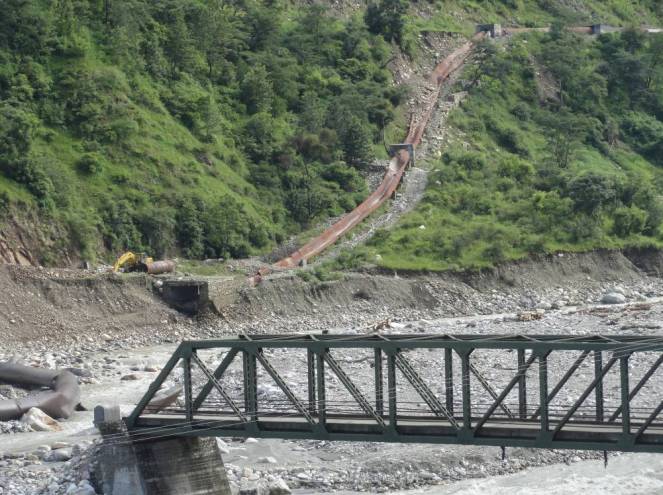

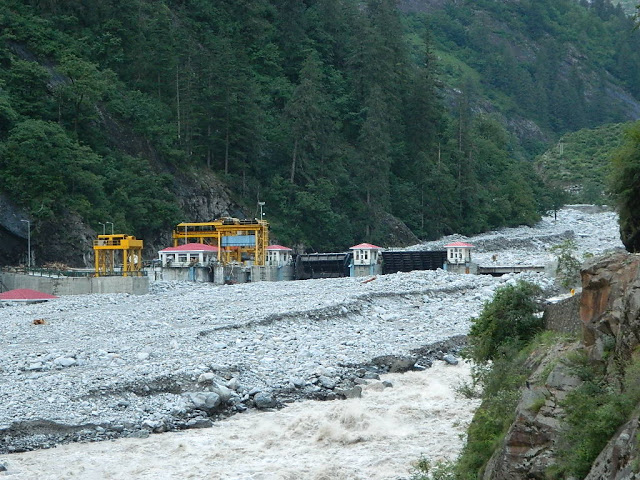
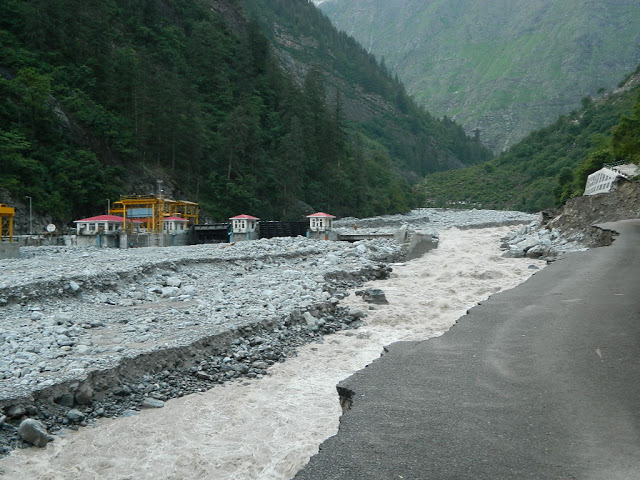


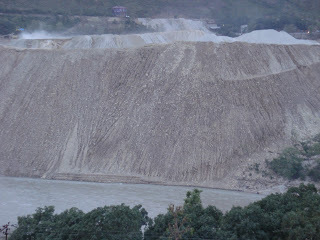
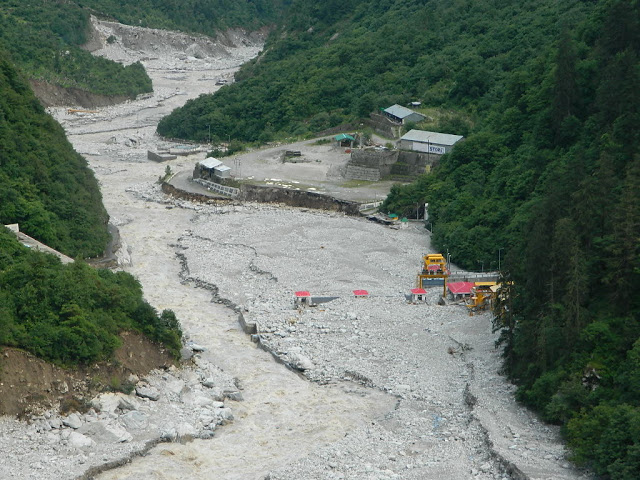


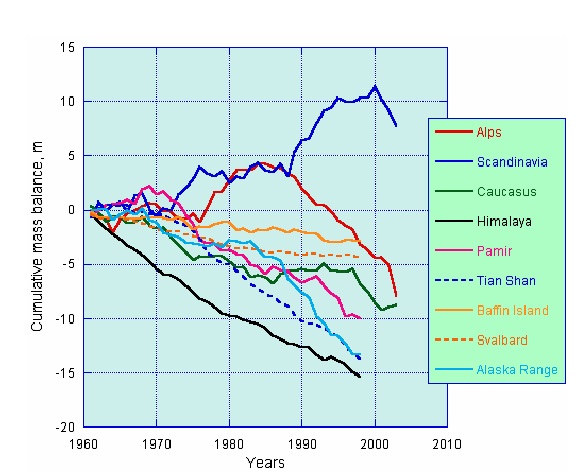
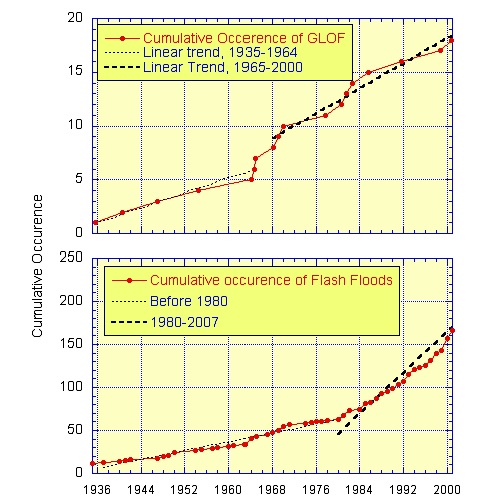
 SANDRP


