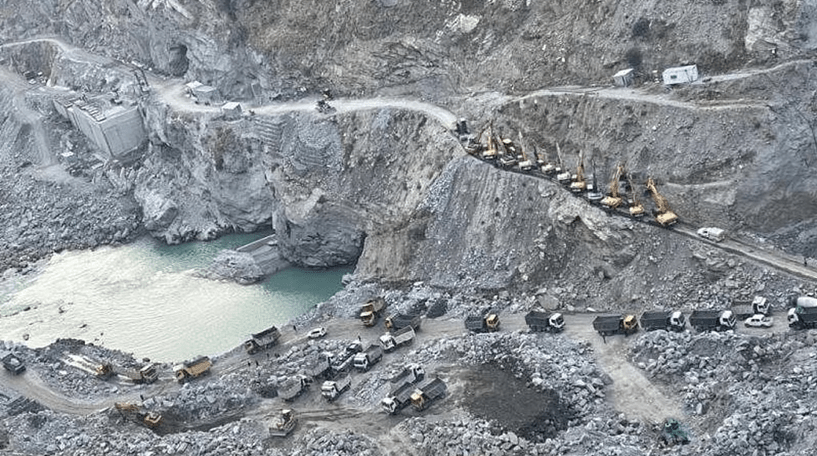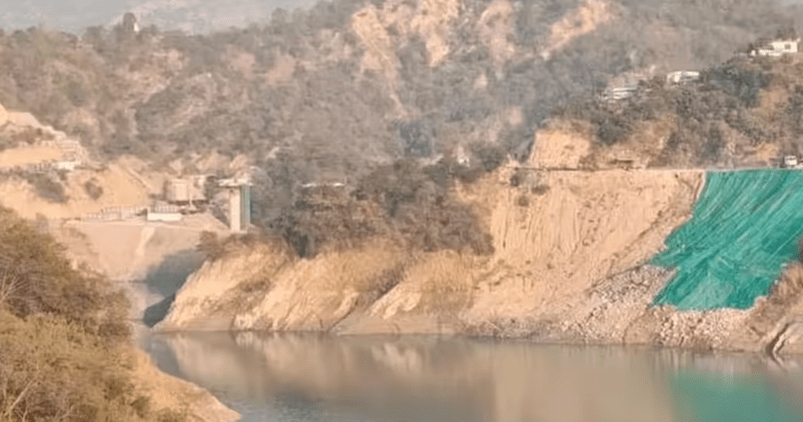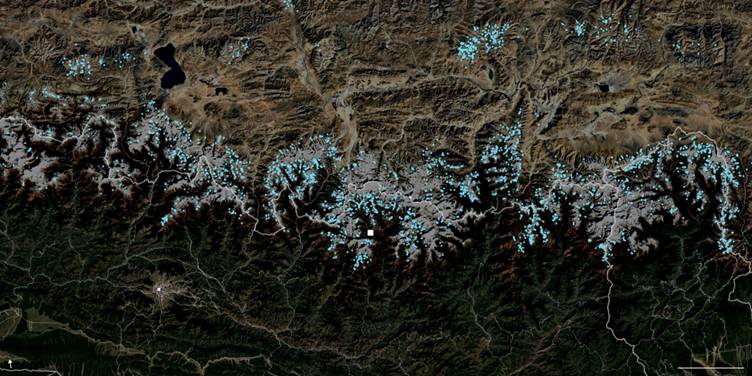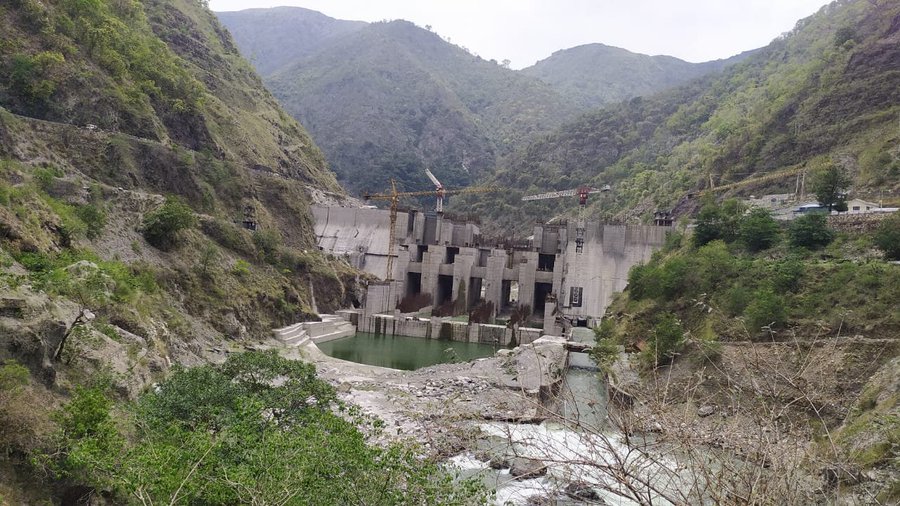
It’s heartening to see the Editorial in Arunachal Times (see below) about the flawed, dishonest, cut and paste Environment Impact Assessment report of the Kalai-II Hydropower project in Arunachal Pradesh. NEHR has written about this to the Anjaw district Deputy Commissioner and one hopes the DC has the courage to take appropriate action: Halt the public hearing and ask the project proponent to get a proper EIA done by a competent and honest consultant. WAPCOS Ltd, which has done the current flawed EIA has been known to do such flawed EIAs on numerous occasions in the past as we have written about it and also informed the MoEF, Expert Appraisal Committee on River Valley Committee, without any impact so far unfortunately.
Continue reading “DRP 150925: Flawed, dishonest Kalai-II HEP EIA”Category: Dams, Rivers & People
Sept. 2025: Six Killed in Luti Dam Flood Disaster in Chhattisgarh
(Feature Image: Damaged Sadsa Luti dam in Balrampur)
A flash flood disaster caused by a significant breach in Luti dam bund has killed six people while one remained missing in Dhaneshpur village near Vishram Nagar under Balrampur district of Chhattisgarh. Six of the flood victims are members of a single family living about 500 meter downstream from the dam area. About eleven villagers were swept away by strong current of waters. Some of them managed to save their lives by holding on to trees and swimming to their safety. Three persons also suffered injuries in this dam induced flood incident.
Continue reading “Sept. 2025: Six Killed in Luti Dam Flood Disaster in Chhattisgarh”DRP 010925: Punjab floods need independent inquiry
(Feature Image: Punjab WRD minister Barinder Kumar Goyal asserted that the timely release of water by the BBMB in June could have significantly reduced the damage caused by the floods.)
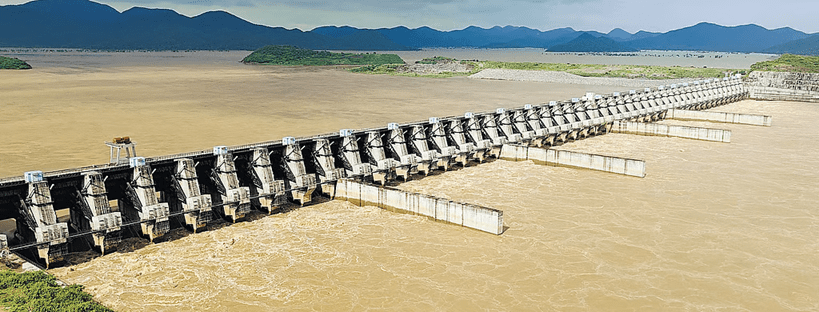
It is clear from the following details that the massive floods that Punjab experienced and parts continue to experience even now has a lot to do with the way Bhakra, Pong and Ranjit Sagar dams were operated. There was sufficient actionable information that was available to take advance water release action. Had these actions been taken, the proportions of the disaster could have been reduced. The risk of further floods remains considering the IMD forecast of heavy rains in catchments of these dams during the remaining weeks of SW Monsoon 2025.
Continue reading “DRP 010925: Punjab floods need independent inquiry”DRP 30 June 2025: Dam Safety concerns arise as monsoon sets in
(Feature Image: Kabini Dam. Source: WRD, Karnataka)
The SouthWest Monsoon has just set in and dam safety issues are coming up in large number of dams in Karnataka, Telangana, besides dam disasters in Himachal Pradesh. This shows how much more we need to do to assure structural and operational safety of India’s dams in changing climate.
Continue reading “DRP 30 June 2025: Dam Safety concerns arise as monsoon sets in”Dams, Rivers & People-June 23 2025: Solar pumps threatening Groundwater Sustainability?
Can Solar pumps threaten groundwater sustainability? The answer is yes. Without integrated water and energy governance India’s solar irrigation drive may worsen environmental stress, say experts. Along with the energy benefits, there are invisible consequences of solar pumps – excess water extraction and energy going waste.
Continue reading “Dams, Rivers & People-June 23 2025: Solar pumps threatening Groundwater Sustainability?”Dams, Rivers & People: June 9 2025: The Myths around Brahmaputra River
The Brahmaputra is believed to have two mythological fathers – Lord Brahma and sage Shantanu. In the 16th-century text Yogini Tantra, dedicated to the worship of goddesses like Kali and Kamakhya, the river is linked to an ancient ablution ritual with the following invocation:
O Son of Brahma! O Son of Shantanu! O Lohit! O Son of Lohit!
I bow before you, wash away my sins of the last three births.
2024: People’s Resistance against Dam, Hydro Projects in Himalayan States
(Feature Image: Tribals in Siang river belt in Arunachal Pradesh demonstrating against a proposed mega hydropower dam. Photo Credit: Special Arrangement/The Hindu)
All through 2024, the vulnerable communities across Himalayan states have continued their resistance and struggles against proposed, under construction & damaged hydro and dam projects as can be seen in this yearend roundup.
The tribals in Siang valley have been urging Central and State govts to stop pushing the giant SUMP. In Teesta valley the GLOF, flood and landslide though have served as wake-up call, the planners seem to ignore the warnings. Facing adverse impacts, the native people in Manipur have resolved to stop further extension to Loktak lake HEP. In Nagaland, fearing damages, the villagers have made the future of Dikhu HEP uncertain.
Continue reading “2024: People’s Resistance against Dam, Hydro Projects in Himalayan States”DRP NB 180324: Electoral Bonds disclosures confirm political economy of large dams
(Feature Image: A controversy over alleged engineering lapses in the ₹1 lakh cr Kaleshwaram project on Godavari triggered an electoral slugfest. HT, 03 Nov. 2023)
The Electoral bonds details now in public domain, thanks to the Supreme Court of India orders, has once again highlighted the political economy of large dams, hydropower projects and irrigation projects. It has once again confirmed what was publicly known that such large water projects involve kickbacks to political parties.
The details so far available involves companies like Megha Engineering, Rithwick Projects Pvt Ltd, Navayuga Engineering Company Ltd, among others. The projects so far that seems to be involved include Polavaram Dam, Kaleshwaram Lift Irrigation Project, Sunni Dam and Hydro projects, Kundah Pump Storage Hydropower project in Tamil Nadu and Silkyara Tunnel, almost all of them also involved in some kind of disaster or other.
Continue reading “DRP NB 180324: Electoral Bonds disclosures confirm political economy of large dams”DRP NB 110324: Bangalore reminds us: Ignore groundwater at your own peril
(Feature Image: People stand in a queue with water cans to get drinking water at Jnana Jyothi Nagar, in Bengaluru. Image Source: PTI/Live Mint, 10 March 2024)
One central lesson of the ongoing Bangalore water crisis is essentially that ignore groundwater sustainability at your own peril. The surface water availability in Bangalore has not decreased, it is the groundwater depletion that is leading to crisis. There is of course the expansion of the city both horizontally and vertically that is increasing demands, but simple arithmetic tells us that if groundwater levels are sustained, it can take care of these increased demands.
The Groundwater sustainability includes sustaining the groundwater recharge and ensuring that extraction does not go past the recharge. Sustaining the groundwater recharge means first understanding the groundwater recharge mechanisms, zones and protecting them. BDA has been sitting for four years on desilting of two lakes: Bellandur and Varthur, which has caused huge impact on groundwater depletion. It also means increasing the groundwater recharge through rainwater harvesting (Bangalore’s failure here is apparent from the fact that government is collecting crores of rupees as fines from those not following the mandatory rainwater harvesting requirements), groundwater recharge wells and diverting tertiary treated sewage, available in Bangalore of upto 300 Million Liters per Day, to lakes and other such recharge zones.
Continue reading “DRP NB 110324: Bangalore reminds us: Ignore groundwater at your own peril”DRP NB 040324: Ganga Water not fit for even bathing in Uttarakhand, UP, Bihar, W Bengal
(Feature Image: A drain falling into Ganga in Varanasi. Source: Amar Ujala)
A number of reports given below from this week shows that Ganga River water is not fit for even bathing at a number of locations in Uttarakhand, Uttar Pradesh, Bihar and W Bengal. These are all official statements, mostly given in reports submitted to judicial bodies or statements by the judicial bodies.
This shows how little progress has been achieved by the government, including by the Prime Minister, central and concerned state governments including by schemes like Namami Gange and scheme of National Mission for Clean Ganga and expenditure of tens of thousands of crores of rupees. This is in spite of the promises given in the past by the Prime Minister and Union Ministers including Nitin Gadkari to clean the river by deadlines that have come and gone.
The worst part is that if we look at the trajectory of various work being done in this regard, we see no hope of any improvement in the foreseeable future unless there is major change in the way this problem is dealt with. But how will such a major change happen?
Continue reading “DRP NB 040324: Ganga Water not fit for even bathing in Uttarakhand, UP, Bihar, W Bengal”