Dams

Impact of 98 Mini Hydel Projects on Cauvery on Bangalore’s Water Supply

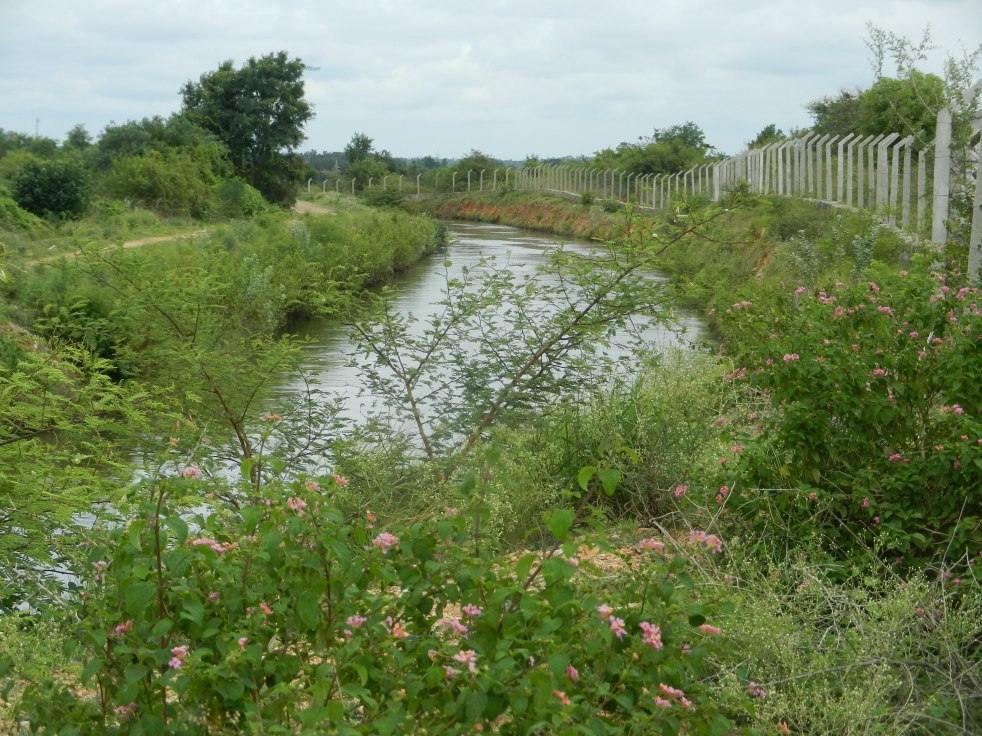
In recent news reports, it was reported that “following the drastic fall in the water-level in the Shiva Balancing Reservoir (SBR), the Bangalore Water Supply and Sewerage Board (BWSSB) has asked Karnataka Power Transmission Corporation Ltd. (KPTCL) and Karnataka Power Corporation Ltd. (KPCL) to stop power generation from four mini-hydroelectric projects in the Cauvery basin, at least till May.”[1] The projects which were asked to stop generation include: Madhavamantri, Satyagala, Shiva Anecut and Shimsha mini-hydroelectric projects.Image

However, the fact is that KREDL (Karnataka Renewable Energy Development Limited) has allotted and commissioned a whopping 98 mini hydel projects on the Cauvery, most of them downstream Krishnaraj Sagar Dam, many of them commissioned. These projects are in the Mysore, Mandya and Chamrajanagara Districts. Actual numbers maybe higher as we have not included projects from Ramanagara in the list as we are not certain how many of those would fall in Cauvery Basin.

24 Projects are in Mysore, 62 in Mandya and 12 in Chamrajanagar.

See Annex 1 for the full list with their status (Only projects from Mandya in the Annex, contact us if you need the full list)

Some of these projects are downstream from the Shiva Anicut from where water supply to Bangalore is routed. In addition to decrease in water availability, water stored by several mini hydel projects increases the evapo-transpiration rate of water, particularly in summer.

Critically, these projects also hold back water, affecting water supply cycles to Bangalore and other towns and villages dependent on the river. Similar conditions had occurred in Mangalore, last year where water levels in the Thumbe Dam fell to alarming levels due to mini hydel projects hoarding up water in the upstream.[2]

In Cauvery, if at all the state government, BWSSB and others concerned about impact of water supply due to mini hydel projects, they need to consider the impact of these projects on the water supply, ecology and livelihoods in the downstream areas and consider halting generation of these projects during this summer when the Cauvery basin is facing sure dire water situation. Mini Hydel Projects which are below the capacity of 25 MW do not need Environmental Clearance, Environment Impact Assessment or Public Hearing. String of Mini Hydel projects on a single river, one after the other, severely affects the hydrology as well as ecology of a river system and also people and their livelihoods in surrounding areas. The same is happening with Cauvery with nearly 100 Mini Hydel projects planned or commissioned. Many projects are right next to the Cauvery Wildlife Sanctuary and are causing impediment to movement of elephants, increasing man-animal conflicts. This has been highlighted by the Karnataka Elephant Task Force.  Due to their cumulative impacts on ecology, High Court of Karnataka has halted construction of any such projects in Western Ghats.

Hence, keeping water supply, hydrology and ecology in view, project level and cumulative impact assessment of mini hydel projects planned, allotted and commissioned along the River Cauvery is an urgent need. Earlier such appeals to KREDL, Karnataka Forest Department and Karnataka Wildlife Board have fallen on deaf ears.

We hope that the Karnataka government, BWSSB, KPCL, KREDL, KPTCL, Cauvery Neeravari Nigam and all others concerned will come together and will conduct this assessment urgently and cancel the projects which are having unacceptable impacts on people, ecology, hydrology and water supply of Cauvery. Immediately, an assessment of their impact is required in the context of summer and dire water situation.

On the International Day of Action for Rivers, Cauvery needs our urgent attention. Cumulative impact Assessment and individual Impact Assessment of unprecendeted number of Mini Hydel Projects is a must.

Nisarg Prakash, Nityata Foundation, Bangalore, nisargprakash@gmail.com

Dr. Latha Anantha, River Research Centre, Kerala, rrckerala@gmail.com

Parineeta Dandekar, South Asia Network on Dams, Rivers and People (SANDRP) parineeta.dandekar@gmail.com

09860030742

(Scroll Down for a list of Commissioned and Allotted Mini Hydel Projects on Cauvery in Mandya District alone)


Annexure 1

Small Hydro Projects in mandya District on Cauvery in Karnataka. Please contact us if you need full list of 98 projects including those in Mysore and Chamrajanagara.

(Source: Karnataka Renewable Energy Development Limited, KREDL: http://www.kredltest.in/Hydroreportall.aspx)

 No. Company Company MHS Status Capacity (MW)
1 ADD Realty Ltd. New 3
2 Aparimitha Power Ventures Pvt. Ltd. Aparimitha Kuppahalli MHS Allotted 4
3 Atria Brindavan Power Ltd. Atria Hanumanahalla Commissioned 8
4 Atria Brindavan Power Ltd. Atria Brindavan Allotted 12
5 Atria Brindavan Power Ltd. Atria Visveswara Commissioned 12
6 Atria Brindavan Power Ltd. Atria KRS Commissioned 4
7 Atria Hydel Power Ltd. Atria Sheshadri Iyer Allotted 10
8 Atria Hydel Power Ltd. Atria Sheshadri Iyer II Commissioned 12
9 Atria Power Corpn. Ltd. Atria Shimsha New 24
10 Atria Power Corpn. Ltd. Atria Yelachagere MHS Allotted 5
11 B & G Energy Pvt. Ltd. B&G Allotted 3
12 B Soilmec India Pvt. Ltd. B Soilmec Hasurubore Halla Allotted 20
13 B Soilmec India Pvt. Ltd. B Soilmec Someshwara II Commissioned 15
14 Bhoruka Power Corpn. Ltd. Bhoruka Mandagere Commissioned 4.5
16 Cauvery Hydro Energy Ltd. Cauvery Shiva Commissioned 3
17 Cauvery Hydro Energy Ltd. Cauvery Akkihebbal Allotted 4.5
18 Energica Power Co. NULL Alugodu Commissioned 0.8
19 Graphite India Ltd. Graphite India Allotted 1.5
20 Hallikeshwara Energy Projects Pvt. Ltd. NULL NULL Allotted 0.5
21 IJK Power Pvt. Ltd. NULL Ganadahalli Allotted 15
22 Innoverse Eco Friendly Solutions Innoverse Thimmana hosur Allotted 0.4
23 Instrument & Systems NULL Banasamudra Allotted 1
24 Kaltronics Office Automation & Networking Pvt. Ltd. Parpikala Mahadevapura Commissioned 0.5
25 Kilara Power Pvt. Ltd. NULL NULL Commissioned 2
26 Limbavali Power Pvt. Ltd. Limbavali Hullahhalla Commissioned 12
27 LK Power Corpn. Ltd. LK Maddur Branch Canal Allotted 2
28 Manasa Gangothri Power Pvt. Ltd. New 3
29 ME Power Gen Project NULL Shree Lakshmi Narashimhaswamy Allotted 3
30 Mythree Power Developers Mythree Sampaji Allotted 0.25
31 Nimishamba Energy India Pvt. Ltd. Nimishamba Nimishamba New 3
32 Obull Power Projects Pvt. Ltd. Obull Sagya New 2
33 Obull Power Projects Pvt. Ltd. Obull Chillapura Allotted 2
34 P6 Energy Pvt. Ltd. KCP Ballenahalli New 2
35 Paramount Estate Pvt. Ltd. Ramapura New 1
36 Paramount Estate Pvt. Ltd. chaluve Allotted 1
37 Parpikala Power Pvt. Ltd. Parpikala Viraja Allotted 0.5
38 Parpikala Power Pvt. Ltd. Parpikala Sithapura Allotted 0.5
39 Penna Cements Industries Ltd. Pioneer Genco Sreeramadevara Allotted 24.75
40 Photon Energy Systems Ltd. Photon Hosaholalu Commissioned 0.5
41 Pioneer Genco Ltd. Pioneer Genco Someshwara Allotted 24.75
42 Samrudhi Hydro Energy NULL KRS Allotted 1.22
43 SLS Power Industries Ltd. Bhoruka Belakavadi Allotted 1.5
44 SM Hydro Power Pvt. Ltd. SM NULL Allotted 10
45 Soham Renewable Energy India Pvt. Ltd. Soham Mahadevapura-2 Allotted 6
46 Sree Mallikarjuna Power NULL Maddur Allotted 0.95
47 Sri Rama Enterprises Rama Doddrasinakere Allotted 0.5
48 Sri Rama Enterprises Rama Chikkarsinakere Allotted 0.5
49 Sriven Power Pvt. Ltd. NULL Heggadahalli Allotted 5
50 Subhash Kabini Power Corpn. Pvt. Ltd. SPML Varuna RBC Allotted 2
51 Subhash Kabini Power Corpn. Pvt. Ltd. SPML Hulikere New 3
52 Trinity Aero & Energy Formulations Pvt Ltd NULL Mosarahalla (Katteri Nala) Commissioned 0.25
53 Trishul Power Pvt. Ltd. Trishul Hemagir Allotted 4
54 V.Pram Power Co. Pvt. Ltd. NULL Devaraya Allotted 0.5
55 Venika Green Power Pvt. Ltd. XS Chikka Commissioned 24.75
56 Venika Green Power Pvt. Ltd. XS Malligere Commissioned 0.75
57 Vijayalakshmi Hydro Power P Ltd (2) NULL Hebbakavadi Commissioned 1.75
58 Vijayalakshmi Hydro Power P Ltd (3) Hebbakavadi Allotted 1.25
59 West Mountain Power Ltd. West Mountain Shimsha Kaveri Confluence SHP Allotted 24
60 XS Hydro Energy Pvt. Ltd. XS Commissioned 24.75
61 Yuken India Ltd. Attigala Allotted 0.35
62 Zen Power Pvt. Ltd. KGK Paschim vahini  Allotted 0.5
 TOTAL  361.47 MW
Dams

Comments on MWR’s DRAFT HYDRO-METEOROLOGICAL DATA DISSEMINATION POLICY (2013)

 The Union Ministry of Water Resources has invited comments by March 31, 2013 (comments to be sent to: nwp2012-mowr@nic.in) on its Draft Hydro-Meteorological Data Dissemination Policy 2013 based on the document available at: http://mowr.gov.in/DraftHydrometlDataDisseminationPolicy_2013.pdf. This is indeed a welcome move. Since there has been no publicity of this notice, we assume that the policy has just been put up on the MWR website on March 7, 2013.

PREAMBLE The preamble to the policy should also mention that the National Water Mission of 2008 and the Draft National Water Policy 2012 (final version still not available on MWR website, typical of the MWR functioning) also require transparent data sharing policy.

LANGUAGE OF DRAFT POLICY AND PERIOD OF COMMENTS The three week period provided for comments is too brief and the policy is also not available in languages that majority of people of this country speak and understand. This is an issue that is of interest to majority of people of the country. Hence the draft policy should be translated into local languages and disseminated widely before setting a reasonable deadline for inviting comments.

UNCLASSIFIED RIVER BASIN INFORMATION The policy should mandate the MWR, CWC, CGWB, India Meteorological Department and all other organisations that are involved in such data collection to put all unclassified hydro-meteorological information promptly in public domain. This is also the requirement implied by the section 4(2) of the RTI act, which the draft policy quotes. United States Geological Society, the agency of USA that is in charge of gathering such data in the US is making this available to the mobile phone users through a publicly available application, see: http://www.enn.com/ecosystems/article/45658. The qualification now put in section 6.1 of the draft policy that the information even in unclassified basins only after “after validation and to the extent published in Water Year Book, Water Quality Year Book, Water Sediment Year Book, Ground Water Year Book” is clearly unacceptable. CWC takes years to publish its year books and the information cannot be held secret till CWC and CGWB find time to make their year books public. About the validation issue, the information promptly put up can say that this is unvalidated information and validated information an be put up after validation. This is even now standard practice adopted by number of agencies like Central Electricity Authority who put up the “tentative” monthly generation reports first and actual reports later on (see: http://www.cea.nic.in/monthly_gen.html).

CLASSIFIED BASINS INFORMATION It is good to see that there is no blanket ban on making public hydro-met information for the classified river basins and there is some application of mind to make some of it public. However, this is still far from sufficient. In the classified basins section, you can say that following categories of data should be made public:

(1) Data pertaining to any “public interest” project in the basin, public interest being defined as per say the Land Acquisition Act, any project where land is compulsorily acquired;
(2) Data related to any project that is defined as a public project under the RTI Act;

(3) Data related to any project being defined as Category A or B1 projects for EIA under the 2006 EIA Notification;

(4) Data related to any project that requires forest land;

(5) Data related to any irrigation, drinking water, flood control project and data related to any hydropower project as all of them are supposed to be public purpose projects. All information that is necessary for assessing and understanding cost benefit, social and environment impact assessment of hydropower projects, dams, diversions, information necessary for assessing and understanding disaster management plans including dam break analysis and such kind of information should be in public domain.;

(6) Data related to any project or intervention that can cause significant impact on the local populations or ecology, and

(7) Any data or information that is made available to any private developer or commercial interests.

(8) All information about the water flow at smaller sub basins of the classified basin should be in public domain, as this is very useful for all water related planning, decision making and analysis.

(9) All information shared with the neighbouring countries should be in public domain.

(10) Information about functioning of all transboundary cooperation projects, plans and committees should be in public domain.

INFORMATION SHARED BY NEIGHBORING COUNTRIES The policy should also make it clear that information shared by the neighbours with India, particularly relevant for people in terms of information related to floods, water flow and water quality etc should also be promptly available in public domain. What is the use of flood forecasting information if it is not available to those who are in the areas that are vulnerable to flood risks that this information is pertaining to?

ORGANISATIONS OTHER THAN CWC AND CGWB There are a large number of organisations besides CWC and CGWB that are also involved in collecting hydro-met information, including IMD, state government, BBMB, NHPC, NEEPCO, SJVN, THDC and private sector hydropower developers. The policy should be pertaining to all such organisations. All information gathered by IMD should be in public domain, in all basins.

METHODS OF DATA COLLECTION In addition to actual data, the methods of data collection should also be available in public domain, so that the information users can also understand the implications of such methods for the accuracy or otherwise of such data. The methods deployed related reports by CWC, CGWB, MWR and others in ensuring the accuracy of the data, including third party evaluation should also be in public domain.

GOOD OPPORTUNITY This is a good opportunity to make the functioning of the ministry of water resources also transparent, it would hugely help improve the image of the ministry. The National Water Mission and new Draft National Water Policy also talk about making available all relevant policy and document in public domain promptly. However, this is yet to happen. We hope you will give due consideration to these comments and accordingly change the policy.

Himanshu Thakkar, South Asia Network on Dams, Rivers & People (www.sandrp.in), ht.sandrp@gmail.com

Dams

PEOPLES’ CONSULTATION ON DAMS & NATURAL RESOURCES IN NORTH EAST

10-11 FEBRUARY 2013, AGARTALA, TRIPURA

The participants of the Two Day “Indigenous Peoples Consultation on Dams and Natural Resources Protection in India’s North East”, held at Agartala from 10 till 11 February 2013, organized by the Borok Peoples Human Rights Organization, Committee on the Protection of Natural Resources in Manipur, North East Dialogue Forum, Citizens Concern for Dams and Development, Siang Peoples Forum, Mapithel Dam Affected Villagers Organization, Peoples Movement for Subansiri Valley, Civil Society Women’s Organization, All Loktak Lake Areas Fishermen Union, Affected Citizens of Teesta, Centre for Research and Advocacy, Save Sikkim, Initiative for Human Rights and Indigenous Peoples, Peoples’ Right to Information and Development Implementing Society of Mizoram, Federation of Khasi, Jaintia and Garo People, All Assam Students Union, Save Mon Federation, All Zeliangrong Students Union, Hmar Inpui United Committee on the Protection of Natural Resources, All Tribal Students Union Manipur, Manab Adhikar Sangram Samiti, Naga Women’s Union hereby:

Asserts that the land, forests, rivers and all natural resources in India’s North East belongs to the indigenous peoples of the region. Our land and all natural resources are inherent sources for our life, culture, identify, survival and future of our present and coming generations.

Further affirms that the indigenous peoples in the region have the right to self determination over our land, territory and resources possessing undeniable rights over its management and use.

Expresses our concern with the introduction of more than 200 mega dams and other unsustainable development policies and projects in the region without the free prior and informed consent of indigenous peoples in the region

Asserts that mega dam constructions already commissioned such as Loktak Project in Manipur, Dumbur Dam in Tripura has already led to widespread dispossession, loss of land, extinction of flora and fauna, demographic impacts on indigenous peoples in the region and other human rights violations.

Taking note of the ongoing and aggressive construction of mega dams such as 2700 MW Lower Siang HEP, 3000 MW Dibang HEP, 1750 MW Lower Demwe in Arunachal Pradesh, 1200 MW Teesta III HEP, 500 MW Teesta IV HEP, 97 MW Tashiding HEP, 280 MW Panang HEP etc in Sikkim, 1500 MW Tipaimukh HEP, 7.5 MW Mapithel Dam in Manipur, 2000 MW Lower Subansiri HEP, 600 MW Kameng HEP in Arunachal Pradesh which has already led to widespread dispossession, environment devastations, militarization, conflicts and human rights violations

Seriously concerned with the projection of mega dams in India’s NE as climate friendly and seeking carbon credits and profits by dam developers from CDM mechanisms of UNFCCC Concerned further with increasing corporatization of our land and resources and the aggressive efforts to explore and drill oil in the region by corporate bodies, such as oil exploration efforts by Jubilant Energy in Manipur, Gas exploration in Tripura by ONGC, to mine uranium in Meghalaya by UCIL, etc.

Concerned with the increasing militarization of indigenous peoples land while pursuing mega dams and other extractive industries and the complication of conflicts by the destructive development processes and subsequent human rights violations:

Concerned with the increasing involvement of international financial institutions, such as World Bank, Asian Development Bank, the Japanese Bank for International Cooperation etc in financing energy and water related projects and in deregulation of related policies to intensify corporatization of our land and resources Concerned with the Government of India’s non application of the UN Declaration on the Rights of Indigenous Peoples, 2007 and the recommendations of other UN human Rights bodies, such as the UN Special Rapporteur on Indigenous Peoples and UN Committee on the Elimination of Racial Discrimination in 2007 and September 2011 to respect indigenous peoples’ rights

Recall the obligations of all states to ensure participatory forms of development and to recognize indigenous peoples rights as reflected in the outcome of the UN Rio+20 conference, June 2012.

Calls upon the Government of India and corporate bodies:

• The Government of India and all corporate bodies should respect and recognize indigenous peoples’ rights over our land and resources in India’s North East and also to respect and recognize their self determined development processes in the region.

• Implement the UN Declaration on the Rights of Indigenous Peoples, 2007 and recommendations of all UN human rights bodies in all development processes affecting their land and resources. • Decommission Dumbur HEP project in Tripura and Loktak Multipurpose Hydroelectric Project in Manipur

• Revoke all MoUs, Environment Clearances for mega dams in the region, especially for 2700 MW Lower Siang HEP, 3000 MW Dibang HEP, 1750 MW Lower Demwe in Arunachal Pradesh, 1200 MW Teesta III HEP, 500 MW Teesta IV HEP, 97 MW Tashiding HEP, 280 MW Panang HEP etc in Sikkim, 1500 MW Tipaimukh HEP, 4000 MW Etalin HEP, 2000 MW Lower Subansiri HEP, 600 MW Kameng HEP etc, granted in the region despite peoples vehement objections and also without their consent.

• Conduct a full review of Mapithel Dam construction and other ongoing mega dams constructions for their compliance with social, environment and human rights norms and safeguards as laid down by the World Commission on Dams, UN Indigenous Peoples Declaration, other human rights treaties and as reflected in “The Future, We Want”, the outcome document of the Rio+20 in June 2012.

• Stop all false projection of Mega Dams as Climate Change friendly in NE India

• Oppose all bilateral or multilateral secretive agreements and negotiations among States on water and energy issues in India’s North East, especially between India and Bangladesh

• Stop all Uranium mining in Meghalaya, Oil exploration efforts in Manipur without the free, prior and informed consent of indigenous peoples.

• Ensure that all International Financial Institutions, World Bank, Asian Development Bank, Japanese Bank for International Cooperation etc investing in India’s North East in water, energy, forestry sector etc should respect indigenous peoples’ rights as per the UN Indigenous Peoples Declaration.

• Repeal Armed Forces Special Powers Act, 1958 and stop all militarization processes associated with development processes in India’s North East

• Protect the human rights of environmentalists, human rights defenders, dam activists campaigning for just and sustainable development in the region We committed to support and extend solidarity to all initiatives and efforts of the indigenous peoples of NE region to assert our right to self determination over our land, wetlands and rivers, forests and all resources and to define our development priorities based on our needs, wishes and aspirations.

Dams

Letter to MoEF: Report on ‘Inviolate’ Forest Areas

The MoEF is seeking comments on  “Report of the Committee to formulate objective parameters for identification of inviolate forest areas”. 23rd Feb is the last day! The comments are  to be sent to secy-moef@nic.inwith subject line “Comments on “Report o the Committee to formulate objective parameters for identification of inviolate forest areas”” as per announcement on MoEF website.The report of the committee can be found at: http://moef.nic.in/assets/Report_on_Inviolate_Forest_area.pdf

Looking at the highly unacceptable nature of the report as it now stands, SANDRP (and its partners) have sent the following letter to the MoEF. We urge as many people to send in comments on this report.

Ms. Jayanthi Natarajan

Minister of Environment and Forests

Email: jayanthi.n@sansad.nic.in


 2. Dr. V RAJAGOPALAN: Secretary(E&F)

Email: secy-moef@nic.in

 Subject: “Comments on “Report o the Committee to formulate objective parameters for identification of inviolate forest areas”: Faulty and exclusionary process to determine criteria for the declaration of inviolate forest areas with respect to coal mining


Dear Ms. Natarajan and Dr Rajagopalan,


We the undersigned would like to put forward our strong objection to the process followed by the MoEF in the drafting of the above mentioned criteria (Report of the Committee to Formulate Objective Parameters for Identification of Inviolate Forest Areas, July 2012) and the short-sighted nature of the approach to identify which forests of India are to be exposed to exploitation by coal mining. Here we would like to point out that the GOM that asked for the expert committee report on this issue was the GOM for environment and development issues in general and if the specific areas need protected since they are inviolate, they should also be inviolate for all purposes and projects?

 This process should be open to public input and engagement, and highlighting that any criteria must take into account the multifaceted nature of human-forest interactions in the country and the millions of livelihoods that depend on the country’s forests, aside from issues of forest cover, forest types, biodiversity, wildlife and endangered species and areas, intact landscapes and hydrological value. Some key missing issues include livelihood issues, cultural issues and interlinking issues with other areas. Another set of parameters missing are: seismically active, flood prone, erosion prone, coastal and such other vulnerable areas. Areas where tribals are in majority should also be excluded without free, prior and informed consent of all the gram sabhas in the region. It is amazing that the social and democratic governance issues get no place in the parameters.

 The grids are not being assigned values of eco sensitivity as per the Pronab Sen Committee report or as per the methodology followed by the WGEEP for the Western Ghats.

 Issue of carrying capacity and cumulative impact assessments and linkages across the areas are key issues.

 The MoEF has kept this process secretive and opaque. By keeping this process behind closed doors and only at internet level in English language, the MoEF has made this process to determine “forest trade-offs” extremely exclusive, expert-driven and narrow in scope. This is contrary our constitution’s stated objectives of upholding democracy and promoting inclusive growth. The fact that this report was finalised in July 2012 and yet only uploaded in the public domain on January 24, 2013, with a period of less than one month for comments, is unacceptable and indicative of the opaque manner in which this critical issue has been approached.

 Our overarching and firm objection is that the MoEF has adopted a non-participatory and undemocratic approach of arriving at these parameters, preferring to work behind closed doors. Our first demand therefore is that these parameters be opened up for extensive public debate, scrutiny and contribution, in such a manner as to hear from those people and organisations that stand to be most affected. This process, of course, cannot be accomplished in less than a month, so we are asking that a new process to achieve the same be announced. Some essential parameters of the process include: translation of the report in local languages, facilitation to ensure that it reaches the communities concerned and affected and a credible independent and transparent process for getting inputs, the process should also be transparent to show how the inputs were used.

 Without prejudice to the above, we would also like to raise strong substantive concerns related to the parameters that have been suggested, which go beyond the issues of process stated above. While the suggested criteria appear to recognise the importance of forests for their biological, landscape, hydrological, wildlife and forest cover and forest type values, they are completely silent on the issue of the livelihoods of forest-dependent communities, their cultural issues and also the inter-linkage issues. As you are no doubt aware, India’s forests are a critical survival resource of millions of Indians. These livelihoods are invariably severely compromised, if not destroyed entirely, by mining, dams and other activities that destroy the forests.

 Such a contradictory approach to India’s forests devoid of their socio-economic context is disconcerting and is also illegal in the context of forest rights act, PESA, Scheduled areas act and Panchayat Raj act. For a country which has a large part of its population dependent directly or indirectly on forests, the future of these same forests cannot be determined solely through the parameters listed in the report.

 The proposed system of weights/scoring is also faulty and arbitrary. The system of averaging the score rigs the process such that a high score on any one parameter (for example, areas notified as Conservation Reserves) is not sufficient to protect the area. By stating that only areas with an average score above 70 will be considered inviolate, the system is in effect discounting the need to protect any area that scores less than 70. This includes, by the committee’s proposal, areas outside the PA network with more than 5 Schedule I species, or areas with occasional wildlife presence, or most Dry Deciduous Forests. The vast majority of wildlife corridors in Western, Central, Eastern, Southern and North Eastern India will fall in these categories.

 Identification of Biodiverse areas through IIRS Data While IIRS data can be one of the useful tools, it cannot be the only one for selection of biodiverse areas. Information and knowledge about the local biodiversity through the involvement of the local communities, academics and civil society should also be used in this process. Under the National Biodiversity Authority Act, Peoples Biodiversity Registers were mandated. Hundreds of villages across India have worked on these registers and documented their biodiversity. The current report cannot just chose to neglect all these institutional and legal mechanisms in place

 A relevant question in this regard is: Do we have sufficient information about for example biodiversity in various Himalayan and Western Ghat forests? New species are being discovered every month even without a concerted effort from the government. Hence, total dependence on IIRS data will be a blunder.

 Wildlife value There is no mention of the aquatic biodiversity in this subject head or anywhere else in the document. Aquatic biodiversity also needs to be taken note of and needs protection. Particularly in the context of protected areas, it needs to be recognised that the aquatic biodiversity within the protected areas would be affected by interventions in the aquatic sources, upstream and downstream of the protected areas and thus would need protection in that respect. Secondly, we have very few protected areas for aquatic biodiversity and we need many more of them.

 Hydrological Value In the committee report there is mention of maintenance of forest cover in the catchment of only first order perennial streams. This, though a step in right direction, is only limited step. It needs to be recognised and understood that the natural forest cover in the catchment of all streams would be of equal importance since destruction of such forest cover has implications for hydrological flow pattern in the downstream areas, aquatic biodiversity in the downstream streams, silt flow patterns in the downstream flows and all the connected water-fish-food-energy securities for the downstream areas.

 This complexity is missed when the suggestion is to declare only the following areas as inviolate areas:

1. The directly draining catchment of the first order streams that are used as drinking water streams for towns and villages,

2. Areas located in direct draining catchments of the first order perennial streams feeding the irrigation and hydropower projects,

3. Areas located within 250 m of the banks of the perennial streams/ rivers, boundary of important wetlands (not clear what is the definition of important wetlands, are all wetlands with area more than 10 ha to be considered as important wetland, is river and its floodplain included in the definition of the wetland?) and storage reservoirs of water supply/ irrigation/ hydropower/ multipurpose projects (does it mean this applies to all natural and man made reservoirs of India, since all such reservoirs are used for one or the other purpose listed here?).

 There is also contradiction when, while on the hand areas within 250 m of the banks of perennial streams and rivers is supposed to be inviolate (and thus get a score of 100), in section 3.6.1 it is suggested that areas within 100 m of the major seasonal streams or rivers should get a score of 70. The trouble is, we do not have ready made baseline data or clear definition as to what areas are supposed to be included when it is mentioned “banks of perennial rivers and streams”. Secondly, there is no clarity as to what would be called a seasonal or perennial river. For example, there are rivers that were perennial but has become seasonal because of human interventions. Then there are some rivers that were seasonal, but have become perennial due to the community conservation actions.

 Moreover as far as hydrological value is concerned, the sustainable existence of value for any sq km grid area would actually depend on what is going on in a much wider area, almost whole of the catchment and also what is happening in the downstream. This reality does not seem to be captured by the suggested methodology. It would not make sense to give value in this sense to only the specific grid, but to protect that much larger area would need to be given implied value and any decisions would need to be keep in mind such inter-linkages.

 The inter-linkages are also important for the implied change in pressures on specific grid element when decisions lead to violation of value of linked grid elements.

 Community conserved areas: Across India, traditional communities have protected stretches of forest, grasslands, wetlands and river through community conservation. As India hosts the CBD this year, we cannot simply neglect Indigenous Community Conserved Areas (ICCAs) even as a signatory to the CBD. All community conserved areas should be declared as inviolate zones.

Fragmentation Similarly, the parameters do not deal effectively with the critical issue of fragmentation of forests as a result coal-mining related infrastructure and ancillary activities – roads, railways, power lines etc. If some areas are recognised as inviolate and the adjoining areas are opened up for mining, there will be demands on the adjoining forests for ancillary infrastructure. Fait accompli arguments will be advanced, as is currently the practice among industry proponents.  Any discussion on excluding mining from critical forest areas needs to take on board cumulative impacts of the land use change which is likely to take place. The MoEF needs to engage with this critical question through widespread debate and consultation as a first step.

Faulty Decision Rules: Decision Rule 1: They have not included already identified ecologically sensitive areas.

Decision Rule 2: A score of 70 is way too high for determining that the grid is inviolate. The rule should be that any area that gets over 70% score with respect to any one of the parameter should be inviolate area.

Decision Rule 3: Only if 90% or more grid from any coal blocks are outside inviolate zone, should there be consideration for such block for mining.

 Compliance A key question in this regard is, who will monitor and ensure that the inviolate forests will remain inviolate? Considering the past track record of the bureaucracy in MoEF, there is little credibility of their ability or interest in keeping such areas inviolate. The example of areas declared earlier as no go areas for mining and how almost of them are now gone is fresh in the minds of the people. We need a credible mechanism involving the local people in ensuring compliance of the decisions. 

Keeping in mind all of the above, we demand that:

 a) The above mentioned criteria be opened up for more detailed scrutiny and debate with an acceptance of the multiple roles played by our forest areas. This process (some essential elements of the process are mentioned above) must be inclusive and broad-based, in contrast to the exclusionary process followed thus far.

 b) That the ministry uphold the spirit of environment justice and the need to safeguard the livelihoods of forest dependent communities as also their cultural issues when making decisions on forest diversion.

 c) That no further forest diversion for mining should be allowed until the conclusion of a transparent and open process as specified in point a) above. This is especially important given the growing conflict in forest areas.

 d) Any further criteria setting process be inclusive and broadbased rather than the exclusive and expert dominated processes like is in the present case. This goes completely against the government’s constitutional commitment to being a sovereign, socialist republic.

 We look forward to your response and the announcement of an open consultation process on the need to protect our remnant forests from coal mining and other activities in forest areas.

 Sincerely

Himanshu Thakkar (ht.sandrp@gmail.com)

South Asia Network on Dams, Rivers & People, 86-D, AD block, Shalimar Bagh, Delhi 110088 (www.sandrp.in)

Parineeta Dandekar (parineeta.dandekar@gmail.com)

SANDRP, Pune.

Dams

GOI Gazette notification of Cauvery Water Disputes Tribunal Award on Feb 19, 2013: Clear Partisan attitude: Proof lack of any interest in water, people or environment?

GOI Gazette notification of Cauvery Water Disputes Tribunal Award on Feb 19, 2013:

Clear Partisan attitude: Proof lack of any interest in water, people or environment?

The belated gazette notification of the final award of the Cauvery Water Disputes Tribunal, over six years after the Tribunal declared its award clearly signifies that the Union Government in general and its water resources ministry has no sensitivity or possibly sense for water, people or environment. The fact that it has been notified only under the deadline given by the Supreme Court of India more than once, as admitted by the Ministry in its Press Release, substantiates this point.

However, it also speaks a lot that the Supreme Court which has been sitting on the petitions from Karnataka and Tamil Nadu challenging the final award for all this years, and has been entertaining the petition on this issue all these years, has not found it fit to either dispose or dismiss those petitions, nor asked for this notification earlier. The direction for notification that the SC now gave could and should have been given earlier.

Also in this entire din, neither the concerned states nor the centre has given necessary encouragement and space to the Cauvery Family experiment that tried to bring the farmers from across the states together to understand, appreciate and resolve the issues through dialogue. This is particularly pertinent since people, the users of the water, river and the connected ecology were not a party before the tribunal. The people have not been heard by the tribunal, only the states have been, assuming that states represent the interests of the people, which is far from correct assumption. Nor do the people have any place in the regulatory system put forward by the Tribunal.

Some of the noteworthy features of Final CWDT award are:

– Meagre allocation of 10 TMC for environment flows in this major river system, which comes to just 1.35% of the assessed annual flow of 740 TMC (Thousand Million Cubic Feet or Billion Cubic feet) at 50% dependability (much lower than the usual 75% dependability assessment for other rivers).

– No calculation of groundwater use in inter state water allocation when ground water is increasingly the mainstay of our water use.

– No clear priority for drinking water and livelihood supporting irrigation water.

– No stipulation that environment flow should not be reduced in any lean season.

– Water storages below 3 TMC is not brought into calculation, so the whole assessment is biased in favour of BIG projects.

– No clear encouragement for System of Rice Intensification and water efficient cropping pattern across the basin.

For further comments see: https://sandrp.in/rivers/Article_Cauvery_Tribunal_Verdict_0207.pdf

Significantly, the SC order of Feb 4, 2013 is clear that this notification is without prejudice to the ongoing proceedings in the apex court. So there is no sense of finality as yet. The gazette notification in any case comes into force in 90 days, so sometime in May 2013, by which time Karnataka would have had its state assembly elections. So there is a lot of electoral and power politics that this issue will see.

SOME USEFUL LINKS:

1. PIB PR: http://pib.nic.in/newsite/erelease.aspx?relid=0

Ministry of Water Resources notifies the Final Award of CWDT

On January 4, 2013, Hon’ble Supreme Court noted that party States did not have any objection to the final decision of Cauvery Water Disputes Tribunal (CWDT) being notified. Accordingly, Hon’ble Supreme Court in its decision dated February 4, 2013 directed the Central Government to publish in official Gazette the final decision given by the CWDT dated February 5, 2007 by February 20, 2013.  Accordingly, Ministry of Water Resources has notified the Final Award of CWDT dated February 5, 2007 on 19th February, 2013.  Details of the notification may be seen at http://www.wrmin.nic.in.

2. MWR Notification on CWDT: http://www.wrmin.nic.in/writereaddata/linkimages/CWDT_Gazette7023249620.pdf

3. Feb 2007 Article by Himanshu Thakkar on Cauvery Award was titled Cauvery Tribunal Award 2007: Why it fails the tests of science, efficiency and equity?: https://sandrp.in/rivers/Article_Cauvery_Tribunal_Verdict_0207.pdf (this article was published then at: http://www.rediff.com/news/2007/feb/06guest.htm)

4. Full CWDT award is available at: http://mowr.gov.in/index3.asp?subsublinkid=376&langid=1&sslid=393

Dams

Hague Court gives ONE ALL verdict in Kishenganga dispute between India and Pakistan

The Permanent Court of Arbitration at Hague has given its partial (final and binding on the issues on which it has decided) award on the India Pakistan dispute on the 330 MW Kishenganga hydropower project in Kashmir. Out of two references filed by Pakistan against the project in India, the PCA ruling is in favour of India for one (whether India can divert the waters of Kishenganga for hydropower project) and in favour of Pakistan for the other (whether India can reduce the level in the reservoir below minimum draw down level for sediment flushing). The PCA is yet to decide about the environment flows that India must release downstream from the diversion site. It would be interesting to see how PCA decides this and also about the manner of release of the flows, ideally the releases should be through a properly designed and well researched fish ladder. We will have to wait for this till the end of the year 2013. See details below.

PCA PRESS RELEASE: INDUS WATERS KISHENGANGA ARBITRATION (PAKISTAN V. INDIA)
Court of Arbitration Issues Partial Award
in First Arbitration under the Indus Waters Treaty 1960

THE HAGUE, February 19, 2013.

The Court of Arbitration constituted in the matter of the Indus Waters Kishenganga Arbitration (Pakistan v. India) has rendered a Partial Award in respect of the dispute between Pakistan and India under the Indus Waters Treaty concerning (1) the legality of the construction and operation of an Indian hydro-electric project located in India-administered Jammu and Kashmir; and (2) the permissibility under the Treaty of the depletion of the reservoirs of certain Indian hydro-electric plants below “Dead Storage Level.”1

In its Partial Award, which is final with respect to the matters decided therein, without appeal and binding on the Parties, the Court of Arbitration unanimously decided:
1. that the Kishenganga Hydro-Electric Project (KHEP) constitutes a Run-of-River Plant under the Treaty, and India may accordingly divert water from the Kishenganga/Neelum River for power generation by the KHEP in the manner envisaged.

However, when operating the KHEP, India is under an obligation to maintain a minimum flow of water in the Kishenganga/Neelum River, at a rate to be determined by the Court in a Final Award.

2. Except in the case of an unforeseen emergency, the Treaty does not permit India’s reduction below “Dead Storage Level” of the water level in the reservoirs of Run-of-River Plants located on the rivers allocated to Pakistan under the Treaty. This ruling does not
apply to Plants already in operation or under construction (whose designs have been communicated by India and not objected to by Pakistan) The Court expects to be able to render its Final Award determining the minimum flow of water India would be required to release in the Kishenganga/Neelum River by the end of 2013.

For full Partial Award of PCA dated Feb 18, 2013 and Press Release of PCA on this dated Feb 19, 2013, See: http://www.pca-cpa.org/shownews.asp?nws_id=351&pag_id=1261&ac=view

Dams

Jan 2013 issue of “Dams, Rivers & People”

Highlights of  the Jan 2013 issue
Jan-Feb Issue of Dams, Rivers and People
As “Dams, Rivers & People” completes ten years, we are happy to bring it to you in brand new format. Please do let us know how you like it.

Analysis of MOEF’s EAC on RVP: The Expert ApprovalCommittee

The Ministry of Environment & forest (MoEF) has constituted different Expert Appraisal Committees (EAC) for the appraisal of various developmental projects including River Valley & Hydroelectric projects. The Union Ministry of Environment and Forests’ (MoEF) Expert Appraisal Committee (EAC) on River Valley and Hydroelectric Projects (RVP) has not rejected a single one of the 262 hydropower and irrigation projects considered by it. This is one of the clues that EAC has strong pro project and anti people bias

Nyamjang Chu

MoEF’s EAC on River Valley Projects:Project wise details (April 2007 to Dec 2012)

This document presents decisions of meetings of the EAC during the period from Apr 2007 to Dec 2012. The document is organized region wise, then statewise, and finally as per project. This list provides evidence for the information provided in the lead article about the functioning of the EAC.

Man holding a Mahseer

Freshwater Biodiversity Conservation finds place in Indian Biodiversity Congress!

Indian Biodiversity Congress lays stress on Freshwater Biodiversity conservation. Looking at the huge and at time irreversible impact of dams and hydropower projects on aquatic and terrestrial biodiversity, Indian Biodiversity Congress has made some specific recommendations to the MoEF

People protesting against Luhri HEP

Reject Environment Clearance for the proposed 775 MW Luhri hydropower project

This letter to the MOEF draws attention to the many inconsistencies in the EAC’s approval of this project on the Sutlej River. It points out that the EIA is ‘inadequate, full of contradictions and misrepresentations’ and recommends blacklisting of the agency involved

Photo of plants in a wetland

Include rivers in India’s definition of Wetlands, follow the Ramsar Convention

The Ramsar Definition of wetlands includes permanent, seasonal, and intermittent Rivers.Despite this, Wetlands (Conservation and Management) Rules 2010 EXCLUDE Rivers from the definition of Wetlands, thus ensuring that no riverine stretches will be nominated for protection.

South Asia Network on Dams Rivers and People

Related News: 

You are receiving this email because you have subscribed to ‘Dams, Rivers and People’
Our mailing address is:

SANDRP

Kanchanban

Pune 411 038

India

Add us to your address book

Email Marketing Powered by MailChimp
Dams

Hilsa is India’s Salmon

Just like Salmon is special to the United States, Hilsa fish is special to Indians. Its declining rapidly. Causes of this decline are well know. Hilsa is anadromous fish and needs to complete its lifecycle from sea to river, which is now impossibles through the hurdle of dams. This article highlights the facts well, however, its sad to see that institutions like CIFRI and ICAR are still not ready or brave enough to tackle the main issue of dams. They are busy funding more research projects about Hilsa. The gap between research and burning reality is widening..

http://www.business-standard.com/article/opinion/surinder-sud-the-right-bait-to-catch-hilsa-113021101361_1.html

SANDRP worked on a report which uniequivocally proved that large dams and infrastaturye projects have been behind fishery collpases in many Indian Rivers: https://sandrp.in/dams/Impacts_of_Dams_on_Riverine_Fisheries_in_India_ParineetaDandekar_Sept2012.pdf

Dams

Freshwater Biodiversity Conservation finds place in Indian Biodiversity Congress!

IBC Recommendation to MoEF: Safeguarding Riverine Biodiversity and ecosystem goods and services of rivers and inland water bodies

http://www.ibconline.co.in/files/IBC_REPORT_AND_RECOMMENDATIONS_2012.doc

Dams, hydropower projects, diversions and hydrological modifications to rivers and inland water bodies are having a huge negative impact on biodiversity and dependent livelihoods across India. Biodiversity Assessments for such projects is nonexistent or fundamentally inadequate or flawed including in in ecological hotspots like Himalayas and Western Ghats. Environmental Impact Assessments are severely flawed. Credible mitigation measures for endangered, threatened, endemic or rare fish and other biodiversity are not in place, even Endangered and iconic species like Ganges River Dolphins are under threat from absence of flows in the downstream and hydrological obstructions. Downstream impacts are neither part of social impact assessment nor part of resettlement and rehabilitation measures. All these  gaps are leading to incremental, cumulative negative impacts on biodiversity and local communities which depend on riverine biodiversity for their livelihoods.

IBC recommends that:

  • EIA notification 2006 should be amended urgently to include all hydel project above 1 MW capacity, all large dams including those for drinking water, industrial use, irrigation above 1000 hectares and flood control structures under its purview
  • Cascade of Hydropower dams in any river basin, including in the Indian Himalayas and Western Ghats should be reviewed, cumulative impact assessment including carrying capacity and river basin studies should be mandatory. No further projects should be considered before such studies in any basin having two or more projects. The studies should be done by credible independent agencies having no conflict of interest.
  • Recommendations of studies like Wildlife Institute of India’s report on Cumulative Impacts of Hydel Development on terrestrial and aquatic ecology of Alaknanda and Bhagirathi Basins should be accepted and 24 hydel projects should be immediately scrapped for their irreversible negative impacts on biodiversity, as recommended by the WII study.
  • Process of Environment Impact Assessments should be made stringent, consultants with conflict of interest should be blacklisted. More scientific inputs and peer reviews should be brought in these studies.
  • Participatory Studies about environmental flow requirements of rivers, free flowing distance of rivers between two dams (should be more than 5 km as suggested by additional chief secretary of Himachal Pradesh in a report to high court) and downstream impacts of dams should be undertaken by the MoEF with participation from scientists and communities across the country. In the absence of these studies, more projects should not be sanctioned.
  • Fish Diversity and dependent livelihoods of inland fisherfolk are being greatly jeopardized by current dam development, in the absence of any mitigation measures. We urge the MoEF to undertake studies about efficacy of current fish farms and hatcheries, studies on fish ladders and passes and impacts of dams on fish diversity in India and not sanction new dams in areas of great fisheries diversity like Western Ghats and Indian Himalayas in the absence of mitigation measures and studies
  • Dams affecting community conserved areas and conservation reserves should be scrapped like 780 MW Nyamjangchhu Project in Arunchal Pradesh affecting last wintering sites of Black-necked Cranes, a community reserve.
  • Free-flowing rivers of India need legal protection as reservoirs of rare biodiversity.
  • Ramsar and other wetlands should get legal protection from impacts due to upstream abstractions.
  • In every state and ecological zone, certain rivers should be left as no go zones for dams and hydropower projects.
  • Community conserved riverine stretches and community fish sanctuaries should get legal protection.
Dams

India Pushing for a Water Treaty with China?

This is indeed very interesting, welcome news if India starts pushing China for a water sharing treaty:

http://www.assamtribune.com/scripts/detailsnew.asp?id=feb1113%2Fat08
India for water sharing pact with China
Feb 10 – Water is emerging as a new possible irritant between China and India, which has proposed a bilateral mechanism to deal with it, reports PTI.

In a significant move, India is pressing China to have either a water commission or an inter-governmental dialogue or an treaty to deal with water issues between the two countries.

This comes in the wake of Chinese move to approve construction of three more dams on Brahmaputra river in Tibet, in addition to the one being built without informing New Delhi.

Following the Chinese move, a high-level inter- ministerial committee, comprising officials from External Affairs Ministry, Defence Ministry, Department of Space among others met here to take stock of the situation and decided to take it up with China.

The issue was once again taken up when a senior Chinese embassy official met MEA officials to give details on the construction proposal.

“Though, the issue (of having a bilateral mechanism) has been part of our discussions earlier also, the recent move by Beijing has further pushed the matter. There is a need for some mechanism to deal with water issues between the two countries on the lines of what India has with other countries like Pakistan,” sources told PTI.

While India has an Indus Water Treaty with Pakistan under which the two countries share information and cooperate on the matter, a Ganges Treaty with Bangladesh establishes a 30-year water-sharing arrangement and recognises the neighbouring country’s rights as a lower-level riparian.

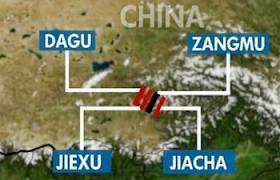
Recently, the Chinese cabinet had approved a document which mentions construction of three dams at Dagu, Jiacha and Jiexu on Brahmaputra.

Reacting to the Chinese move, the official spokesperson in MEA has said India carefully monitors all developments on the Brahmaputra river. “As a lower riparian state with considerable established user rights to the waters of the river, India has conveyed its views and concerns to the Chinese authorities, including at the highest levels.”

The official spokesperson also stressed the need for China to ensure that the interests of downstream states are not harmed by any activities in upstream areas.Image