The World Bank has decided not to lend financial assistance to the massive Luhri Hydropower project on Sutlej River in Himachal Pradesh. The World Bank, which was to provide a huge USD 650 million to the $ 1150 million project, on its website now indicates[i] the status of the project as DROPPED. Environmental groups and local affected people under the banner of Sutlej Bachao Jan Sangharsh Samiti consider this is a major victory for the campaign to save the last remaining stretch of “free”[ii] flowing Sutlej River.
Now that the Bharatiya Janta Party (BJP) has made its manifesto for the 2014 Parliamentary elections in India public on April 7, 2014, we are in a position to make a comparative reading of manifestoes of three most prominent parties in fray at national level, namely the BJP, Congress and Aam Aadmi Party (AAP). While manifestos are largely ritualistic exercises, they are also the most important documents that declare the intentions of the political outfits, besides the other statements of the party leaders and track records of the parties and their leaders. These documents need to be read both in terms of the promises that they make as also the roadmaps that the parties provide to achieve the promises.
Overall impression In that respect, the overall impression that BJP manifesto (let us begin with a comment on BJP manifesto since all the opinion polls are giving the party an edge over others, though it is well known that opinion polls are largely doctored exercises that have proved wrong so many times) gives is one of an arrogance: both in terms of the content and the timing of the document. The BJP manifesto reads more like a laundry list of feel good factors, without any roadmap as to how the party hopes to achieve the listed objectives. The fact that the party came out with manifesto even as the voting in first phase of the elections was already underway, signals that it is not bothered to tell people why they should vote for them. There is little in the track record of the party in the states it is in power for over a decade, like Gujarat, Madhya Pradesh and Chhattisgarh, to show that it is serious on these issues in these states.
Congress manifesto, also of 52 pages like that of the BJP manifesto, provides much more details about the specific issues they list, but it is not written in particularly imaginative style, nor is it making any attempt at taking care of the negativity that has been generated around its performance over the last decade. In that sense, Congress’s manifesto makes for somewhat bureaucratic and boring reading. It also lacks in providing the big picture and a big vision.
The AAP manifesto at 28 pages is more interesting as it is not written as a marketing product pamphlet. It starts with the section on Jan Lokapal, their main plank and tries to answer why people should vote for AAP. The major highlight of the whole manifesto is that the party wants to give Gram Sabhas and mohalla sabhas a decisive say in all matters at their respective levels and in overall governance. This is a major departure from other two manifestos, besides their reliance on tackling corruption & Crony Capitalism with more seriousness and convincingly than other two parties. However, while it is more elaborate than the BJP and Cong manifestos in describing how the party seeks to change the governance in India, it seems less comprehensive. Another lacuna of the AAP manifesto’s PDF file is that it is not searchable, unlike the other two manifestos.
Having taken an overall view, let us look at some specific issues that we are concerned about.
Natural Resource Management The BJP manifesto seems to have poor understanding of the scope of ‘Natural Resources’. The manifesto lists only coal, minerals and spectrum among natural resources. The most important natural resources of land, forests, rivers, water sources and biodiversity are not even listed. It seems the party is only interested in directly marketable (as in equity market) commodities that their industry friends are interested in. Interestingly, the section starts with Gandhi’s famous quote on need vs greed, but there is no reflection of this principle in what is said here.
The Congress manifesto talks about “establishment of a clearly defined policy for fair, transparent equitable and time bound development of natural resources. The Indian National Congress will immediately put in place a Special Purpose Vehicle for this.” The fact that this comes in industries section does not sound very confidence inspiring.
The AAP has a section on natural resources that does include water and forests among natural resources along with major minerals and provides Gram Sabha pivotal role, without whose consent, decisions about exploitation of such major natural resources cannot be taken. The ownership of the minor natural resources remains with the gram sabhas in AAP scheme of things.
Environmental governance The BJP section on this issue has interesting heading: “Flora, Fauna and Environment – Safeguarding Our Tomorrow”. However, the section or the rest of the document does not tell us anything how they are going to improve environment governance in India or do they even see this need. On the contrary, by stating in Industry section that it intends to “Frame the environment laws in a manner that provides no scope for confusion and will lead to speedy clearance of proposals without delay” and talking about single window and speedy clearance elsewhere, it is clear what is their understanding is and where they intend to go. This can only be disastrous for India’s environment and environmental governance.
The Congress Manifesto claimed that it intends to set up National Environment Appraisal and Monitoring Authority. However, as Supreme Court judges promptly remarked, this is actually the order of the Supreme Court and Congress had no business of putting it on their manifesto. Moreover, Congress lacks credibility on this, since, when Jairam Ramesh, as environment minister proposed this, he was actually removed and his successor did nothing to implement this. Moreover, the environment ministry under UPA II actually filed an affidavit in the Supreme Court saying that it is not possible to set up such an authority with any teeth. The appointment of Union Oil Minister Veerappa Moily as Environment Minister, forgetting about conflict of interest and the actions that Moily as been taking subsequently including pushing the disastrous Yettinahole Diversion Project to benefit his parliamentary constituency in Karnataka takes away any credibility the party may have had. It is true that National Green Tribunal is the only major contribution of UPA on this issue, but that too is largely due to Mr Ramesh as his successor ministers tried their best to scuttle the functioning of NGT.
The AAP manifesto talks about reforming “Ministry of Environment and Forests and its agencies so that they can empower and facilitate Gram Sabhas to be effective custodians and managers of their local natural resources.” This is certainly welcome. However, there are insufficient details as to how this will be achieved. Their clubbing of Ecology and Economy in one section sounds promising at one level, again how this will be implemented without allowing ecology to be subservient to economic interests is not described.
Rivers It is well known that Inter Linking of Rivers (ILR) is high on agenda of BJP and Mr Modi. However, for some unclear reasons, they have played down ILR, saying, “Inter-linking of rivers based on feasibility.” Possibly they do not want to raise the hackles prematurely. However, the Narmada Kshipra link that was recently inaugurated and the track record of the BJP in Madhya Pradesh and elsewhere seems to suggest that BJP state governments are working at cross purposes with the national ILR plan.
The BJP manifesto says, “BJP commits to ensure the cleanliness, purity and uninterrupted flow of the Ganga on priority”, but this is not helpful, since no roadmap is given how this will be achieved. Moreover, this intentionally ignores the three biggest threats that the Ganga and other rivers face: The dams & hydropower projects, the urban & industrial pollution & encroachment. The BJP manifesto is silent on all these three threats to the river. Even on the issue of River Pollution, the only thing the party manifesto condescends to inform the readers is that “a massive ‘Clean Rivers Programme’ will be launched across the country driven by people’s participation.” No details again. Even on the issue of seemingly unsolvable urban water pollution, the only solution party can offer is more sewage treatment plants, choosing to ignore that the existing STPs are non functional most of the places. Interestingly, BJP manifesto has a section on North East India (unlike the other two manifestos) and mentions the flood problem of Assam and promises tackling the river, but without any details as to how.
It is worth noting in this context that when BJP’s PM candidate Mr Modi visited North East India in general and Arunachal Pradesh in particular he did not mention ILR or large hydropower projects in that region, knowing that local sentiments are totally against them. However, Mr Modi, while proposing his national energy plan in Madhya Pradesh in March 2014, said that North East India is heaven for hydropower projects! The manifesto again is expectedly silent on this issue!
The Congress manifesto says that “The National Ganga River Basin Authority has begun the ambitious task of cleaning the Ganga River. We will use similar models of creating empowered, well-funded agencies to clean other major rivers in the country”. Now this sounds mindless and incredible! NGRBA, five years after it was notified, has been the most ineffective, non transparent institution that has achieved no change in the state of the river. How can such an institution be used as a model for other rivers? The authors of the Congress manifesto seem completely ill informed on this score.
The AAP manifesto seems to have nothing on Rivers: a major omission of the manifesto.
Water The BJP manifesto promises piped water supply to all households! Irrespective of if all households need it or not or is it feasible or appropriate or not. The BJP manifesto claims that there will be 50% gap between demand and supply of water in India by 2050. This is totally off the mark, according to Govt of India’s National Commission for Integrated Water Resources Development, country’s water requirement will match the available resources in 2050, even considering high growth trajectory, we are going far below that level currently. The BJP manifesto writers seem to have no clue about the realities, or they are just trying to push greater market for water companies. There is one promise in this regard that is welcome: “We will promote decentralized, demand-driven, community-managed water resource management, water supply and environmental sanitation.” However, how they will promote this is not given. Moreover, this promise remains unconvincing considering they also talk about river linking.
The Congress manifesto talks about adding 1 crore ha in gross irrigated area in 12th Plan, two years of which are already over! It clearly looks impossible, but more importantly, it does not say how they will achieve it. Both Congress and BJP manifestoes talk about water conserving irrigation techniques, which is actually seems to be scam ridden and affected by crony capitalism. Congress manifesto also talks about increasing irrigation efficiency and water use efficiency in general, but without any roadmap. More worryingly, the UPA government has pushed the proposal to allow Jain Irrigation (the biggest private supplied of drop and sprinkler systems) to set up the National Bureau of Water Efficiency! Crony capitalism?
The AAP manifesto talks about giving priority to watershed development to reduce pressure on big irrigation projects, but fails to take an informed and prudent stand on performance of big irrigation projects. This is certainly a major let down of AAP manifesto.
Urban Water Issues There is nothing noteworthy in BJP manifesto in this regard, even as it plans to prioritise Urban Development. It has no clue about how to tackle Urban Wastewater as it only talks about more STPs when existing STPs are not working, including in Modi’s Gujarat.
The Congress manifesto talks about continuing the problematic Jawaharlal Nehru Urban Renewal Mission under which over Rs 70000/- crores have been spent, mostly on Urban water issues, without any attempt at democratic governance, local water options, demand side management or recycle and reuse of treated sewage. This is creating havoc on surrounding areas with displacement of tribals, destruction of forests and pushing unjustifiable dams. But it seems Congress is least bothered about it. The problem is so acute that some 18000 people in Thane to be displaced by Kalu dam meant for Mumbai have decided to boycott the polls, since the dam is being taken up without any clearances and when all the gram sabhas have passed resolutions against it. The writing is clearly on the walls for the Congress.
The only positive aspect in this regard in AAP manifesto is the proposed empowerment of Mohalla Sabhas. Let us hope they are able to show how this will work.
Climate Change It is interesting to see that Climate Change is an issue recognised by BJP and Congress manifestos, but what they say there is disappointing in both cases. BJP manifesto talks about launching a National Mission on Himalayan Ecosystem, but there is already one existing, which is supposed to be under implementation for some years, but no one seems to know what it is doing! BJP Manifesto also talks about program devised to arrest melting of Himalayan glaciers, sounds strange, since no such program is known.
The Congress manifesto promises of continued implementation of National Action Plan on Climate Change when the plan and its mission stand discredited, along with the Prime Minister’s Council on Climate Change. These are the things that make the Congress manifesto sound so bureaucratic.
AAP manifesto seems silent on climate change.
Renewable Energy It is welcome to note that BJP manifesto talks about promoting small hydro with local support and without displacement. However, it is not welcome that there is no mention of big hydro and big dams. Their promise to push infrastructure development in Arunachal Pradesh without any mention of participatory decision making with the local communities is likely to raise suspicion that this is for pushing big hydro there. The manifesto is also silent about promoting household level solar power projects.
The Congress manifesto is also silent on promoting household level solar power projects. It talks about giving new thrust to small hydro under new and renewable energy sources, but these projects need social and environmental impact assessment, the manifesto is silent on this.
The AAP manifesto is the only one that does talk about pushing decentralized renewable energy plants, which is welcome.
Tribal Development The scary part in BJP manifesto in this regard is that tribal development in India will be pushed on the lines of what has been achieved in Gujarat, Madhya Pradesh and Chhattisgarh! If this is the tribal development model for tribals in other areas, tribals all over India need to be very wary of this party.
The Congress manifesto says: “We will ensure the stringent implementation of PESA, 1996 and the Forest Rights Act, 2006 to ensure that Scheduled Tribes are empowered and brought into the mainstream.” Sounds good, but the trouble is what has Congress governments both at centre and states done? Nothing about PESA and very little to implement FRA in letter and spirit.
In that respect AAP manifesto does make such commitment and this is most welcome. This is possibly the only useful thing for tribals among all three manifestos, in addition to the fact that AAP provides separate section for Tribals, for Scheduled castes and also for Valmikis, unlike the BJP and Congress manifestos basically clubbing all under one head.
In conclusion It is apt that the last page of the BJP manifesto says “Time for Modi” and not for BJP! The Congress manifesto on last page shows Rahul Gandhi sitting with urban youth. This appeal will have limited catchment. The last page of AAP manifesto asks voters in Hindi to vote for the honest party.
This blog also hosted at: http://www.write2kill.in/himanshu-thakkar/election-manifestos-of-bjp-congress-and-aap-comparative-reading-on-environment.html
and at: http://indiatogether.org/comparing-manifestos-of-national-parties-environment.
8. Great to see hydropower projects become election issue in Sikkim: http://www.firstpost.com/politics/in-sikkim-environmental-issue-get-top-priority-1470713.html
10. EPW editorial: “The absence of any engagement with climate change in the planet’s biggest elections is shocking” http://www.epw.in/system/files/pdf/2014_49/15/King_Canutes_Land.pdf
Inter-governmental Panel on Climate Change’s (IPCC) Fifth Assessment is falling into place. On the 31st March 2014, the report titled ‘Climate Change 2014: Impacts, Adaptation, and Vulnerability’, from Working Group II[1] was issued in Yokohoma, Japan. Working Group II assesses “the vulnerability of socio-economic and natural systems to climate change, negative and positive consequences of climate change, and options for adapting to it. It also takes into consideration the inter-relationship between vulnerability, adaptation and sustainable development.”[2]
This can be called as one of the more incisive Working Group Reports from IPCC. It states unequivocally that the effects of climate change are already occurring on all continents and across the oceans and world is ill-prepared for risks from a changing climate. According to Co-Chair of Working Group II, Chris Field, “The report concludes that people, societies, and ecosystems are vulnerable around the world, but with different vulnerability in different places. Climate change often interacts with other stresses to increase risk”.[3]
The report consists of two volumes. First volume contains a Summary for Policymakers, Technical Summary, and 20 chapters assessing risks by sector and opportunities for response. The sectors include freshwater resources, terrestrial and ocean ecosystems, coasts, food, urban and rural areas, energy and industry, human health and security, and livelihoods and poverty. A second volume of 10 chapters assesses risks and opportunities for response by region. These regions include Africa, Europe, Asia, Australasia, North America, Central and South America, Polar Regions, Small Islands, and the Ocean.
The summary for policymakers paints a sombre picture: “Climate change over the 21st century is projected to reduce renewable surface water and groundwater resources significantly in most dry subtropical regions, intensifying competition for water among sectors. In presently dry regions, drought frequency will likely increase by the end of the 21st century under RCP8.5. In contrast, water resources are projected to increase at high latitudes. Climate change is projected to reduce raw water quality and pose risks to drinking water quality even with conventional treatment, due to interacting factors: increased temperature; increased sediment, nutrient, and pollutant loadings from heavy rainfall; increased concentration of pollutants during droughts; and disruption of treatment facilities during floods. Adaptive water management techniques, including scenario planning, learning-based approaches, and flexible and low-regret solutions, can help create resilience to uncertain hydrological changes and impacts due to climate change.”
“Risks are unevenly distributed and are generally greater for disadvantaged people and communities in countries at all levels of development.”
Links with water
Being an integral and cross cutting issue, water features prominently in all of Chapters of the Working Group Report. Sections on Freshwater Resources, Costal systems and low lying areas, Food Security, Inland systems, etc. include important findings. It is significant to note that dams, hydropower projects, infrastructure measures like channelization, embankments, etc., are also mentioned in nearly all the chapters of the report. Couple of references indicate dams as a possible adaptation measure, but overwhelming references point to the contrary.
The collective picture that is arising through these reference is very important. A collation and analysis of all specific references to water infrastructure projects, read in tandem with the report indicates that:
1. Dams and infrastructure projects contribute significantly to “non-climate impacts” which, after interacting with changing climate, exacerbate the overall impact on human societies and ecosystems
o Sediment Trapping by reservoirs, exacerbates impact of sea level rise
o Hydropower affects local options
o Climate change and dams together affect a greater eco-region
o Increased flow fluctuations by dams exacerbate through climate change
2. In case of Flood Protection, dams and embankments may do more harm than good. Ecological measures would fare better.
3. Dams and Hydropower projects affect biodiversity, which is critical in facing climate change challenges.
4. In the tropics, global warming potential of hydropower may exceed that of Thermal Power
5. Dams increase vulnerability of weaker sections to climate change
6. Existing Dams have to be managed sustainably, with ecological considerations
7. Hydropower itself is vulnerable to Climate Change
~~~
The references used in WG II report are peer reviewed research from several authors.The specific references given below will play an important role in debunking the simplistic myth that dams and hydropower projects are climate friendly and can be considered as de facto adaptation measures to cope with Climate Change.
Some Relevant Extracts from Working Group II Report:
Dams and infrastructure projects contribute significantly to “non-climate impacts” which, after interacting with climate impacts, exacerbate the overall impact of climate change on human societies and ecosystems
Sediment Trapping by reservoirs, exacerbates impact of sea level rise
“Most large deltas in Asia are sinking (as a result of groundwater withdrawal, floodplain engineering, and trapping of sediments by dams) much faster than global sea-level is rising.” (Chapter 24: Asia)
“Human activities in drainage basins and coastal plains have impacted the coastal zone by changing the delivery of sediment to the coast. Sediment trapping behind dams, water diversion for irrigation, and sand and gravel mining in river channels all contribute to decrease sediment delivery, whereas soil erosion due to land-use changes help increase it. It is estimated that the global discharge of riverine sediment was 16-–19 Gt/ yr in the 1950s before widespread dam construction and it has decreased to 12–13 Gt/ yr. Out of 145 major rivers with mostly more than 25-year record, only 7 showed evidence of an increase in sediment flux while 68 showed significant downward trends. The number of dams has increased continuously and their distribution has expanded globally. As of early 2011, the world has an estimated 16.7 million reservoirs larger than 0.01 ha. Globally, 34 rivers with drainage basins of 19 million km2 in total show a 75% reduction in sediment discharge over the past 50 years. Reservoir trapping of sediments is estimated globally as 3.6 Gt/ yr to more than 5 Gt/ yr (Syvitski et al., 2005; Walling, 2012; Milliman and Farnsworth, 2011). Human pressure is the main driver of the observed declining trend in sediment delivery to the coastline.(Chapter 5 Coastal systems and Low Lying areas)
“Attributing shoreline changes to climate change is still difficult due to the multiple natural and anthropogenic drivers contributing to coastal erosion.” (Chapter 5 Coastal systems and low lying areas)
“The combined impact of sediment reduction, relative sea level rise, land-use changes in delta and river management on channels and banks has led to the widespread degradation of deltas. The changes of sediment delivery from rivers due to dams, irrigation and embankments/dykes creates an imbalance in sediment budget in the coastal zones. Degradation of beaches, mangroves, tidal flats, and subaqueous delta fronts along deltaic coasts has been reported in many deltas (e.g. Nile and Ebro, Sanchez-Arcilla et al., 1998; Po, Simeoni and Corbau, 2009; Krishna-Godavari, Nageswara Rao et al., 2010; Changjiang, Yang et al., 2011; Huanghe, Chu et al., 1996; very high confidence). Deltaic coasts naturally evolve by seaward migration of the shoreline, forming a delta plain. However, decreasing sediment discharge during the last 50 years has decreased the growth of deltaic land, even reversing it in some locations (e.g. Nile, Godavari, Huanghe). Artificial reinforcement of natural levees also has reduced the inter-distributory basin sedimentation in most deltas, resulting in wetland loss.” (Emphasis added.)
“The major impacts of sea level rise are changes in coastal wetlands, increased coastal flooding, increased coastal erosion, and saltwater intrusion into estuaries and deltas, which are exacerbated by increased human-induced drivers. Ground subsidence amplifies these hazards in farms and cities on deltaic plains through relative sea level rise. Relative sea level rise due to subsidence has induced wetland loss and shoreline retreat (e.g. the Mississippi delta, Morton et al., 2005; Chao Phraya delta, Saito et al., 2007; high confidence).” (Chapter 5 Coastal systems and low lying areas)
“There have been local variations in precipitation and runoff since 1950, but changes in sediment load are primarily attributed to over 50,000 dams and vegetation changes.” (Chapter 18: Detection and attribution of observed impacts)
Hydropower affects local options
“Hydropower dams along the Mekong River and its tributaries will also have severe impacts on fish productivity and biodiversity, by blocking critical fish migration routes, altering the habitat of non-migratory fish species, and reducing nutrient flows downstream. Climate impacts, though less severe than the impact of dams, will exacerbate these changes.”(Chapter 24: Asia)
Climate change and dams together affect a greater eco-region
“For one climate scenario, 15% of the global land area may be negatively affected, by the 2050s, by a decrease of fish species in the upstream basin of more than 10%, as compared to only 10% of the land area that has already suffered from such decreases due to water withdrawals and dams (Döll and Zhang, 2010). Climate change may exacerbate the negative impacts of dams for freshwater ecosystems.” (Chapter 3: Freshwater resources)
Flood Protection: Dams and embankments may do more harm than good. Ecological measures fare better.
“On rivers and coasts, the use of hard defences (e.g. sea-walls, channelization, bunds, dams) to protect agriculture and human settlements from flooding may have negative consequences for both natural ecosystems and carbon sequestration by preventing natural adjustments to changing conditions. Conversely, setting aside landward buffer zones along coasts and rivers would be positive for both. The very high carbon sequestration potential of the organic-rich soils in mangroves and peat swamp forests provides opportunities for combining adaptation with mitigation through restoration of degraded areas.” (Chapter 3 Freshwater Resources)
“Ecosystem based adaptation (EBA) can be combined with, or even a substitute for, the use of engineered infrastructure or other technological approaches. Engineered defenses such as dams, sea walls and levees adversely affect biodiversity, potentially resulting in maladaptation due to damage to ecosystem regulating services. There is some evidence that the restoration and use of ecosystem services may reduce or delay the need for these engineering solutions. EBA offers lower risk of maladaptation than engineering solutions in that their application is more flexible and responsive to unanticipated environmental changes. Well-integrated EBA can be more cost effective and sustainable than non-integrated physical engineering approaches (Jones et al., 2012), and may contribute to achieving sustainable development goals (e.g., poverty reduction, sustainable environmental management, and even mitigation objectives), especially when they are integrated with sound ecosystem management approaches.” (Chapter 3 and Also Chapter 15 Adaptation Planning and Implementation)
Dams and Hydropower projects affect biodiversity, which is critical in facing climate change challenges
“Freshwater ecosystems are considered to be among the most threatened on the planet. Fragmentation of rivers by dams and the alteration of natural flow regimes have led to major impacts on freshwater biota.” (Chapter 4: Terrestrial and Inland Water Systems)
“Damming of river systems for hydropower can cause fragmentation of the inland water habitat with implications for fish species.” (Chapter 4 Terrestrial and Inland Water Systems)
“Freshwater ecosystems are also affected by water quality changes induced by climate change, and by human adaptations to climate-change induced increases of streamflow variability and flood risk, such as the construction of dykes and dams”. (Chapter 3: Freshwater resources)
“Hydropower generation leads to alteration of river flow regimes that negatively affect freshwater ecosystems, in particular biodiversity and abundance of riverine organisms, and to fragmentation of river channels by dams, with negative impacts on migratory species. (Chapter 3: Freshwater Resources)
“Hydropower operations often lead to discharge changes on hourly timescales that are detrimental to the downstream river ecosystem.”
“Climate change and habitat modification (e.g., dams and obstructions) impact fish species such as salmon and eels that pass through estuaries.” (Chapter 5 Coastal Systems and low lying areas)
In Tropics, global warming potential of hydropower may exceed Thermal Power
“In tropical regions, the global warming potential of hydropower, due to methane emissions from man-made reservoirs, may exceed that of thermal power; based on observed emissions of a tropical reservoir, this might be the case where the ratio of hydropower generated to the surface area of the reservoir is less than 1 MW/km2”.
“Reservoirs can be a sink of CO2 but also a source of biogenic CO2 and CH4” (Chapter 4 Terrestrial and Inland Systems)
Dams increase vulnerability of weaker sections to climate change
“A number of studies recognize that not every possible response to climate change is consistent with sustainable development, since some strategies and actions may have negative impacts on the well-being of others and of future generations .For example, in central Vietnam some responses to climate change impact, such as building dams to prevent flooding and saltwater intrusion and to generate power, threaten the livelihood of poor communities. First, the relocation of communities and the inundation of forestland to build dams limit households’ access to land and forest products. Second, a government focus on irrigated rice agriculture can reduce poor households’ ability to diversify their income portfolio, decreasing their long-term adaptive capacity. Indeed, the consequences of responses to climate change, whether related to mitigation or adaptation, can negatively influence future vulnerability, unless there is awareness of and response to these interactions. Here, the role of values in responding to climate change becomes important from a variety of perspectives, including intergenerational, particularly when those currently in positions of power and authority assume that their prioritized values will be shared by future generations. (Chapter 20: Climate-resilient pathways: adaptation, mitigation, and sustainable development)
“Some documented impacts on dams, reservoirs and irrigation infrastructure are: reduction of sediment load due to reductions in flows (associated with lower precipitation), positively affecting infrastructure operation (Wang et al., 2007); impacts of climate variability and change on storage capacity that creates further vulnerability; and failures in the reliability of water allocation systems (based on water use rights) due to reductions of streamflows under future climate scenarios” (Chapter 9: Rural Areas)
“Infrastructure (e.g. roads, buildings, dams and irrigation systems) will be affected by extreme events associated with climate change. These climate impacts may contribute to migration away from rural areas, though rural migration already exists in many different forms for many non-climate-related reasons.” (Chapter 9 Rural Areas)
“Changes in water use, including increased water diversion and development to meet increasing water demand, and increased dam building will also have implications for inland fisheries and aquaculture, and therefore for the people dependent on them” .
“In the case of the Mekong River basin, a large proportion of the 60 million inhabitants are dependent in some way on fisheries and aquaculture which will be seriously impacted by human population growth, flood mitigation, increased offtake of water, changes in land use and overfishing, as well as by climate change. Ficke et al. (2007) reported that at that time there were 46 large dams planned or already under construction in the Yangtze River basin, the completion of which would have detrimental effects on those dependent on fish for subsistence and recreation.” (Chapter 7 Food security and food production systems)
Existing Dams have to be managed sustainably, with ecological considerations:
“Suggested strategies for maximizing the adaptive capacity of ecosystems include reducing non-climate impacts, maximizing landscape connectivity, and protecting ‘refugia’ where climate change is expected to be less than the regional mean. Additional options for inland waters include operating dams to maintain environmental flows for biodiversity, protecting catchments, and preserving river floodplains.” (Chapter 24:Asia )
Hydropower itself is vulnerable to Climate Change
“Climate change affects hydropower generation through changes in the mean annual stream-flow, shifts of seasonal flows and increases of stream-flow variability (including floods and droughts) as well as by increased evaporation from reservoirs and changes in sediment fluxes. Therefore, the impact of climate change on a specific hydropower plant will depend on the local change of these hydro-logical characteristics, as well as on the type of hydropower plant and on the (seasonal) energy demand, which will itself be affected by climate change”
“Projections of future hydropower generation are subject to the uncertainty of projected precipitation and stream-flow. In regions with high electricity demand for summertime cooling, this seasonal stream-flow shift is detrimental. In general, climate change requires adaptation of operating rules which may, however, be constrained by reservoir capacity. Storage capacity expansion would help increase hydropower generation but might not be cost-effective.”
“Observations and models suggest that global warming impacts on glacier and snow-fed streams and rivers will pass through two contrasting phases. In the first phase, when river discharge is increased due to intensified melting, the overall diversity and abundance of species may increase. However, changes in water temperature and stream-flow may have negative impacts on narrow range endemics. In the second phase, when snowfields melt early and glaciers have shrunken to the point that late-summer stream flow is reduced, broad negative impacts are foreseen, with species diversity rapidly declining once a critical threshold of roughly 50% glacial cover is crossed.” (Chapter 3 Freshwater Resources)
Let us hope that these collated finding will be helpful in addressing the myth that dams and hydropower projects are climate friendly and can even be looked at as adaptation measures. Let us also hope that the Working Group III Report, which will come out in less than a week’s time from now, will have lessons for hydropower development in line with the above statements in the WG II report.
Issues with WG III, Special Report on Renewable Energy
Findings of WG II contrast strikingly with Special Report on Renewable Energy Sources and Climate Change Mitigation (SRREN) [4]brought out by Working Group III in 2011.
One of the two lead coordinating authors of this report was Dr. Arun Kumar, from AHEC, IIT Roorkee. Notably, Dr. Kumar was also a part of the team which worked on Cumulative Impact Assessment of Hydropower projects in Upper Ganga basin of Uttarakhand[5]. The state suffered huge flood and precipitation damages in June 2013 (long after the report came out) and commissioned and under–construction hydropower projects had a large role to play in compounding the impacts of the disaster[6]. Ministry of Environment and Forests as well as the Supreme Court of India rejected this report. SANDRP had published a detailed critique of this CIA report at the outset.
Amazingly, the Hydropower Section of the above mentioned IPCC Special Report on Renewable Energy severely downplays and ignores the impacts of hydropower. For example, it does not allude to peoples protests to projects, impacts of projects by blasting and tunneling, downstream impacts, impacts of peaking, associated deforestation and related development, cumulative impacts of projects in a cascade, increasing climate vulnerability of the population, seismic impacts, increased disaster vulnerability of the region, etc.,. In fact, these impacts have been some of the most-discussed issues in hydropower discourse in many countries at the moment. The report makes strange statements like “trans-boundary hydropower establishes arena for international cooperation”, when we see across the world that hydropower projects on internationally shared rivers further conflicts and strife between nations. It also downplays methane emissions from hydropower.
In all, the section appears biased towards hydropower and does not do justice to IPCC’s rigorous and objective standards. The section should not have been accepted as it stands now.
Now, the Working Group III is yet to submit its Assessment Report to the IPCC. It will be discussed by the IPCC between 7-11 April 2014, in Berlin. We hope there is true depiction of hydropower in the Working Group III report, looking at the above mentioned impacts and also keeping in mind strong statements from Working Group II report made public on March 31, 2014.
Parineeta Dandekar, parineeta.dandekar@gmail.com
~~~
[1] The IPCC Working Group I (WG I) assesses the physical scientific aspects of the climate system and climate change. Working Group II (WG II) assesses the vulnerability of socio-economic and natural systems to climate change, negative and positive consequences of climate change, and options for adapting to it. It also takes into consideration the inter-relationship between vulnerability, adaptation and sustainable development. The assessed information is considered by sectors (water resources; ecosystems; food & forests; coastal systems; industry; human health) and regions (Africa; Asia; Australia & New Zealand; Europe; Latin America; North America; Polar Regions; Small Islands). The IPCC Working Group III (WG III) assesses options for mitigating climate change through limiting or preventing greenhouse gas emissions and enhancing activities that remove them from the atmosphere. (https://www.ipcc.ch/working_groups/working_groups.shtml)
The theme of this World Water Day, 2014 is Water and Energy. The occasion gives us an opportunity to take a look at the hydropower rush going on in the country at this moment.
Hydropower projects are being incessantly pushed from the highest quarters ( including the Prime Minister’s Office, through the formulation of Cabinet Committee on Investment, Ministries like Power, Private dam lobbies, etc.,) . Some environmentalists do not seem to bat an eyelid while labelling ALL hydropower as “Green”. (Director General of CSE was a part of the Kasturirangan Committee report which certified all hydro as green, did not object to two of the most destructive projects: Gundia and Athirappilly, did not stress that mini hydel projects should be appraised for their impacts)
Satluj, downstream Nathpa Jhakri Dam Photo: SANDRP partners
Despite its far reaching impacts, the general perception about hydropower, consciously pushed by developers, funders like World Bank [1]and ADB and also institutions is that they are ‘clean, green and sustainable’. ( The overall understanding of institutions like World Bank on the water-energy nexus is itself limited, as is highlighted by this critique by Shripad Dharmadhikary.[2])
With impacts of HEPs and protests from local communities increasing, we need to check these premises which blindly give a “Green and Clean” certificate to all hydropower, without qualification. On the occasion of the World Water Day, we attempt to look at some impacts of HEPs planned across India on ecosystems and local communities, the existing environmental governance and the justification behind pushing these projects.
Whither River? A typical HEP impounds water behind a dam, transfers it through a Head Race Tunnel (HRT) to the powerhouse where electricity is generated and transfers water back into the river through a Tail Race Tunnel (TRT). Prima facie, supporters of hydropower claim that water is returned to the river and hence hydropower is a renewable and green. However, the tunnels that carry water from dam to the powerhouse and back tend to be kilometers long, effectively drying the river between. Even for one project, this can be a long stretch. 588 MW Luhri HEP in Himachal Pradesh, on Sutlej will have Asia’s longest tunnel of 38.14 kms bypassing the river for 50 kms. Upstream Luhri, there are 3 dams bumper to bumper: 412 MW Rampur, 1500 MW Nathpa Jhakri and 1000 MW Karcham Wangtoo. Effectively, the entire river will flow through tunnels made by blasting fragile Himalayan Mountains or through stagnant waters behind dams. Same is the case of the Teesta basin in Sikkim and many other rivers.
Along with rivers, the aquatic biodiversity, specialist riparian forests, forests in submergence zones, groundwater recharge zones, habitats to numerous wild animals, watering holes of wildlife and communities too are being destroyed.[3] Seventy hydroelectric Projects in Uttarakhand will submerge more than 3,600 hectares of forests. Dibang Multipurpose HEP in Arunachal alone can submerge 5,056 hectares of forest while the Tipaimukh HEP in Manipur can submerge an unbelievable 25, 822 hectares of forest, providing 1 MW installed capacity for 16 hectares of forest submerged.
Diurnal fluctuations and impacts of peaking When the releases from power houses eventually meet the rivers, there is a huge fluctuation on a daily basis in the water level in the downstream. For example, in case of the 1,750 MW Demwe Lower HEP on the Lohit in Arunachal Pradesh, the water level fluctuations 100 kilometers downstream in the Lohit River at Dibru Saikhowa National Park will range from 70 cumecs to 1920 cumecs, each day in the lean season. This is a level fluctuation of 3-5 feet every day in the plains![4] In case of the Siang River, if all dams on the main stem and tribuataries are constructed, water level in the downstream DErring National Park will flucatute beween 23 feet everyday in the lean season![5]
Run ‘with’ the River Projects? Project Proponents, industry and even official committees are claiming that Run of the River (ROR) Projects are green as they do not involve major storage and do not alter the rivers flow over a 10 day period. ROR thus get an official tag of sustainability. In reality, most of the ROR Projects involve massive dams and massive storages behind these dams. They involve reservoirs which run upto ten or more kilometers.For example, the reservoir og Luhri will be 6.8 km long; Kotli Bhel IB will be 27.5 km, Kotli Bhel 2 will be 31.21 km and Lower Demwe will be 23 kms long.
At the same time, for the riverine ecosystem and downstream population, the daily fluctuations in the river levels is devastating. Over a hundred people have died in India due to sudden release of water from upstream hydro projects in non-monsoon months.
Impacts on the aquatic ecosystem: HEPs alter the master variable which governs major riverine processes: its flow.[6] Dams physically block upstream and downstream migration of fish species crucial for their spawning. Fragmentation of rivers, water fluctuation, dry river stretches and passage through turbines have a disastrous impact on fisheries and fish diversity which has been collapsing in all major rivers in country, mainly due to dams.[7]
Himachal Pradesh Fisheries Department has a ‘Negative list’ of rivers and streams rich in biodiversity where in situ protection of fisheries should take place[8]. Ironically, even in this region, hydropower plants are being sanctioned and set up, sometimes in cascades.
Dried Baspa River downstream Baspa Dam. Baspa River supported rich fisheries and fish diversity Photo: SANDRP Partners
There are no provisions for fish migration like fish passages and ladders, eflows. For example the 300 MW Baspa II HEP on Baspa River, in the negative list for fisheries does not have a fish ladder, and has been drying the river without e-flows. Fisheries Departments in Himalayan as well as Western Ghat States have become rubber stamps for providing No Objection Certificates to HEPs while taking monitory compensation. Himachal Fisheries department charges Rs 50,000 per kilometer and additionally, Rs 50,000 Per MW electricity generated as compensation. This means windfall profits to Fisheries departments and nothing to actual fish diversity that is being destroyed.
Hydel Power Dams coming up in the Western Ghats like the 163 MW Athirappilly and 200 MW Gundia will affect endemic and endangered fish diversity in the region, which is not mentioned in the cut paste EIAs of these projects. While WGEEP report categorically rejected both these projects, the HLWG headed by Dr Kasturirangan did not reject them. Instead it simply asked for a revaluation.
The 780 MW Nyamjangchu Project to come up in Tawang region of Arunachal Pradesh threatens one of the last remaining wintering sites of the Black Necked Crane and habitat of Red Panda, though the EIA of the project did not mention this fact. While the Cumulative Impact Assessment report on Upper Ganga HEPs submitted by Wildlife Institute of India recommended dropping 24 HEPs for their irreversible impacts on ecology, but the report of the IMG on Ganga Projects headed by B K Chaturvedi rejected this without giving any reasons.
Disaster potential[9] A critical issue left unaddressed in the environmental clearance, forest clearance and even report of committees like IMG on Ganga and HLWG on Western Ghats is the assessment of disaster potential of hydropower projects. Deforestation, building activities, boulder mining, tunneling and blasting, integral with hydropower projects in the Himalayas make the young mountain more prone to landslides and rivers more flood prone. Impoundment and water level fluctuations play a major role in landslides.
EIAs of mega projects like Luhri, which plans to have world’s longest tunnel does not even include impacts of this tunnel in EIA Report submitted by CISHME team. In the recent Uttarakhand disaster, projects like 400 MW VishnuPrayag, 330 MW Srinagar, 76 MW Phata Byung, 99 MW Singoli Bhatwari, 304 and 90 MW Maneri Bhali I and II & 280 MW Dhauli Ganga hugely increased the damages and loss of lives. If more projects on Alaknanda, Mandakini and Bhagirathi, cleared by MoEF and IMG, were present, losses would have been higher. However, there are studies after studies which do not mention the disaster potential of projects, like the recent Siang Basin Study.[10]
Muck disposal – an example of impacts of non-compliance Throughout the Himalayan states, rivers are littered and changing courses due to millions of tonnes of muck illegally dumped by the HEPs in the riverbed itself. This muck dumped by 330 MW Srinagar Project in Alaknanda bed hugely increased the disaster in Srinagar Town. Muck disposal plans of HEPs remain resolutely on paper, whereas on ground, muck is dumped at the most convenient sites: the riverbed. MoEF has refused to take action even when presented with evidence. The IMG report missed most of these ground realities.
Major struggles From Lahaul Spiti in the glacial north, Singoli Bhatwari & Phata Byung in Uttarakhand, to Subansiri Lower and Tawang in the North east, to the Athirappilly in Western Ghats of Kerala, most of the large (and also small) HEPs are being opposed strongly by local communities. India is witnessing one of its largest anti dam stir against the 2000 MW Lower Subansiri HEP in Assam where construction on the project has been stalled for 20 months. Why are the communities resisting at this scale? Why are litigations surrounding HEPs increasing? Do the communities have any role while decisions are taken in Delhi and private proponent’s offices about destroying their rivers? The answer is no.
Climate Friendly façade of Large Hydro: Large Hydro promoters, government, funders like World Bank and ADB as well as research institutions are supporting HEPs because of the claimed climate friendly nature of the projects.
This is hugely misleading. World over, HEPs are being increasingly recognized as being ‘False Solutions to Climate Change’. Reservoirs of HEPs (including RORs) emit Methane which is 21 times more potent as a greenhouse gas than Carbon dioxide. This emission is further boosted at each draw down of the dam.[11]
The trouble is, we have not conducted a single credible greenhouse gas emission study for any of India’s so-called ‘climate friendly’ hydros. The only project where this was a condition laid while granting a hasty environmental clearance was the 1000 MW Tipaimukh HEP. But here too, after 5 years of granting the EC the study has not been conducted. There is no logic behind labeling large hydro as climate friendly. On the other hand through deforestation, drying up of rivers, destruction of ecological services, instability, increased risks of landslides and flash floods, the adaptation and mitigation potential of local communities to Climate Change is hugely compromised.
With Climate change, Glaciers in Himalayas are receding faster than those at other mountains (ICIMOD). This is leaving moraine debris on the path of receding glacier, building up into moraine dams which can fail catastrophically, as was witnessed in Kedarnath disaster. In this scenario, hydropower dams, which depend largely on glacial melt are not only vulnerable to climate change, but have catastrophic impacts on the downstream population as was witnessed in Uttarakhand in case of 400 MW Vishnuprayag and 330 MW Srinagar Projects. Hence, claiming that HEPs in India are important from climate change perspective is unscientific.
Environmental governance: As per SANDRPs analysis, the Expert Appraisal Committee granting environmental clearance to River valley projects has not rejected a single project of the 262 project considered in last six years ending in Dec 2012[12]. Even when local groups and organisations like SANDRP have raised concerns about impacts of HEPs on rivers, ecosystems and communities, these have been routinely sidelined. While sanctioning cascades of HEPs, no credible CIAs or basin studies or carrying capacity studies are being performed. IMG report on Upper Ganga Projects has also come across as a huge disappointment in this aspect.[13]
Destroyed 400 MW Vishnuprayag HEP on Alaknanda. Photo: Matu Jan Sangathan
MoEF has openly stated that it does not have the capacity to ensure environmental compliance of clearance conditions and environment management plan. In the absence of any enforcement, violations have become a norm. Neither has the MoEF thought of stalling Environmental and Forest Clearancesof HEPs unless streamlined compliance is enforced, like it did for the case of Goa Mines.The pressure of lobbies seems to have blinded precautionary principle or democratic governance at all levels.
It may be noted that 50% of our existing HEPs are generating at less than 50% of their designed 90% dependable generation[14], while nearly 89% projects generate at below the promised levels! Per MW generation has fallen by about 25% in last two decades. On the other hand, micro-hydel projects are making remote places like Anjaw in Arunachal power secure without major impacts.
Sustainable development cannot be achieved by poor environmental governance, by discouraging community participation, by excluding affected communities from decision-making while externalizing impacts on local communities, ecology and future generations. Energy security and access to energy to poor and disadvantaged sections of the society is a very real challenge and there are ways to address this challenge, which are not ecologically and socially destructive. Let us hope that the Water-Energy Nexus also upholds the rights of the rivers and its people.
Welspun Energy which is famous for renewable sources of energy like solar and wind power plants in India, is now becoming more infamous in thermal power sectors in India. While, the Environmental Clearance of one of its thermal power plant in Katni (Madhya Pradesh) is under controversy since 2 years alleging fake public hearing and protests from farmers for forcefully acquiring land with help of local administration,… an action replay is observed in another thermal power plant proposed by the company in Mirzapur district of Uttar Pradesh. While High Court of Madhya Pradesh has issued notices to Central and State government of M.P. for Katni Thermal Power Plant raising question on the whole EIA process[i], the proposed 1320 MW Mirzapur thermal power plant is awaiting EC and is facing huge opposition from local people and Banaras Hindu University which has its new 2700 acres of south campus very near to the project site. Students of BHU even sent a written petition to MoEF alleging that public hearing was not communicated properly and the EIA concealed several critical information.In this article, we tried to highlight the issues related to water where the company has been alleged to conceal information and not taking into account the factors which will is bound to have significant impact on environment.
A 1320 MW coal based thermal power plant is proposed at village Dadri Khurd in Mirzapur by M/s Welspun Energy (U.P.) Pvt. Ltd. Issues like concealment of wildlife data and utilizing forest areas caught the eyes of environmentally concerned people after the Site Visit report prepared by Vindhya Bachao was made public. One of the key issues raised was the impact of water withdrawal and the manner in which it is proposed in the Environment Impact Assessment (EIA) report. The project proponent concealed information regarding the presence of an entire river, water-falls, a University campus of 2700 acres and the fact that the same water source provides drinking water to the entire campus!
The project was considered for Environmental Clearance by Expert Appraisal Committee (EAC) – Thermal Power and Coal Mines on 26th March, 2013 and 18th November, 2013, and was deferred both the times. Local activists and Banaras Hindu University have made representations for shifting of this project to MoEF (Ministry of Environment and Forests) already. The project is being under consideration for third time by EAC in its meeting dated 25th March, 2014. This article presents a short summary of the contradictions between the claims made by the Company and the reality at the ground level. It also illustrates the extent to which a company can go to mislead the authorities to get an Environmental Clearance.
1. No EIA of withdrawal of water from Ganga
Ecological Flow ignored while giving NOC to withdraw Ganga water
The project proponent wrote in its EIA that 40 lakh liters of water per hour will be required by the power plant which will be withdrawn from River Ganga via Upper Khajuri Reservoir. In the NOC (No Objection Certificate) letter given by CWC (Central Water Commission), the dry period of Ganga has been written as January to May. According to researchers based in Varanasi and Mirzapur, the water flow in Ganga improves only around July after the onset of monsoons. Apart from this, one can visually make out the state of river Ganga in Mirzapur which starts drying in October and by November end, the river looks completely dry. In any case, the extraction of water in lean season will not only affect the river ecology but the livelihood of people dependent on the river as well specially the fishermen. Mirzapur stretch also reportedly has Gangetic Dolphins, which will be also affected due to the proposed activity. However, it is ironical to see that the country’s premier institutions like CWC ignored the water flow of Ganga at Mirzapur while giving NOC to withdraw water. Not only the lean season has been altered for the project but the high level of pollution in Ganga has also kept aside while allowing so much water (36 MCM) to be pumped for the power plant. Mirzapur lies between Allahabad and Varanasi, both of which lie on the banks of Ganga, and are responsible for its severely polluted state. No doubt the water quality of Ganga at Mirzapur is not great and there should be enough water present in the river to allow safe dispersal of pollutants and improving the self cleansing capacity of the river. In such a crisis, the decision of the CWC to allow withdrawal of water from Ganga is extremely incongruous.
In a response to a representation that we sent to the MoEF regarding this, the company replied that they are using just 0.0003% of total 60,000 Cu.mec. water flow in the Ganges. It must be mentioned here that this calculation was based on the consideration of 4 lakh litres of water required per hour, instead of 40 lakh/hour. As discussed earlier, such huge extraction of water will have significant impact on the river flow in lean season. There has been no impact assessment of the withdrawal of water from Ganga which was required to be done as per the TOR issued to the project.
The Distance of Upper Khajuri Reservoir by road from Mirzapur is at least 24 Km and from Upper Khajuri reservoir to the proposed site is another 7 Km. The elevation of the proposed project site is at 630 feet while the elevation of Upper Khajuri dam and river Ganga is at approx. 510 feet and 260 feet respectively. The pipeline crosses through several Reserve Forests like Barkachha RF, Daanti RF, Marihaan Reserve Forest and Patehra which are home to at least six Schedule I species including Sloth Bear, Chinkara and Vultures. According to a reply under RTI application from the forest department, it is also noted that the region has a very small population of Swamp deer and Mugger Crocodile too.
Picture 1: Map showing location of BHU Campus, Wyndham Fall, River Khajuri & Lower Khajuri Fall, presence of which were concealed in the EIA Report
2. Diversion of Irrigation Reservoir to Industrial Use, was there any participation of the affected people in this decision?
i) Imprudent approach to use Upper Khajuri The project proponent says that the water for dry season of Ganga will be met from Upper Khajuri Dam, which will be filled up during monsoon.The company also added that 9.5 MCM will be also pumped for agricultural needs of the people. Firstly, the reservoir is very much in use and is source of irrigation and drinking water. The subsequent question that arises is whether they have the permission for additional 9.5 MCM to be withdrawn and whether there is any checking mechanism to monitor that only 36 MCM water is being pumped and no more? Will they be able to maintain the water quality, which will be effected due to ingress of Ganges water?
According to the information available on WRIS-NRSC website, the Upper Khajuri Reservoir is a very old reservoir developed in 1962 as a medium irrigation project with potential created at 7280 Ha with a live storage-capacity of 37.834 MCM.
Our concern here is, whether the idea of filling up of a rain-fed reservoir with the severely polluted water from Ganga will solve the problem or escalate it? There are several agricultural fields adjoining Upper Khajuri reservoir that will be submerged. In addition, the clean water available to the farmers will be completely jeopardised and there will be increased threat of contamination of the fields due to the constant filling of polluted water from Ganga. It is worth noting that the current source of water for the reservoir is rainfall surface run-off which gets enough time to clean its water from suspended particles and other contaminants.
ii) No Mention of downstream features and impacts of alteration to Upper Khajuri reservoirThe EIA report does not mention the important downstream features and uses of Upper Khajuri Reservoir. The Upper Khajuri Reservoir (UKR) is connected to Lower Khajuri Reservoir (LKR) via River Khajuri. River Khajuri runs alongside the Banaras Hindu University’s South Campus (A k.a. RGSC-Rajiv Gandhi South Campus) and has to two of the famous water-falls of Mirzapur, namely Wyndham Fall and Kharanja Fall.
Wyndham fall is a very famous historical water fall and nature park being maintained by Forest Department, which is on River Khajuri. The length of the river between Upper and Lower Khajuri Reservoir is very short, which is approximately less than 10 Km. The LKR is the source of drinking water to the entire BHU South Campus and any alteration to Upper Khajuri Reservoir will directly affect the Lower Khajuri Reservoir as both of them are connected via River Khajuri.
The EIA report not only ignores the presence of 2700 acres of RGSC-BHU, but also does not even mention the presence of River Khajuri, Wyndham Fall and Lower Khajuri Reservoir (LKR). LKR, commissioned in 1949 as per CWC register of Large Dams in India has gross storage capacity of 120.37 MCM (Million Cubic Meters). UKR, commissioned in 1958 has gross storage capacity of 44.74 MCM and live storage capacity of 37.83 MCM. As CWC register shows, both are irrigation projects.
A representation from Banaras Hindu University has already been sent to MoEF on 18th September, 2013, in which they have mentioned that any alteration to Upper Khajuri will jeopardise the drinking water source of the campus. In the same letter it has been demanded to shift the site of the project far from the campus.
Opposition is also coming from the students of RGSC. Students recently sent a petition with more than 500 signatures showing opposition to the use of Upper Khajuri dam and saying that Khajuri River has cultural values for the students and they are sentimentally attached to the river system, especially the Wyndham fall and Kharanja fall. They also showed concern regarding water quality as it is also the source of drinking water for them. The same petition also alleged that the information about public hearing was not communicated properly, due to which no one from RGSC could participate in the Public Hearing and register their complaint.
Picture 3: Wyndham Fall | 08.08.2010. Photograph: Debadityo SinhaPicture 4: Cleanliness Drive at Wyndham Fall by BHU students with DFO Maneesh Mittal| 02.02.2012. Photograph: Eco One-BHUPicture 5: Cleanliness Drive at Kharanja Fall by BHU students with DFO Adarsh Kumar| 02.02.2014. Photograph: Eco One-BHU
3. No Impact on water resources?
Under the Terms of Reference recommended by MoEF for EIA of the project, it was mandatory to:
“Study on the impact on river/marine ecology (as may be applicable) due to the proposed withdrawal of water/ discharge of treated wastewater into the river/ creek/ sea etc shall be carried out and submitted alongwith the EIA Report.”
The company repeatedly maintained in the EIA report that there will be no impact on water resources due to the project.
In the EIA report they wrote that the project will be designed for zero waste water discharge and the waste water generation will be only 1% of freshwater withdrawn. This magical prediction is based on their theoretical design. However, it is highly impractical. Moreover, there is no mention of River Khajuri, Wyndham fall and most importantly, the fact that the same water source is also used for drinking water by BHU and also irrigation. Apart from withdrawal of water, what concerns us is the impact of water pollution on the water sources. In a thermal power plant project, the water pollution range from discharges from cooling tower blow down, boiler blow down, demineralisation plant effluent, coal handling plant dust suppression, ash handling, Leachate of heavy metal (especially Mercury) from ash pond, effluent from oil handling and transformer areas, power house and turbine area effluent and domestic waste water. No detailed assessment of impacts on water due to withdrawal or discharge is given in the EIA report.
Though the company’s arguments have seems to have convinced State Government and Central Water Commission, it is becoming very hard for the BHU Professors to accept that this will not jeopardize the drinking water supply of the campus. As the Upper Khajuri dam and river Khajuri is being used extensively for drinking water, this will severely affect the water quality. As the length of river Khajuri between UKR and LKR is short, one cannot expect the self cleaning capacity of the river will be too sufficient. The impact of the water withdrawal on the aquatic ecology, groundwater recharge, irrigation, water falls was also required, none has been done.
EAC in its meeting dated 26th March, 2013 raised this issue to project proponent and asked for some other alternative water source for the project site, since the dam was constructed for drinking and agricultural needs and not for industrial purposes.
In our representation to EAC we also emphasized that water from Ganga will have very very high levels of BOD, coliforms and other pollutants, which will cumulatively jeopardize the water quality in the streams leaving this entire region in severe crisis of drinking water. Apart from that, contaminants like Zinc, Aresinc, Chromium, Phosphate, Copper and radioactive element like Uranium will impose heavy threat to the water quality of the local water sources as the waste water will be finally discharged in local nallah which will drain either into Khajuri river or some other wetland. The company has still kept a mum on the disclosure of that local nallah till now, where the wastewater is to be discharged.
On raising the issue regarding water discharge and impact on water resources to EAC in November last year, the company responded as follows:
“The desired water is sourced primarily from Ganga River flowing at a distance of 17 km from project site for which desired approvals have already been obtained from State & Central Government. The same is only intermediately stored at Upper Khajuri Dam, which is finally pumped to reservoir at project site. Therefore, our source of water is not common as Vindham Falls…
I. Referring Point No. I, we confirm that Upper Khajuri Dam will be used as intermediate storage of water from Ganga & ultimately will be pumped to our project site after fulfilling the commitment with State Government for irrigation & other purposes of local community…
Total water requirement for power project including irrigation requirement would be met by pumping water from river Ganges and storing In Upper Khajuri Dam and there is no conflict of interest as for as BHU and Vindham fall is concerned.”
We just hope EAC takes note of the silly and unscientific replies of the project proponent while making any decision in future of this project. In any case, an assessment of the quality of the Ganga water, how it will affect the UKR and Khauri river and downstream ecology and how will it ensured that water used by the company will be exactly same as the water pumped from Ganga minus the losses? Why can the project not be asked to build their own facility rather than using the UKR?
4. Other Issues with the Project There are numerous environmental issues which were raised by Vindhya Bachao in its ‘Site Visit Report’ submitted to MOEF on 15th November, 2013 – including location of the project site inside a forest area, presence of Schedule I animals in the project site – which are in direct contradiction to the claims made in the EIA report that no forest land is involved and no endangered animal is present in project area. Some other issues were also reported like illegal means of getting signatures in support of the project in the form of job application form. The Site visit report prepared by Vindhya Bachao, BHU’s representation and all EIA documents of the project can be accessed at www.vindhyabachao.org/welspun.
It is also interesting to see what stand Mr. Narendra Modi, BJP’s prime ministerial candidate who will be contesting from Varanasi, just 60 km downstream of Mirzapur, will take. While he tries to woo people of Varanasi for clean Ganga, will he understand the ecology of Ganga? And can he prevent further destruction of this mighty, holy river from companies like Welspun. This becomes particularly interesting since Welspun has flourished in Gujarat under Modi’s rule.
At a time when the creation of separate Telengana state from Andhra Pradesh is making headlines in the national media, the issue Polavaram dam seems to have been sidelined in media. But Polavaram dam holds huge significance in this situation since construction of this dam is one of the condition laid down by the center in order to create state of Telengana bifurcating the state of Andhra Pradesh. The dam though has no legally tenable clearance, Odisha and Chhattisgarh continue to oppose it and there are cases pending against the project in the Supreme Court.
Location map of Polavaram with the Submergence area
Now a 2013 film by social activist and filmmaker Saraswati Kavula “Dam’ned” documents plight of the people being affected by the Polavaram dam. The film also brings out the critical issues associated with the construction of this mega dam which were rarely covered by any media. The film is available in four parts on youtube, see: http://www.youtube.com/channel/UCb4JjIYab5w_dFkHwkmkrHQ?feature=g-user-u.
The 71 minutes film is a brilliant documentation of peoples sentiments associated with the river, land and a project which will submerge all of these. Within these 71 minutes the film brings to light the multitude and complexity of issues associated with this mega project. But before getting into that, a brief about this gigantic project has been provided, as given in the film.
The Polavaram Project Polavaram is one of the most controversial dam projects in India. It is also the largest dam in India in terms of the number of people it would displace. The dam will be located near Polavaram village in West Godavari district of Andhra Pradesh, an area bordering Chhattisgarh and Odisha. The dam aims to irrigate 7,21,000 acres of land in four districts of Andhra Pradesh i.e. West Godavari, East Godavari, Vishakhapatnam and Krishna districts. The project proponent claims that this project will also provide drinking water to 540 villages of Vishakhapatnam district along with the city of Vizag and to provide water to industries located in Vishakhapatnam district. The project also aims to transfer 80 TMC (Thousand Million Cubic Feet) water from Godavari to Krishna river basin.
The cost of mega plan will be majorly born by the ethnic tribal people of Andhra as well Chhattisgarh and Odisha. The dam will submerge 300 villages displacing 2,00,000 people. The submergence area will be so huge that the back waters of the dam go all upto Sabari river in Chattisgarh and Sileru river in Odisha. This submergence area will cover 10,000 acres of biodiversity rich forest and also partially submerge the Papikundulum wildlife sanctuary. The people living in these areas are predominantly ‘adivasis’ belonging to Koya and Konda Reddy tribes. There is a substantial number of no-tribal people, majority of the belonging to Dalits and backward classes. In numbers nearly 200 out of the 300 submerged villages are adivasi villages.
Why this Film is Important The film is threaded around people’s strong links with the land, forest, biodiversity and river. Throughout the film how people have associated themselves with the natural resources and how breaking this association is inviting havoc for the economic conditions and social relations have been depicted brilliantly.
“This is a land where our ancestors have been living for ages and we won’t leave it at any cost” such sentiments have been echoed throughout the history in most cases of displacement caused due to dams or any other project displacing people. This film on Polavaram documents with videos why and how this is such a crucial case against such projects. The film shows how displacing people from one place and giving them compensation either in terms of money or in rare cases some land has done little to improve the conditions of the people and has in fact impoverished and disempowered the people. This, as the film very clearly shows, has thrown them in to a life of poverty and uncertainty.
The film is packed with interviews of the people affected by the dam either due to submergence or due to other project components like canal construction. The filmmaker also interviewed experts from the field to show how the construction of Polavaram dam violates legal norms, is technically not feasible and takes no lesson from the experiences of construction of similar project in other parts of the country and how better options exist.
The personal interviews done brings to light how the people have little information about the project in Andhra Pradesh and have literally no information in Chhattisgarh and Odisha. In Andhra Pradesh, the government is also building infrastructure such as roads and buildings in areas which have been identified as submergence areas. This rather than helping people is creating confusions. There has been no environment or social impact assessment or public consultations in Chhattisgarh or Odisha, nor any plans for rehabilitation or environmental management. The Polavaram project got environment clearance in Oct 2005 but till 2013, in Andhra Pradesh out of the 276 submergence villages only 30 to 40 villages have been receiving compensation and that too only partly for their land only.
Complexities with Compensation: Monetary The film also brings out what is actually happening with the money given as compensation. The compensation that was given to one affected family, loosing 1.5 acres of land, was Rs. 1,68,000. When asked what did they do with the money, the head of the family said that they distributed the money among the family members where each person got around Rs. 10,000. People from Khammam district narrated the story of how they have been looted in the process of getting the compensation cheques from the government officials and lawyers. People were also cheated by insurance companies which came to these areas in large numbers posing as banks after people received their cheques. People also believed that after the project compensation was given the social relations in villages have deteriorated. One of the ladies from an affected family said “Many people died since the money came… drinking heavily and died… People are fighting among themselves since the money came.”
The Bone of Contention: Land The film shows that even in case of the compensation received in the form of land, why the result is equally distressful. In a rehabilitation colony in East Godavari district few males are to be found since they have migrated to the cities to find work. People said that there is no farmland for them to work nor there is any work under MGNREGA. In Kuruturu in West Godavari district, the conflict over land between tribal and non-tribal people have intensified since displaced people were given disputed land as part of their rehabilitation plan. Many people who were given such land returned to their original villages due to these conflicts. They now conclude: “we have decided that its better we die in the Godavari, rather then go over there.” Some of the affected people (e.g. in Kunta block in Dantewada district of Chhattisgarh) face double displacement. The people of this area were forced to shift to Salwa Judum camps due to the conflict between Maoist and Salwa Judum since 2005. But at a time when they were returning to their villages to resume their lives, they were told that they will again had to leave their villages as they will be submerged by the Polavaram dam.
Canals Completed without any work on the Dam The film also throws light on drawback of the construction plan of the Polavaram dam. The films shows that the construction work of the irrigation canals of the project is almost complete at a time when no progress has been made in the construction of the main dam. This project, as Himanshu Thakkar of SANDRP points out in the film, resembles the Rs 75,000 crore Maharastra irrigation scam where canals were constructed to fulfill the interests of the construction lobby without doing any work on the main dam. The massive Andhra Irrigation Scam is only beginning to surface, as pointed out in a recent CAG report[i].
Embankments as Huge as ‘China Walls’ The film shows that the proposal to construct embankments as huge as the ‘China wall’ on Sabari and Sileru rivers of Chhattisgarh and Odisha to prevent submergence of the areas in these states can only be possible on paper. The plan to construct embankment came as response to Orissa High Court order which said that Polavram project cannot submerge the areas of Odisha and Chhattisgarh. However, embankments were not a part of the original construction plan which received clearance from Environment Ministry. Nor has there been any environment or social impact assessment or feasibility study based on ground realities of the embankment proposal. There has also been no public consultations in these affected areas.
Experts say construction of such embankments would be a huge blunder of the Polavaram project. In the film Prof. T. Shivaji Rao of Center of Environment Studies in GITAM Univeristy, Vizag opined that with embankments there will be greater damage for Odisha and Chhattisgarh. Andhra Pradesh has also made a plan to put 16 lifts at different points on the embankments on Sabari and Sileru rivers to lift the water from the tributaries to the main river during flooding season. During rains these lifts are to lift and pump the water over the embankment walls and pour it in the river. This is doomed right from the beginning. The film shows this by bringing a detailed account of the experience of similar sluice gate scheme on the Godavari embankment in Bhadrachalam where it failed miserably. The sluices got closed up leading to waterlogging and inundation of houses.
There is no doubt that this film is a very detailed documentation of the issues related with Polavaram dam. The filmmaker could have added some voices from the government or project authorities to give a complete picture. In the film serious concerns were raised against how the government has handled the whole issue of Polavaram. I would recommend all concerned must watch this film. For a copy, either see the youtube link given above or write to the film maker: skavula09@gmail.com, the price of a copy of the film is Rs 350/- including postage charges of Rs 50/-. Do watch and spread the word!
The foundation stone of 3000 MW Dibang Multipurpose Dam was laid on 31st January 2008, by Prime Minister Manmohan Singh. Six years have passed since then but the project is yet to get the necessary forest and environment clearances. This in a way reflects the state of environment governance in India where the foundation stone of mega dam is laid without getting any necessary clearance.
This project was considered for forest clearance in the FAC meeting held on July 11th and 12th 2013. The FAC meeting minutes noted “Felling of more than 3.5 lakh trees most likely to have adverse impact on general eco-system of the area, recovery of which may be very difficult through any type of mitigate measures”.
The Expert Appraisal Committee (EAC) on River valley and Hydroelectric projects considered Dibang multipurpose project in its 68th meeting on September 23rd 2013 for environment clearance but this was in complete violation of norms. Following the “Lafarge vs Union of India and others” case of 2011, the Supreme Court of India had said that a project without forest clearance cannot be considered for environment clearance. SANDRP had pointed this out in our submission to EAC dated 20/09/2013. But EAC seemed to take no account of that.
Out of the 168 projects proposed for Arunachal Pradesh, this is the only multipurpose project. The minutes of 68th EAC meeting states that this project has dual objectives. The primary objective is flood moderation while electricity generation is its secondary objective. This is highly doubtful though since the project does not have the adequate storage capacity. On the other hand, the installed capacity of the project i.e. 3000 MW is also one of the highest among 168 hydropower projects.
The Dibang multipurpose dam is located 1.5 km upstream of confluence of Ashu Pani with Dibang river at Munli village in Lower Dibang Valley district. Construction of this dam involves two districts of Arunachal Pradesh viz. Lower Dibang Valley and Dibang Valley districts. All the project components e.g. dam, power house will be are located in Lower Dibang Valley District while reservoir which will submerge 43 km length of the river will fall in both districts. The total land requirement for this dam is 5794.142 ha out of the 5022.842 is forest area with very rich bio-diversity. Submergence of such a huge forest is one of the major concerns associated with this dam and that is why the Forest Advisory Committee (FAC) has refused forest clearance to this project.
The Dibang multipurpose project plans to construct 288 meter high concrete gravity dam with an underground dam toe power house. The reservoir of this project will submerge 40.09 sq km area. The total cost of the project at November 2007 price level was estimated at 15886.39 crores.
It is important to note that the public hearing for the project faced vehement opposition of the local people. The public hearing of the project has been halted for several times. The local people expressed serious concern regarding Dibang multipurpose project and feared that influx of outsiders for dam building will lead to a demographic imbalance in the Dibang valley. This is a serious issue since the primary inhabitants of Dibang valley are Mishmi (Idu) which is a very small community with a population of 11,023 according to 2001 census. According to NHPC estimation a workforce of 5800 people (labour and technical staff) would be needed for the Dibang multipurpose project. But All Idu Mishmi Students Union (AIMSU) has contested this figure and opined that a single project would bring about 15,000 people into the region. It is also reported that NHPC claim that the project will cause ‘negligible human displacement’ grossly undermines its harmful impacts on smaller ethnic community such as Idu Mishmis. A video of the protest by local people can be seen here – http://www.youtube.com/watch?v=m8TCUKh2hQY
No cumulative impact assessment of dams in Dibang valley has been conducted e even though 17 projects have been proposed for this region. The TOR clearance had been given to 86 MW Ithum and 3097MW Etalin HEP in the basin by EAC. Without any cumulative impact assessment study of the basin no project should be given environment clearance. People from Dibang valley has also written to previous EAC on demanding cumulative impact assessment study. A letter to EAC from a local person Raju Mimi, dated January 31st 2013 stated “Since the 3097 MW Etalin project is on agenda again for the 64th EAC meeting to be held on Feb 1st – 2nd 2013, we re-iterate our demand to have prior cumulative impact assessment of multiple hydropower projects by urgently commissioning a Dibang river basin study.”
Other Glaring Issues of Dibang Multipurpose Along with the above mentioned issues SANDRP had made detailed submission to EAC pointing to some of the glaring concerns associated with the project. Some of these issues are –
Incomplete and Shoddy Downstream Impact Assessment: The downstream impact assessment done for the Dibang multipurpose does not take into account impacts of the dam in Assam. The downstream impact assessment study does no assessment beyond Dibru-Saikhowa and whatever has been done is also very much inadequate.
No Public Hearing Held in Assam: Even though the Dibang multipurpose will have severe impacts in downstream Assam, there was no public hearing held for the project in Assam.
Mining for the Dibang Multipurpose will lead to Catastrophes: Mining of boulder, sand and other construction material for the Dibang multipurpose project will have very severe impacts on the river as well as on the local environment. The amount of boulder required for the construction of this project is 193 lakh cubic meter as stated in the project document. This is really astonishing figure and impact of such mining on the river bed and nearby areas will be catastrophic. The fragility of the Himalayan mountain range is not unknown to anyone and mining in such a sensitive hilly area will area will only increase the risk of landslide and disaster. The catastrophe of Uttarakhand floods is a clear example of this.
No Climate Change Assessment Impact of climate change on the project and impact of the project on the local climate. No attempt has been made to assess the impact of green house gas emissions from the reservoir of the dam which extends to 43 km.
No assessment impacts of peaking power operations Impacts Detail assessment of impacts of peaking power operation during non-monsoon months not done. Impacts on the flow characters of the river due to this dam, what will be the changes and how these will impact downstream areas.
No Assessment of Disaster Potential Impact of the project on disaster potential in the project area as well in the downstream including Assam due to construction and also operation at various stages, say on landslides, flash floods, etc.
No Assessment of SiltFlushing Impact of changing silt flows downstream from desilting chamber and from silt flushing in monsoon on the downstream areas not analyzed. A detail account of how the silt from the dam would be flushed out annually and what would be the impact of this in the downstream as well as on the geo morphology, erosion, stability of structures etc was not done.
What did the EAC say in 68th Meeting The EAC in its 68th meeting did not recommend environment clearance to the project and instead pointed out several issues in the EIA – EMP report. Some of the important issue pointed out by EAC are –
1. Attempts may be made to avoid submergence of huge area of rich forest land. It merits mention that due to the very high forest land submergence, forest clearance has not yet been accorded by FAC.
2. Environmental Flow in the diverted portion of about 1.2 km i.e. between dam and TWL of dam toe PH is to be reassessed and a suitable quantity is to be proposed for release as per extant norms. 4% flow as suggested was found to be inadequate.
3. Numbers of Fish species reported was found to be on lower side and NHPC was asked to verify this and report accurately.
4. Number of plant species reported also appeared to be on lower side and to be rechecked by NHPC.
5.At this altitude of the project (about 3000m), snow leopard should have been sighted. It may be erroneous to report that leopard was not found in the study area. Therefore, this may be relooked.
6. Study area in back water/ submergence is also to be extended for proper inventory of both flora, fauna/bio-diversity.
The impacts of the Dibang multipurpose project are going to severe on the river, people and overall ecology of Dibang river basin. But sad part is that no proper assessment of these impacts has been done till now. Looking back at the six years since the laying foundation stone for the project we reiterate what Forest Advisory Committee said about the project “ecological, environmental and social costs of diversion of such a vast tract of forest land, which is a major source of livelihood of the tribal population of the State, will far outweigh the benefits likely to accrue from the project.”
SANDRP made the following submissions on Pinjal and Gargai Dam proposals which will be considered for First Satge Environmental Clearance ( Terms of References or TORs) by the Expert Appraisal Committee (EAC) of the Ministry of Environment and Forests (MoEF) of the 20th and 21st of January.
As is clear from the submissions below, there are major issues with these projects: Pinjal Dam will submerge 2100 hectares of forest land in 11 villages in Western Ghats, it falls under the Schdeule 5 of Indian Constituion: a special schedule for tribal areas. Local tribal communities are opposing the dam, but need support.
Gargai Dam will submerge 6 villages and 750 hectares of Tansa Sanctuary. Tansa Sanctuary is already scarred by many developments, including the Middle Vaitarna Dam. Putting more pressure on a protected area which also provides ecological services to Mumbai region is not justified.
Finally, these dams are for supply drinking and industrial water to Mumbai. But is the Mumbai Metropolitan region using its available water wisely? Has it explored any options like recycling and reuse of sewage water, the way Singapore or Chennai has? Is it serious about Rainwater harvesting? Has it taken accountable steps against the 1000+ MLD water that is wasted every day through leakages?
If answeres to the above are negative, is the region justified in asking for more dams, affecting people and nature? (SANDRP’s detailed (draft) report on the many dams coming up around Mumbai can be found here:https://sandrp.in/Mumbai_Dams_Draft_Report_Dec_2013.pdf)
If you agree with the points in the submission below, please consider making a similar submission to the MoEF.
__________________________
To,
Chairperson and Members,
Expert Appraisal Committee, River Valley and Hydroelectric Projects
Ministry of Environment and Forests,
New Delhi
Subject: Urgent, multiple concerns about considering Pinjal Multipurpose Project for TORs
Respected Chairperson and members,
We are writing to you as Pinjal Multipurpose Project is on agenda of EAC for TORs for the 71st meeting to be held in January 2014.
This is a second submission we are making about Pinjal Multipurpose Project. The project was on Agenda for the 70th EAC meeting, but was dropped without stating any reasons.
We had organized a meeting on dams coming up around Mumbai on the 18th December 2013 and were also a part of farmers meeting at Pinjal Dam site. This submission draws on both these events. (Please see a Background Report on Dams around Mumbai here:https://sandrp.in/Mumbai_Dams_Draft_Report_Dec_2013.pdf)
At these meetings, there was unanimous conclusion that:
1.No dams should be considered for Mumbai Metro Region (which includes MCGM) before cumulative impact assessment of the dams and developments in the region:
More than 12 dams in close proximity are in various stages of completion, construction and planning for supplying drinking and industrial water to Mumbai Metropolitan region (MMR). The affected region is home to various tribes and majority area id under the Fifth Schedule of the Constitution of India.
As per cursory account of the current (unassessed) cumulative impacts, these dams will result in submergence of more than 22000 hectares of this region, including 7000 hectares of forest land and will affect more than 100,000 tribals.
Looking at these massive impacts, Forest Advisory Committee, MoEF, while giving stage I clearance to Kalu Dam (also in Thane district), has recommended “A cumulative Impact Assessment of all drinking water projects in the region on the flora and fauna of the area will be undertaken by the state government at the cost of the User Agency and mitigative measures and other conditions suggested in the study will be binding on the User Agency.” This has been reiterated in the Stage I clearance letter of the MoEF dated 31st May 2013 (attached).
Even according to MoEF’s May 28, 2013 notification, cumulative impacts of multiple projects should be done before considering clearances for the next project. Hence, per MoEFs instructions itself, TORs should be issued only in light of the Cumulative Impact Assessment Study.
Hence, TORs should not be recommended to Pinjal Project without such an assessment is completed and public consultations on the same conducted.
Planned, under construction and existing dams around Mumbai. Map: SANDRP
2.Strong opposition to the project:
Pinjal Project will be submerging 11 villages in Jawhar and Mokhada talukas in Thane district. This is predominantly a tribal region, with many areas falling under Schedule 5 of the Constitution and tribal sub plan. All the tribals from affected villages are strongly against the project. They have convened many meetings and have also passed Gram Sabha resolutions against the project. Considering the strong local opposition, Pinjal Dam should not be recommended TORs because:
a.Violation of Panchayat (Extension to Scheduled Areas) Act 1996:
As the entire affected region falls under the fifth schedule of the constitution, it comes under the PESA Act. PESA mandates that Gram Sabha consent is a mandatory pre requisite for any project being considered in scheduled region. In addition, PESA lays stress on local self-governance of tribal regions by tribals. Considering this and unanimous opposition to Pinjal Dam project, it should not be considered for TORs by the MoEF.
People’s meeting protesting Pinjal Dam. Date: 04.01.14, Photo: Amit Tillu for SANDRP
b.Forest Rights as per the Forest Rights Act 2006 are not settled:
Lives of the tribals in this region an inextricably linked with their forests. However, their community and individual Forest Rights on their forests have not yet been recorded or settled. In the absence of this, no project should be considered from this region that will affect their forests, as per the Forest Rights Act 2006.
Seeta bai, from Tansa Forests, Ogade village which will be submerged for Gargai Dam. Photo: Parineeta Dandekar, SANDRP
c.Right to Fair Compensation and Transparency in Land Acquisition, Rehabilitation and Resettlement Act (2013), section 42 (i)says: “As far as possible no land acquisition shall be made in scheduled areas”.
It also says: Section 42 (3) prior informed consent of gram sabhas is mandatory in Schedule 5 regions.
Considering the above legal issues and current local opposition, Pinjal Dam should not be considered by the MoEF.
3.Ecosensitive Zone of the Western Ghats world Heritage Site:
Almost all of the affected villages by Pinjal Dam fall under Ecosensitive Area as per HLWG (High Level Working Group) on Western Ghats report and Eco-sensitive Zone I By WGEEP (Western Ghats Expert Ecology Panel) Report. While The HLWG mandates Gram Sabha consent prior to any developmental activity in Eco-sensitive Region, WGEEP bans large dams in ESZ I. Hence, looking at both these reports as well as extremely rich local biodiversity, TORs should not be recommended for Pinjal Dam Project.
Forests to be submergec by Gargai Dam Photo: Parineeta Dandekar, SANDRP
4.Serious misrepresentation of Clearance from NBWL:
Form I ( Table 3, Page 10) submitted by the project developer to MoEF says: “Permission from National Wild Life Board, New Delhi, Government of India for geo-technical investigations.”
To the best of our knowledge and from the minutes of the NBWL meetings, Pinjal project has never been considered by the NBWL for any clearance. If this is indeed the case, we ask the EAC to take strong action against the user agency for providing false and misleading information.
5.Contradictions in PFR, Form I and additional information:
There are several serious errors in the Form I and the PFR uploaded on MoEF website. For example:
Form I states that the Gross Storage Capacity of the dam will be 421.6 MCM (Table 1, Section 5). But, PFR states that gross Storage Capacity of the dam will be 483 MCM (Page 8, PFR)
Additional information sheet says that annual yield at Pinjal dam site at 95% dependability is 421.6 MCM, while PFR states the same as 524 MCM.
PFR states 865 MLD water from Pinjal is earmarked for Mumbai, while the Additional information letter puts the same value at 1073 MLD!
Looking at these serious contradictions, the PFR, Form I and the letter about additional information needs to be reworked and the project should not be considered for TORs on the basis of such fundamentally misleading information.
Tribal settlement at Ogade village which will be submerged for Gargai Dam. Photo: Parineeta Dandekar, SANDRP
6.Form I says ‘No cumulative impacts”:
Form I says that there are no cumulative impacts envisaged (Section 9.4). However, there are very serious cumulative impacts of dams planned and under construction in the region, in addition to the existing projects. As states above, even the FAC and the MoEF has asked for a Cumulative Impact Assessment study of all dams in the region. Hence, the information provided in the Form I is wrong and the project should not be recommended TORs based on such misleading information.
7.Serious errors in the Prefeasibility Report
The prefeasibility Report prepared by Mott Macdonald who is also the contractor for MCGM) has many errors. Some examples:
· 2011 Report gives MCGMs population as 14.5 million. (Page 1). According to Census of India Reports, population of Municipal Corporation of Greater Mumbai (MCGM) in 2011 was in fact 12.4 million.
· Pre-feasibility report has not relied on census, but on projections, which have proved wrong. Its water demand calculation based on these incorrect predictions are also wrong,
· It assumes that in 2011, the slum population is 40% and planned is 60%, in fact according to census as well as Deputy Commissioner of Mumbai[1], it is exactly opposite ( slum population is 60% and planned is 40%) Thus, again changing the water demand projections.
· Further water demand projects are based on exuberant figures like 240 lpcd. This is unjustified and no dam development should happen at a huge social and ecological cost for lavish water usage.
8.Current water demand of Mumbai is misrepresented
· The PFR as well as Municipal Commissioner’s note state that current water demand in Mumbai is 4240 MLD and there is a shortfall in supply currently.
· This is completely wrong. According to Census 2011, population of Mumbai is 12.4 million, with a majority population living in the slums. According to Deputy Municipal Commissioner of Mumbai[2],slum population gets 100 lpcd (liters per capita per day) and non-slum population gets 200 lpcd water. Consumption is 686 MLD (Million Liters per Day) for slum and 1297 MLD for non-slum population, which comes to a total of 1983 MLD. It should be added here that slums constructed post 1995 are currently not entitled to any water from BMC.
· Total water supply to MCGM at source is 3520 MLD.[3] According to the Deputy Commissioner, per capita water availability currently is greater than 180 lpcd, which is still higher than water supplied to London (150 lpcd), Singapore (160 lpcd) and Paris (150 lpcd). It is clear thatthere is NO current shortfall of water in Mumbai.
· At the same time, if supply at source is 3520 MLD and the use is 1983 MLD for drinking water, 260 MLD for commercial and industrial uses[4] and 120 MLD en route supply, there is an additional 1157 MLD water that is available. That is32.86% of the current water supplied at source is unaccounted for. It is assumed that leakages are to the tune of 25% supply at the source (which is very high), we still have 7.86% water supplied that is unaccounted for. This means 880 MLD of water! Nearly equal to two large dams Mumbai is planning to build!
· But MCGM and PFR is stating that current demand is 4240 MLD[5] and that there is a current shortfall of at least 720 MLD. Where does this 4240 MLD figure come from? This is assuming 240 lpcd water supply which is extremely high and unjustified even by international standards!
This indicates that the PFR and Additional Information letter are misrepresenting and exaggerating the water demand of Mumbai, to justify an ecologically and socially destructive dam projects in the Western Ghats. MoEF should not recommend TORs for Pinjal Dam in this case.
9.No options Assessment about Mumbai’s Water supply options
Before exploring options like new dams, Mumbai needs to explore and exploit its existing options. Some of these include:
Inequitable water supply: parts of MCGM get less than 40 lpcd water, some slum areas receive no water, while affluent addresses get over 300 lpcd water. Equitable, metered water supply will reduce the misleading water demand.
Fixing leakages and wastage: As per the PFR itself, MCGM wastes an unbelievable 1208 MLD water every day in leakages, which is more than the capacity of Pinjal and more than twice the capacity of Middle Vaitarna Dam which is completed this year for water supply to MCGM. There is no transparent program for fixing leakages and wastages in the system.
Rainwater harvesting: MMR receives average rainfall upto 2500 mm annually and thus has a huge potential of rainwater harvesting. MCGM has made rainwater harvesting compulsory for buildings above 300 sq. meters since 2007. However, MCGM needs to make RWH compulsory for all government buildings, all institutional buildings, all commercial buildings, all colleges, schools, parks, stations, flyovers, malls, multiplexes and give them one year time limit after which consequences should follow. This should be accompanied by credible monitoring and compliance systems. MCGM has not done this.
There are several examples where residents themselves have set up RWH plants either to recharge bore wells or to store water. Examples of Sea Line Apartments in Khar, Jago Mumbai Movement, or Shivaji Park in the heart of the city indicate the potential and benefits of Rain water harvesting. In Khotwadi slum, a public toilet with washrooms is managed by Triratna Prerna Mandal and does not use a drop of water from MCGM. The facility is used by nearly 1400 people daily and needs approx. 8000 liters of water per day. An ingenuous rainwater harvesting and ring well facility with a storage tank supplies all water needed. (Dhaval Desai, Time is Running out: Does Mumbai have enough water? Observer Research Foundation, 2012). Observer Research Foundation’s report “Why is there a drought of Rainwater harvesting in Mumbai” indicated MCGM’s Rainwater harvesting Cell is functioning dismally and does not even have data on number of building that have functioning rainwater harvesting systems or the status of RWH in government buildings. “The condition of the cell is pathetic and it functions in a small room, with leakages, no place for paperwork and severely limited manpower”. This indicates how non-serious Mumbai administration.
Navin Chandra, Sea Line Apratment with harvested rainwater. Photo: Times of India
Reuse and recycle sewage MCGM also needs to ensure that as much reuse and recycle of the sewage is affected in the city as possible. MCGM needs to make such systems compulsory for all government buildings, all institutional buildings, all commercial buildings, all colleges, schools, parks, stations, flyovers, malls, multiplexes and give them one year time limit after which consequences should follow. This should be accompanied by credible monitoring and compliance systems. MCGM has not done this.
Protection of local water systems Mumbai Metro Region also needs to protect all local water bodies including tanks, rivers, forests and wetlands that help harvest and recharge water. There is again no effective step in this direction.
Several lakes exist in Vasai Virar, Kalyan Dombivali, navi Mumbai, etc which can be protected and used as conjunctive sources. Bhiwandi still uses a lake in the city. Photo: Vasai Today
Demand Side Management In addition to above there are many other demand side management measures can be adopting, including use and incentives for water conserving flushes and such other appliances, among others.
No new projects for exogenous water supply sources should be considered until all these options have not been explored by the Mumbai Municipal Corporation and MMR bodies through credible policies and programmes.
10.Contradicts the 12th Five Year Plan:
The 12th Five Year Plan Working Group Report on Urban Water states: “cities must only get funds for water projects, when they have accounted for the water supply from local water bodies and have protected these water bodies and their catchments. This precondition will force protection and build the infrastructure, which will supply locally and then take back sewage also locally”[6]. And that rather than focussing only on supply management, Investments in water supply must focus on demand management, reducing intra-city inequity and on quality of water supplied.
We hope that the EAC considers this roadmap laid out by the 12th Five Year Plan, Working Group on Urban and Industrial Water Supply and Sanitation.
Conclusion Looking at all the serious issues above, we are sure that the EAC will not recommend TORs for Pinjal Dam and will respect the ecological integrity of the region as well as the protests from tribals who are entirely dependent on their forests for survival. These forests are also the lungs of Mumbai Metro Region and Western Ghats.
We and the affected tribals of Pinjal are looking forward to a wise decision by the EAC considering all the issues mentioned above and reject the Pinjal Dam proposal.
Thanking You,
Sincerely,
SANDRP
Submission on Gargai Dam:
It is based on the same lines as above. Additional points:
Serious misrepresentation of Clearance from NBWL in case of Gargai Dam:
Form I (Table 3, Page 10) submitted by the project developer to MoEF says: “Permission from National Wild Life Board, New Delhi, Government of India for geo-technical investigations.” This is completely false information.
The project was considered by the Standing Committee of the National Board for Wildlife in its 28th meeting (minutes attached) which states:
“At the time of approval for the Shahi project, the project authority had given a written undertaking that “It is not necessary to construct any new source for water supply up to year 2031”. He (Kishor Rithe, NBWL) also mentioned that the former Chief Wildlife Warden himself had rejected this proposal as this dam will destroy 750 ha of good forest area of Tansa sanctuary and hence he would not support this proposal.”
“The committee, after discussions, decided to have a site inspection by Dr Asad Rahmani and take a view based on the site inspection report.”
However, in the 29th meeting, (See here: http://www.moef.nic.in/sites/default/files/NBWL-29th-MOM-06-06-13.pdf)non-official member Kishore Rithe writes: “The Proposal for survey and investigation for Gargai project in Tansa Sanctuary for Gargai River Project, Maharashtra which requires 750 ha forest from Tansa Sanctuary,was rejected by all the non-official members and not suggested any site inspection. However the final minutes has recorded that the “The committee, after discussions, decided to have a site inspection by Dr Asad Rahmani and take a view based on the site inspection report.”
Considering the above, it is clear that not only does the project not have ANY clearance from NBWL, but ALL non-official members have rejected the project. When this is clearly stated in NBWL minutes, it is shocking to read the false information being provided by the user agency. We urge the EAC to take strong action against such misleading information being provided to the MoEF.
________________
Selected media reports about dams around Mumbai:
1. Front page report in Hindustan Times on 18th Dec
2013 will remain a memorable year for Maharashtra’s water sector in many ways. The year saw several remarkable events, including country’s the biggest dam scam, a severe drought followed by floods, unprecedented intrastate water conflicts, court rulings in many hues, disaster management preparedness, push for urban and industrial water, etc. These issues have raised a question mark over institutions and governance mechanisms around water in the state. 2013 year has been a crucible of sorts through which the flaws and strengths of prevailing water management in Maharashtra can possibly be assessed. This is an attempt to give an overview of the important water happenings in Maharashtra during this year.
As the year 2012 ended, a White Paper on Irrigation Projects[i]was published by the Water Resources Department (WRD) Government of Maharashtra after much pressure from civil society and media following colossal corruption charges[ii] against the WRD, and also against the NCP (Nationalist Congress Party) which held the portfolio for more than 11 years. This was looked at primarily as a political move in the ongoing tussle between NCP and Congress. Immediately after its publication, Deputy Chief Minister Ajit Pawar who had resigned over corruption charges in WRD was reinstated, without clearing his name. Modus operandi of the dam scam included pushing and initiating multiple projects, incomplete works, unbelievable and irregular cost escalations post tendering: some to the tune of 300%, favoring a cartel of contractors, poor quality of construction, absence of essential studies like water availability, detailed designs, DPRs, absence of canal networks, etc. All this culminated into the fact that after spending Rs 70000 crores on irrigation projects in the past 10 years, the actual increase in irrigated area was extremely low.
Poor quality work at Gosekhurd Canals, Vidarbha Photo: Tehelka
The white paper provided a status report of projects under the WRD, the money spent, cost escalations and reasons, status of clearances, etc. As was predicted by many, the white paper has been a white wash. Not only has it presented false information about many projects, it has chosen not to report many controversial projects, and has not given any convincing reasons for delay and cost hikes. It nonchalantly reported illegalities like the on-going work without mandatory Forest and Environmental clearances.
One of the remarkable features of the dam scam and white paper has been that both issues were highlighted and pushed by the civil society and the media and also the CAG report. Parts of the Dam scam was unearthed after organizations like IAC (India Against Corruption), Shramik Mukti Sangathan, SANDRP, etc. which worked on individual projects, mainly of the Konkan Irrigation Development Corporation (KIDC), strung together evidence to understand the scope and scale of the scam. One of the eloquent voices in this group has been that of Ms Anjali Damaniya, now with the AAP (Aam Aadmi Party), who joined the dots across Maharashtra and collected a body of evidence which irrefutably indicated the massive corruption and problems in the WRD. Equally remarkable was Chief Engineer Vijay Pandhare’s unshaking stand against the functioning of his own department. Not surprisingly, he was deemed as being mentally imbalanced by the Ministers.[iii]
In this entire episode, Chief Minister of Maharashtra and his government succumbed to the pressures of vested interests in the pro dam lobby, losing a golden opportunity to purge the irrigation sector of its collective corruption.
The White paper was followed by the constitution of a Special investigation Team (SIT) in December 2012 under the chairpersonship of Dr. Madhav Chitale, to investigate the corruption charges and to recommend further action to the WRD. Unfortunately, not only did the constitution of the SIT interfere with taking the WRD into the court, the members, including Chitale, are all known for toeing the government line. Chitale is also known for his pro-dam stance. On top of this, the SIT refused to accept any evidence about the scam from anyone outside the WRD. This move was criticized by many, after which the SIT started accepting such submissions. However, many view the constitution only for buying time and diluting and delaying actual strong action which is deserved by the WRD. [iv] This again shows how the Maharashtra government led by Chavan did not understand the issue and did not have the courage to provide transparent governance.
Massive Drought: Monsoon of 2012 had been poor in many regions across Maharashtra. End of 2012 itself saw severe water stress in many regions and increasing conflicts. The situation needed quick appraisal and strong, urgent measures. But the MWRRA (Maharashtra Water Resources Regulatory Authority), expressly constituted in 2005 to provide equitable water distribution in the state was busy holding meetings about water rates.[v] By December 2012 live storages of many projects, including Ujani, touched zero. Months that followed saw one of the most severe droughts experienced by Maharashtra. This was dubbed as a drought worse that 1972 by political leaders, to underline the “natural disaster” and escape responsibility. However, SANDRP’s analysis proved that rainfall in 2012 had been more than that of 1972 in almost all of the 17worse drought-affected districts in Maharashtra. This proved that 40 years after 1972 and after spending thousands of crores on dams and institutions, the impact of a drought less severe than that of 1972 was more severe, highlighting the mismanagement of water on a large scale.[vi]
Water released from Bhama Askhed Dam to downstream Ujani, as per High Court orders. Photo: SANDRP
Sugarcane concentrated in the worst drought hit regions There were many reasons behind this situation, including inequitable water allocation, pollution, dam scam, etc. One of the major culprits was wide spread cultivation of water intensive sugarcane, promoted by the politicians and the government. The water use efficiency of Maharashtra’s cane farming is dismally low, as compared to other states like Uttar Pradesh.[vii] Solapur region, worse hit by drought has the maximum concentration of sugar factories (28) and maximum area under sugarcane.[viii] It also includes Union Agricultural Minister’s (Shri Sharad Pawar) constituency of Madha. Water required for cultivating sugarcane on 155 864 ha area under sugarcane in Solapur works out to be 2630 Million Cubic Meters (MCM). This is 1.73 times the live storage capacity of Ujani Dam (Live Storage: 1517 MCM), the largest reservoir in Bhima basin and third largest reservoir of Maharashtra.[ix] All this cane was crushed when drought was at its worst. In regions like Osmanabad, all of the cane over 50,000 ha was crushed when all of the dams in the region were at dead storage! The same drought-hit region was also going to host several new (mostly private) sugar factories. SANDRP analysed the impact of sugarcane on drought and highlighted this at multiple fora[x]. Some, like Rural Minister Dhobale, promised that new factories will not come up in drought regions. But this has not been implemented.
Most of the water of Ujani Dam in Solapur was diverted for sugarcane, without any checks from anyone. As it reached dead storage, drinking water to villages was affected. The High Court, while hearing a case filed by Prabhakar Deshmukh of Solapur ordered in April 2013 that dams upstream Ujani should release water immediately for the downstream Ujani Dam and other areas. The rationale behind water releases to Ujani has been questioned. Importantly, even in the village of Prabhakar Deshmukh, sugar industries continued to crush cane using huge quantity of water every day, even when he was on fast.[xi] The government has been completely ineffective in dealing with this issue.
Marathwada was most severely hit by drought and was also at the receiving end of a complex upstream-downstream water conflict. After commissioning the massive Jayakwadi Dam near Aurangabad in this region, several (more than 11) dams have been built in the upstream Godavari Basin in Nashik and Ahmednagar Districts. These dams have reduced the water flow into Jayakwadi.[xii] In keeping with Section 11 and 12 of MWRRA, All dams within a basin should have approximately same percentage of water in October each year. However, in Godavari, upstream dams held upto 90% water, even when Jayakwadi was at Dead storage. Multiple cases were filed in Aurangabad bench of High Court which twice ordered release of water from upstream dams. How much water of it actually reached Jayakwadi remains an unanswered question.
Thus the year also saw complete ineffectiveness of MWRRA as an institution. It was shamed by the High Court. More than 13 posts, including the chairperson and expert members were not filled for several years and the authority was all together nonfunctional. Rules of the Act were not made 8 years after formulating the act. They were hastily made after HC orders and very significantly, tried to delete the same clauses which were significant for equitable water distribution. This again was and is being contested by civil society, especially in Marathwada. Now, the WRD has appointed a committee under the chairpersonship of Mr. Mendhegiri, Director WALMI, specifically tasked with making MWRRA “practicable”. Marathwada groups see this as a clear threat to Jayakwadi and have written to the government as well as Mendhegiri Committee. The road ahead seems long.[xiii]
Drought of 2013 was not without bright sparks, though. Collectors from places like Beed, Jalna and Osmanabad took some strong stands. Notable amongst these was Dr. Nagargoze from Osmanabad. Many of their recommendations were however ignored. Civil society groups became active and vocal about equitable water management. Many villages joined initiated desilting tanks and weirs. Several new watershed structures were erected. All this led to considerable storage in 2013 monsoons.
However, quick fix methods like Shirapur pattern which entail deepening and widening of streams and rivulets, was pushed indiscriminately for all, as was string of cement nallah bunds, but this again was contested for its impacts on groundwater and environment. It is now reported that Government has applied for a Rs 60,000 crores loan for drought proofing works, with support from the World Bank. Before such big ticket expenses, we need to check what happened to the thousands of crores spent on watershed management and specifically minor irrigation projects? Large number of minor irrigation projects are dysfunctional and poorly maintained, like their big counterparts. People’s participation in management is the key, but is entirely absent.[xiv] The year 2013 also saw tragic death of five engineers of the WRD, while inspecting a flawed minor irrigation project, which caved in during the inspection.
Unviable LIS also violate laws At the same time, many Lift Irrigation Schemes (LIS) of Maharashtra applied for TOR clearance or Environmental clearances with the Ministry of Environment and Forests, Central Government. SANDRP was following this closely and we were shocked to find that many projects which applied for clearances were already underway, some were nearly finished. All such work before clearance is in complete violation of the Environmental Protection Act 1986 and EIA Notification Sept 2006. All of these projects: Lower Dnyan Ganga, Ar kacheri and Alewadi nalla, Shirpaur Lift Irrigation Scheme and Krishna Marathwada Lift Irrigation scheme were rejected clearance by the MoEF’s Expert Appraisal Committee on River Valley Projects after SANDRP wrote to the EAC about the violations. Though White paper stated Forest and Environmental clearances as hurdles to its work, we see that projects do not wait for these processes and WRD pushes on with illegal works.
2013 Monsoon 2013 monsoon (June-Sept) has been satisfactory for most of the state: Vidarbha got 1360.4 mm (43% above average) rainfall, Madhya Maharashtra got 880.1 mm (21% above average) rainfall, Konkan got 3502.6 mm (20% above average) rainfall and Marathawada got 747.3 mm (9% above average) rainfall. Thus Vidarbha, already stressed by water diversions for thermal power plants and farmers plight, faced severe floods this year. Standing crops of cotton and soyabean were destroyed and the impacts of soil erosion continue till date. Same is the case with Dhule and Jalgaon districts. Operation of Dams has been held responsible for compounding the flood losses in places like Wardha and Chandrapur. Compensation announced to the farmers is meager, with some receiving single digit checks.
The Krishna Water Disputes Tribunal announced its final verdict in November 2013, disallowing Maharashtra to make any further interbasin transfers, especially through the Krishna Marathwada Lift Irrigation project. The work on this project is already progressed to considerable extent. Mostly, this again will be money down the drain. The project also applied for environment clearance, but was denied that following SANDRP submission that work has already progressed before the clearance.
Western Ghats 2013 also saw a huge upheaval and public discourse surrounding the Western Ghats, following the Western Ghats Expert Ecology Panel (WGEEP) Report by Prof. Madhav Gadgil and the problematic Kasturirangan Committee report, mainly to dilute WGEEP recommendations[xv]. The affidavit submitted by Principal Secretary Maharashtra on the WGEEP report is extremely flawed. Even when SANDRP and other organizations highlighted the gross violations in KIDC irrigation projects, the Forest and Irrigation department continued to ignore that[xvi]. The affidavit[xvii] says that interbasin water transfers in Western Ghats are necessary in Maharashtra for the water security of the drought affected region in the Deccan plateau, but ironically, all the current water transfers of more than 2000 MCM annually though Koyana HEP and TATA HEPs is transferring water FROM this very drought hit region TO the water surplus region of Konkan And this was not checked even when the 2012-13 drought was at its peak and organizations like SANDRP raised this issue during the drought.[xviii]
The dithering ways of Congress government at the centre and state are epitomsed in a recent event of appointing Veerapa Moily, a completely unsuitable candidate[xix], as the Union Environment Minister. One of the first persons Mr. Moily met after becoming the Minister of Environment was Mr. Prithviraj Chavan, along with Kerala CM, with the CMs advocating putting a hold on the ESAs in Western Ghats recommended by the Kasturirangan committee and Mr. Moily promptly obliging. In earlier meetings, which I attended, Mr. Chavan intentionally depicted WGEEP report in incorrect light. This may have something to do with entrenched interests another congress MLA, Narayan Rane, in mining and destructive activities in the Western Ghats of Maharashtra.
Looking at Rahul Gandhi’s absolutely incorrect depiction of Environment and Environmental clearances as hurdles at the FICCI meet, it looks like the congress establishment has just not got the message from the AAP episode in Delhi. People have indicated that they want clean, participatory and responsive governance and not just growth at any cost. The establishment seems to have no clue about the dependence of the poor on the environmental resources.
Dams around Mumbai, in the Western Ghats 2013 saw frenzied activity by the Mumbai Metropolitan Regional Development Authority (MMRDA) and Municipal Corporation of Greater Mumbai (MCGM) to push more and more drinking water supply dams in the tribal areas of Western Ghats MMR region. Around 12 dams are now in various stages of completion, construction and planning for the MMR Urban areas. They will together affect more than 100,000 tribals and submerge more than 22,000 hectares of land including over 7000 hectares of forests and protected areas. Looking at options that Mumbai has and its current water management, these dams are totally unjustified. Some dams like Kalu started even before statutory Forest clearance. Balganga dam is 90% complete without land acquisition! In Suseri Dam, the contractor secured permission for a farm house and built a site office instead. SANDRP and other organizations held a workshop focusing on these issues in Mumbai on the 18th December 2013.[xx]Here too, the fight for sustainable and equitable water management looks tough as the power equation is skewed in favour of the urban areas.
Forests in Tansa Wildlife Sanctuary. 750 hectares of these forests will be submerged for the Gargai Dam. Photo: SANDRP
Significantly, it was at Mr. Chavan’s request letter to Union Environment Minister that Kalu Dam was considered again by the Forest Advisory Committee, MoEF in April 2013 and was given in-principle clearance a month later, after being categorically rejected just one year back. The dam will submerge 1000 hectares of forests in Western Ghats and will affect at least 18000 tribals. Mr. Chavan, in one of his meetings, had said that no project will go ahead without assessing its impact on the environment. I had then publicly reminded him there that no assessment has taken place for Kalu and he himself is pushing it without assessment.
The urban water scenario in Maharashtra is seriously problematic at the moment. Many urban areas are in a hurry to build new dams as the only option to their increasing water supply, but are not ready to harvest rain, or to treat and reuse any sewage they generate or to revive their rivers and other local water sources or achieve any participatory governance. Nashik, which receives additional funds from the National River Conservation Directorate for cleaning up Godavari is converting the river into a drain, while hankering for a new dam called Kikvi. SANDRP raised objections about this proposal and it is yet to receive final Forest Clearance from the MoEF.[xxi]Godavari Gatarikaran Virodhi manch, a civil society group in Nashik has filed 3 petitions against the Municipal Corporation and MIDC for polluting Godavari. The corporation is actually releasing untreated sewage in the river, just a few hundred meters upstream the holy Ramkund in which devotees take a dip and consume teerth, especially during Kumbh Mela.
All in all, 2013 exposed the gaping holes in Maharashtra’s water governance. Events which happened this year are not one-off accidents but underline systemic flaws. Some of the main factors include blind push for big dams, no post facto analysis of existing projects, absence of equitable water distribution, exclusion of communities in decision making and management, absence of transparency and accountability in management and corruption and arrogance linked to powerful vested interests.
As the year 2013 closes, Chief Minister, Union Agriculture Minister and all the dignitaries so very linked with sugar sector again came together at the Vasantdada Sugar Institute’s Annual General Meeting in December 2013. The same leaders had met at the same forum in March 2013 in the middle of the drought, when the Union Agriculture Minister had said that from next year flow irrigation to sugarcane will be stopped and drip will be made compulsory.[xxii] But just after 9 months from the “worse drought in 40 years”, these promises seem to have been forgotten. The same Minister did not even mention drip in his December 2013 address.
Union Agriculture Minister Sharad Pawar, Maharashtra Chief Minister Prithviraj Chavan, Deputy CM Ajit Pawar at the award presentation ceremony at the 37th Annual General Meeting (AGM) of the Vasantdada Sugar Institute (VSI) at Manjri in Pune, Maharashtra. Photo: ePrahaar
In conclusion 2013 ends in India on a historical note, with the Aam Admi Party taking over the reins of the government in Delhi, riding to power on the promise of clean, corruption free, pro-people and hence pro-environment governance. The key operative term here is transparent and democratic governance.
In Maharashtra, Chief Minister Prithviraj Chavan assumed office on a similar promise of clean governance, but the CM and his government has completely lost this claim. It was shocking to see that the Chavan government rejected the Adarsh Scam report hat indicting the ruling Cong and NCP leaders, highlighting the misguided, dishonest and weak governance in the State. Political opposition has also completely failed here. In the dam scam or other episodes described above, neither the BJP, nor the Shiv Sena nor any other party could play an effective pro-people role.
Thus, as far as current political set up in the state is concerned, the writing is clearly on the wall. Rural poor who do not receive irrigation, farmers whose water is stolen by industries, urban poor and the middle class who do not get assured water despite the city spending thousands of crores on water supply projects, rivers which are drying up, they all need alternatives and pro people governance.
Let us hope and work to ensure that 2014 will be a different year. It is a tough road ahead.
Year-end provides a wonderful opportunity for us to take stock of siatuations. If we look at India’s water sector, the above-average rainfall in 2013 monsoon would mean good agricultural production.
But the water sector as a whole is showing increasing signs of trouble.
Let us take few examples. The most striking crisis of 2013 was the unprecedented flood disaster in Uttarakhand in June where thousands perished. Experts and media called it a man-made disaster with a significant role played by existing and under construction hydropower projects and other unsustainable infrastructure. (SANDRPs Report) The Supreme Court order of Aug 13, 2013 directed the Union Ministry of Environment and Forests to set up a committee to look into the role played by existing and under construction hydropower projects in the disaster and also directed that no further clearance to any hydropower projects be given till further orders. This order was possibly the only hopeful sign since Uttarakhand government, other Himalayan states or the central agencies including NDMA and MoEF, seem to have learnt no lessons from the disaster.
Destroyed Vishnuprayag HEP on Alaknanda . Courtesy: Matu Jan Sangathan
Earlier in 2012-13 we saw triple crisis in Maharashtra in the form of worst drought in 40 years, worst irrigation scam in independent India and agitation against diversion of huge quantity of water from agriculture to non agriculture sector without any participatory process. In Andhra Pradesh too, a massive irrigation scam was exposed by the CAG report. In fact inequity in the distribution of costs and benefits related to water sector project lies at the heart of the bifurcation of the troubled state.
Dry Seena River in Madha in March 2013. Madha has a dense concentration of Sugar Factories. Photo: SANDRP
In Chhattisgarh and downstream Orissa, thermal power plans of massive capacities are going to impact the water situation so fundamentally that big trouble is likely to erupt there, which may impact several other sectors. Madhya Pradesh government is on a big dam building spree in all its river basins, including Narmada, Chambal and also the water scarce Bundelkhand. All of these projects are for canal irrigation when canal irrigation has failed to add any area to the total net irrigation at national level for over two decades now. We could see a new massive irrigation scam in MP in coming years, in addition to agitations and interstate disputes. Gujarat too saw a very bad drought in 2012-13, and there is increasing perception that Gujarat government is by design not building the distribution network to take the Narmada Dam waters to Kutch and Saurashtra, for whom the project was justified and built.
In North East India it is now two years since massive agitation has led to stoppage of work at ongoing 2000 MW Lower Subansiri hydropower project. This is India’s largest under construction hydropower project on which over Rs 5000 crores have been spent without putting in place basic studies or participatory decision making process. Similar fate awaits if the government goes ahead with other hydropower development projects in the region without learning lessons from this episode. During the year, Forest Advisory Committee’s rejection to grant forest clearance to 3000 MW Dibang and 1500 MW Tipaimukh projects in the region was a good sign, so is the stoppage of work at Maphithel dam in Manipur by the National Green Tribunal.
Breathtaking floodplains of the Lohit River, an important tributary of the Brahmaputra, threatened by the 1750 MW Lower Demwe Dam. Photo: Neeraj Vagholikar
But we have seen no sign of improvement in environment governance. The year saw the questionable appointment of former Coal Secretary as chairman of the Expert Appraisal Committee on River Valley Committee, by Union Ministry of Environment and Forest. In fact, several of the new appointees in the committee do not have any background in environmental issues. The year also began on the wrong note with the environment clearance to the 620 MW Luhri hydropower project in Himachal Pradesh, designed to destroy the last flowing stretch of SutlejRiver in the state. In April 2013, the Forest Advisory Committee took the most shocking decision of approving the completely unjustifiable Kalu dam for Mumbai Metropolitan Region, without any assessments. The same FAC had rejected the proposal one year back and the reasons for that rejections stand even today.
In Western Ghats, the decision of the Union government of dumping the Western Ghats Expert Ecology Panel Report (Gadgil Report) and instead in principle accepting the-much criticized Kasturirangan committee Report has already led to full blown crisis in Kerala and is threatening to engulf more areas. This crisis was completely avoidable if the MoEF, in stead had used last two years to encourage public education on the need for implementing the Gadgil panel recommendations.
While relatively poorer states like Rajasthan, Madhya Pradesh, Chhattisgarh and Orissa has shown big jump in agriculture growth rates in recent years, these have come at the cost of huge depletion in groundwater levels. As Vijayshankar of Samaj Pragati Sahyog said at a conference in Delhi recently, in Rajasthan, the level of groundwater development (ratio of annual groundwater draft to annual utilizable recharge) increased alarmingly from 59% in 1995 to 135% in 2009, indicating that Rajasthan is now in the overexploited category. Of the 236 blocks in Rajasthan, massive 164 (69%) were in over exploited category in 2009. In Madhya Pradesh, while the state groundwater use has moved from 48 to 56%, about 89 blocks out of total 313 (28%) are using unsafe levels of groundwater.
This fresh news of groundwater depletion in new areas is bad sign in medium and long range. “Over the last four decades, around 84 per cent of the total addition to the net irrigated area has come from groundwater. India is by far the largest and fastest growing consumer of groundwater in the world. But groundwater is being exploited beyond sustainable levels and with an estimated 30 million groundwater structures in play, India may be hurtling towards a serious crisis of groundwater over-extraction and quality deterioration”, said Planning Commission member Mihir Shah at a recent meeting in Delhi. 12th Five Year Plan has started the new scheme of mapping groundwater aquifers of India, which is a useful step, but we have yet to crack the puzzle of how to regulate groundwater use to ensure its equitable and sustainable use for priority sectors.
The state of our rivers as also the reservoirs and other water infrastructure is deteriorating but our water resources establishment has shown little concern for that. The IIT consortium report on the Ganga River Basin Management Plan is due soon, but if the pathetic interim report is any sign, there is little hope there.
The year 2012 ended with the National Water Resources Council approving the National Water Policy 2012. At the end of 2013 we have yet to see a credible plan in place for implementing the policy provisions. The year saw proposal from Union Ministry of Water Resources for a new Draft National Water Framework Law, Draft River Basin Management Bill and draft National Policy Guidelines for water sharing/ distribution amongst states. None of them have reached finality and all of them are likely to be opposed by states as an encroachment on their constitutional domain. In fact the interstate Mahadayi River conflict has reached a flashpoint with upstream Karnataka and Maharashtra starting dams in the basin without even statutory clearances from the centre or consent from downstream state of Goa.
While all this looks rather bleak, increasing agitations and informed protests all over India on water issues is certainly hopeful sign. More community groups are challenging inadequately done environmental impact assessments, cumulative impact assessments, basin studies, downstream impact assessments, concepts like eflows etc, raising very informed and pertinent questions. Most of these studies have been the monopoly of select, fraudulent EIA agencies. Critical questions indicate that these studies cannot be done excluding local communities, their knowledge and their concerns. Among other hopeful signs include some of the decisions of the National Green Tribunal on Yamuna and other rivers.
The underlying theme of these events is the increasing trend of state in India working for the interest of the corporate interests to the exclusion of people, environment and democracy. It is a challenge for us all to see how to reverse this trend.
The year 2013 also marks the end of the current term of the Union government. While there is little to hope from the two main political parties ruling the centre and the states mentioned above, perhaps the emerging political alternative in Delhi will grow and move in right direction. Let us hope for the best.



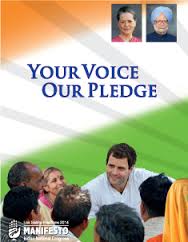
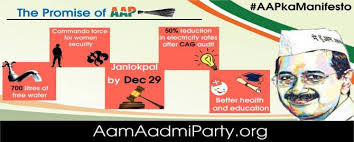
 One of the two lead coordinating authors of this report was Dr. Arun Kumar, from AHEC, IIT Roorkee. Notably, Dr. Kumar was also a part of the team which worked on Cumulative Impact Assessment of Hydropower projects in Upper Ganga basin of Uttarakhand

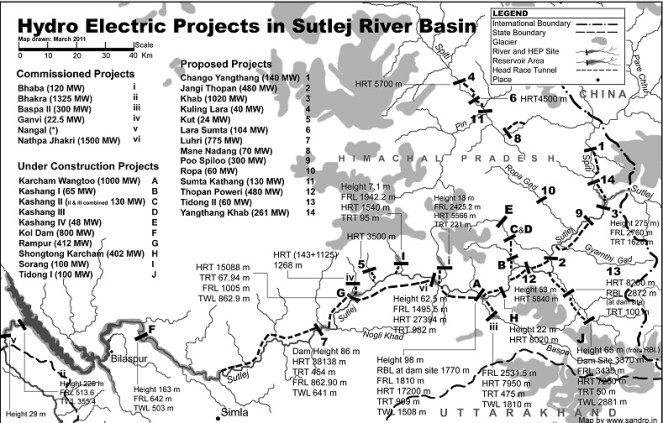


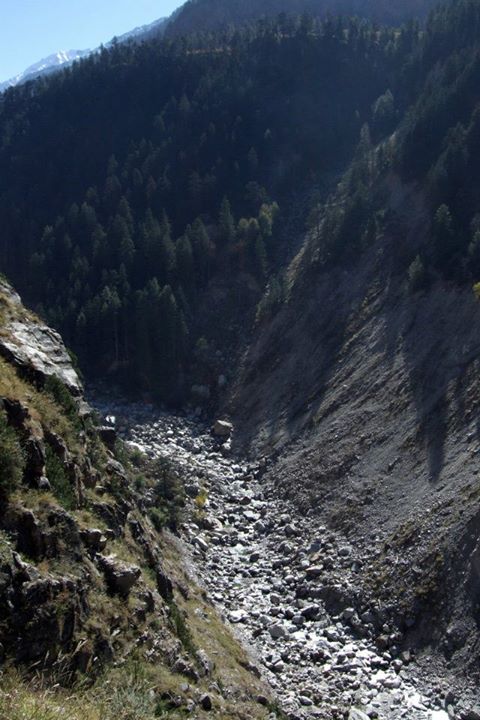

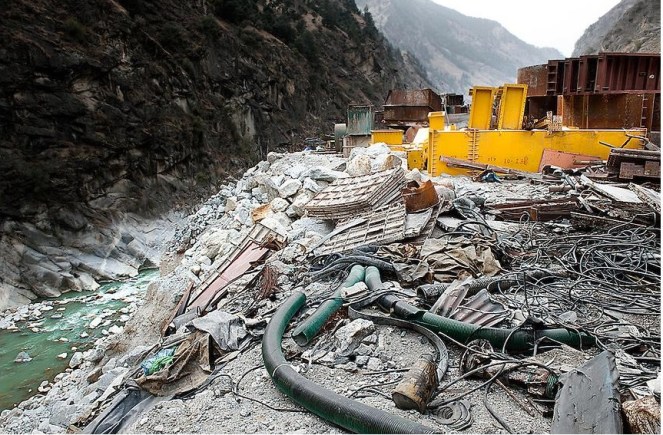


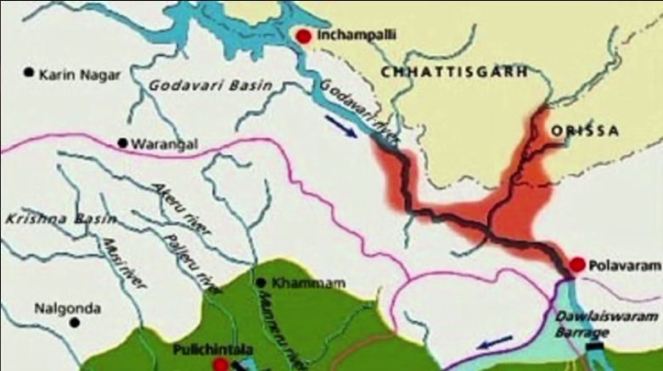

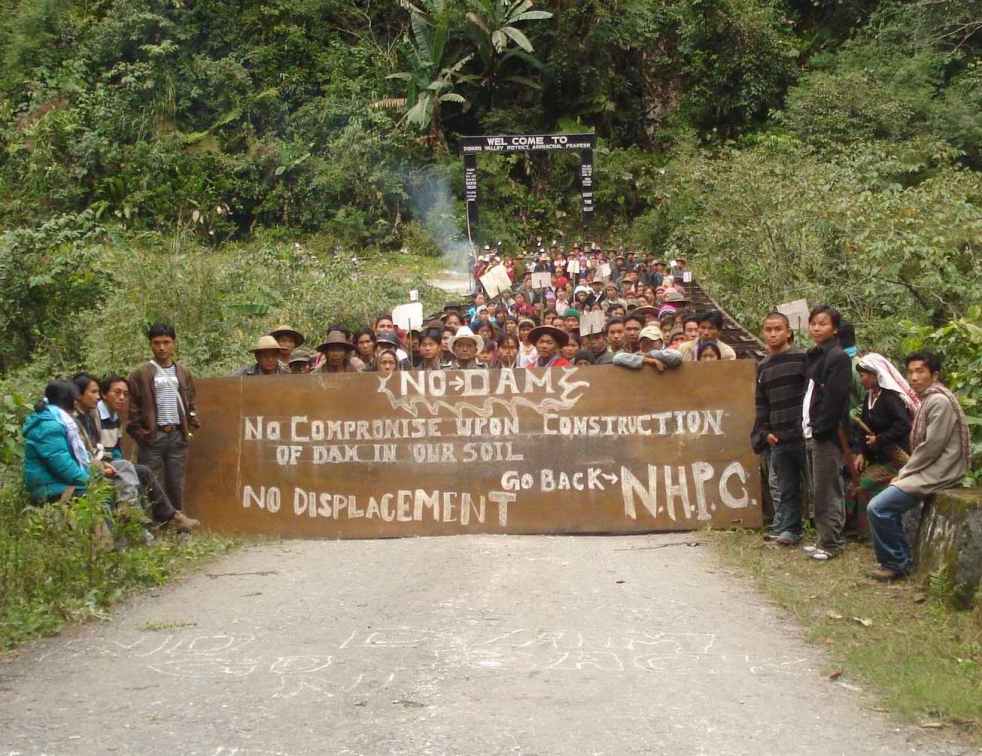
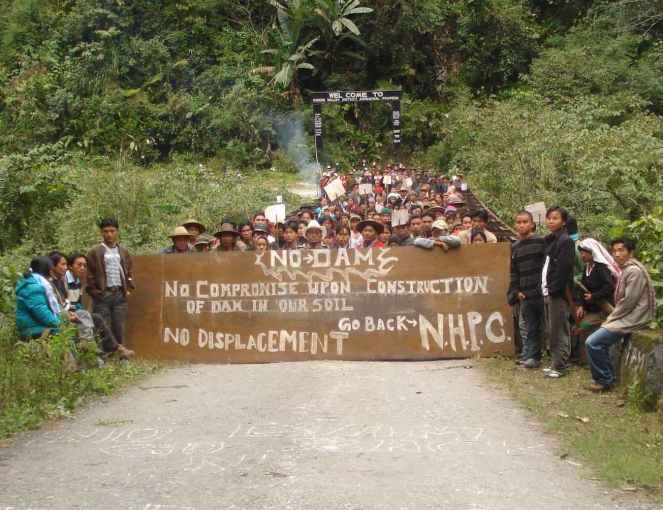



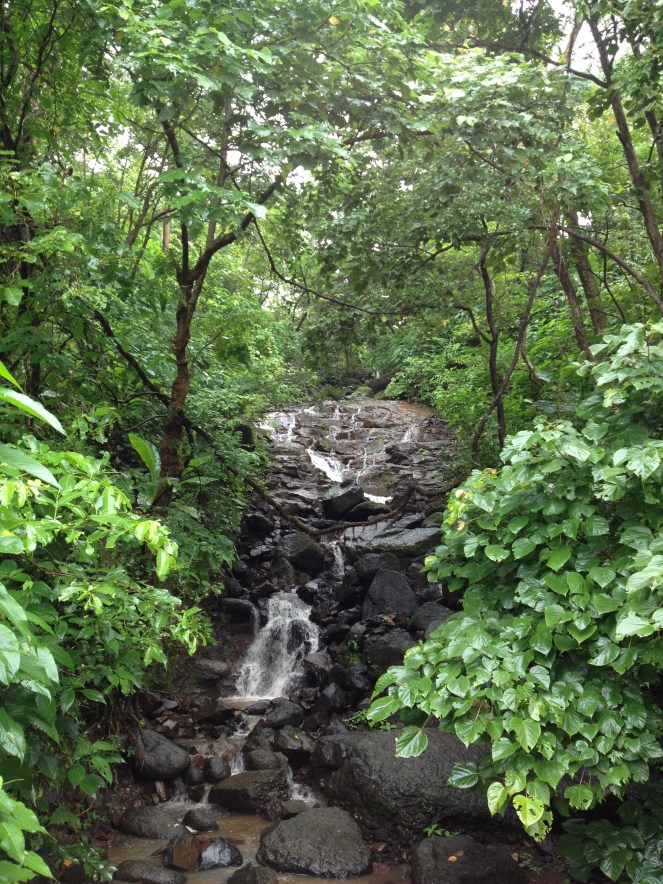



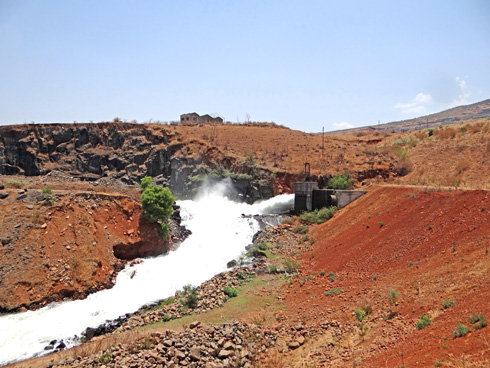

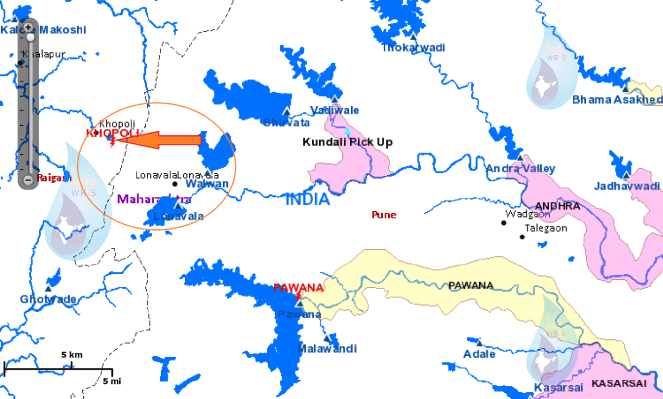

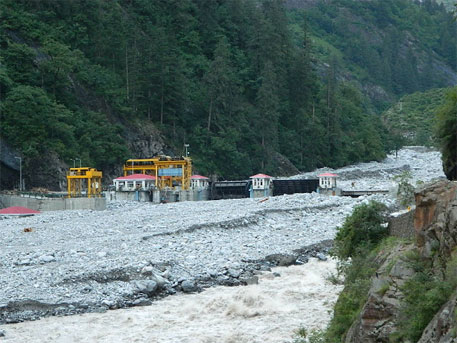


 SANDRP