
A couple of years ago, we were travelling from Dehradun to Delhi and on my left was the massive Bhimgouda barrage which diverted the Ganga through Upper Ganga Canal at Haridwar. The barrage diverted the entire river, so that the downstream of the barrage, Ganga River was bone dry. Even for an agnostic like me, it was disturbing to see the mighty Ganga dried out like this so close to her origin. But just a couple of hundred meters ahead on the right were Har ki Pauri Ghats where Pilgrims were religiously performing Ganga Arati. There was a highly colored cement statue of Ganga precariously balancing on her gharial, in the middle of the canal. Continue reading “Borewell water in a concretized Ramkund: Has religion helped Rivers at all?”
Category: Dams

DRP: 13 June 2016(Minister Threatens Stir Over Delay In Ken-Betwa Clearances)
Uma threatens stir over delay in Ken-Betwa interlinking Water Minister Uma Bharti on June 07 threatened an agitation if there were further delays to the wildlife clearances necessary for the storied Ken-Betwa river-interlinking project. This is TOO Much! Union Minister threatening to go on Fast, demanding environment clearance to Ken Betwa link! Calling it a national crime to stop clearance to Ken Betwa link. Saying if the project is not cleared in next meeting, she will go on fast! Claiming that the link will help Marathwada!! It wont help even Bundelkhand, but the Union Minister seems to be setting completely wrong, precedent, which also ultra legal. On the other hand The Hindu has been consistently underplaying the impacts of the Ken Betwa project and over playing the official lines. Very strange to see this from THE HINDU. Before this in its June 02 meeting the expert appraisal committee (EAC) of environment ministry has deferred environment clearance for the ambitious Rs.10,000cr Ken-Betwa river linking project in its last meeting on June 2, and has sought more clarity on its wildlife & hydrological impact. The meeting could not come to a conclusion as the members of the EAC had several doubts regarding the project’s hydrological feasibility, its impact on hydrology and wildlife too and found that many serious issues related to the project are yet to resolved. In the last week of May 2016, SANDRP in a letter to EAC has written about Ken-Betwa project & why EAC should not clear this. Please help us spread the word and urgently write to EAC if you agree. Himanshu Thakkar coordinator SANDRP points out that the Ken-Betwa link, in essence, Ken-Betwa link will facilitate transfer of water from the Ken River Basin (Bundelkhand) to Upper Betwa Basin (outside Bundelkhand), so it is actually exporting water out of Bundelkhand.
Continue reading “DRP: 13 June 2016(Minister Threatens Stir Over Delay In Ken-Betwa Clearances)”
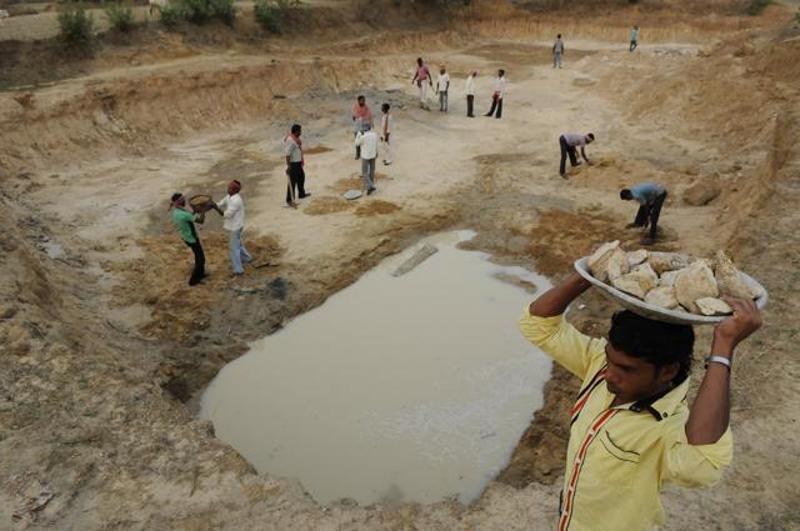
Community Driven Water Conservation Initiatives In 2016 Drought
In 2016, India has been witnessing one of the severest droughts after independence. The phenomena has led to a ‘never before’ kind of water crisis across the country. As a result the surface water sources are under severe stress and aquifers beneath ground have been over drafted. An already depressed agrarian community is worst hit. Thousands of parched villages have been dotting the rural landscape. Many somewhat immune urban centers are also facing the wrath of heat.
However there is no dearth of inspiring tales in the field of water conservation pan nation presenting a ray of hope amid gloomy scenario. The exemplary works being done by several villages, people and organizations across the country offer some lasting solutions to growing water scarcity. So here is an attempt to present a State wise account of drought hit areas which have been wading through the water crisis sound and safe by reinventing the community driven and local water harvesting practices.
Continue reading “Community Driven Water Conservation Initiatives In 2016 Drought”

DRP: 6 June 2016 (India to be power surplus for next 3 yrs: why govt continue to pursue hydro projects)
India will not have power deficit situation in FY17 India won’t need any new power plants for the next three years as it is flush with generation capacity, according to a government assessment. The country can manage for the next three years with existing plants that are currently under-utilised, and those that are under construction and upcoming renewable energy projects, assessment made by the power ministry for reviewing the National Electricity Policy shows. Govt declares for the first time in history that India is POWER SURPLUS in 2016-17 with 3.1% power surplus in peak hours and 1.1% power surplus in off peak hours, both figures in 2015-16 were -3.2% during peak hours and -2.1% in peak hours. The western and Southern regions will be power surplus, but Northern, Eastern and Northeastern regions will have deficits. At the same time Power Minister Piyush Goyal says that Big hydro power units may come under renewable energy According to Minister the Centre has begun studies to decide whether to include big hydro power plants under the ambit of renewable energy. When India will be energy surplus for next three years why then Govt. of India is continue to pursue disastrous hydro projects on ground. Where ASSOCHAM is asking Arunachal govt. to do away with adverse tax policies on Hydro power to boost construction of hydro projects in the State. NHPC has also raised relief amount for Kishanganga HEP around Rs 60 lakh and Rs 70 lakh to each family for the land acquired. And despite Delhi Govt. openly rejecting water from Renuka dam NGT panel has visited the area to look into the rehabilitation issue.
Continue reading “DRP: 6 June 2016 (India to be power surplus for next 3 yrs: why govt continue to pursue hydro projects)”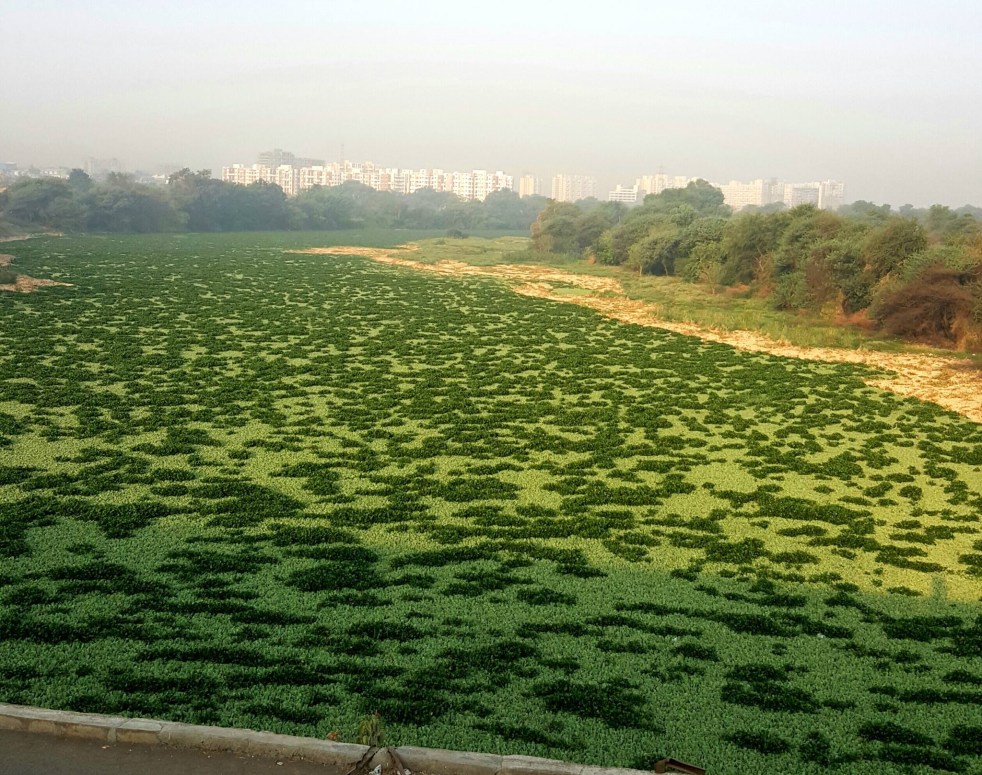
Consume more, Pollute more, Pay less, Ask for more Dams: Pune City’s water policy
Above: Dying rivers, as they leave Pune Photo: Parineeta Dandekar
In May, decision of Pune’s Guardian Minister and head of canal committee of releasing 1 TMC (thousand million cubic feet) water from Khadakwasla Dam to downstream regions of Daund and Indapur saw huge protests from the city’s political parties and civic administration. Ensuring that Pune suffers no further water cut, even when downstream regions face historic drought, seems to have become the Mayor’s crusade. Keeping urban areas insulated and away from a terrible water crisis has its own major equity issues.
Pune is a water surplus city in upper riparian region of Krishna Basin. In a report “Reimagining Pune: Mission Smart City” submitted to Urban Development Department by Pune Municipal Corporation (PMC), it is admitted that Pune has water availability of 219 lpcd (liters per capita per day).[1] Even so, the city has been much reluctant to share its water with downstream villages. it has seen barely 20% water cuts since last October.
While discussions and debates about drought revolve around sugarcane, industries, rural water use, irrigation management etc, etc., the growing, unjustified footprint of urban areas generally is left scot free and Pune is a classic example if this.
Here, we take a brief look at PMC’s water supply approach with its monomaniacal supply-side focus. While sourcing much more water than allocated from four upstream dams, PMC has been shirking from its responsibility of treating waste water before releasing it for the downstream. PMC has taken the upstream dams for granted and is planning for expansion of water supply system with 24×7 water supply in near future, relying on more water from these dams. Continue reading “Consume more, Pollute more, Pay less, Ask for more Dams: Pune City’s water policy”

Concerns about unplanned River Widening, Deepening and Straightening Works being undertaken under Jal Yukta Shivar and other projects
(This Note is followed by a letter to Maharashtra Chief Minister Devendra Fadnavis in Marathi, which is endorsed by several organisations)
In the past two years, Jal Yukta Shivar Abhiyan has been implemented in many districts of the State. A Government Resolution was issued on the 5th December 2014 to implement Jal Yukta Shivar Abhiyan (JYS from hereon) to make “Maharashtra Drought Free by 2019”. The GR lists out a 13-point program to be implemented, which lays stress on watershed works, deepening and widening of canals, cement nalla bunds, reinstating old water structures, tree plantation, well recharge, etc. The Chief Minister has supported the small scale water harvesting through JYS strongly, as one of the main solutions to water security for farm and villages. Continue reading “Concerns about unplanned River Widening, Deepening and Straightening Works being undertaken under Jal Yukta Shivar and other projects”
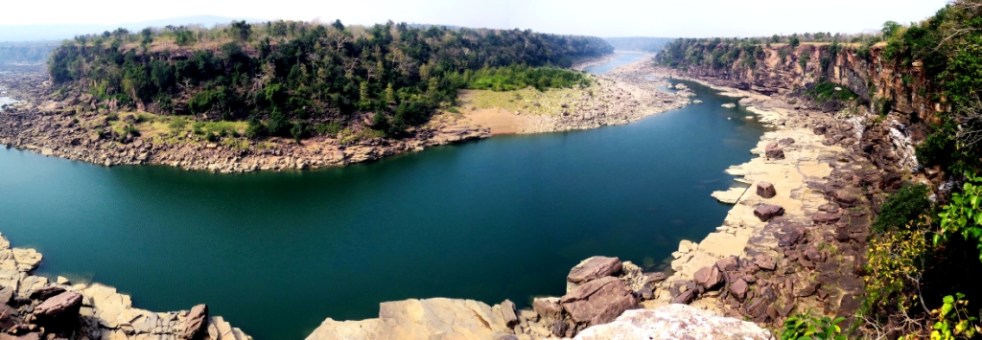
Ken Betwa Project will facilitate water export out of Bundelkhand, It will destroy Panna Tiger Reserve: Letter to EAC
June 1, 2016
To
Chairman and Members of EAC on River Valley Projects, MoEF, New Delhi
Urgent: Concerns about Ken Betwa Project on EAC agenda for Environment Clearance for meeting on June 2-3, 2016
Respected Chairman and Members,
- No documents since Feb EAC meeting: In continuation of our earlier submissions of Aug 21, 2015, Oct 24, 2015, Feb 6, 2016 and April 15, 2016, we are writing to you again since the Ken Betwa Link is again on the EAC agenda for the meeting on June 2-3, 2016. It may be noted that after the project was earlier considered by the EAC latest in the meeting on Feb 8-9, 2016, no new documents are available on the EC website. This itself is a serious lacuna since this means that all concerned are in dark as to why the project is being reconsidered by the EAC, what progress has been achieved since the last meeting. This is also in violation of the orders of the Central Information Commission that required all such documents be available in public domain at least ten days in advance of the meeting.

REJECT Draft Wetland Rules 2016: Designed to destroy wetlands
While the Ministry of Environment, Forests and Climate Change never implemented Wetland (Conservation and Management) Rules 2010, it has now brought out a new and seriously watered down Draft Wetland Rules 2016. The New Rules can jeopardise wetland conservation in the country and need to be rejected in entirety. Following is a submission made by SANDRP to the Secretary, MoEF and CC about the same. Last date for sending comments is 6th June 2016. Emails are b.sikka@gov.in, ram.jindal@nic.in, c.singh@nic.in.
We request you to kindly make similar submissions. Feel free to use our letter below. Our Wetlands need protection, not degradation! Continue reading “REJECT Draft Wetland Rules 2016: Designed to destroy wetlands”
DRP: 30 May 2016 (Centre’s new wetland protection rules reinforces the stereotype: wetlands = wastelands)
Centre’s new wetland protection rules reinforces the stereotype that govts see wetlands as wastelands The draft Wetlands (Conservation and Management) Rules, 2016 which replace the existing Wetland (Conservation and Management) Rules, 2010, are up for public comments till June 6, 2016. While wetlands nationwide are threatened by encroachment, pollution, catchment degradation and mindless development, the Narendra Modi government’s draft rules show no indications of acknowledging this threat. The draft rules, environmentalists say, reinforces the stereotype that governments see wetlands as wastelands. The essence of the new rules is to decentralise wetlands management to states. The Centre will have a say only in ‘exceptional cases’ While the 2010 rules gave some role to states, the draft rules gives them all powers. But in the process, the whole conservation process has been weakened. The period for public comments on the draft notification ends by the month. Several organisations, including BHNS, WWF, LIFE, International Rivers, INTACH, YJA & SANDRP have sent, or are in the process of sending, representations to the environment ministry. Among the concerns is that the 2010 rules itself were barely getting implemented. No state has identified a wetland yet, and few have made state-level nodal agencies mandated by the 2010 rules. In an ongoing case before the NGT, it emerged that states had not notified wetlands under the 2010 regulations. This forced the tribunal to demand that states begin to do so in at least 5-10 districts in a time-bound fashion. The Union meanwhile has proposed to substantially change the existing regulations. The new regulations do away with the elaborate list of activities that are prohibited or restricted. It prohibits reclamation of wetlands, conversion to non-wetlands, diversion or impediment of inflows and outflows from the wetland and ‘any activity having or likely to have adverse impact on ecological character of the wetland’. The need for the environmental impact assessment before permitting such activities is to be done away with. The earlier regulations allowed appeals against the decisions of the central wetlands authority with the NGT. This, too, is to be done away with, though aggrieved entities could continue to file cases against violations of these rules. The concerns were also raised during a discussion organized in Jodhpur on May 23 by three NGOs EIA Resource and Response Centre, Libra India and Life on Draft Wetland Rules 2016 issued recently by the environment ministry seeking suggestions and comments.
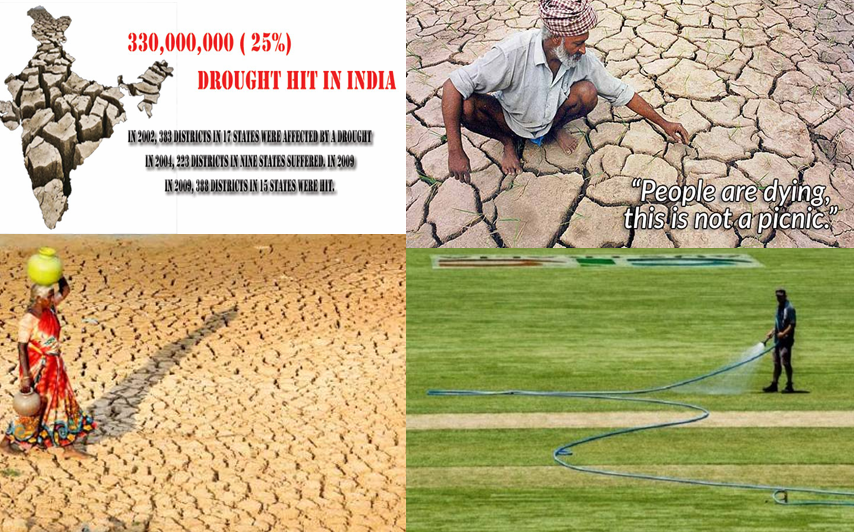
Landmark Supreme Court Order on Govt Failure in Tackling Drought
A PIL under Article 32 was filed by the NGO, Swaraj Abhiyan praying for directions for declaration of drought and relief in affected areas. The apex court came out with a 3 part judgment earlier this month – the first one dealt with the issue of drought and the latter judgments took up the poor implementation of the National Food Security Act, 200513 (NFSA) and the Mahatma Gandhi National Rural Employment Guarantee Act, 2005 (NREGA). These directions largely signify the failure of the governance in tackling drought and suggest actions to be taken hence, we need to be thankful to the petitioners and apex court for this. We also hope the apex court continues to monitor the implementation of the directions.
Continue reading “Landmark Supreme Court Order on Govt Failure in Tackling Drought”
 SANDRP