Dams

शौचालय निर्माण से शुचिता की ओर-1 (जल-थल-मल पुस्तक समीक्षा)

खुले में शौच की आदत से निजात दिलाने के लिए केन्द्र सरकार शौचालय बनाने का काम 1980 के दशक से लेकर अब तक चलाती आ रही है। 1999 में इस अभियान का नाम टोटल सैनिटेशन कैंपेन और 2013 में निर्मल भारत अभियान हो गया। आज इसे स्वच्छ भारत अभियान के नाम से जाना जाता है। बदले नाम के साथ हाल में स्वच्छ भारत मिशन भी 2019 तक भारत को खुले में शौच से मुक्त कराने का बीड़ा उठाए हुए है। ऐसा करने वाले गाॅवों का निर्मल ग्राम पुरस्कार भी दिया जा रहा है। 2003 से लेकर अबतक करीब 28 हजार से ज्यादा गाॅवों को इस ईनाम से नवाजा जा चुका है।

सरकारी आॅकड़ो के मुताबिक देश में 10 में से 3 व्यक्ति आज भी खुले में ही शौच जाते हैं। जो सरकार के लिए अतंर्राष्ट्रीय स्तर पर बड़ी शर्मिंदगी का विषय है। सयुक्त राष्ट्र के अनुसार गरीबी में भारत से निचले पायदानों पर खडे़ देश नेपाल, पाकिस्तान, बांग्लादेश आदि पडौसी मुल्क शौचालय बनाने में भारत से कहीं आगे निकल गए हैं।

केंद्रीय पेयजल और स्वच्छता मंत्रालय के अनुसार इस अभियान के तहत अब तक 8 करोड़ 7 लाख शौचालय बनाए गए हैं। यानी 12 करोड़ 5 लाख शौचालयों के लक्ष्य का 70 फीसदी बन चुके हैं। परंतु 2011 की जनगणना के हिसाब से महज 5 करोड़ 16 लाख शौचालय ही पाए गए। मामला साफ है शौचालय ज़मी पर कम और कागज़ों में ज्यादा बने। 2008 के सर्वे में बड़ा खुलासा हुआ की 132 निर्मल गाॅव ईनाम पाने वाले में से केवल 6 गाॅव ऐसे निकले जिनमें कोई भी खुले में पखाना नहीं जाता था। योजना आयोग द्वारा तैयार 2013 की रपट इससे अधिक दिलचस्प है जो बताती है 73 फीसदी शौचालयवाले घरों में अब भी कम से कम एक सदस्य खुले में ही शौच जाता है।

इन सब के बीच प्रश्न उठता है, क्या शौचालय बनाना ही सैनिटेशन है और क्या मात्र शौचालय बनाने से ही भारत स्वच्छ हो जाएगा ? कहीं शौच मुक्त भारत के लक्ष्य का पीछा करते हम लोग प्राकृतिक संसाधनों का नाजायज दोहन और प्रदूषण तो नहीं कर रहे हैं ? मानव मल का प्रकृति और माटी से क्या संबंध है ? कहीं मात्र शौचालयी स्वच्छता के कारण ही तो पानी की बर्बादी और नदियों का प्रदूषण नहीं बढ़ रहा है? मल के जल और थल से बिखरे संबंधों से फिर रूबरू कराते हुए इन्हीं सब सवालों का जवाब तलाशती है, सोपान जोशी द्वारा लिखित जल-थल और मल पुस्तक!

Continue reading “शौचालय निर्माण से शुचिता की ओर-1 (जल-थल-मल पुस्तक समीक्षा)”
Dams · Maharashtra

Tracing the Maharashtra Irrigation Scam: From 2012 to 2016

Above: Retaining wall of Gosikhurd RBC slid down from its location  Photo: Jan Manch

Aftermath of the irrigation scam exposed in 2012 in Maharashtra still continues. Roots of the scam were pointed out time and again by Comptroller & Auditor General of India (CAG) and also by several other committees set up by the Government. The scam was finally unveiled in May 2012 with a combined effort of several whistle blowers from inside & outside the government as civil society groups including SANDRP. Unjustified cost overruns, forged tenders, tweaking the norms of tendering process, incomplete projects laden with inferior quality work were brought to light and the unholy nexus of corrupt leaders, government officials and contractors became visible like never before.
Continue reading “Tracing the Maharashtra Irrigation Scam: From 2012 to 2016”

Dams · DRP News Bulletin

DRP: 26 Sep 2016 (Victory to tribals protest; Jispa HEP calls back staff)

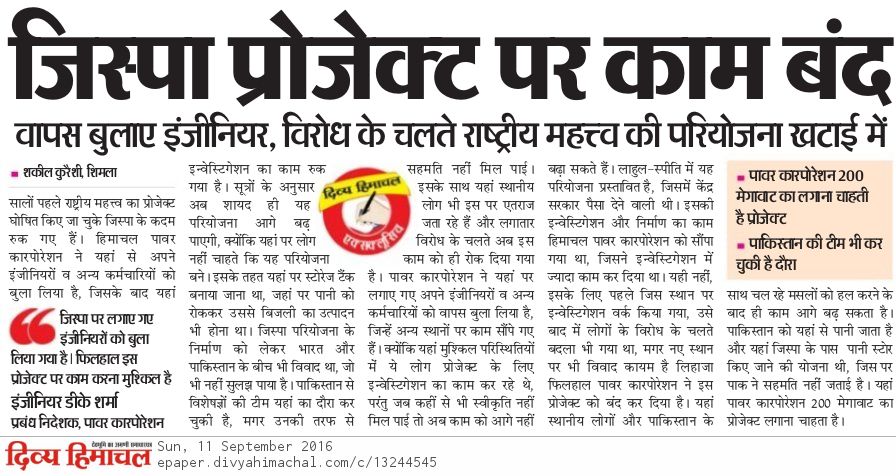
Finally, tribals struggle wins, sends Jispa HEP company packing up Facing stiff opposition from the tribal community against the construction of 300 MW Jispa Dam in Lahaul-Spiti valley has forced the Himachal Pradesh Power Corportaion Ltd (HPPCL) to suspend the project for the time being. The dam which was declared a project of national importance now has residents from 14 villages oppose it. HPPCL has invested Rs 3 crore and has stated that it would begin study work only when locals extend their support.

Since 2009, people from the Todh valley in Lahaul-Spiti district were opposing the Jispa Dam project proposed over Bhaga river, a tributarJy of Chenab at Jispa village. The government had sanctioned Rs 7,000 crore for this project but local residents did not allow officials to work in smoothly for three years now.

Confirming the development, managing director, HPPCL, D K Sharma told that some people were continuously opposing the project without realizing that construction of project could have ushered development in the area. He said constant opposition of local people had resulted into wastage of limited human resource so HPPCL board had decided to withdraw the manpower as project was only at investigation stage.

Continue reading “DRP: 26 Sep 2016 (Victory to tribals protest; Jispa HEP calls back staff)”
Dams

Celebrating our Rivers on the World Rivers Day, 2016!

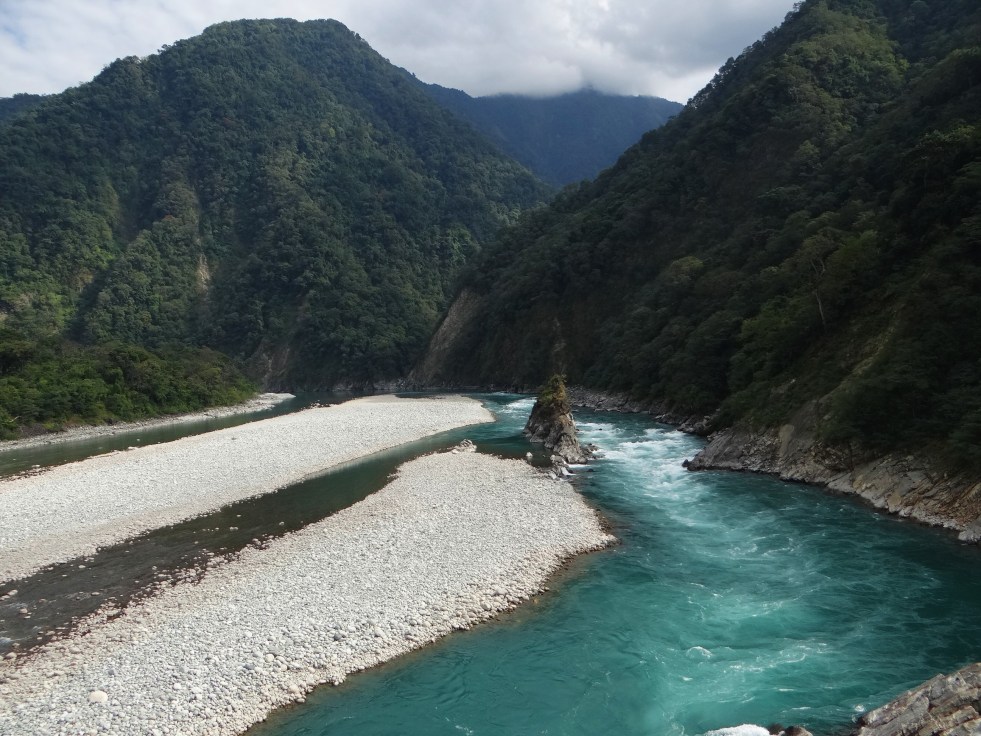
Above: Parshuram Kund on River Lohit, Arunachal Pradesh

Since 2005, last Sunday of every September is celebrated as the World Rivers Day. The tradition started in 1980s in British Columbia when some river activists came together for their rivers. Its only grown since then.

All through the year we hear about water conflicts, river pollution, degrading freshwater biodiversity, damming of living rivers, mismanagment, concretisation and encroachment on Indian Rivers. As I write this, Cauvery Water Conflict and simmering, serious discontent over the Indus Water Treaty governing 6 rivers between India and Pakistan is mounting. A simple google search on Indian Rivers throws up images of filth, pollution, droughts and floods. Lest we forget, thats not the whole picture. We are still the custodians of an amazing legacy. India still holds some of the most beautiful, healthy and life giving rivers in the world. There are people and communities nurturing their rivers and protecting them. All is not lost and this is a battle worth fighting, full of positive energy. Continue reading “Celebrating our Rivers on the World Rivers Day, 2016!”

Dams · DRP News Bulletin

DRP: 19 Sep 2016

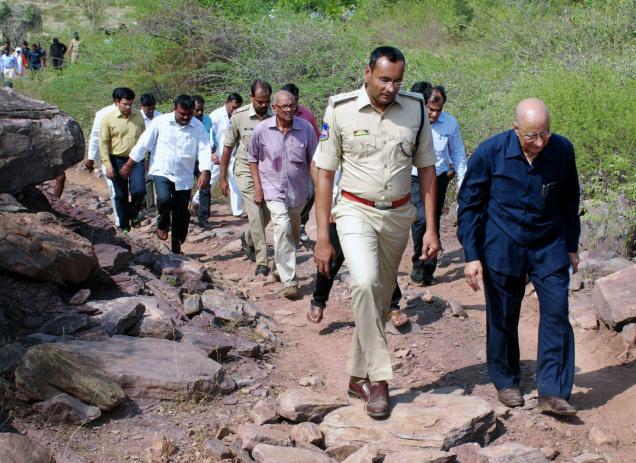
EAC Panel Visiting the site in Dec 2015

Centre EAC defers clearance to Yadadri Power project The Expert Appraisal Committee (EAC) under the Ministry of Environment has deferred its decision for granting environmental clearance for the 8,000 MW Yadadri Thermal Power Station in Telangana by TSGENCO due to a “lackadaisical” approach in preparing documentation. The EAC said the Environmental Impact Assessment (EIA) report was incomplete and there was lack of clarity on many issues raised by the Committee earlier. EAC on Thermal Power Companies has in its minutes meeting held on 29-30 2016 held the EIA consultants guilty of cut & paste jobs which can be found here.  At some places, it is mentioned that coal will be transported from two ports and in some other places, four ports are mentioned. Hence, complete and specific details regarding coal import ports and coal transportation routes were not given. Further it is also observed that two important sections of the EIA report- “risk assessment” and “disaster management plan”- are almost entirely generic and contain hardly any site or project specific aspects.

Continue reading “DRP: 19 Sep 2016”
Dams · DRP News Bulletin

DRP: 12 Sep 2016 (Hydro Projects Causing Mass Fish Extinction: HP Fisheries Dept.)

Hydro power projects impact riverine fisheries The bleak future of fisheries is reflected in the “Vision and Perspective Plan” released by the Department of Fisheries earlier this week. The department is keeping its fingers crossed to even maintain the production of 5,393 tonnes in 2014-15 as it feels that with the commissioning of 294 hydro power projects in the recent years, the downward trend will be difficult to arrest. 

It says that the expansion of the hydro power sector has resulted in the shrinking of rivers and streams and high silt levels. Rampant sand mining and indiscriminate use of pesticides have further aggravated the problem. 

The fish production from the rivers and streams is falling drastically each year and the multi-pronged environmental assault is proving to be too damaging for the fisheries promotion. The state has some precious mahseer reserves. Though the power policy stipulates a minimum discharge of 15% ecological flow of rivers, the failure of the regulatory authority to check this has converted riverbeds into sandy deserts. That’s how the department perceives the threat from hydro power generation. As a further blow to the riverine fisheries, under the revised hydro-power policy, there is no requirement for micro hydel project developers to prepare environmental and social impact reports.

The vision document reflects that the coming up of hundreds of micro-hydel projects has drastically affected the streams environmental flow in Kangra, Kullu and Chamba. The picture is so grim that the project commissioned on the Sujan Nullah is virtually threatening the hatchery of the prestigious Indo-Norwegian trout project which is the lifeline of the entire trout farming programme of the state.Perceived as one of the major threats, the commissioning of 92 power projects, in the last few years has altered the river hydrology and blocked migratory routes exterminating spawning and feeding grounds of fish.Adding to the already bad situation is the array of pesticides and insecticides being used by farmers and fruit growers.

Continue reading “DRP: 12 Sep 2016 (Hydro Projects Causing Mass Fish Extinction: HP Fisheries Dept.)”
CAG Report · Dams · Maharashtra

Public Audits of corruption ridden irrigation projects in Vidarbha: Sinchan Shodh Yatra

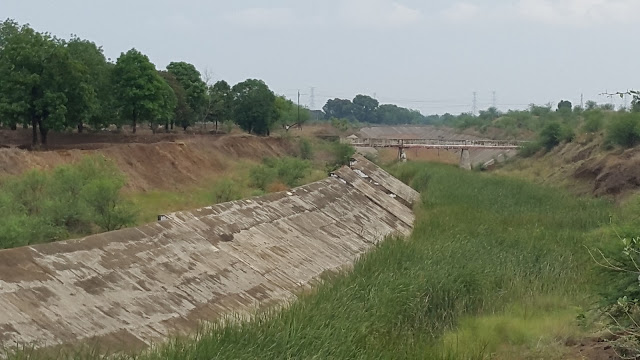
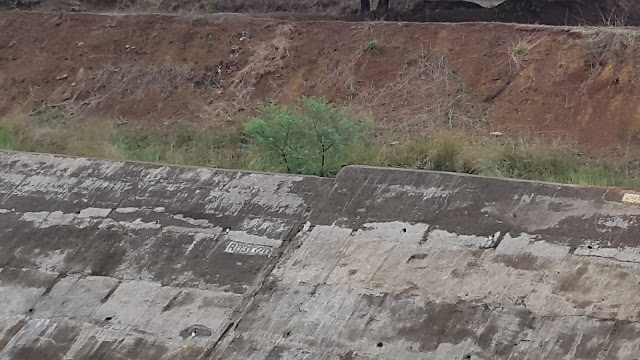
Right Bank Canal of Gosikhurd Dam (Photo: Jan Manch)

Controversial irrigation projects of Maharashtra continue to make headlines after massive irrigation scam that was unveiled in 2012. Following an inquiry in the scam, the state cabinet has recently scrapped 94 tenders of 14 irrigation projects worth Rs 9,196 Crore.[i] Around 52 of these tenders have been under the scanner of anti-corruption bureau (ACB), with first information reports (FIRs) filed in four of them. Continue reading “Public Audits of corruption ridden irrigation projects in Vidarbha: Sinchan Shodh Yatra”

Agriculture · Dams · Irrigation · Maharashtra · Marathwada

This is the time to protect Pulse Farmers in Marathwada

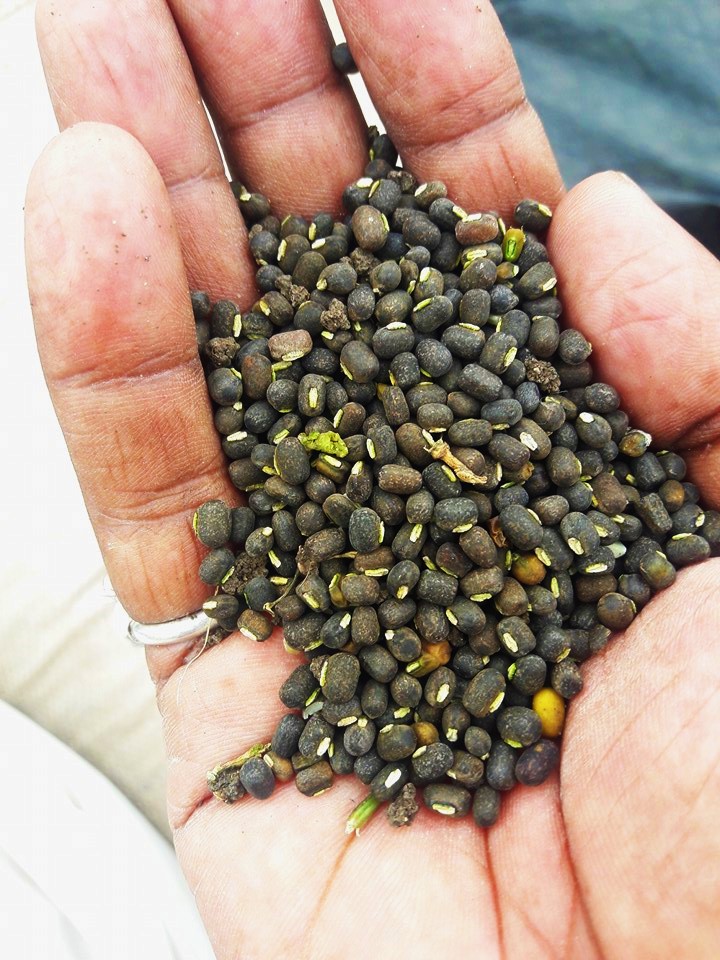
I have harvested Moong (green gram) from my farm, now I’m harvesting Udad (black gram). Their price is crashing each day…I may not get even the Minimum Support Price (MSP)…But I’m not supposed to care about the price… its solely the farmer’s responsibility to reduce inflation and make India a superpower.”

…says Ashok Bhau, a dry land farmer dependent on rainfall and groundwater in the heart of Marathwada: Osmanabad.

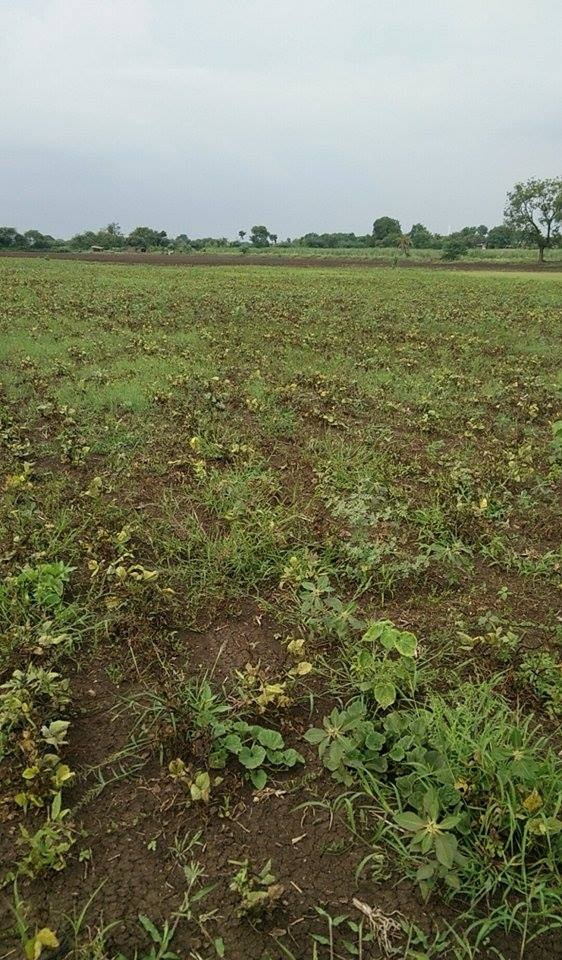
Last year his Moong failed completely, there was no seed development and although his Tur (Pegion Pea/Arhar) fetched a very good price, it did not mean anything for the family as the productivity was dismally low following three droughts and dry wells[i]. Like many farmers in Marathwada, he burned his sugarcane on 4 acres after watering it for many months… finally there was no water to sustain it. We had written about soaring pulses last year.udad (1).jpg Continue reading “This is the time to protect Pulse Farmers in Marathwada”

Dams · Maharashtra

Pune plans more STPs while existing plants under perform and there is no attempt to fix them

Above: Children trying to understand why their River Mutha is so polluted Photo: Parineeta Dandekar

Treating even 50% of its sewage is a dream that has been eluding Pune for decades. Mula, Mutha, Pavna and Indrayani Rivers crisscrossing Pune have routinely made headlines for pouring Pune’s sewage into Ujani Dam in the downstream, which supplies drinking water to several towns and villages, including the city of Solapur. All these rivers are classified as one of the 35 most polluted river stretches of India by Central Pollution Control Board (CPCB).[1]

Japan International Cooperation Agency (JICA) has recently agreed to extend a loan of 1000 Cr. under project ‘pollution abatement of River Mula-Mutha’.[2] Utilizing this funding PMC has proposed to build 11 new sewage treatment plants (STPs) with treatment capacity of 396 MLD. It is one of the star projects under Smart City programme and engineers of water supply department are gearing up for the construction of new STPs. As stated in the PMC newsletter of Feb 2016, the 11 new STPs will increase treatment capacity of Pune from current 477 MLD (Million Liters a Day) to 873 MLD which, it is claimed, will be sufficient to cater to sewage generation till year 2027.[3] Continue reading “Pune plans more STPs while existing plants under perform and there is no attempt to fix them”

Dams · Ganga

दो बाॅधों की कहानीः क्या बिहार की अप्रत्याशित बाढ़ एक टाली जा सकने वाली मानव जनित त्रासदी है?

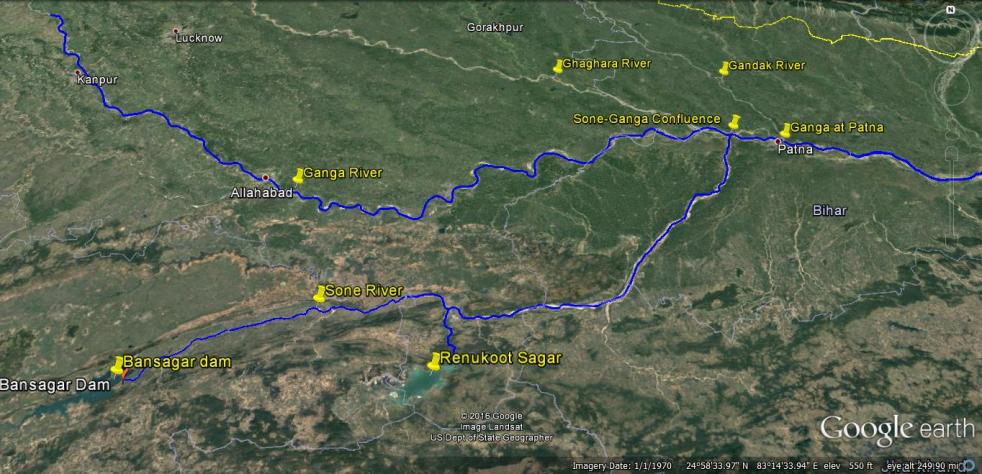
बाणसागर बाॅध, सोन नदी, गंगा नदी और पटना को दर्शाता मानचित्र

21 अगस्त 2016 की सुबह, गंगा नदी का जलस्तर लगातार बढ़ते हुए, पटना में 50.43 मीटर पर पहुॅच गया। जिससे पटना में गंगा नदी अपने पहले के उच्चतम बाढ़स्तर 50.27 मीटर से 16 सैंटीमीटर ऊपर बह रही थी। 22 अगस्त 2016 तक पानी का जलस्तर गंगा नदी के किनारे तीन अन्य स्थानों पर उच्चतम बाढ़स्तर को पार कर गया। जिसका विवरण निम्न हैः-

       स्थान                        22.08.2016 को उच्चतम बाढ़स्तर                      पुराना उच्चतम बाढ़स्तर
बलिया उत्तरप्रदेश                         60.30 मीटर                                     60.25 मीटर (14 सितंबर 2003)
हाथीदाह, बिहार                           43.17 मीटर                                      43.15 मीटर (07 अगस्त 1971)
भागलपुर बिहार                           34.55 मीटर                                      34.50 मीटर (05 सितंबर 2013)

इस तरह से हम देखते हैं कि पटना में उच्चतम बाढ़ का रिकार्ड तोडने के बाद, अब यह बाढ़ गंगा नदी के किनारे बसे बिहार और उत्तरप्रदेश के अन्य इलाकों में पहुॅच रही है। यहाॅ यह बात उल्लेखनीय है कि बिहार में अब तक वर्षा औसत से 14 प्रतिशत कम हुई है। सवाल यह उठता है कि इसके बावजूद गंगा में रिकार्ड तोडने वाली बाढ़ क्यों आयी?

Continue reading “दो बाॅधों की कहानीः क्या बिहार की अप्रत्याशित बाढ़ एक टाली जा सकने वाली मानव जनित त्रासदी है?”