Dams

Yamuna River Developments in 2016-2- Other River Interventions

(During monsoon the polluted river cleanses itself allowing migrant fishermen to move in and seek out their livelihood through fishing ;  Photo by Burhaan Kinu)

The exploitation of Yamuna Rivers that starts in upper basin comprising Uttarakhand (UKH) and Himachal Pradesh (HP) gets worse as the river is dammed at Hathini Kund Barrage (HKB) while passing through Shivalik Hills located at the border of Haryana and Uttar Pradesh (UP), the barrage has severely compromised lean season (8-9 months) water flow in the river downstream.

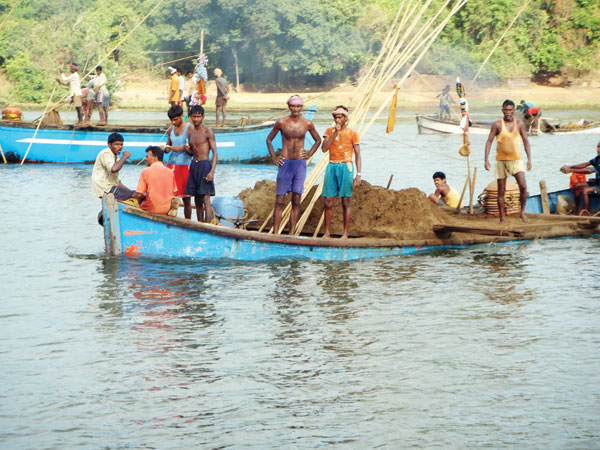
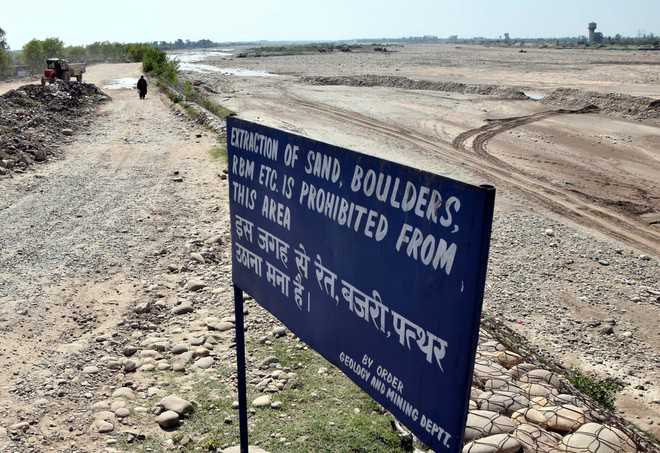
As a result, the waterless riverbed resembles a desert till Delhi’s potable water is released back into the river at Palla village, the border of Delhi and Haryana. The absence of flow facilitates intensive illegal riverbed mining for sand and boulders for longer periods in a year which further destroys the river’s eco-system. More over industrial and domestic effluents in great volume from nearby towns reach the river via tributaries, storm water drains. Amid all this successive State Governments show no will to achieve even basic flow of freshwater in the river, even as they keep pushing more dams.

Here is an account of the projects planned and launched in 2016 related to the River Yamuna. 

Continue reading “Yamuna River Developments in 2016-2- Other River Interventions”

Dams · DRP News Bulletin

DRP: 23 Jan. 2017 (Unjustified Ken-Betwa Link Costs: Bundelkhand To Gain Nothing, Panna To Lose Its Tigers)

SANDRP Blog Little for Bundelkhand, lot for contractors in Ken Betwa river-link The official executive summary of the Detailed Project Report of KBLRP on NWDA website says: “The main objective of the Ken-Betwa link project is to make available water to water deficit areas of upper Betwa basin through substitution from the surplus waters of Ken basin.” Upper Betwa basin (Raisen and Vidisha districts of MP) is not in Bundelkhand. So KBLRP is essentially facilitating export of water from drought prone Bundelkhand to area outside Bundelkhand, which, in fact is well endowed with over 900 mm of average annual rainfall.

The DPR further says, a third o the surplus water will be utilized for “enroute irrigation of 0.60 lakh ha. in the districts of Tikamgarh and Chhatarpur of MP and Mahoba & Jhansi of U.P.” The claim in the minutes of Expert Appraisal Committee meeting of Dec 30, 2016 that “It is proposed to provide irrigation facility in 6,35,661 ha of area in Panna, Chhatarpur, Tikamgarh Districts of Madhya Pradesh and Banda, Mahoba and Jhansi Districts in Uttar Pradesh” needs to be put in context here. Firstly, this claim is far in excess of what the presumed surplus water can irrigate.

Continue reading “DRP: 23 Jan. 2017 (Unjustified Ken-Betwa Link Costs: Bundelkhand To Gain Nothing, Panna To Lose Its Tigers)”
Dams · DRP News Bulletin

DRP: 16 Jan. 2017 (MoEF’s Expert Committee Shows Biases)

EAC against entertaining ‘anti-development’ representations The expert appraisal committee (EAC) on river valley and hydel projects of the Union Environment Ministry has decided “not to take any cognizance of such representations” received by its members. In its Dec. 30, 2016 meeting, the committee concluded that once a project proposal reaches the EAC for appraisal, it has crossed the stage of public consultation and “the EAC should not go back in time, and should not reopen it, by entertaining unsubstantiated representations received from the people”. 

The EAC noted that in case of any clarification regarding action taken on such representations under the RTI Act, the EAC prescribed that a standard reply “action has been taken in accordance with the decisions taken in the 1st meeting of the EAC for River Valley and HEP on 30.12.2016” should suffice. “It was also felt that many of the objections raised are repetitive. Many such kind of representations have an anti-development attitude so that the projects are kept on hold or delayed. This has financial implications to the developers in particular and to the nation in general.

The committee emphasized that relevant ministries scrutinised every aspect of a project and proposed it for final appraisal only when all details were in place. If not satisfied that public consultation had been completed properly, the EAC said it could ask the project promoter to do the needful. The committee also made allowance for representations with “new points” and “grave consequences” on which comments from project proponents could be sought. The EAC considered 13 projects in its December 30 meeting and cleared eight of them.

Environmental activists, however, pointed out the impracticality of the contention that representations should be restricted to the 30-day public consultation window. Sripad Dharmadhikari also, in his blog has mentions various reasons to counter the EAC’s suspicious justifications. He also says that the fact that a body which is supposed to represent the environmental perspective displays such an attitude is the biggest critique of the EAC and the environmental clearance process that it is a part of. The newly constituted MOEF’s EAC on River Valley Projects has in their very first meeting shown anti people, anti democratic and anti environment attitude.

Continue reading “DRP: 16 Jan. 2017 (MoEF’s Expert Committee Shows Biases)”
Dams · Maharashtra · Rivers

Maharashtra Urban water sector in 2016: Big cities eyeing big dams

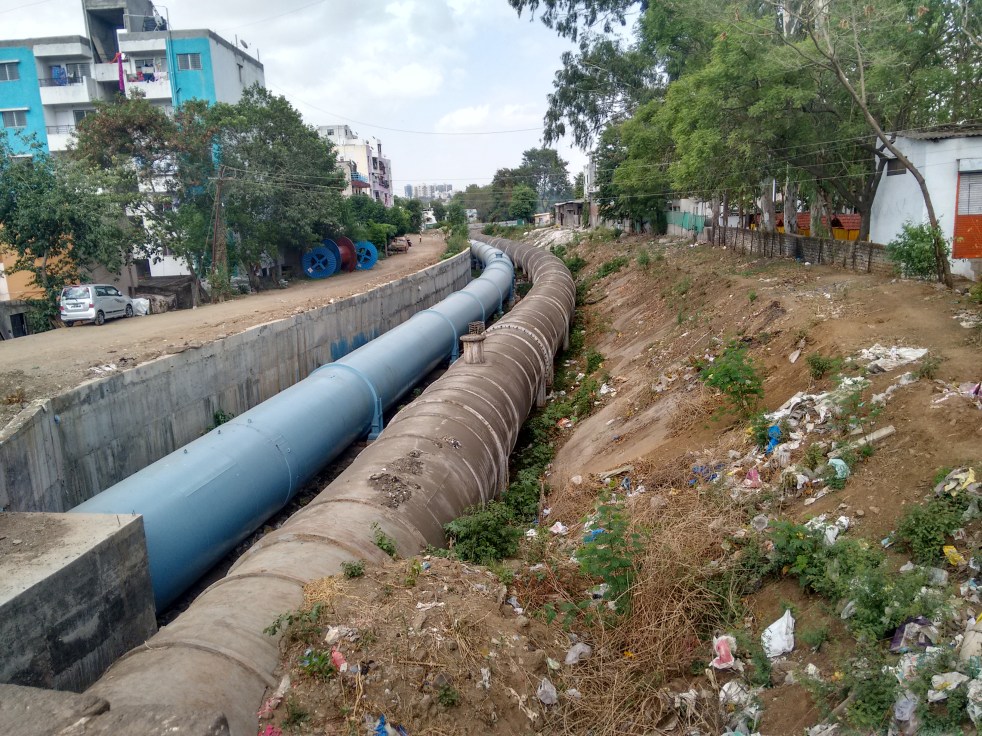
Above: Pipelines which supply water to Pune City from Khadakwasla Dam (Photo: Amruta Pradhan, SANDRP)

Urban narrative of Maharashtra revolves predominantly around cities of Mumbai (along with the Mumbai Metropolitan Region i.e. MMR), Pune, Nagpur and Nashik. Dominance of these large urban centres or the big cities over raw water sources is apparent. These cities have per capita water supply much more than the prescribed norms and continue to seek more water allocations. As Maharashtra gears up to fund more and more dams tapping finances from different sources, big cities with growing footprint of water consumption are all set to claim more water from these dams. Continue reading “Maharashtra Urban water sector in 2016: Big cities eyeing big dams”

Dams

Yamuna River 2016: Unjustified Dams, Hydro Projects

The first part of 3-part blog series throws light on impact of dams and hydro projects in upper reaches of the River and the imminent dangers of climate change that have jeopardized the entire eco-system around the Yamuna rivers. 

The second part would bring forward the plight of severely polluted and threatened Yamuna tributaries in the mainland of Haryana, Uttar Pradesh (UP), Rajasthan and Madhya Pradesh (MP). The third and concluding part would detail the status of ongoing and planned cleaning and rejuvenation projects launched in 2016.  

Continue reading “Yamuna River 2016: Unjustified Dams, Hydro Projects”

Dams · DRP News Bulletin

DRP: 9 Jan 2017 (India Groundwater Continues to Decline: Govt Report)

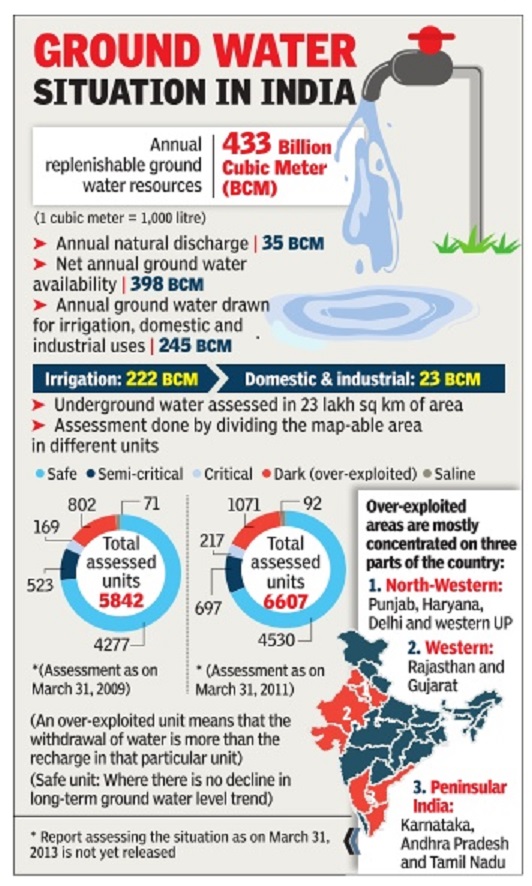
Ground water recharge plan is a non-starter Though the latest report, covering assessment of ground level situation as on March, 2013, is still being compiled, sources in the Central Ground Water Board (CGWB) hinted at further increase in the number of `dark’ (over-exploited) units. Decline in ground water level due to over exploitation of available resources had prompted the Centre in 2013 to come out with a master plan for artificial recharge of ground water, specifying how different states would go about it on priority. But majority of the states have, so far, not implemented the master plan. Only six states -MP, Gujarat, W-Bengal, UP, Chhattisgarh and Karnataka have taken follow-up actions despite the fact that the number of `dark’ units increased from 802 in March, 2009 to 1,071 in March, 2011. This not only says what the title mentions, but also shows how slow our official agencies are in even coming up with groundwater data, the latest data is for March 2011! 

Continue reading “DRP: 9 Jan 2017 (India Groundwater Continues to Decline: Govt Report)”
Dams · Sand Mining

River Sand Mining in India in 2016–III – Judicial Interventions

Ever since its land mark judgment[1] on February 27, 2012, the Supreme Court (SC) of India is not hearing any particular case pertaining to River sand mining regulation. In 2012 judgment SC had directed all Union Territories and State Governments to seek Environmental Clearances (EC) from Ministry of Environment, Forest & Climate Change (MoEF&CC) for mining minor minerals even in less than 5 ha or renew the same after prior approval from the MoEF&CC. Before this order, mining areas of less than 5 ha were exempted from EC enacted under Environmental Impact Assessment (EIA)-2006[2].

On Aug 5, 2013, the National Green Tribunal (NGT), has passed an important decision[3] ordering a ban on sand excavation across the country without permission from State Environment Impact Assessment Authority (SEIAA) and MoEF&CC. Further in November 2013, interpreting environment as Central Government subject and directing MoEF&CC to frame uniform sand extraction rules, the NGT prohibited State Governments[4] to form mining rules separately.

Since then, in pursuit of compliance to aforesaid orders, NGT and the High Court (HC) in several States have been frequently directing respective Government agencies to facilitate sustainable River sand removal. In this context, these courts have issued a number of orders and decisions all through 2016.

In fact, the sustained hearings in SC and NGT have resulted in first to Sustainable Sand Mining Policy draft 2016[5] and then to formation of Sustainable Sand Mining Guidelines 2016[6].

Continue reading “River Sand Mining in India in 2016–III – Judicial Interventions”

Dams · Sand Mining

River Sand Mining in India in 2016-II- Governments Show no Will to Regulate


In the second part of three-part blog series SANDRP presents an overview of steps taken by Central and State Governments on this issue of river sand mining practices in the year 2016.

CENTRAL GOVERNMENT

The year 2016 started with a welcoming development when none other than the Prime Minister of India, Sri Narendra Modi himself, while delivering inaugural address[1] at 103rd session of Indian Science Congress, in Mysuru on January 06, 2016 cited the importance of rivers in human history.  Emphasizing the value of rivers, he stressed on the use of science and technology to understand the impact of urbanization, farming, industrialization and ground water use and contamination on the river eco-system. Revering the Rivers as soul of nature, the PM emphasized to make renewal of Rivers an element of a larger effort to sustain Nature.

Contrary to this, on January 06, 2016, the Union Transport Minister revealed Government plans considering use of river sand for national highways construction[2]. The minister particularly mentioned sand of river Yamuna to be used in construction of national highways and agreements would be signed with states to seek approval for using sand from their rivers. The report ironically mentioned it as innovative moves to boost infrastructure development. Interestingly the Sustainable Sand Mining Management Guidelines 2016[3] from Union Ministry of Environment, Forests and Climate Change (MoEF&CC) condemned the use of sand in concretization including its burial under highways despite very high value of minerals found in the sand. 

In the same month the MoEF&CC came out with a draft notification[4] for a new sustainable sand and minor mineral mining policy[5] applicable form January 1, 2016. Proposing to decentralize the process of granting environmental clearance the draft notification prescribed creation of District Environment Impact Assessment Authority (DEIAA) for screening mining proposals followed after district level survey report. As per the draft policy District, State and Central level authorities were eligible to approve environment clearances (EC) for mining up to five ha, 5-50 ha, over 50 ha respectively. 

Continue reading “River Sand Mining in India in 2016-II- Governments Show no Will to Regulate”

Dams · DRP News Bulletin

DRP: 2 Jan 2017 (Corruption in Nepal’s Hydro Power Projects)

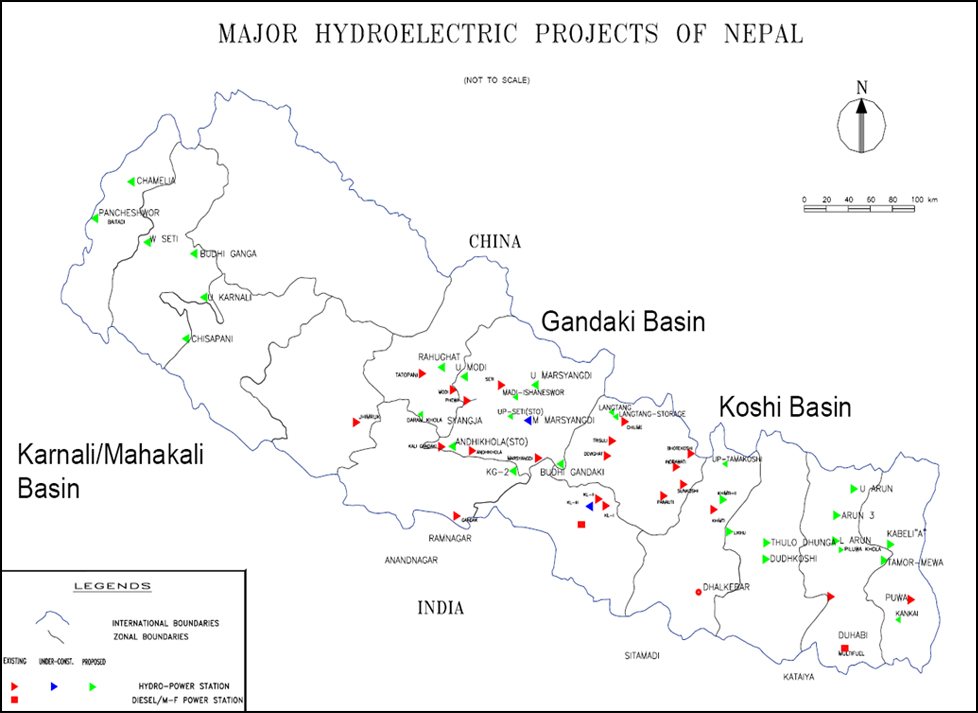
The latest report of Transparency International reveals that lack of dependable hydrological data, authentic study, action plans giving dual meaning, lack of transparency in the power purchase agreement and a failure to increase the risk-bearing capacity among power developers have remained major hindrances towards the development of hydropower sector in Nepal.

As per the report, the irregularities start from the stages of project selection and identification and this tendency further flourished in the period of a survey and the project implementation, the report states, highlighting a responsible role from the government level to control this practice.

The report also points out that environment standard violations, inadequate compensation in regard to land acquisition, false claims, unreasonable local demands, unwarranted contract variations, bias in selection of top officials like board members and CEOs during the construction, procurement, and implementation phases are working as a catalyst to bring the hydro sector under the grip of corruption.

Continue reading “DRP: 2 Jan 2017 (Corruption in Nepal’s Hydro Power Projects)”
Dams · Maharashtra

Maharashtra Water Sector Review of 2016: Revival of scam tainted dams

When the Chief Minister of Maharashtra told the state Assembly on July 21, 2015, “We pushed large dams, not irrigation” he had raised much hopes for the state with a fresh memory of worst ever dam scam and drought termed as “worse than 1972”.[1]

Even though the CM unequivocally said in the state Assembly “Large Dams are not the road ahead”, looking back at year 2016 reveals that the approach of the new government remained as large dam centric. Year 2016 in Maharashtra has been all about reviving the corruption ridden controversial irrigation projects. Continue reading “Maharashtra Water Sector Review of 2016: Revival of scam tainted dams”