
It was bit of a shock to get up to a VERY wet Sunday on March 1, 2015, having slept past midnight the previous night with a ‘dry’ weather. When I checked my inbox, the message from Manoj Misra of Yamuna Jiye Abhiyaan was waiting to provide a link to Accuweather.com site[1] and also satellite image from India Meteorology Department (IMD) site[2]. It looked ominous: “A potent storm will drop unusually far south as March begins, blasting India and Pakistan with heavy thunderstorms, flooding rain and burying mountain snow.” Northwestern India and Northern Pakistan were to face the maximum impact, but the impacts were to reach far down south right upto Karnataka. As the site said it was a rare event: “It is rare for widespread substantial rain such as this elsewhere across northern and central India”. Continue reading “Early Spring Rains bring Climate Disaster for farmers in India”
Category: Climate Change

HLC – TSR Subramanian report: Climate blind or a climate disaster?
The Report of the High Level Committee to review various Acts administered by MoEF & CC (the report hereafter) has been submitted[1] on Nov 18, 2014[2], though it has been made public only in early Dec 2014. The High Level Committee (HLC) headed by former cabinet secretary T. S. R. Subramanian faced a lot of well deserved criticism from its inception[3]. While a comprehensive critique of the 106 page HLC report will take time, some critiques have already been published[4].
At the outset it should be mentioned that the HLC report is replete with recommendations for expediting environmental clearance, fast tracking projects and they show anti environment bias, as reflected in its use of “Single Window clearance”, “Fast track clearances”, “making business easier”, “utmost good faith” to name only a few phrases frequently used by HLC. However, this article is limited to commenting on the direct and indirect implications of the HLC report on climate change concerns.
While the mandate of the HLC report was “to review various Acts administered by MoEF & CC”, as the title page of the report says, the report rightly acknowledges that such a review would entail analysis of functioning of the environmental governance in India. And any review of environmental governance would be considered grossly inadequate in 21st century, when climate change is the biggest over arching environmental concern of our times that is also dictating the developmental priorities and options. As the world moves from deeply disappointing negotiations at Lima (Peru), symbolizing the continued let down of recent COPs (Conference of Parties) under United Nations Framework Convention on Climate Change, to the next (21st) COP at Paris in 2015, it would be useful to see the HLC report through the climate change lenses.
HLC is climate blind Scanning through the report for the phrase “climate change”, one finds that it appears just once in the report outside the name of the commissioning ministry (Ministry of Environment, Forests & Climate Change), in para 1.3 in preamble chapter, where it says: “We need to take heed of the very recent Intergovernmental Panel on Climate Change (IPCC) call from Copenhagen that the earth is flirting with danger – the alarm flag has been hoisted.” That reference, one would have thought would lead HLC to give more importance to Climate Change, but that hope is belied when we read through the report. Even the word climate appears just one other time in the report (para 7.10.4 (e)) but that has nothing to do with climate change.
The other phrase generally used synonymously with climate change is global warming. This phrase appears in the report just once in preamble chapter, in para 1.7, which generates some hope: “Global warming, environmental degradation, loss of biodiversity and potential for conflict growing out of competition over dwindling natural resources are the current focus of humanity and should occupy the centre stage in policy formulation.” Indeed, Climate Change is “current focus of humanity and should occupy the centre stage in policy formulation”. But the HLC has nothing to do with that concern as the report does even care to mention that in any of its analysis or recommendations!
That shows that as far as direct reference to climate change is concerned, HLC has shown not referred to it in its analysis or recommendations. It would seem from this that may be HLC report is blind to climate change concerns.
But how can it be blamed for inviting a climate disaster? Let us see how.
Indian government is proud of its National Action Plan on Climate Change which is supposed to drive our developmental plans and priorities during the ongoing 12th Five year plan and beyond. There are several national missions, including National Mission for a Green India, National Mission for Sustaining the Himalayan Ecosystem, National Solar Mission, National Water Mission, National Sustainable Agriculture, National Mission for Enhanced Energy Efficiency and National Mission for Sustainable Habitat, all of which have far reaching implications for environment governance and climate change. The prime minister himself chairs the PM Council on Climate Change, which is a policy making and national monitoring body.
The 12th Five Year Plan specifically gives importance to climate change when it says (para 1.42): “It is known that India will be one of the countries most severely affected if global warming proceeds unchecked and as such appropriate domestic action is necessary. A National Action Plan for climate change has been evolved with eight component Missions. Implementation of these missions must be an integral part of the Twelfth Plan.”
But HLC takes no cognizance of any of these. Nor does it see the ecology, forests, rivers, biodiversity from climate change perspective and how vulnerable groups from climate change point of view would be affected by projects that would adversely impact the ecology, forests, rivers, biodiversity & other natural resources. In fact HLC completely ignores the fact that millions of Indians directly depend on these natural resources. HLC seems to have no clue about this.
Here it will be illuminating to quote what the HLC chairman said recently[5]: “Villages in Gujarat could have got the water five years earlier had there been no andolan. Though some people lost their land in Madhya Pradesh (MP), the result is that half of MP and three-quarters of Gujarat today has access to water. So, there is some cost attached to everything. Some larger force will have to look at it. Ultimately, it is all about striking a balance. We are suggesting that the government should not go after development blindly but also not let people of one village blackmail it by shouting “my right, my right”. Mr Subramanian here is clearly referring to Narmada Bachao Andolan agitation against the Sardar Sarovar Dam on Narmada River. This is not only grossly ill informed opinion, it shows his shocking anti people and anti people’s movement bias.
The HLC was expected to consider populations that are vulnerable due to climate change and also affected by destruction of environment. In fact the entire HLC report has nothing to do with people or populations, leave aside identifying the vulnerable populations and giving affected people any effective say in environmental decision making process. Absence of such role for people is one of the key reasons for current environmental problems in India, as is apparent in any of the environmental and natural resources conflict. But HLC analysis not only ignores this lacuna, HLC recommendations are for further reducing say for the people by suggesting that public consultations can be done away with in most projects.
Let us see some further direct implications of HLC recommendations with respect to climate change. HLC is essentially dealing with forests (chapter 5), wildlife (chapter 6), biodiversity (chapters 5, 6 & 7), environmental governance (chapter 7). It makes a large number of recommendations on these issues and all of these have implications for climate change and how the populations vulnerable to climate change would become further vulnerable when these resources are taken away from them. But here again HLC sees no need to mention climate change. For example, forests are a major storehouse of carbon and HLC recommendations are going to lead to massive deforestations, thus increasing the release of stored carbon and reducing the carbon absorption, besides taking away the adaptation capacity of the forest dependent communities, but HLC finds no merit or reason to mention that. Even in section 7.9.2 where HLC mentions the kind of expertise NEMA (National Environmental Management Authority), there is no mention of climate change.
It is in this context that we need to view the HLC recommendations for faster and single window clearances with advocacy for utmost faith in the project developers, for relaxing the environmental governance on several counts, for fast track clearances for mining, power, line projects and large number of other projects, for recommending relaxation of public consultation process in most of the projects, for insulating the officials and the ministers (the executive) from environmental governance, for delaying the legal challenge process to clearances and also for debarring the legal challenge on merit. These HLC recommendations are all going to help relax the environmental governance and hence invite greater environmental disaster and by implication, climate disaster for India.
The claim of HLC chairman that HLC had tried “to optimize the efforts to balance developmental imperatives causing least possible damage to environment” is clearly unfounded. The remarks of the Union Environment Minister Prakash Javdekar, while accepting the report from HLC, that “the Report was a historic achievement that would strengthen processes to balance developmental commitments and environment protection. The recommendations of the Report would enhance Ministry’s efforts to avoid undue delays and ensure transparency in clearances and implementation of projects” is deeply disappointing and seems to begin an era where environmental conflicts will only increase and deepen.
It is thus clear that HLC report will invite greater climate disaster for India, particularly for those who are poor and already vulnerable to climate change implications. The HLC report should be rejected for this reason alone, besides its other acts of omissions and commissions.
Himanshu Thakkar (ht.sandrp@gmail.com), SANDRP

END NOTES:
[1] See full report: http://envfor.nic.in/node/4610
[2] See: http://pib.nic.in/newsite/PrintRelease.aspx?relid=111520
[3] For example, see: https://sandrp.wordpress.com/2014/09/26/review-of-environment-laws-is-necessary-but-the-tsr-subramanian-hlc-lacks-credibility/;
http://www.assamtribune.com/scripts/detailsnew.asp?id=nov2614/state050
[4] For example, see: http://shripadmanthan.blogspot.in/2014/12/full-report-of-moefs-committee-to.html and Executive’s Environmental Dilemmas: Unpacking a Committee’s Report by Manju Menon and Kanchi Kohli in Economic & Political Weekly, Dec 13, 2014, among others
[5] For full interview, see: http://www.downtoearth.org.in/content/my-report-not-industry-report-t-s-r-subramanian
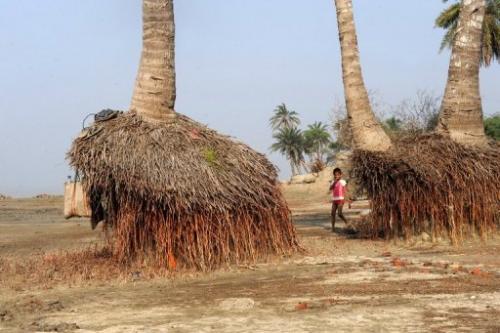
Climate Change and Rising Sea-Levels: Real Threats coupled with Govt’s inaction
Above: Child playing on the Ghormara island in Sunderbans, which is being increasingly affected by rising sea levels Photo: Phys.org
Global ocean levels have risen by about 19 cms in the past century[i]. Over 1961-1993, the global average sea level rose at a rate of 1.4 mm per year. But in the recent past, the rate of rise has gone up. Over 1993-2003, it was observed that the average rate of rise more than doubled to about 3.1 mm per year[ii]. As the earth gets warmer, the threat of land inundation due to sea level rise also increases.
So what is the cause of this rise? According to scientists, this is caused due to thermal expansion of the ocean water and due to melting of glaciers and of ice caps. The amount these have contributed to the above is only speculative as the data available for such estimations is spotty and does not date back far enough. But what is somewhat known is the loss this creates and might create in the future in terms of land inundation, though not really accounting for the loss in the lives of various people, especially the ones living along coasts. The problem today is not that this is happening, the problem is that we do not seem to be doing enough to mitigate the impacts of the sea level rise, nor do we seem to do anything to adapt to it.
In the case of the Indian subcontinent, according to a report published by a group of ecologists led by Dr. M Zafar-ul Islam, there may be a loss of about 14,000 sq. km. of land in case the sea levels rise by one metre[iii]. The report also warns that marine intrusion might affect 18 of the 48 eco-regions in India. This report mainly assesses the losses in the case of sea levels rising by one metre and six metres. In the one metre scenario, which is the estimated rise by 2100, the Sundarbans may lose about half of their area, while the Godavari-Krishna mangrove region is estimated to lose about a quarter of its land. It is also estimated that seven protected areas – Bhitarkanika, Chilka Lake, Point Calimere, Interview Island, Lothian Island, Sajnakhali and Pulicat Lake- would be about 50% flooded in case of a 1 metre riseiii.
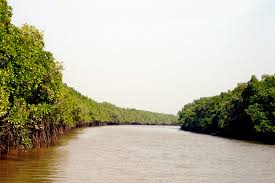
In the Sundarbans part of the largest riverine delta of the world, the villagers are struggling to protect their lands as more and more land is being claimed by sea water, sinking villages. The people living on the banks of these islands have observed that the river has widened and is eating into the island on a regular basis, constantly reshaping them. A study by Professor Sugata Hazra, director of the School of Oceanography, Jadavpur University, found that the total land area of 6402.090 sq. Kms of Sunderbans in 2001 was found to be reduced to 6358.048 sq kms in 2009. This would mean an approximate loss of about 44.042 sq kms. This has led to the displacement of approximately 7,000 people in the last 30 years according to this study[iv], but this seems like an under-estimation. The MoEF’s (Union Ministry of Environment and Forests) Climate Change Assessment report, also called 4 X 4 report (since it looks at 4 Sectors in 4 most vulnerable regions), prepared by the Indian Network of Climate Change Assessment, quoted a 2000 study by Goodbread and Kuehl, which said that the rise in sea level can be attributed partially to the subsidence of the Ganga-Brahmaputra delta at the rate of about 4mm/year, as estimated by sedimentological studies[v].

Deltas as sinking as sediments are trapped by dams The sinking of deltas due to upstream interventions are also contributing to impacts felt in the coastal areas, in addition to the impacts due to rising sea levels. In many cases like the above, part of the driving force for effective rise in sea levels is the sinking deltas due to the absence of sediments from the upstream. According to a report by SANDRP earlier this year, the Ganga-Brahmapuptra delta, carrying one of the highest sediment loads of the world, has experienced a 30% reduction in sediment over the past century. Thus the impacts seen in case of the Sundarbans is a mix of two factors: rising sea level and delta sinking. The driving force behind sinking deltas is damming of rivers in the upstream, which blocks sediments from entering the river channel and effectively, the Delta. The reduction in water flow to the deltas due to upstream diversions adds to this.
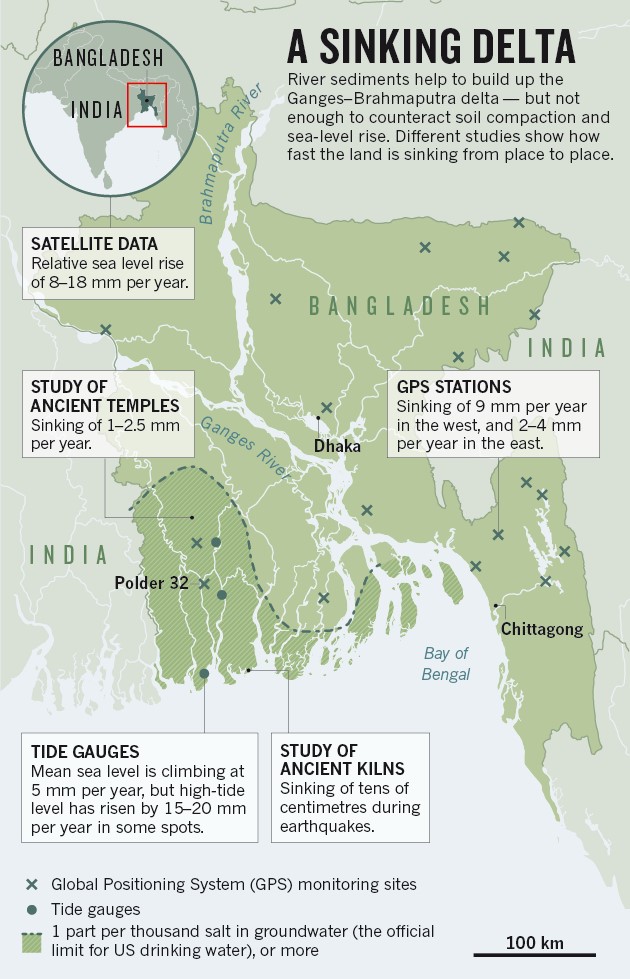
Source: http://www.nature.com/news/floods-holding-back-the-tide-1.15013
These dams trap the sediment that should have come downstream with the river and deposited on the delta. Moreover, due to water diversions in the upstream, less and less water is flowing in the deltas, and less flow means less capacity to carry sediment to the deltas. Due to these reasons, the deltas are experiencing reduced silt deposit which then leads to their sinking and the sea eating away the remaining area. According to the report, in the last 50 years, the combined annual sediment flux of the large Chinese rivers has reduced from 1800 million tons (Mt) to about 370 Mt mainly due to the construction of a large number of dams[vi]. The Yellow river delta in China is sinking so fast that the local sea levels are effectively rising by upto 25 cms/year, nearly 80 times the global average.i
It is also interesting to note that in places like Jakarta, Indonesia, which is home to almost 10 million people, the heavily populated areas have sunk by as much as six and a half feet as groundwater is pumped from the earth to drink[vii]. This increases their risk of flooding and even more so if the groundwater levels continue to drop. With this drop in groundwater levels, the river flow in downstream areas decrease. This reduces the capacity of the river to carry silt, thus making the condition even worse[viii].
An estimated half a billion people live on or near deltas, constituting the highly vulnerable populations. The government needs to alter its development plans to suit the vulnerabilities and needs of these people. With its constant imposition of building large dams and barrages without taking into account the impacts they are going to have downstream, the government is just adding to the existing impacts and threats faced due to climate change. Moreover the governmnet anyways refuses to acknowledge that large sections of Indian people, particularly the poor and weaker sections are suffering due to the impacts of climate change, it refuses to identify people who are vulnerable to climate change, it refused to compensate them when they suffer for no fault of theirs and it refuses to demand from the climate polluters in the west and within India to pay for the losses.
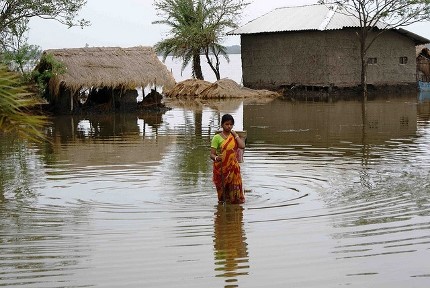
Above: A woman wades across water in the Ganga Brahmaputra Delta. The dams hold back sediments crucial to the delta formation. Source: http://www.thethirdpole.net/dams-responsible-for-south-asias-sinking-deltas/
Reports: IPCC In the recent past, there has been much interest in sea levels rising and some research has gone into this direction. The Intergovernmental Panel on Climate Change has been assessing and publishing about the various impacts of climate change and through their assessment reports, but it is not the only body doing this. In fact, it has come under a lot of criticism lately with people outside the body, especially ones who use semi-empirical models for study, showing that the figures of the IPCC under estimate the risk at hand.
In the 4th Intergovernmental Panel on Climate Change (IPCC) report, 2007, global sea levels were observed to be on the rise with the projected rise being about 18-59 cms by 2100. After facing criticism for this figure seen as an underestimation, IPCC came out with a 5th report on climate change. In this, the predictions of global rise in sea level have gone up by 50% and now stand at 28-98 cms by 2100. This is the wide range. For high emissions, the IPCC predicts that there will be a rise by 52-98 cms, whereas, even with emission reductions, the rise is predicted at 28-61 cms[ix]. These projections are made for the global sea level for 2081-2100 relative to 1986-2005. This then puts a lot of low-lying areas at the risk of flooding. These estimates are speculative to some extent due to the complexities inherent to the models used for study and spotty data. These estimates are also likely to be under estimates.
Other reports predict higher sea level rise The models that the IPCC uses for study are process models. This range given by them is derived from these models in combination with climate projections and literature assessment of glacier and ice sheet models. Some other studies done using ‘semi-empirical’ models, give different results. These studies look at how temperatures have changed over hundreds of years and the way sea levels have corresponded to it. They extrapolate based on this and their figures have come to be almost twice as high as what the IPCC found. They argue that the sea levels will rise by as much as 2 metres, and cause floods affecting roughly 187 million people[x]. The IPCC has dismissed these models as divergent and inaccurate, perhaps themselves adopting a more conservative approach than they should.

Maale, capital of the Maldives, an Indian Ocean archipelago that is the lowest, flattest country on Earth is now protected by a seawall. By 2100 rising seas may force Maldivians to abandon their home. Photo: George Steinmetz. Source: http://ngm.nationalgeographic.com/2013/09/rising-seas/steinmetz-photography#/08-maale-maldives-670.jpg
Not being able to put a finger on it: One of the problems pointed out about the IPCC is that it does not provide the upper limit for sea level rise. For instance, if the collapse of marine-based sectors of the Antarctic ice-sheet is initiated, then the sea level could rise by several times more than projected during the 21st century[xi]. Scientists have estimated that the ice caps in the poles and Greenland hold enough water to raise sea level by 65 metresi. In the case of Greenland, scientists have assessed that the entire island is losing weight. The warm shore water is causing glacier calving into the sea. In a recent press release on a study conducted on ice sheets in Antarctica and Greenland, Veit Helm, glaciologist at the Alfred Wegener Institute (AWI) in Bremerhaven said that ice sheets are losing volume at the rate of about 500 cubic km per year[xii]. This study found that the volume loss in Greenland has doubled since the year 2009. At the same time, the loss of the West Antarctic sheet has tripled. This then means that the estimated rise in sea levels needs to be relooked at.
It is the responsibility of the governing authorities to take measures to try and minimize the damage that is occurring and will occur from climate change and its own skewed development projects. The government needs to identify, acknowledge and safeguard the already vulnerable communities and not make them more vulnerable in the face of the dangers they face from climate change. There is a need to integrate these climate change warnings and mitigation measures into planning and development, especially in the coastal areas. This is clearly not happening. There is little effective steps from Indian government to protect mangroves, deltas, or coastal areas either from dams and diversions in the upstream or from sea-level rise in the downstream. On the contrary, the government plans are for accelerating the dam construction in the upstream and destructino of mangroves due to coastal projects. India’s National Action Plan on Climate Change or the state Action Plans on Climate Change do not have any credible assessments or mitigation or adaptation plans in this context.
There have been increased instances and intensities of tsunamis, floods and cyclones in the recent past. In the case of rising sea levels and deltaic changes, the warnings have been there for a long time. It is not going to be a sudden catastrophe, but is a well established danger which lurks on our coasts. Therefore, there is no excuse to let it go unaddressed. There is no excuse for inaction.
Padmakshi Badoni, SANDRP, padmakshi.b@gmail.com

END NOTES:
[i] http://e360.yale.edu/feature/rising_waters_how_fast_and_how_far_will_sea_levels_rise/2702/
[ii] http://www.moef.nic.in/sites/default/files/fin-rpt-incca_0.pdf
[iii] http://www.thehindubusinessline.com/news/14000-sqkm-land-at-risk-with-rising-sea-level-report/article4826559.ece
[iv] http://economictimes.indiatimes.com/news/environment/global-warming/villagers-struggle-to-save-land-as-islands-shrink-in-sundarban/articleshow/27238842.cms
[v] http://www.moef.nic.in/sites/default/files/fin-rpt-incca_0.pdf
[vi] https://sandrp.in/Shrinking_and_sinking_delta_major_role_of_Dams_May_2014.pdf
[vii] http://timesofindia.indiatimes.com/home/science/Worlds-coastal-megacities-sinking-10-times-faster-than-rising-water-levels/articleshow/34389492.cms
[viii] For a recent update on the groundwater situation in India, see: https://sandrp.wordpress.com/2014/08/11/groundwater-falling-levels-and-contamination-threaten-indias-water-lifeline-urgent-need-for-community-driven-bottoms-up-management/
[ix] http://www.realclimate.org/index.php?p=15875
[x] http://e360.yale.edu/feature/rising_waters_how_fast_and_how_far_will_sea_levels_rise/2702/
[xi] http://www.realclimate.org/index.php?p=15875
[xii] http://www.downtoearth.org.in/content/record-decline-ice-sheets-antarctic-and-greenland
Climate Change & Himalayan Glaciers: A News Round up
This year has witnessed erratic rainfall, increased snowfall, rising sea levels and other extreme weather conditions and the situation is not likely to improve in the coming months. Recent assessments have declared that this is the result of climate change, which we so conveniently blame for every untoward weather condition without properly addressing our own role in bringing it about or perhaps minimizing its effects. The climate is changing and the urgency to address this now is more than ever. Climate change acts as a catalyst and multiplies the threat we already face from certain environmental circumstances. The effects of climate change are being felt worldwide and global urgency is being expressed through various seminars and assessments being carried out by different international bodies like the IPCC (Intergovernmental Panel on Climate Change). Scientists have warned that extreme weather events will increase in intensity if climate change goes unchecked. Unchecked climatic change is also responsible for loss of life and property. According to the World Bank Report ‘Building Resilience: Integrating Climate and Disaster Risk into Development’, “from 1980 to 2012, disaster-related losses amounted to US$3,800 billion worldwide. Some 87% of these reported disasters (18,200 events), 74% of losses (US$2,800 billion) and 61% of lives lost (1.4 million in total) were caused by weather extremes (Munich Re 2013)[i].”
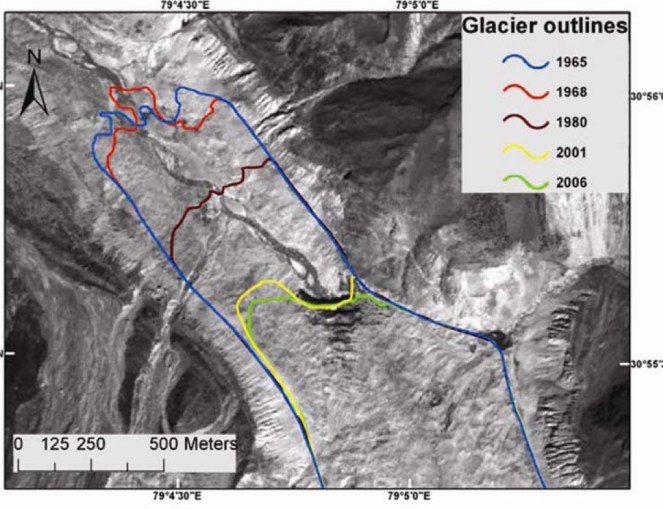
Image showing the retreat of the Gangotri glacier (http://glacierchange.files.wordpress.com/2010/01/gangotri-2006.jpg)
These weather extremes can cause and are in turn caused by changes in various water resources such as seas, lakes, rivers and glaciers. The Himalayas, spreading across over 2500 kms are the source of various life giving rivers in India and other parts of South Asia. The Ganga, Brahmaputra and the Indus, among the most important rivers for the South Asian region, originate in the Himalayan glaciers. The Himalayas have the highest concentration of glaciers outside the polar caps. These glaciers are natural stores and regulators of water in these rivers, which in turn support needs and livelihoods of millions of people, provide water for irrigation, domestic consumption and energy generation. Climate change is likely to result in smaller glaciers and less melt water. For rivers like the Indus, which gets almost half of its water from the melting of glaciers, this can lead to the endangering of the livelihood of millions of people living in low lying areas.

Even though such fears are being expressed by various groups of people, studies done by the ICIMOD in collaboration with Netherlands’ Utrecht University and research organization FutureWater, observe that the water levels in the Indus, Ganga and the Brahmaputra are likely to increase at least until 2050[ii]. This, they say, is due to an increase in melt-water in the Indus and an increase in precipitation in the Ganges and the Brahmaputra. But these projections, as even the scientists acknowledge, do not say anything about the future of these rivers. With retreating glaciers, what will the fate of rivers like the Indus be, which depend largely on melt-water, is still to be ascertained.
Soaring temperatures, melting glaciers A study prepared by the Uttarakhand government has predicted that the mean annual temperature (MAT) in the Himalayan region is likely to rise by up to 2 degree centigrade by 2030. It has also predicted a rise of 5-13% in rainfall in the next 2 decades. This was disclosed in the Rajya Sabha on 5th of August, 2013 by the then Science and Technology minister, S Jaipal Reddy[iii].
According to a report presented in the Second India Water Forum in 2013, melting of glaciers will lead to a reduction in the critical water supplies for the people of the Himalayas. The International Centre for Integrated Mountain Development (ICIMOD) predicted that Himalayan water flow from the glaciers to the basin would reduce by about 25-50% by the end of this century[iv]. The significant effects of this will be seen in the upper reaches. Taking the case of Ganga, it is seen that though its snow and ice melts contributes only about 1-5% of the water in the Ganga and its tributaries, this is only an annual averageiv. The percentage of melt water becomes higher in the months of March, April and May. This then becomes a very crucial amount of water in the rivers in those summer months where it cannot be recharged through rain.
This is also very important for the hydro projects downstream. Seasonal melt-water serves as the main source of power for an increasing number of hydroelectric dams on the rivers served by the glaciers. The amount of electricity generated depends on the amount of water flow in the river. Thus with changing river patterns in South Asia, the hydropower production will be disrupted. A 1% reduction in stream flow can reduce electricity output by roughly 3%[v]. The unreliable and potentially decreasing flow of water implies that whole hydropower development plans need a comprehensive rethink, also considering the increaed threat of flashfloods and related disasters in changing climate.
Another report by the ICIMOD has found that glacier runoff contributes majorly to river flow for about 2-4 months, mainly from early/mid-summer, till late summer/early fall and reaches its maximum in the Northern hemisphere in July-August. The total mass of the glaciers is much more than what is recharged every year, thus leading to smooth inter-annual flow variability and thus reducing risks of the late summer droughts in hot and dry summers. Climate Change, however, may lead to consistent mass loss in glaciers, hence reducing their inter-annual storage capacity[vi].
The report further reads:
The withdrawal of glaciers and seasonal snow covers as the transient storages for precipitation in certain areas implies first and foremost the loss of flow regulation capacity in basin’s headwaters… Combined effect of the reduction of glacier area and seasonal snow extent on the seasonality of flow from the alpine catchments will be characterized by an increase of the magnitude of the short-term flow variability, in particular, an increase of autumn and winter flow, shift of late spring-early summer peak to earlier dates and possible decrease of mid-late summer flow (assuming no changes in precipitation). Hydrological regimes will be gradually changing from glacio-nival to fluvial, i.e., dependent primarily on rainfall… The glacier runoff simulation results suggest that relative shares of renewable and nonrenewable components in total glacier runoff have undergone a remarkable change: the nonrenewable component increased from 16-30% of total glacier runoff in 1961-1990 to 26-46% in 2001-2010 in all the study basins. However, the increase of non-renewable runoff in none of the basins has been large enough to overweigh the decrease of the renewable component of glacier runoff due to overall reduction of the glacier-covered area.[vii]
According to another study co-authored by Anil Kulkarni, visiting scientist at the Divecha Centre for Climatic Change, entitled, The state and fate of Himalayan glaciers, the rate of loss of glacial mass in the Himalayan and Karakoram (H-K) region, has increased after roughly 1995. Rough estimates suggest that glaciers in the Indian Himalaya are losing mass at the rate of 16 Billion T per year[viii]. The loss in mass for many small glaciers located in low altitude range could be larger than the average suggests, being as high as 1 m per year. This is substantial loss considering mean depth of small glaciers could be between 30 and 50 mviii. These small glaciers and ice fields are important source of water for many mountain communities. This source of water is and could be significantly influenced in near future and could affect sustainability of many mountain communities. There is today neither a mapping of such vulnerable communities, nor any plans to compensate them for the losses they are suffering and will suffer for no fault of theirs.
This loss of mass, especially if it comprises of non-renewable runoff, can also lead to further complications. According to geophysicist and seismologist, Geological Survey of India, Mr. O.P. Mishra, melting of glaciers due to increasing temperatures and high rainfall also add to the already existing complex of factors influencing earthquake activity in the Himalayan region[ix]. According to him, the ice sheet melting leads to the loosening of the litho static pressure (vertical pressure on the underlying crust)ix. As a glacier retreats and its weight eases, the earth could show a tendency to bounce back up in the form of a moderate or even a strong earthquake. According to him, there is a strong correlation between the retreat of ice sheets and increased seismic activityix. This increase in seismic activity can also lead to further melting of glaciers and a change in their behavior as it has the capacity to alter the axis of rotation, which can then lead to changes in surrounding areas.
According to a study conducted by the Chinese Academy of Sciences (CAS), the glaciers in the Tibetan plateau, which form the source of vital rivers such as the Brahmaputra, have shrunk by about 15%, which would mean about 8,000 square kms since 1980[x].

They also found that the perennial frozen earth in the plateau had decreased by 16% over the past 30 yearsviii. This does not present a favourable scenario for water security in the region and downstream areas of the Brahmaputra. According to scientists, this glacial retreat has accelerated since the 1990s and is making the plateau more vulnerable to the effects of climate change. This again means the plans for hydropower projects in North East India will need a review, but unfortunately, the Environmental and Social Impact Assessments of these projects are not even considering these factors and the MoEFCC’s (Ministry of Environment and Forests and Climate Change) Expert Appraisal Committee on River Valley Projects is not even taking these into consideration while appraising these projects in spite of repeated submissions on this by SANDRP.

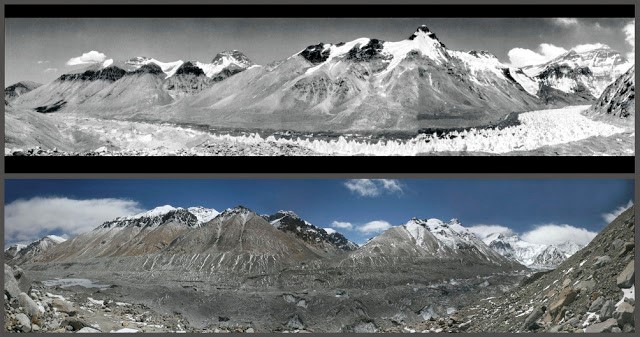
Above: The scale of glacial melting on the west Rongbuk Glacier located in Southern Tibet,between 1921 and 2008. Photo by: RGS and David Breashears. (http://tibet-edd.blogspot.in/2012/03/glacial-meltdown-and-glacial-lake.html)
The situation is similar in the case of the Gangotri glacier. Scientists at the GB Pant University of Himalayan Environment and Development have observed that the gangotri glacier is reducing in volume and size. The glacier is 30.2 km long and is the origin of the Bhagirathi, one of the main tributaries of the Ganga. This has retreated more than 1500 metres in the last 70 years. According to researchers, from the year 2000 onwards, the average rate of retreat of the glacier per year has been about 12-13 metres[xi].
Even while this is happening, there have not been any efforts to sensitize the scores of pilgrims who flock to Gangotri every year towards the condition the glacier is in, and how they can help in not letting it deteriorate further or at least in slowing down the process. They need to be made aware of the danger that the environment is faced with and should be encouraged to take steps towards its conservation. The state and union government also needs to ensure that local projects do not lead to worsening the situation. It is also the responsibility of the local people of the area to conserve what is important for them. They have to come out and take responsible action to ensure that they have a say in the plans made for their area.

The impact of glacier melting is felt in the upper reaches of the river and also in low-lying areas. For example, the Tawi river in Jammu has become shallow over time so much so that one does not need a boat to cross it anymore at certain locations and certain times. According to the retired director of operations M.M. Munshi, Geological Survey of India, “the glaciers and barrier lakes in the Jujdhar and Seojdhar ranges, which contribute a larger share of water to Tawi, have almost disappeared… water flow in all the rivers is declining… the perpetual snow line in Jammu and Kashmir has gone up to 16,000 feet from 13,000 feet in the last hundred years”[xii]. Such changes affect those who mainly rely on water for their livelihoods, i.e., farmers as also ground water recharge. It is not only the unavailability of water, but also the floods caused due to untimely or heavy rains. In such situations, which are recorded to be increasingly occurring in this region, people have to suffer the loss of land, livestock and thus even livelihood.
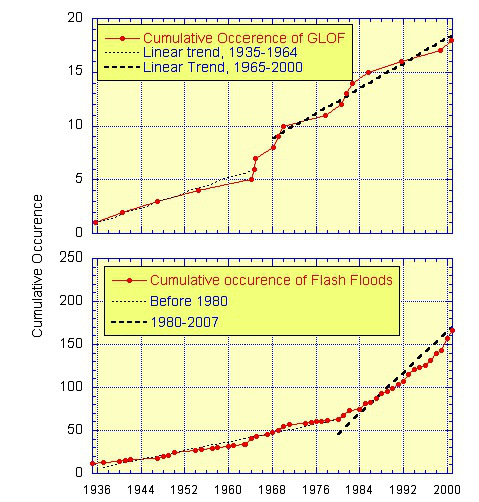
Such floods in the upper reaches by the headwaters can also be caused due to the flooding/breaking of glacial lakes. These glacial lakes can either already exist or even get formed in case the precipitation and/or glaciers melt increases. Global warming is seen as one of the key causal factors in their formation. According to recent reports, melting of glaciers is leading to the formation of small lakes in the high reaches of Himachal Pradesh. These lakes pose danger to the villages downstream. Out of the 249 glacial lakes in Himachal, 11 have been identified as having high potential for breach. Glaciers and ice-bodies cover a total of 2472.49 sq km (4.44%) of the total area of 55673 sq km in the state[xiii]. This is made worse by the uncertainty of rainfall and increasing frequency of higher intensity rainfall.
These kind of glacial lakes are forming in many areas in the Himalayas. Such lakes can also have loose moraines with them, which pose a greater threat to downstream areas as there could be a sudden breach of the moraine dams leading to flooding. One of the ways to prevent excessive harm to the people is if the rate of glacier melting can be studied with some degree of attentiveness, then alarm systems can be installed in areas downstream to warn the people in case of a Glacial Lake Outburst Flood (GLOF).
.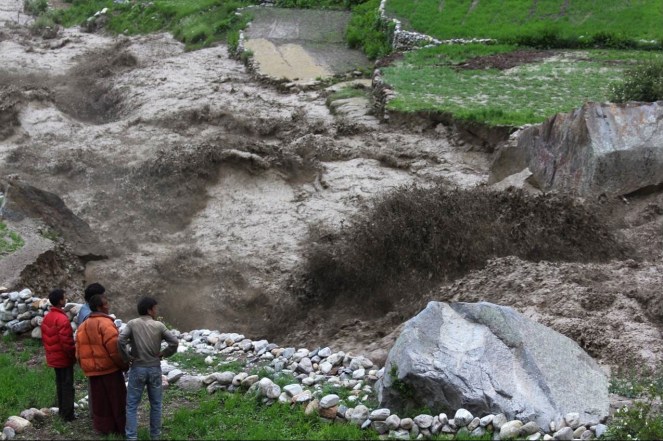
Above: People in Halji Village, NW Nepal, watch as a GLOF destroys their fields. (http://www.asianart.com/articles/halji2/index.html)
The monsoon is likely to become even more unpredictable in the coming years. Thus the threat to our environment from climate change is on the rise and it increases every day that we choose to ignore it. The government had set up the National Action Plan on Climate Change (NAPCC) in 2008 which was intended to serve as a road map on how India plans to combat climate change. There are various missions under the NAPCC amongst which are the National Water Mission and the National Mission for Sustaining the Himalayan Ecosystem, which has been constituted primarily to understand to what extent the glaciers are retreating and how the problem can be addressed. The government plans to review all the missions in 2017. However, as SANDRP publication “Review of NAPCC: There is little Hope here” showed, both content and process of formulation of the NAPCC had nothing to be hoped for particularly as far as vulnerable communities were concerned. A more detailed review of the National Water Mission in SANDRP’s 2012 publication “Water Sector Options for India in a Changing Climate” showed, the process, content and implementation of the National Water Mission is not going to bring any help to sustainable water resources development or to the vulnerable sections.
We have seen various so-called natural disasters happen since 2008, a very significant one of which was the Uttarakhand flood disaster of June 2013. The Uttarakhand government, at the end of last year, proposed a Rs 9,000 crore action plan to minimize the effects of climate change. Under this plan, it had allocated Rs 108 crore to be spent on water resources, like the treatment of catchment areas and flood control, etc. These measures just show the desperation of the government to show that something is being done in the namesake, even though it is not based on any scientific studies or participatory process. It seems to be the same way in which the Disaster Management cell was set up in Uttarakhand to try and manage any disaster that might strike the region, the campus of which was affected in the 2013 floods. The affected people have still not received sufficient help from the government. Even the basic minimum facility like the road that leads into Uttarkashi has not been constructed. The local people have to cross tracts of dusty and congested roads to reach from one place to the other when it has been over a year since disaster struck the town.
What we need is for the community to be involved at every stage from planning, impact assessments, decision making, implementation, operation and maintenance process and awareness creation in the areas which are most vulnerable. The current top-down approach that pushes business as usual situation will clearly not help.
Padmakshi Badoni, SANDRP, padmakshi.b@gmail.com

END NOTES:
[i] http://www-wds.worldbank.org/external/default/WDSContentServer/WDSP/IB/2013/11/14/000456286_20131114153130/Rendered/PDF/826480WP0v10Bu0130Box37986200OUO090.pdf
[ii] http://timesofindia.indiatimes.com/Home/Environment/Global-Warming/Water-supply-in-Ganga-Brahmaputra-will-increase-Study/articleshow/35955391.cms
[iii] http://economictimes.indiatimes.com/environment/global-warming/mean-annual-temperature-in-himalayan-region-to-rise-by-2-degrees-by-2030/articleshow/21625356.cms
[iv] http://www.thethirdpole.net/glacier-melt-will-reduce-crucial-water-supplies-for-people-living-in-the-himalayas/?utm_source=third+pole+newsletter&utm_campaign=8590241a4e-thethirdpole+June+newsletter+2013&utm_medium=email&utm_term=0_43686cf8d5-8590241a4e-46415029
[v] http://www.nature.com/news/climate-change-melting-glaciers-bring-energy-uncertainty-1.14031
[vi] http://www.iwmi.cgiar.org/Publications/IWMI_Research_Reports/PDF/PUB150/RR150.pdf)
[vii] http://www.iwmi.cgiar.org/Publications/IWMI_Research_Reports/PDF/PUB150/RR150.pdf
[viii] http://www.iisc.ernet.in/resehig_himalayan_glaciers.html
[ix] http://www.thethirdpole.net/in-the-jigsaw-of-himalayan-risk-climate-change-and-earthquakes-are-linked/?utm_source=third+pole+newsletter&utm_campaign=f192aa85b1-thethirdpole+June+newsletter+2013&utm_medium=email&utm_term=0_43686cf8d5-f192aa85b1-46415029
[x] http://www.thehindu.com/sci-tech/energy-and-environment/tibetan-plateau-glaciers-have-shrunk-by-15-per-cent/article6130865.ece
[xi] http://www.thehindu.com/sci-tech/energy-and-environment/gangotri-glacier-is-retreating-report/article5549905.ece
[xii] http://www.trust.org/item/20140225155301-lt9p4/?source=hpeditorial
[xiii] http://timesofindia.indiatimes.com/home/environment/global-warming/Melting-glaciers-giving-rise-to-new-lakes-in-Himachal-Pradesh/articleshow/38889169.cms
Gawadewadi: A success story of participatory small scale water conservation
Background
Clean roads, lush green farms and wells having water even at the peak of summer is what one notices when one enters Gawdewadi Village of Ambegaon Taluka in Pune Distrct.
Ralegan Siddhi and Hiware Bazar villages of Maharashtra are two widely discussed success stories of sustainable village development through soil and water conservation works. There are however lesser known success stories of equal caliber. Gawadewadi is possibly one such story. Participatory soil and water conservation work started for improving water availability in the village for drinking and agricultural purposes has led to multiple other initiatives like cooperative dairy, gobar gas plants for the households, horticulture etc. A chain of benefits has unfolded over more than ten years of hard work put in by the villagers. The village is now tanker free, crops have diversified, agricultural production has gone up and so have income levels. Most rewarding benefit has been the homecoming of more than 165 families which had migrated to Pune or Mumbai in search of work.
Gawadewadi has successfully demonstrated how small scale ‘active solution’ of participatory soil and water conservation works can become a successful alternative to large scale ‘passive solution’ such as building dams.
The success story is even more important in the context of changing climate. The Working Group II of Inter-governmental Panel on Climate Change (IPCC), in its report titled ‘Climate Change 2014: Impacts, Adaptation, and Vulnerability’released on 31st March 2014[i][ii], acknowledges that Ecosystem Based Adaptation (EBA) to Climate Change (such as soil and water conservation works) is a lower risk option as against engineering solutions (such as dams) as their application is more flexible, more responsive to unanticipated environmental changes and is more cost effective & sustainable. It also acknowledges that building large dams is not a climate friendly option. The report further states that EBA may contribute to achieving sustainable development goals (e.g. poverty reduction, sustainable environmental management, and even mitigation objectives), especially when they are integrated with sound ecosystem management approaches.
In this regard the success story of Gawadewadi assumes greater importance.
Journey towards sustainability
Gawadewadi (Ambegaon taluka, Pune district) with a total area of 1243 Ha is a village located about 10 km away from Manchar on the Pune-Nashik road and 70 KM away from Pune city. It is a rainfed watershed lying in the rainshadow region of Maharashtra state (Figure 1[iii]). Average annual rainfall is about 500 mm. The terrain is mostly flat. Southern boundary of the village is hilly which flatten in central and northern portion. Out of 1,243 ha of land 878 ha is cultivable. Most of the families in this village are small land holders. Current population of the village is about 3190. After drought of 1972-73 the village was dependent on tankers for drinking water during summer, agricultural productivity was low and a large number of people had migrated to Pune and Mumbai in search of employment.

In 1985, residents of Gawadewadi with local leadership of Anna Pimpale visited Ralegan Siddhi village in Parner taluka of Ahmednagar District. Impressed by the holistic development of the Ralegan Siddhi the residents were determined to transform Gawadewadi. Vanarai, a voluntary organization based in Pune that was approached by the villagers agreed to act as a catalyst in this process of development. Soil and water conservation works started in 1991. Technical inputs needed for the watershed development works were given partly by Irrigation Department and partly by Agricultural department. Along with these funds no grazing and no cutting of trees was diligently followed. Since there are no landless cattle breeders following no open grazing regulation was easier.
| Sr. No. | Structure | Number |
| 1 | Soil bunds | 18 |
| 2 | Loose Boulder Bunds | 03 |
| 3 | Underground Bunds | 03 |
| 4 | Gabion Structures | 01 |
| 5 | Check dams | 03 |
| 6 | Percolation Tanks | 05 |
| 7 | Vanrai Bund | 01 |
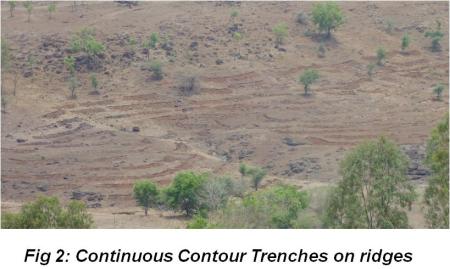
There are four catchment areas spread over 1400 Ha. Adopting top to bottom approach for watershed treatment Continuous Contour Trenches (CCT) (Figure 2), loose boulders and stone bunds were constructed on the ridges; soil bunds, cement bunds, gabion structures and percolation tanks were constructed at the bottom of the catchment. CCT works on the ridges is carried out by forest department. Under social forestry programme Village Panchayat has planted 1,10,000 trees on 34 acre land. Table above lists the existing watershed structures.

Total expenses incurred for the project were Rs 60 lakh for construction of watershed structures and Rs one lakh for trainings. This money was spent during first 5 to 6 years of work during 1991-97 and funded by various government departments like Agriculture Department, Social Forestry Department, Ground Water Survey and Development Agency and also by Vanarai.
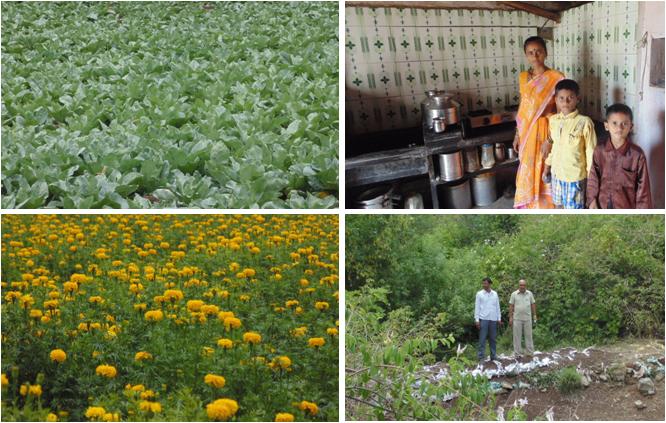
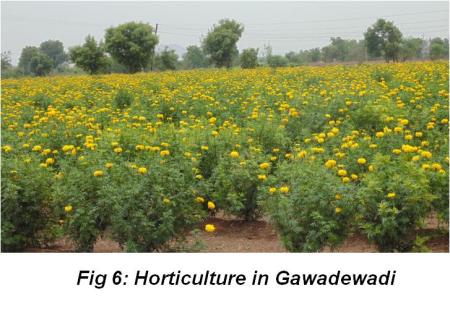
Water availability has slowly increased. After the great drought 1972-73 the village survived entirely on tankers post February every year. Government had to send two to three tankers per day to cater for drinking water. The village is now completely tanker free. Wells that had no water after December earlier now have water even at May end (Figure 4). Earlier the only crops harvested were bajra and jowar. Farmers could barely cultivate once a year. Now the crop diversity includes tomatoes, potatoes, groundnut, wheat, sugarcane etc. Village also produces export quality custard apples, pomegranates and grapes. Farmers take three rounds of crops in a year instead of one. The village now has irrigated area of 150 Ha. In 1991, 500 people from the village were daily wage labourers. Now there are nil. Area under horticulture was 11 Ha in 1991 which has now increased to 142 Ha (Figure 5 & 6). Increased fodder development resulted in increased milk production. Milk collection which was 200 lt per day in 1991 has gone up to 12000 lt per day. The village experienced no scarcity of water in drought of 2012. Domestic demand for water was unaffected by drought. For agriculture the usual round of water is once in 10 days which had to be adjusted to once in 20 days during the drought. “We did not even realize that there was a drought” says Jaywant Gawade a villager.


 Vanarai has played a role of facilitator. It coordinated the local officers of various ministries & departments and pooled different resources to make them available to the village. Vanarai awakened the local leadership and conducted training programmes for developing different skills and also worked for empowerment of women and youth.
Watershed development worked as a platform for the villagers to come together. With resources made available from Vanarai the participatory initiatives soon diversified to other livelihood generating and development initiatives. Following footsteps of Ralegan Siddhi the village followed the principles of ban on alcohol, no use of axe, no grazing, shramdan and family planning. Latrines were constructed in all the households. Biogas plants have been constructed in 265 households and latrines have been connected directly to the biogas plants. Entire cooking for all these families is taken care of by biogas. Increased fodder availability has made it feasible to rear cattle and thus has ensured the availability of cow dung. There are 13 women Self Help Groups (SHGs) involved in activities like sericulture, vermi composting etc. The village now has nine dairies. These dairies were actively functioning till 2-3 years back. The milk collected was sent to Katraj Doodh Sastha (Pune). Since last two three years private milk product companies collect milk from individual households and pay for the same. Villagers opted for this as it is a more convenient option. In 1994 the villagers established Hirkani Vidyalay, a local school with contribution from village. The momentum of village development which geared up 10-12 years back is still very much alive. Currently Vanarai is involved in improving the marketing of agriculture produce. The villagers now want to focus on improving the agricultural practices. After increase in the water availability the cultivated area under sugarcane has also increased. Currently the area for sugarcane cultivation is 60% of the total cultivated land. The sugarcane is sent to Pargaon Cooperative Sugar Factory. The factory has been existing for last 15 years. About 90% of the sugar cultivators from the village are members of this sugar factory.
This is a matter of concern in such low rainfall area and it has intensified the water use. With this realization the villagers are slowly shifting towards drip irrigation. They are also keen on learning sound crop water management and organic farming practices. Data for the current water use and ground water levels for past few years could not be available for this study.
Dynamics with Dimbhe dam
The village was self reliant in terms of water availability four to five years prior to irrigation canal provided by the government. Right Bank Canal (RBC) of Dimbhe dam which was constructed in 1997 passes through the village (Figure 7[iv] & 8). Dimbhe dam was filled to capacity in 2000, submerging 2202 hectares land of tribals in the Ambegaon taluka. 1253 families had to shift out, 11 villages were submerged fully and another thirteen villages were partially affected. Villagers inform that there is no fixed schedule followed for releasing water in RBC of the dam. The Left Bank Canal (LBC) constructed in 1987 has water throughout the year since it carries water downstream to Yedgaon dam[v]. However RBC receives water only thrice a year. The latest round of water release, as I write this was in February 2014. The water lasted for crops for about 30 to 35 days. The next round of water was due in May 2014 which is yet to be released. Agricultural fields only in the belt of 200 ft on both the sides of canal are benefitted. Villagers inform that in absence of watershed development work, coping with summer solely with canal irrigation was impossible.
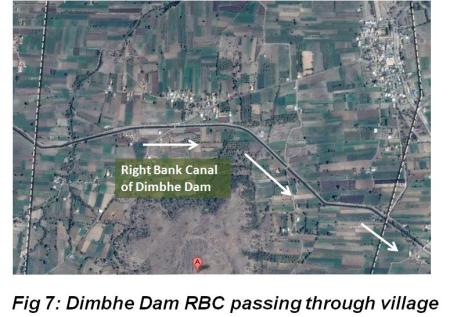

Dimbhe Dam and its RBC share some more interesting dynamics with the village. Gawadewadi has hosted more than 70 families which were displaced because of Dimbhe Dam. Villagers point out that these families are a classic example of how the displaced families often remain away of benefits of the dam. The displaced families stay more than two KM away from the RBC and have no access to water from RBC. They were given land for land around 20 KM away from the houses that were built for them in Gawadewadi. Many of them sold the lands given to them under rehabilitation package as commuting was a problem. Problems of Dimbhe dam that have interface with Gawadewadi may just be a tip of ice berg. Even so these links with the government irrigation projects further highlight the need for participatory and decentralized water conservation.
Conclusion
Taking a close look at the development of Gawadewadi shows that the essential element behind success was the active public participation. This participation and ownership of the work resulted in completion of soil and water conservation works on 1400 Ha of area when no funding was available. This participation was also responsible for spurring of other allied developmental initiatives in the village which almost took a form of movement. Villagers voluntarily participated in various training programmes and diversified their livelihood options, improved farming practices, increased crop variety, increased milk production and in turn increased their income. In this sense such eco-system based works for conservation of natural resources like land and water become ‘active solutions’ as against the ‘passive solutions’ such as dams which come at a tremendous social and environmental cost.
It is worth noting that over 40% of India’s under construction dams are in Maharashtra. The state has spent about Rs 75000 crores over the last decade and will need to spend about Rs 76000 crores to complete the under construction projects[vi]. When Maharashtra is on such an irrigation spree, highlighting and replicating stories like Gawadewadi which demonstrate success of small scale solutions is definitely the need of the hour.
Amruta Pradhan, SANDRP, amrutapradhan@gmail.com, Photos by Author
Note: This article is based on field visit, accompanied by Vanrai in early June 2014.
END NOTES:
[i] http://ipcc-wg2.gov/AR5/report/final-drafts/
[ii] https://sandrp.wordpress.com/2014/04/03/dams-are-not-climate-friendly-readings-from-ipcc-wg-ii-report/
[iii] Base map adopted from Wikipedia
[iv] Base map adopted from Google Maps
[v] Water from Yedgaon dam is further carried to Visapur dam and then to Karmala Dam.
[vi] https://sandrp.in/irrigation/MAHA_Irrigation_Scam_Nov2012.pdf

Why is the IPCC’s Mitigation (WG3 summary) report so disappointing?
Extracts from and comments on WG3 summary report of IPCC of April 13, 2014
The summary for policy makers[i] of the Working Group 3 (WG3) report of IPCC (Inter Governmental Panel on Climate Change) Assessment Report 5 (AR5) was made public on April 13, 2014 in Berlin. As Dr Youba Sokono, a co-chair of the IPCC’s working group 3 said said science has spoken with a road-map and as IPCC chair Dr Rajendra Pachauri hoped, high-speed mitigation train was all ready to leave the station with all on board, as reported by BBC.
IPCC scenarios showed world emissions of greenhouse gases would need to tumble by 40-70 % from 2010 levels by 2050, and then to almost zero by 2100, to keep rises below 2C. “Ambitious mitigation may even require removing carbon dioxide from the atmosphere,” the IPCC said. The trouble is, the emissions are still rising as the WG3 report summary report shows and there are no plans in sight to reverse that trend and achieve even these targets that may not be sufficient. In such a situation to talk about rather business as usual low carbon technologies do not sound convincing.
Here are some important relevant extracts and comments thereon. As IPCC statement in Berlin while releasing this report highlighted, this report is endorsed by the governments and is supposed to provide the main scientific guide for nations working on a UN deal to be agreed in late 2015. While governments of the world have promised to limit the increase in global temperature within 2 degrees C above pre-industrial level (there are many who have questioned if this will be good enough), this report does not provide clear implications of current global warming path and credible road-map to achieve that objective in a equitable, sustainable and democratic way. Many of solutions suggested in this report including Carbon Capture & Storage, Nuclear Energy, Redd+, CDM and plantations are in reality false solutions, as is also proved by increasing trajectory of emissions in spite of so called actions being taken since over a decade. As a Guardian report on leaked copy of the report warned, it seems this report is largely making business as usual recommendations without showing will to face the reality or learn from past experiences.
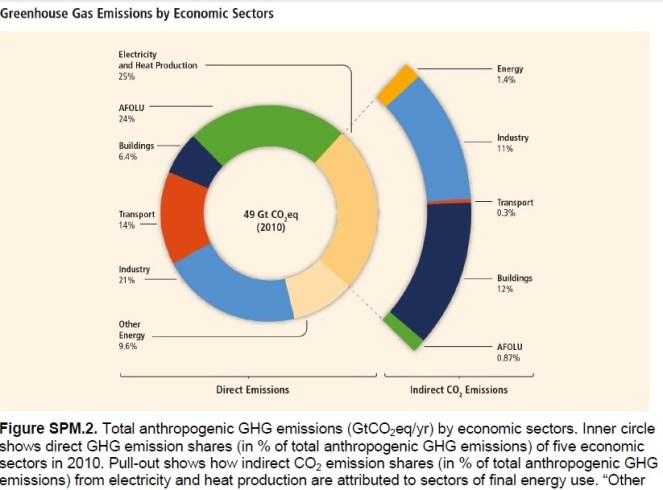
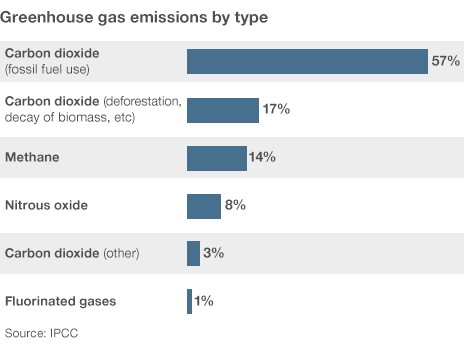
According to IPCC, the IPCC WG III assesses options for mitigating climate change through limiting or preventing greenhouse gas emissions and enhancing activities that remove them from the atmosphere. The main economic sectors are taken into account, both in a near-term and in a long-term perspective. The sectors include energy, transport, buildings, industry, agriculture, forestry, waste management. The WG analyses the costs and benefits of the different approaches to mitigation, considering also the available instruments and policy measures. In case of some of the issues, our comment on the IPCC statements is also included. The overall conclusion is that the report is disappointing, but let us first go through some note worthy aspects.
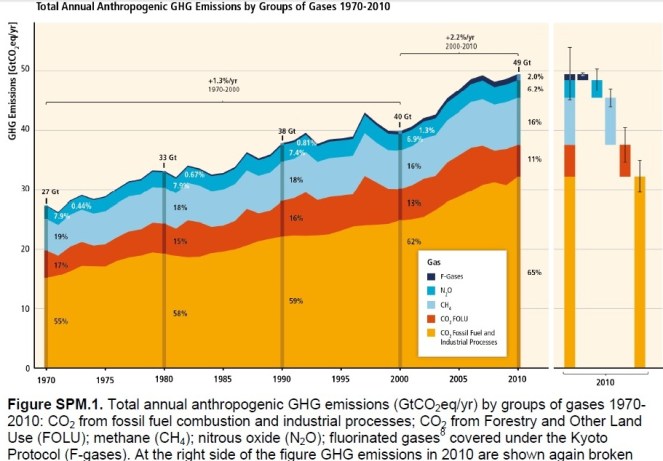
“Total anthropogenic GHG emissions have continued to increase over 1970 to 2010 with larger absolute decadal increases toward the end of this period (high confidence). Despite a growing number of climate change mitigation policies, annual GHG emissions grew on average by 1.0 giga tonne carbon dioxide equivalent (GtCO2eq) (2.2%) per year from 2000 to 2010 compared to 0.4 GtCO2eq (1.3%) per year from 1970 to 2000. Total anthropogenic GHG emissions were the highest in human history from 2000 to 2010 and reached 49 (±4.5) GtCO2eq/yr in 2010.” The figure below provides how the emissions across sectors have been changing over the years. Even at conservative estimates, the emission is likely to have reached 53 GtCO2eq by 2014.
“About half of cumulative anthropogenic CO2 emissions between 1750 and 2010 have occurred in the last 40 years (high confidence). In 1970, cumulative CO2 emissions from fossil fuel combustion, cement production and flaring since 1750 were 420±35 GtCO2; in 2010, that cumulative total had tripled to 1300 ±110 GtCO2. Cumulative CO2 emissions from Forestry and Other Land Use (FOLU) since 1750 increased from 490±180 GtCO2 in 1970 to 680±300 GtCO2 in 2010.” It is not clear why the full emission from all sectors was not counted to arrive at this comparative statement.
“Globally, economic and population growth continue to be the most important drivers of increases in CO2 emissions from fossil fuel combustion. The contribution of population growth between 2000 and 2010 remained roughly identical to the previous three decades, while the contribution of economic growth has risen sharply (high confidence). Between 2000 and 2010, both drivers outpaced emission reductions from improvements in energy intensity (Figure SPM.3). Increased use of coal relative to other energy sources has reversed the long‐standing trend of gradual decarbonization of the world’s energy supply.” The equating of contribution from population growth and economic growth this way is a bit inappropriate and in any case, since contribution from economic growth went up, separate figures for the two should have been given.
“Without additional efforts to reduce GHG emissions beyond those in place today, emissions growth is expected to persist. Baseline scenarios, those without additional mitigation, result in global mean surface temperature increases in 2100 from 3.7 to 4.8°C compared to pre-industrial levels” (the increase could be 7.8°C when including climate uncertainty). “For comparison, the CO2eq concentration in 2011 is estimated to be 430 ppm” (uncertainty range means it be as high as 520 ppm).
The Cancún Pledges are likely to keep temperature change below 3°C relative to pre-industrial levels and not below 2°C as is required. This admission that Cancun Pledges (which still does not a credible road map for implementation) are insufficient is welcome.
“In the baseline scenarios assessed in AR5, direct CO2 emissions from the energy supply sector are projected to almost double or even triple by 2050 compared to the level of 14.4 GtCO2/year in 2010, unless energy intensity improvements can be significantly accelerated beyond the historical development (medium evidence, medium agreement).” In the last decade, the main contributors to emission growth were a growing energy demand and an increase of the share of coal in the global fuel mix.
Regarding electricity generation, RE (Renewable Energy) accounted for just over half of the new electricity‐generating capacity added globally in 2012, led by growth in wind, hydro and solar power. However, the IPCC should not have put all hydro on same pedestal as solar and wind, it is well known that large hydro is not considered among Renewable source of energy.
Questionable certificate to Nuclear Energy and CCS This certificate of the IPCC report to Nuclear Energy is certainly going to be questioned: “Nuclear energy is a mature low‐GHG emission source of baseload power, but its share of global electricity generation has been declining (since 1993). Nuclear energy could make an increasing contribution to low‐carbon energy supply, but a variety of barriers and risks exist (robust evidence,high agreement). Those include: operational risks, and the associated concerns, uranium mining risks, financial and regulatory risks, unresolved waste management issues, nuclear weapon proliferation concerns, and adverse public opinion (robust evidence, high agreement). New fuel cycles and reactor technologies addressing some of these issues are being investigated and progress in research and development has been made concerning safety and waste disposal.”
Similarly, the claim of IPCC report about CCS is questionable: “Carbon dioxide capture and storage (CCS) technologies could reduce the lifecycle GHG emissions of
fossil fuel power plants”. In this respect, the warning issued by the Guardian[ii] based on a leaked copy of the report seems to be correct: “The underlying assumption appears to be that business as usual economic growth must be sustained, and industry and corporate profits must be protected and maintained. But if we focus on ‘business-as-usual economics’, seeking and accepting only bargain basement options for addressing global warming – the costs will be far more severe.”
Hopeful forecast for AFOLU GHG emissions The IPCC report is hopeful about emissions from AFOLU (Agriculture, Forestry and Other Land Use) sector: “Most recent estimates indicate a decline in AFOLU CO2 fluxes, largely due to decreasing deforestation rates and increased afforestation… in the future, net annual baseline CO2 emissions from AFOLU are projected to decline, with net emissions potentially less than half the 2010 level by 2050 and the possibility of the AFOLU sectors becoming a net CO2 sink before the end of century”. However, this is not the situation for India where deforestation continues to be on the rise. Moreover, it is not clear if the IPCC report equates forests with plantations. Similarly it is disappointing to note the IPCC saying that REDD+ is a “cost effective policy option” in forest sector, neglecting to note the huge opposition such measures are facing from the forest dependent populations in India and elsewhere.
No mention of SRI The report concludes, “In agriculture, the most cost‐effective mitigation options are cropland management, grazing land management, and restoration of organic soils”. However, it is disappointing that there is no mention of the huge potential of emission reduction through use of cropping methods like the System of Rice Intensification for rice and various other crops. It is good to see that the report notes that suitability of the conclusion “Bioenergy can play a critical role for mitigation” is limited by concerns of food security, water resources and biodiversity conservation.
Urbanisation “As of 2011, more than 52% of the global population lives in urban areas. In 2006, urban areas accounted for 67–76% of energy use and 71–76% of energy-related CO2 emissions. By 2050, the urban population is expected to increase to 5.6–7.1 billion, or 64–69% of world population. Cities in non-Annex I countries generally have higher levels of energy use compared to the national average, whereas cities in Annex I countries generally have lower energy use per capita than national averages”. However, there is little systematic efforts at tapping the huge potential of mitigation in Urban areas. The report has no success story in this regard. On the other hand there are many examples of urban areas demanding more dams in nearby areas at the cost of forests, rivers, biodiversity and people, without doing any options assessment or exhausting local options. From India, Mumbai[iii], Nashik[iv] and Bangalore[v] provide some examples in this regard.
What are low carbon energy sources? It is disappointing to note that IPCC report brackets “renewables, nuclear and electricity generation with CCS” as “low‐carbon electricity supply”. This is certainly recommendation for business as usual situation, without much change for the USD 1200 billion per year investment sector. This is certainly very questionable.
Are energy efficiency measures working? The report makes and interesting observation about labeling programs to achieve energy efficiency: “There is general agreement that rebound effects exist, whereby higher efficiency can lead to lower energy prices and greater consumption, but there is low agreement in the literature on the magnitude”. This is particularly relevant since such programs are more likely to benefit more for the richer sections who are polluters in the first place.
“Cap and trade” is not working? The report conclusion in this regard is noteworthy: “Since AR4, cap and trade systems for GHGs have been established in a number of countries and regions. Their short-run environmental effect has been limited as a result of loose caps or caps that have not proved to be constraining”. In India this program is underway in terms of Renewable Energy Certificates (REC) and India’s power ministry rather misguidingly wants to implement this also for large hydro. In absence of any punitive measures for distribution companies not abiding by the CERC norms, there are few takers for the RECs and the price of RECs have also been low.
No attention to abject failures of UNFCCC and CDM The IPCC report says United Nations Framework Convention on Climate Change has “nearly universal participation” and “Kyoto protocol offers lessons towards achieving the ultimate objective of the UNFCCC, particularly with respect to participation, implementation, flexibility mechanisms, and environmental effectiveness”. Nothing can be farther from truth particularly in the context of actual implementation of Clean Development Mechanism (CDM), which is the main vehicle for achieving UNFCCC objectives. CDM has been a vehicle for perpetrating further environmental degradation, destruction of forests, biodiversity, rivers and livelihoods of people to basically benefit the private sector’s business as usual projects and with no benefits or participation for the local communities. The process of certifying the CDM projects as sustainable and additional in terms of emission reduction have proved to be complete failure as numerous examples from India and elsewhere show.
“Sustainable development and equity provide a basis for assessing climate policies and highlight the need for addressing the risks of climate change. Limiting the effects of climate change is necessary to achieve sustainable development and equity, including poverty eradication.” This sounds good, but there are no credible recommendations in the report to achieve equity or sustainable development.
“Effective mitigation will not be achieved if individual agents advance their own interests independently. Climate change has the characteristics of a collective action problem at the global scale, because most greenhouse gases (GHGs) accumulate over time and mix globally, and emissions by any agent (e.g., individual, community, company, country) affect other agents.” This is welcome indeed and should have been added that there are different classes of people who are polluters, different from those who are vulnerable to the impacts of such pollution.
“Important options for mitigation in waste management are waste reduction, followed by reuse, recycling and energy recovery (robust evidence, high agreement). Waste and wastewater accounted for 1.5 GtCO2eq in 2010. As the share of recycled or reused material is still low (e.g., globally, around 20% of municipal solid waste is recycled), waste treatment technologies and recovering energy to reduce demand for fossil fuels can result in significant direct emission reductions from waste disposal.” Indeed, but there are no credible measures to achieve progress on this front, particularly in country like India.
“Policies governing agricultural practices and forest conservation and management are more effective when involving both mitigation and adaptation. Some mitigation options in the AFOLU sector (such as soil and forest carbon stocks) may be vulnerable to climate change (medium evidence, high agreement). When implemented sustainably, activities to reduce emissions from deforestation and forest degradation (REDD+ is an example designed to be sustainable) are cost‐effective policy options for mitigating climate change, with potential economic, social and other environmental and adaptation co‐benefits (e.g., conservation of biodiversity and water resources, and reducing soil erosion) (limited evidence, medium agreement).” This recommendation of REDD+ is seriously problematic considering the opposition to such measures from forest dependent communities all over the world, including India. This shows how cut off from ground is the report.
Gas a bridge fuel? As BBC report [vii] noted, one of the surprising endorsements in the report is natural gas: “Emissions from energy supply can be reduced significantly by replacing current world average coal-fired power plants with modern, highly efficient natural gas combined-cycle power plants,” says the summary. However, gas is itself a fossil fuel, extraction of gas has its impacts and the extraction of shale gas, the newest and hottest source has worse kind of impacts. Without looking at all these issues, recommending gas as a bridge fuel is not likely to be convincing.
Conclusion The summary of the Working Group 3 report of the IPCC’s fifth Assessment Report is disappointing considering that it has failed provide the current status of climate change and its implications in 2020, 2030, 2050 and 2100 for the various sections of the global society, particularly the vulnerable ones in clear terms. This conclusion seems justified even though the report does have certain welcome statements and recommendations as mentioned above. Since this is the summary for the policy makers and governments, it is a very crucial document, even as we await the full publication of the report. A number of recommendations of the report are disappointing and unscientific, including: continued use of fossil fuels with questionable Carbon (dioxide) Capture & Storage techniques, nuclear energy, and putting them in same footing as Renewables like solar, wind and micro hydro; equating plantation and forests, omission of SRI, omission of democratic and participatory governance, omission of identification of vulnerable sections, omission of critical view of CDM implementation and keeping them in focus and lack of sufficient emphasis on equity. The lack of recommendation that climate change polluters among the developed countries and rich sections of developing countries be made to pay for the pollution and upholding the principle of equity at global, national and local section is glaring. The report mentions nothing about need to reduce the demand. We hope the full WG3 report does not have more worrying aspects and has more hopeful recommendations.
Himanshu Thakkar, ht.sandrp@gmail.com
END NOTES:
[i] http://report.mitigation2014.org/spm/ipcc_wg3_ar5_summary-for-policymakers_approved.pdf
https://sandrp.wordpress.com/2013/12/18/multiple-dams-for-mumbai-region/,
https://sandrp.wordpress.com/2014/02/28/crisis-in-indias-urban-water-sector/
[vii] http://www.bbc.com/news/science-environment-27008352
[ix] On 24 April 2014 on email:
The edits to the summary of the IPCC’s recent report, were all about governments vying for position ahead of crucial UN climate talks in Paris next year. –‘Censored’ IPCC summary reveals jockeying for key UN climate talks by David Stern, Australian National University
One of the graphs dropped from the summary shows that per capita emissions have grown rapidly in middle-income countries like China and India, but have declined in both the richest and the poorest countries. Despite that, it also shows that per capita emissions remain much higher in the developed world than in developing countries.Another graphs which was dropped shows that the greenhouse gases emitted to produce goods destined for rich countries outweigh the emissions created by rich countries to make goods for export elsewhere. Naturally, the reverse is necessarily true for middle- and low-income countries
Maharashtra State Action Plan on Climate change: Farmers Suffer, State and consultant TERI unaffected
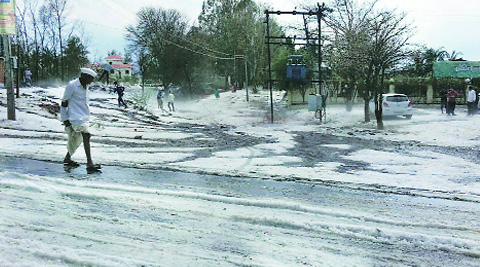
Even as rural areas in otherwise-drought hit Maharashtra (as also in neighbouring areas of Karnataka, Madhya Pradesh and Chhattisgarh) are trying to cope with the immense damages due to untimely rain and hailstorms in Feb-March 2014, the IPCC Assessment Report 5 by Working Group II warns that extreme weather events may increase in their frequency. This was also supported by the IPCC Special Report on Extreme Events in 2012.
| Sr No | Event | Date |
| 1 | NAPCC made public | June 30, 2008 |
| 2 | Mah state council on CC formed by a GR | Sept 2008 |
| 3 | Work awarded to TERI “to assess Climate Change Vulnerability and Adaptation Strategies for Maharashtra State and to prepare a Climate Change Adaptation Action Plan for the State” at the cost of Rs 98 lakhs; to include six case studies | Aug 20, 2009 |
| 4 | Maharashtra govt order regarding TERI (6 members in addition to Dr Pachauri and Dr Leeana Srivastava as advisors) given above task, along with Met office, Hadley Centre, UK (2 members) and formation of state coordination committee for this under the chairmanship of Chief Secretary | Nov 26, 2009 |
| 5 | Dept of Environment conducted decision makers workshop CC adaptation and mitigation | Feb 24-25, 2011 |
| 6 | State advisory committee on CC created with chief minister as chair | July 8, 2011 |
| 7 | First meeting of State advisory committee on CC | Feb 2013 |
| 8 | Meeting (latest) held on draft climate change action plan with Chief Secy in chair | Oct 7, 2013 |
| 9 | Mah Env department gives RTI response to SANDRP: “The final action plan on climate change is not yet submitted by TERI to Govt of Maharashtra” | Apr 2, 2014 |
Back to back in two years, Maharashtra faced a drought (in 2012-13), touted to be worst in past 40 years, to a hail and rain event which broke records of past hundred years (and perhaps even more) several times over. Studies are pointing out that the coastal region and the traditionally drought-affected part of Marathwada and Vidarbha is specifically vulnerable to climate change.
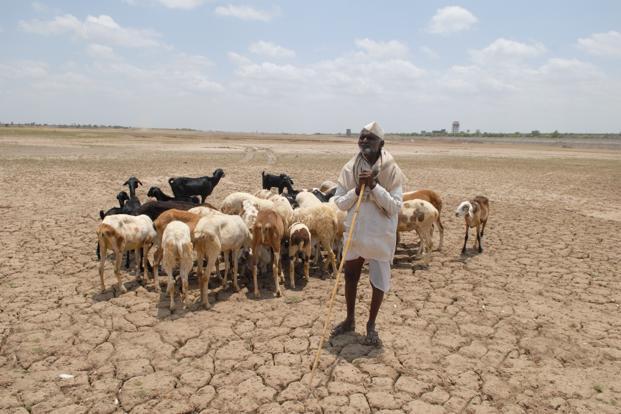
It is also highlighted by the IPCC reports, experienced painfully by Maharashtra that: “Risks are unevenly distributed and are generally greater for disadvantaged people and communities in countries at all levels of development.”
So how prepared is Maharashtra to face, adapt to and mitigate the challenges put forth?
Information obtained by SANDRP under RTI underlines the fact that respective governments have given no priority, time or importance to consider climate change or its impacts on societies and ecosystems.
The Maharashtra State Council on Climate change was formed in Sept 2008 by a GR, its Chairperson was the then Chief Minister and included ministers from Agriculture, Water resources, Industries, etc. This Council awarded work related to State Action Plan on Climate Change to TERI on 20th Aug 2009 and TERI was supposed to complete this Study in two years, that is by Aug 2011.
More than four and a half years latter, TERI has still not completed the report on State Action Plan on Climate change and Government of Maharashtra does not seem too bothered by it.
The process by which TERI was given the task of doing the SAPCC also seems inappropriate. The process is described in Maharashtra government order of Nov 16, 2009, where there is no mention of any competitive bidding. The order says that Dr RK Pachauri of TERI was asked to make a presentation on climate change in Maharashtra, based on which it was decided to give the task of preparing the SAPCC to TERI and Met Office, UK at the cost of Rs 98 lakhs. This is clearly inappropriate process.
It’s been 5 years since the National Action Plan on Climate Change (NAPCC) was made public in June 2008. NAPCC itself was formulated in non-transparent, non-participatory way by Prime Minister’s Council on Climate Change. Several States have submitted and are working towards their Action Plans.
In Feb 2011, Chief Minister Prithviraj Chavan announced Advisory committee on Climate change similar to PM’s council on CC. However, the Government Resolution for the State Council on CC came only on 8th July 2011. Some its current 19 members include Chief Minister (chair), Deputy Chief Minister, Ministers of Environment, Agriculture, Water resources, Rural Development, Chief Secretary, Secy-Environment, etc. Some Expert members include Sunita Narain, Jamshed Godrej, Anu Agha, Dr. R.K. Pachauri, Dr. R. A. Mashelkar, Dr. Anil Kakodkar and Ajay Mathur from Bureau of Energy Efficiency.
The Terms of Reference of the Committee indicate the following duties:
(a) To evaluate the study being done by TERI in the State and recommend strategies. (Emphasis added)
(b) Provide an oversight to the State Government in the drafting an action plan to combat climate change;
(c) To ensure a co-ordinated response to all issues relating to climate change.
This council was to meet “at least twice a year to review situation on CC and adaptation strategy” as per the GR. It has met just once in last 33 months.
After giving contract to TERI in 2009, announcing State Council on CC in 2011, the first and only meeting of the State Council on Climate Change happened only in Feb 2013! Minutes of the meeting claim that final report from TERI is expected in March 2013. However, there was no discussion on this important report or even a discussion to hasten the formulation and implementation of this report. Strangely, TERI and MET Office UK had already published a note on the Action Plan in 2012[1] itself, when the State Action Plan is still not final even today!
There is also issue of conflict of interest here: when TERI is given the task of preparing Maharashtra SAPCC, how can Dr. Pachauri, who heads TERI be on the State Council to oversee the preparation of SAPCC? Secondly, Dr. Pachauri is a member of PM’s Council on Climate Change, which recommends state action plans and then his own organisation, TERI is awarded the work to prepare the action plan for Maharashtra. Is not there a conflict of interest here?
Moreover, Sunita Narain and Dr. Pachauri are also members of PM’s Council on Climate Change and having seen the performance of PMCCC in bringing out business as usual NAPCC in non-transparent, non-participatory way. The state government should have appointed independent members who have knowledge of the state.
The minutes of the first meeting of the state council seem to suggest that the meeting had rather unfocused discussions. The meeting had interesting conclusion: “All the members Council were of the opinion that the implementation of the existing schemes/ plans need to be focused on climate change adaptation strategies and did not encourage going in for further studies.” In spite of such a clear conclusion, we see neither the state action plan in place, nor adaptation of the existing schemes/ plans with the climate change implications in Maharashtra. In fact, Sunita Narian was also member of the Kasturirangan committee on Western Ghats, but we see no effective reflection of climate change concerns in the conclusions of the Kasturirangan committee.
The Chief Minister said in conclusion, “Providing income support to farmers was of utmost importance to the Government. A special “Climate Change Cell” would be established in the state to focus on climate change issues”. There is no evidence of functioning of any such cell, more than a year after that meeting.
There have been some meetings of High Powered Committee on climate changed, headed by Chief Secretary, the latest meeting happed on Oct 7, 2013.
The minutes of the Oct 2013 meeting notes, “The officers of the disaster management department were attending the meeting for the first time, which according to the Chief Secretary was not very useful given that they do not have any background in the subject area as well as the previous discussions.” Considering how important is the role of disaster management in climate change context, this callousness of disaster management department seems disturbing. The minutes also noted the need for additional Rs 40 lakhs to get run off (hydrology) data.
The minutes of the meeting ends with this conclusion: “Chief Secretary instructed TERI, to finish the consultations with respective departments for validations of data and finalise the recommendations within a month time, post which the presentation could be made before the cabinet.” However, that was in Oct 2013, but even in April 2014, there is no sign of the State Action Plan on Climate Change, an exercise that has dragged on for over 4 and half years now.
While all this has been going on without any conclusion, action plan or implementation of any necessary actions, the millions of the vulnerable people of the state are suffering and more than 20 farmers have committed suicide in the face of inconsolable loss.
The State Action Plan on Climate change is not a magic wand that will cure all ills. It is, however, one of the indicators of the seriousness and intent of our administration in tackling the real and grave challenges. Right now, there seems to be no seriousness and no intent.
Parineeta Dandekar (parineeta.dandekar@gmail.com),
Himanshu Thakkar (ht.sandrp@gmail.com)
END NOTES:
[1] http://www.metoffice.gov.uk/media/pdf/c/a/GOM_brochure_for_web.pdf
4. VERY TRAGIC story of how hailstorms have hit poor farmers in Marathawada in Maharashtra: http://www.livemint.com/Specials/jkcra6zQqMShlFJjzmvXeN/Death-and-despair-in-hailstormhit-Marathwada.html
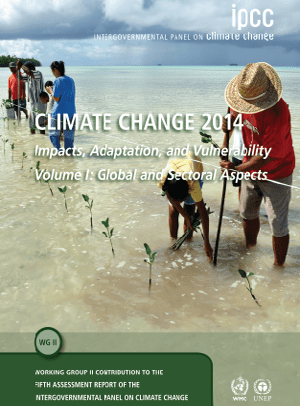
Dams are not Climate Friendly: Readings from IPCC WG II Report
Inter-governmental Panel on Climate Change’s (IPCC) Fifth Assessment is falling into place. On the 31st March 2014, the report titled ‘Climate Change 2014: Impacts, Adaptation, and Vulnerability’, from Working Group II[1] was issued in Yokohoma, Japan. Working Group II assesses “the vulnerability of socio-economic and natural systems to climate change, negative and positive consequences of climate change, and options for adapting to it. It also takes into consideration the inter-relationship between vulnerability, adaptation and sustainable development.”[2]
This can be called as one of the more incisive Working Group Reports from IPCC. It states unequivocally that the effects of climate change are already occurring on all continents and across the oceans and world is ill-prepared for risks from a changing climate. According to Co-Chair of Working Group II, Chris Field, “The report concludes that people, societies, and ecosystems are vulnerable around the world, but with different vulnerability in different places. Climate change often interacts with other stresses to increase risk”.[3]
The report consists of two volumes. First volume contains a Summary for Policymakers, Technical Summary, and 20 chapters assessing risks by sector and opportunities for response. The sectors include freshwater resources, terrestrial and ocean ecosystems, coasts, food, urban and rural areas, energy and industry, human health and security, and livelihoods and poverty. A second volume of 10 chapters assesses risks and opportunities for response by region. These regions include Africa, Europe, Asia, Australasia, North America, Central and South America, Polar Regions, Small Islands, and the Ocean.
The summary for policymakers paints a sombre picture: “Climate change over the 21st century is projected to reduce renewable surface water and groundwater resources significantly in most dry subtropical regions, intensifying competition for water among sectors. In presently dry regions, drought frequency will likely increase by the end of the 21st century under RCP8.5. In contrast, water resources are projected to increase at high latitudes. Climate change is projected to reduce raw water quality and pose risks to drinking water quality even with conventional treatment, due to interacting factors: increased temperature; increased sediment, nutrient, and pollutant loadings from heavy rainfall; increased concentration of pollutants during droughts; and disruption of treatment facilities during floods. Adaptive water management techniques, including scenario planning, learning-based approaches, and flexible and low-regret solutions, can help create resilience to uncertain hydrological changes and impacts due to climate change.”
“Risks are unevenly distributed and are generally greater for disadvantaged people and communities in countries at all levels of development.”
Links with water
Being an integral and cross cutting issue, water features prominently in all of Chapters of the Working Group Report. Sections on Freshwater Resources, Costal systems and low lying areas, Food Security, Inland systems, etc. include important findings. It is significant to note that dams, hydropower projects, infrastructure measures like channelization, embankments, etc., are also mentioned in nearly all the chapters of the report. Couple of references indicate dams as a possible adaptation measure, but overwhelming references point to the contrary.
The collective picture that is arising through these reference is very important. A collation and analysis of all specific references to water infrastructure projects, read in tandem with the report indicates that:
1. Dams and infrastructure projects contribute significantly to “non-climate impacts” which, after interacting with changing climate, exacerbate the overall impact on human societies and ecosystems
o Sediment Trapping by reservoirs, exacerbates impact of sea level rise
o Hydropower affects local options
o Climate change and dams together affect a greater eco-region
o Increased flow fluctuations by dams exacerbate through climate change
2. In case of Flood Protection, dams and embankments may do more harm than good. Ecological measures would fare better.
3. Dams and Hydropower projects affect biodiversity, which is critical in facing climate change challenges.
4. In the tropics, global warming potential of hydropower may exceed that of Thermal Power
5. Dams increase vulnerability of weaker sections to climate change
6. Existing Dams have to be managed sustainably, with ecological considerations
7. Hydropower itself is vulnerable to Climate Change
~~~
The references used in WG II report are peer reviewed research from several authors.The specific references given below will play an important role in debunking the simplistic myth that dams and hydropower projects are climate friendly and can be considered as de facto adaptation measures to cope with Climate Change.
Some Relevant Extracts from Working Group II Report:
- Dams and infrastructure projects contribute significantly to “non-climate impacts” which, after interacting with climate impacts, exacerbate the overall impact of climate change on human societies and ecosystems
- Sediment Trapping by reservoirs, exacerbates impact of sea level rise
“Most large deltas in Asia are sinking (as a result of groundwater withdrawal, floodplain engineering, and trapping of sediments by dams) much faster than global sea-level is rising.” (Chapter 24: Asia)
“Human activities in drainage basins and coastal plains have impacted the coastal zone by changing the delivery of sediment to the coast. Sediment trapping behind dams, water diversion for irrigation, and sand and gravel mining in river channels all contribute to decrease sediment delivery, whereas soil erosion due to land-use changes help increase it. It is estimated that the global discharge of riverine sediment was 16-–19 Gt/ yr in the 1950s before widespread dam construction and it has decreased to 12–13 Gt/ yr. Out of 145 major rivers with mostly more than 25-year record, only 7 showed evidence of an increase in sediment flux while 68 showed significant downward trends. The number of dams has increased continuously and their distribution has expanded globally. As of early 2011, the world has an estimated 16.7 million reservoirs larger than 0.01 ha. Globally, 34 rivers with drainage basins of 19 million km2 in total show a 75% reduction in sediment discharge over the past 50 years. Reservoir trapping of sediments is estimated globally as 3.6 Gt/ yr to more than 5 Gt/ yr (Syvitski et al., 2005; Walling, 2012; Milliman and Farnsworth, 2011). Human pressure is the main driver of the observed declining trend in sediment delivery to the coastline.(Chapter 5 Coastal systems and Low Lying areas)
“Attributing shoreline changes to climate change is still difficult due to the multiple natural and anthropogenic drivers contributing to coastal erosion.” (Chapter 5 Coastal systems and low lying areas)
“The combined impact of sediment reduction, relative sea level rise, land-use changes in delta and river management on channels and banks has led to the widespread degradation of deltas. The changes of sediment delivery from rivers due to dams, irrigation and embankments/dykes creates an imbalance in sediment budget in the coastal zones. Degradation of beaches, mangroves, tidal flats, and subaqueous delta fronts along deltaic coasts has been reported in many deltas (e.g. Nile and Ebro, Sanchez-Arcilla et al., 1998; Po, Simeoni and Corbau, 2009; Krishna-Godavari, Nageswara Rao et al., 2010; Changjiang, Yang et al., 2011; Huanghe, Chu et al., 1996; very high confidence). Deltaic coasts naturally evolve by seaward migration of the shoreline, forming a delta plain. However, decreasing sediment discharge during the last 50 years has decreased the growth of deltaic land, even reversing it in some locations (e.g. Nile, Godavari, Huanghe). Artificial reinforcement of natural levees also has reduced the inter-distributory basin sedimentation in most deltas, resulting in wetland loss.” (Emphasis added.)
“The major impacts of sea level rise are changes in coastal wetlands, increased coastal flooding, increased coastal erosion, and saltwater intrusion into estuaries and deltas, which are exacerbated by increased human-induced drivers. Ground subsidence amplifies these hazards in farms and cities on deltaic plains through relative sea level rise. Relative sea level rise due to subsidence has induced wetland loss and shoreline retreat (e.g. the Mississippi delta, Morton et al., 2005; Chao Phraya delta, Saito et al., 2007; high confidence).” (Chapter 5 Coastal systems and low lying areas)
“There have been local variations in precipitation and runoff since 1950, but changes in sediment load are primarily attributed to over 50,000 dams and vegetation changes.” (Chapter 18: Detection and attribution of observed impacts)
- Hydropower affects local options
“Hydropower dams along the Mekong River and its tributaries will also have severe impacts on fish productivity and biodiversity, by blocking critical fish migration routes, altering the habitat of non-migratory fish species, and reducing nutrient flows downstream. Climate impacts, though less severe than the impact of dams, will exacerbate these changes.”(Chapter 24: Asia)
- Climate change and dams together affect a greater eco-region
“For one climate scenario, 15% of the global land area may be negatively affected, by the 2050s, by a decrease of fish species in the upstream basin of more than 10%, as compared to only 10% of the land area that has already suffered from such decreases due to water withdrawals and dams (Döll and Zhang, 2010). Climate change may exacerbate the negative impacts of dams for freshwater ecosystems.” (Chapter 3: Freshwater resources)
- Flood Protection: Dams and embankments may do more harm than good. Ecological measures fare better.
- “On rivers and coasts, the use of hard defences (e.g. sea-walls, channelization, bunds, dams) to protect agriculture and human settlements from flooding may have negative consequences for both natural ecosystems and carbon sequestration by preventing natural adjustments to changing conditions. Conversely, setting aside landward buffer zones along coasts and rivers would be positive for both. The very high carbon sequestration potential of the organic-rich soils in mangroves and peat swamp forests provides opportunities for combining adaptation with mitigation through restoration of degraded areas.” (Chapter 3 Freshwater Resources)
- “Ecosystem based adaptation (EBA) can be combined with, or even a substitute for, the use of engineered infrastructure or other technological approaches. Engineered defenses such as dams, sea walls and levees adversely affect biodiversity, potentially resulting in maladaptation due to damage to ecosystem regulating services. There is some evidence that the restoration and use of ecosystem services may reduce or delay the need for these engineering solutions. EBA offers lower risk of maladaptation than engineering solutions in that their application is more flexible and responsive to unanticipated environmental changes. Well-integrated EBA can be more cost effective and sustainable than non-integrated physical engineering approaches (Jones et al., 2012), and may contribute to achieving sustainable development goals (e.g., poverty reduction, sustainable environmental management, and even mitigation objectives), especially when they are integrated with sound ecosystem management approaches.” (Chapter 3 and Also Chapter 15 Adaptation Planning and Implementation)
- Dams and Hydropower projects affect biodiversity, which is critical in facing climate change challenges
- “Freshwater ecosystems are considered to be among the most threatened on the planet. Fragmentation of rivers by dams and the alteration of natural flow regimes have led to major impacts on freshwater biota.” (Chapter 4: Terrestrial and Inland Water Systems)
- “Damming of river systems for hydropower can cause fragmentation of the inland water habitat with implications for fish species.” (Chapter 4 Terrestrial and Inland Water Systems)
- “Freshwater ecosystems are also affected by water quality changes induced by climate change, and by human adaptations to climate-change induced increases of streamflow variability and flood risk, such as the construction of dykes and dams”. (Chapter 3: Freshwater resources)
- “Hydropower generation leads to alteration of river flow regimes that negatively affect freshwater ecosystems, in particular biodiversity and abundance of riverine organisms, and to fragmentation of river channels by dams, with negative impacts on migratory species. (Chapter 3: Freshwater Resources)
- “Hydropower operations often lead to discharge changes on hourly timescales that are detrimental to the downstream river ecosystem.”
- “Climate change and habitat modification (e.g., dams and obstructions) impact fish species such as salmon and eels that pass through estuaries.” (Chapter 5 Coastal Systems and low lying areas)
- In Tropics, global warming potential of hydropower may exceed Thermal Power
- “In tropical regions, the global warming potential of hydropower, due to methane emissions from man-made reservoirs, may exceed that of thermal power; based on observed emissions of a tropical reservoir, this might be the case where the ratio of hydropower generated to the surface area of the reservoir is less than 1 MW/km2”.
- “Reservoirs can be a sink of CO2 but also a source of biogenic CO2 and CH4” (Chapter 4 Terrestrial and Inland Systems)
- Dams increase vulnerability of weaker sections to climate change
- “A number of studies recognize that not every possible response to climate change is consistent with sustainable development, since some strategies and actions may have negative impacts on the well-being of others and of future generations .For example, in central Vietnam some responses to climate change impact, such as building dams to prevent flooding and saltwater intrusion and to generate power, threaten the livelihood of poor communities. First, the relocation of communities and the inundation of forestland to build dams limit households’ access to land and forest products. Second, a government focus on irrigated rice agriculture can reduce poor households’ ability to diversify their income portfolio, decreasing their long-term adaptive capacity. Indeed, the consequences of responses to climate change, whether related to mitigation or adaptation, can negatively influence future vulnerability, unless there is awareness of and response to these interactions. Here, the role of values in responding to climate change becomes important from a variety of perspectives, including intergenerational, particularly when those currently in positions of power and authority assume that their prioritized values will be shared by future generations. (Chapter 20: Climate-resilient pathways: adaptation, mitigation, and sustainable development)
- “Some documented impacts on dams, reservoirs and irrigation infrastructure are: reduction of sediment load due to reductions in flows (associated with lower precipitation), positively affecting infrastructure operation (Wang et al., 2007); impacts of climate variability and change on storage capacity that creates further vulnerability; and failures in the reliability of water allocation systems (based on water use rights) due to reductions of streamflows under future climate scenarios” (Chapter 9: Rural Areas)
- “Infrastructure (e.g. roads, buildings, dams and irrigation systems) will be affected by extreme events associated with climate change. These climate impacts may contribute to migration away from rural areas, though rural migration already exists in many different forms for many non-climate-related reasons.” (Chapter 9 Rural Areas)
- “Changes in water use, including increased water diversion and development to meet increasing water demand, and increased dam building will also have implications for inland fisheries and aquaculture, and therefore for the people dependent on them” .
- “In the case of the Mekong River basin, a large proportion of the 60 million inhabitants are dependent in some way on fisheries and aquaculture which will be seriously impacted by human population growth, flood mitigation, increased offtake of water, changes in land use and overfishing, as well as by climate change. Ficke et al. (2007) reported that at that time there were 46 large dams planned or already under construction in the Yangtze River basin, the completion of which would have detrimental effects on those dependent on fish for subsistence and recreation.” (Chapter 7 Food security and food production systems)
- Existing Dams have to be managed sustainably, with ecological considerations:
- “Suggested strategies for maximizing the adaptive capacity of ecosystems include reducing non-climate impacts, maximizing landscape connectivity, and protecting ‘refugia’ where climate change is expected to be less than the regional mean. Additional options for inland waters include operating dams to maintain environmental flows for biodiversity, protecting catchments, and preserving river floodplains.” (Chapter 24:Asia )
- Hydropower itself is vulnerable to Climate Change
- “Climate change affects hydropower generation through changes in the mean annual stream-flow, shifts of seasonal flows and increases of stream-flow variability (including floods and droughts) as well as by increased evaporation from reservoirs and changes in sediment fluxes. Therefore, the impact of climate change on a specific hydropower plant will depend on the local change of these hydro-logical characteristics, as well as on the type of hydropower plant and on the (seasonal) energy demand, which will itself be affected by climate change”
- “Projections of future hydropower generation are subject to the uncertainty of projected precipitation and stream-flow. In regions with high electricity demand for summertime cooling, this seasonal stream-flow shift is detrimental. In general, climate change requires adaptation of operating rules which may, however, be constrained by reservoir capacity. Storage capacity expansion would help increase hydropower generation but might not be cost-effective.”
- “Observations and models suggest that global warming impacts on glacier and snow-fed streams and rivers will pass through two contrasting phases. In the first phase, when river discharge is increased due to intensified melting, the overall diversity and abundance of species may increase. However, changes in water temperature and stream-flow may have negative impacts on narrow range endemics. In the second phase, when snowfields melt early and glaciers have shrunken to the point that late-summer stream flow is reduced, broad negative impacts are foreseen, with species diversity rapidly declining once a critical threshold of roughly 50% glacial cover is crossed.” (Chapter 3 Freshwater Resources)
Let us hope that these collated finding will be helpful in addressing the myth that dams and hydropower projects are climate friendly and can even be looked at as adaptation measures. Let us also hope that the Working Group III Report, which will come out in less than a week’s time from now, will have lessons for hydropower development in line with the above statements in the WG II report.
Issues with WG III, Special Report on Renewable Energy
Findings of WG II contrast strikingly with Special Report on Renewable Energy Sources and Climate Change Mitigation (SRREN) [4]brought out by Working Group III in 2011.
 One of the two lead coordinating authors of this report was Dr. Arun Kumar, from AHEC, IIT Roorkee. Notably, Dr. Kumar was also a part of the team which worked on Cumulative Impact Assessment of Hydropower projects in Upper Ganga basin of Uttarakhand[5]. The state suffered huge flood and precipitation damages in June 2013 (long after the report came out) and commissioned and under–construction hydropower projects had a large role to play in compounding the impacts of the disaster[6]. Ministry of Environment and Forests as well as the Supreme Court of India rejected this report. SANDRP had published a detailed critique of this CIA report at the outset.
Amazingly, the Hydropower Section of the above mentioned IPCC Special Report on Renewable Energy severely downplays and ignores the impacts of hydropower. For example, it does not allude to peoples protests to projects, impacts of projects by blasting and tunneling, downstream impacts, impacts of peaking, associated deforestation and related development, cumulative impacts of projects in a cascade, increasing climate vulnerability of the population, seismic impacts, increased disaster vulnerability of the region, etc.,. In fact, these impacts have been some of the most-discussed issues in hydropower discourse in many countries at the moment. The report makes strange statements like “trans-boundary hydropower establishes arena for international cooperation”, when we see across the world that hydropower projects on internationally shared rivers further conflicts and strife between nations. It also downplays methane emissions from hydropower.
In all, the section appears biased towards hydropower and does not do justice to IPCC’s rigorous and objective standards. The section should not have been accepted as it stands now.
Now, the Working Group III is yet to submit its Assessment Report to the IPCC. It will be discussed by the IPCC between 7-11 April 2014, in Berlin. We hope there is true depiction of hydropower in the Working Group III report, looking at the above mentioned impacts and also keeping in mind strong statements from Working Group II report made public on March 31, 2014.
Parineeta Dandekar, parineeta.dandekar@gmail.com
~~~
[1] The IPCC Working Group I (WG I) assesses the physical scientific aspects of the climate system and climate change. Working Group II (WG II) assesses the vulnerability of socio-economic and natural systems to climate change, negative and positive consequences of climate change, and options for adapting to it. It also takes into consideration the inter-relationship between vulnerability, adaptation and sustainable development. The assessed information is considered by sectors (water resources; ecosystems; food & forests; coastal systems; industry; human health) and regions (Africa; Asia; Australia & New Zealand; Europe; Latin America; North America; Polar Regions; Small Islands). The IPCC Working Group III (WG III) assesses options for mitigating climate change through limiting or preventing greenhouse gas emissions and enhancing activities that remove them from the atmosphere. (https://www.ipcc.ch/working_groups/working_groups.shtml)
[3] https://www.ipcc.ch/pdf/ar5/pr_wg2/140330_pr_wgII_spm_en.pdf
[4] http://www.ipcc-wg3.de/special-reports/srren/special-report-renewable-energy-sources
[5] http://www.sandrp.in/hydropower/Pathetic_Cumulative_Impact_Assessment_of_Ganga_Hydro_projects.pdf
[6] https://sandrp.wordpress.com/2013/06/21/uttarakhand-deluge-how-human-actions-and-neglect-converted-a-natural-phenomenon-into-a-massive-disaster/
https://sandrp.wordpress.com/2013/06/23/uttarakhand-floods-disaster-lessons-for-himalayan-states/
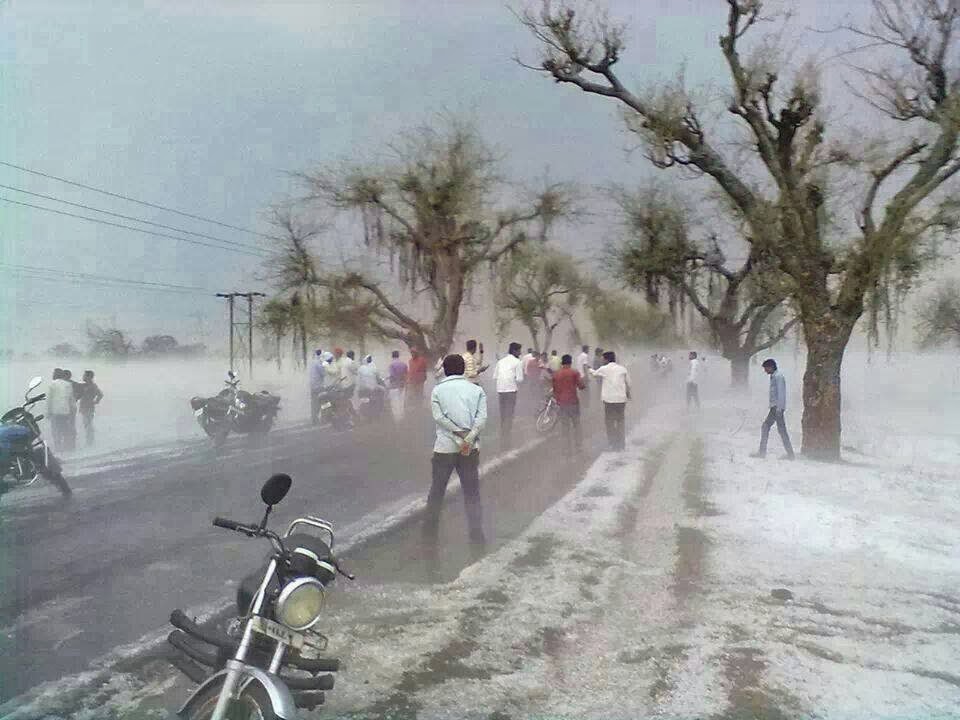
Maharashtra farmers face impacts of hailstorms and State’s “Inaction” Plan on Climate Change
Marathwada, Vidarbha, Northern Maharashtra and parts of Western Maharashtra are reeling under unprecedented hail storms and unseasonal rainfall. Hailstorms in end of February 2014, initially thought of as a one-off phenomenon, continue to batter places like Solapur for nearly two weeks now, absolutely destroying the farmer. Rabi crops like Wheat, Harbhara, Cotton, Jowar, summer onion are lost, horticultural crops like Papaya, sweet lime, grapes are battered and orchards which took years to grow are ridden to the ground. For many farmers the tragedy is unbearable as majority of crops were about to be harvested. Turmeric was drying in the sun, grapes were waiting to be graded, wheat was harvested and lying in the fields.
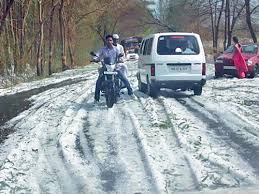
According to a preliminary estimate and news reports, crops over 12 lakh hectares have been severely affected, thousands of livestock, animals and birds have succumbed to injuries and diseases, which threaten to spread. Around 21 people have lost their lives to the disaster.[1]

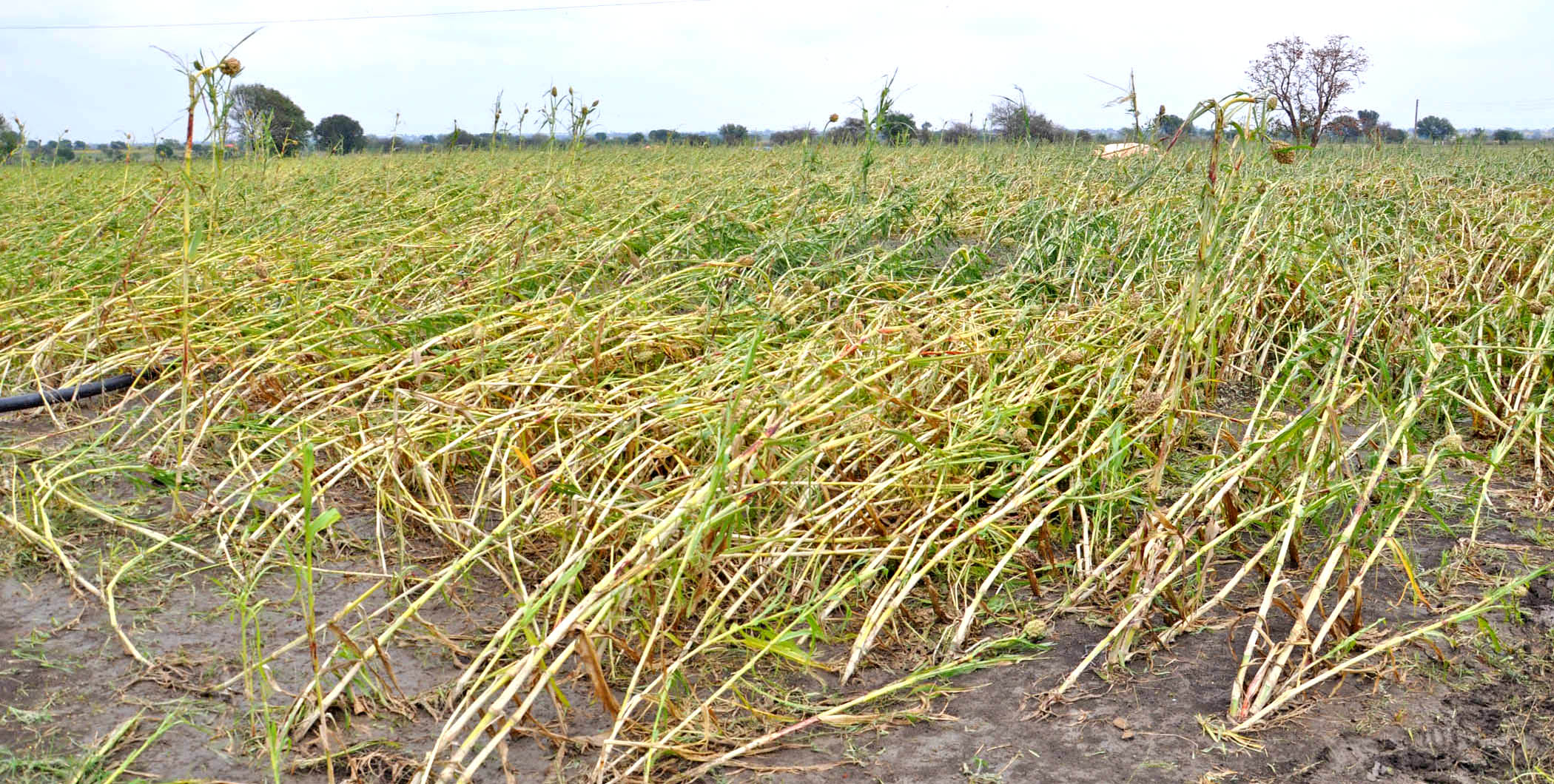

The hailstorms developed as a response to hot, damp air from Bay of Bengal as well as Arabian Sea, rising and meeting the cold air coming south from the Himalayas, which led to formation of huge hail. This, though, is a very preliminary understanding of the phenomenon and hopefully, a clearer picture will arise in some time.
According to news reports, Madha Taluka in Solapur alone received 208 mm rainfall, Kurduwadi received 154.1 mm rainfall and Pandharpur received 63.95 mm rainfall in a single day[2].
SANDRP compared this rainfall with the 1901-2002 district wise rainfall dataset of IMD available at India Water Portal. 208 mm rainfall in Madha in March 2014 is 771.79% higher than the highest recorded monthly district rainfall for Solapur District for the entire month of March in the 100 years between 1901-2002! The highest total recorded rainfall of March for the district was 26.95 mm in 1915 [3]. Similarly, 65 mm rainfall received by Ausa Taluka in Latur[4] is 146 % higher than the highest 100 year recorded March rainfall of the district in 1944. Similar is the case with Parbhani, Akola, Wardha, etc.
While district rainfall masks extreme spikes due to averaging and also due to the distribution and location of rain gauges, this is truly unprecedented.
But is it also truly unexpected?
Is Climate Change an unknown phenomenon to us? IPCC[5] has predicted that in peninsular India, rainfall patterns will become more and more erratic, with a possible decrease in overall rainfall, but an increase in extreme weather events. What we are witnessing is certainly an extreme weather event.
That climate change is happening and that the reasons are anthropological is beyond debate[6]. Unfortunately, Climate change, its scientific status, its impacts, adaptation and mitigation strategies to cope with the changing climate do not enter discussions in functioning of Maharashtra government with any seriousness. Being a fuzzy, global phenomenon, linking climate change to singular events is difficult, though climate scientists are unanimous that there is footprint of climate change in each such extreme weather event.
The complexity of this issue does not allow us to brush the issue under the carpet. In the recent floods of United Kingdom, the issue of climate change was debated and led to serious discussions between researchers, climate scientists, politicians and policymakers and it seems that it will lead to an action plan.[7],[8]
Significantly, there are studies that claim that Marathwada and other regions of Maharashtra are vulnerable to Climate Change. In a 2012 paper by ICRISAT “Vulnerability to Climate Change: Adaptation Strategies and Layers of Resilience” (2009-2012) by Naveen Singh et al, which was highlighted in the latest edition of Adhunik Kisan, a Marathi magazine on agriculture, the authors have warned that Semi-Arid Tropics (SAT) in Maharashtra (as also the country) are specifically vulnerable to Climate Change. Their analysis of Maharashtra has shown that Marathwada and parts of Vidarbha are particularly vulnerable to climate change challenges, which include increase in the incidence of extreme weather events. Vulnerability index depends not only on the changing climate, but also on the vulnerability of the communities in the region: Despite hundreds of dams, agriculture in Marathwada region is mostly rain-fed, miniscule area which is irrigated appropriates all the water and grows sugarcane: a crop fundamentally unsuitable for a drought prone region, making the lesser endowed communities more and more vulnerable to challenges posed by climate changes or even small natural oscillations in the weather. This was seen very starkly in 2012-13 drought, when the region had highest area under sugarcane in Maharashtra, but several villages did not have water for drinking and dams became pawns at the hands of politicians-cum-sugar kings of the region.[9]
The ICRISAT Paper says, “In the SAT region, [10]Rainfall variability over the years is the major cause of yield uncertainty and makes rain-fed agriculture one of the risky enterprises in SAT India.”
In SAT region of Maharashtra, long-term climatic analysis undertaken by ICRISAT shows “an average rise of 0.02°C per year in annual temperature in the last 40 years. In addition, the mean surface air temperature is projected to rise by 1.7-2.0°C by 2030 and 3.4-4.5°C by 2080 from the 1960-1990 . According to simulation studies, there can be productivity losses from 5% to 18% from 2030 to 2080 if no effective mitigation measures are undertaken. Differential degree of drought together with unpredictable rainfall variability has become common. This situation makes it difficult for the farmer to take pre-emptive decisions, resulting in crop and economic loss. Everyone is affected by this sudden change in weather. However, the extent of damage caused will be dependent upon each one’s ability to cope with the deleterious effects. The evidence, although incomplete, is indicative of major changes in the climatic conditions at macro levels. However, this masks the situation and variance at the local level. Greater vulnerability at the local levels implies greater pressure at the state and national level governance systems to respond to prevent the spillover effects such as urban migration, socio-political instability and conflicts, national poverty indicators, increased demands on disaster response systems, depletion of food and fodder production, etc.” However, there is no mention of increasing coping capacity of the vulnerable and compensating those who lose and demanding that those who are responsible (High consumption sections of the world and India) pay for these impacts in this long list.
According to an undated report ‘Climate change in Maharashtra’[11] brought out by Met Office (Hadley Centre, UK), TERI and Government of Maharashtra:
- “Increased temperatures and altered seasonal precipitation patterns (both quontum and timing) could affect the hydrological systems and agricultural productivity.
- Increased risk of severe weather events may have a devastating impact on agriculture, water resources, forestry and the well-being of the population.
- TERI states that due to changing climate, Sugarcane yield in Maharashtra could go down by 30%
When all this is known, what is Maharashtra’s response to these predictions and the looming challenge of Climate change?
The National Action Plan on Climate Change was made public in June 2008 amidst huge fan fare by PM Manmohan Singh.[12] It was mandated that states will come up with State Action Plans for Climate Change by 31st March 2011. These State Action Plans would outline the vulnerability of the state as whole as well as specific regions and specific communities in the state to Climate change and recommend a strong adaptation and mitigation plan for overcoming these challenges. Till date (11th March 2014), SAPCCs of 12 states have been submitted to the MoEF. [13]
Maharashtra Cabinet had reportedly approved a State Action Plan for Climate change prepared by its environment department on Aug 20, 2009[14], however, the Maharashtra’s Action Plan is not finalized till date. When enquired about the status of this plan, the Director in Environment Department, Government of Maharashtra told SANDRP that they had contracted the plan to TERI and TERI has not completed the task till date.
Given the gravity of the issue, the State Action Plan for Climate Change is supposed to be overseen by a High Powered Committee, whose Chairperson is the Chief Minister, with participation from ministers of Urban Development, Public Works, Transport, Agriculture, Water resource, Revenue & Forest, Energy, industry, Food, Civil Supplies & Consumer Protection Department and Education Department.[15] The agenda and minutes of meetings of this High Powered Group should have been in public domain, but none are.
A formal contract was signed between Government of Maharashtra and TERI in March 2010 and TERI was supposed to submit a complete report in two years, i.e., by March 2011. However, Maharashtra still does not have a state action plan, indicating its lack of seriousness about Climate Change and vulnerable communities.[16]
As Maharashtra continues to be battered by hailstorms, rainfall and winds, it is not useful to get into discussions of whether this is due to climate change or not. The challenges right now is to devise strategy that will help the most vulnerable sections of Maharashtra: its farmers, more than 85% of whom practice rain fed agriculture. It is time not only to seriously revamp the nearly non-existent disaster management systems, but also the weather prediction and crop insurance systems. To build resilience of farming communities, reliance cannot be put on monoculture like sugarcane which does not allow even protective irrigation to a large proportion of farmers outside the sugarcane belt.
After closely spaced events like Mumbai floods in July 2005, Phyan cyclone in 2009, 2012-13 drought, erratic monsoon rainfall and current hailstorms, Maharashtra cannot afford to drag its feet on addressing climate change challenges, organizations like WOTR are specifically working on strengthening capacities of local communities to adapt to challenges thrown by Climate change[17]. Let us hope that at least State Action Plan on Climate change is finalized, not only by the experts from far away, but with full participation of the people of Maharashtra. Similar rain induced damages are also being witnessed in the North India and scientists fear that the coming monsoon may suffer due to El Nino effect. (http://timesofindia.indiatimes.com/business/india-business/Fears-of-El-Nino-on-rise-may-spell-woes-for-the-economy/articleshow/31824485.cms)
In the meantime, the least that the government of Maharashtra and also the Union Government can do is to compensate the affected farmers irrespective of red tapes and Codes of conduct.
High-end consumers and polluters of India and abroad contribute to climate change, which ironically hits the poorest sections of the society harder. This gives an added urgency to address these linked issues.
Parineeta Dandekar, parineeta.dandekar@gmail.com
[1] Sakal (Marathi) Newspaper, 11 March 2014
[3] http://www.indiawaterportal.org/articles/district-wise-monthly-rainfall-data-2004-2010-list-raingauge-stations-india-meteorological
[10] The semi-arid tropics (SAT) region is characterized by highly variable, low-to-medium rainfall and poor soils, further characterized by lack of irrigation. In general, the historical average annual rainfall in the SAT is below 700 mm. In agricultural policy terms, this region is considered to be a less favored area (LFA) (ICRISAT)
[12] http://books.google.co.in/books/about/India_s_national_action_plan_on_climate.html?id=2i0cAQAAMAAJ&redir_esc=y
[14] http://www.dnaindia.com/mumbai/report-state-approves-climate-change-action-plan-1285474, http://timesofindia.indiatimes.com/city/mumbai/TERI-to-study-climate-change-impact-in-state/articleshow/5028870.cms
[15] http://envis.maharashtra.gov.in/envis_data/newsletter/climatechange/Links/cc_stat_resp_ntwrk.html
[16] http://envis.maharashtra.gov.in/envis_data/newsletter/climatechange/Links/cc_stat_resp_ntwrk.html
[17] http://www.wotr.org/climate-change-adaptation
http://www.wotr.org/audio_visuals_english/does-it-ever-rain-time
[18] VERY TRAGIC story of how hailstorms have hit poor farmers in Marathawada in Maharashtra: http://www.livemint.com/Specials/jkcra6zQqMShlFJjzmvXeN/Death-and-despair-in-hailstormhit-Marathwada.html
[19] Maharashtra State Action Plan on Climate change: Farmers Suffer, State and consultant TERI unaffected https://sandrp.wordpress.com/wp-admin/post.php?post=2529&action=edit
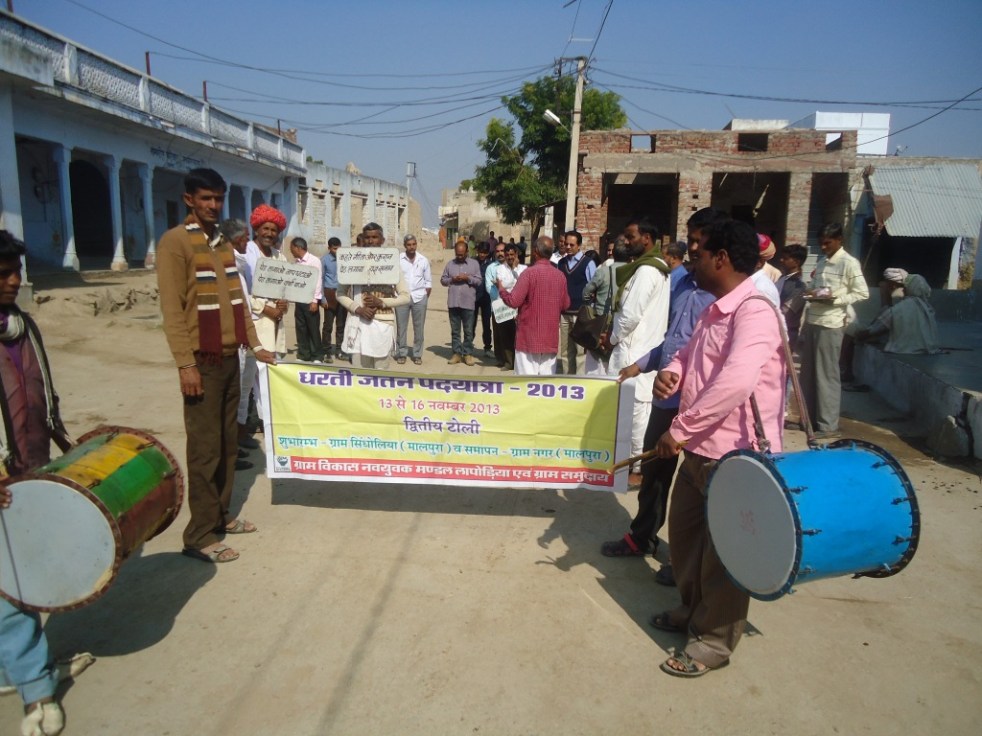
27th Dharati Jatan Annual Festival Honoured Eco-warriors: A Different Conference of Parties that Actually Addresses Climate Change
It was certainly a Conference of Party (COP) of sorts. Those present included farmers, women, academics, media persons, delegates from other states (Gujarat, Madhya Pradesh, Uttar Pradesh, Delhi), Non Government Organisations and elected representatives. It also happens to be an annual event that has been going on for 27 years. It was certainly celebrating the work that actually helped mitigation and adaptation in changing climate in both drought and flood related possibilities. It was also happening on the same dates as the COP 19 was going on far away in Warsaw, Poland.
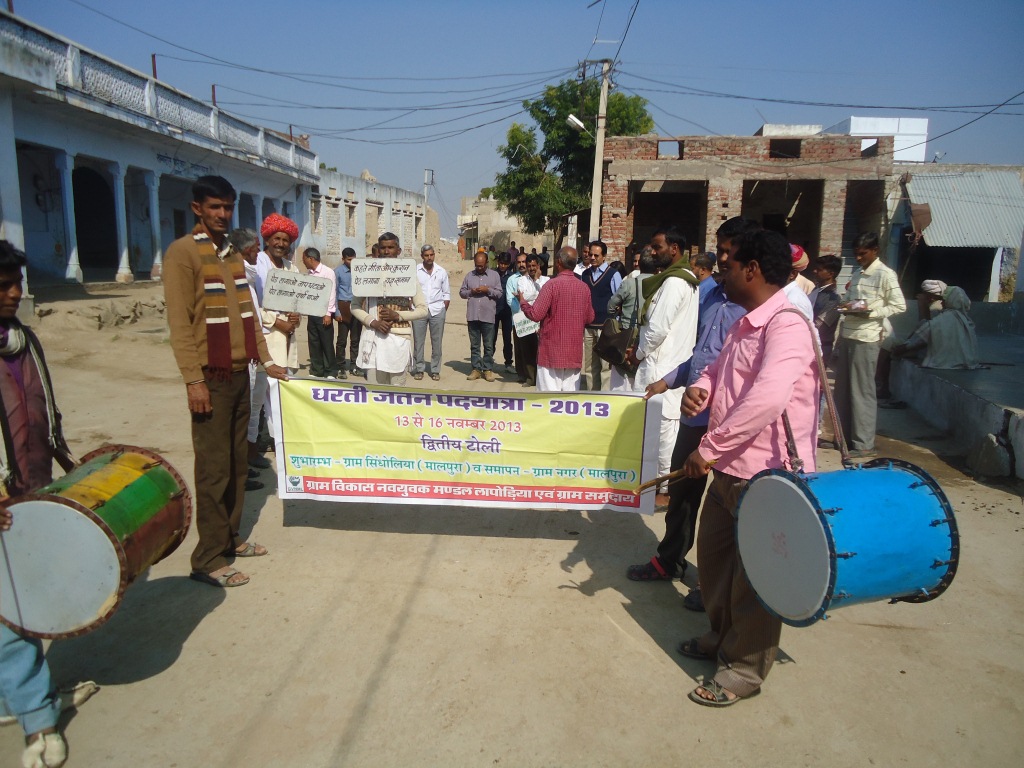
It was an honour for me to be present at Nagar village in Malpura block in Tonk district in Rajasthan at the 27th annual Dharati Jatan conference where the Pad Yatra from two different streams that culminated. Five eco warriors were honoured at this meeting with a certificate, silver medal, shawl and other ceremonial gifts. They were being honoured for their work related to tree plantation, soil and water conservation and protection of grazing land.
As speakers at the conference on November 16, 2013 narrated, this annual festival is a remarkable achievement by the Gram Vikas Nav Yuvak Mandal at Laporiya in Dudu block in Jaipur district, led by Laxman Singh, now famous for his grazing land protection through the unique chauka system.
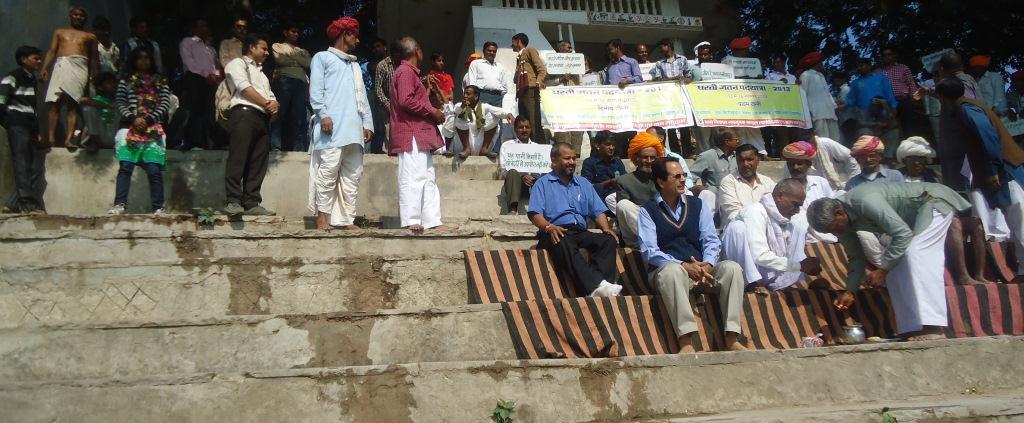
Experience of the marchers The leaders of two streams of marchers presented their experience. Rameshbhai Saini, leader of the first stream that marched through the 15 villages of Dudu block (Jaipur district) also mentioned the difficulties people are facing. For example, he mentioned how Phulsagar, one of the tanks in Laporia is encroached and communities’ efforts to remove the encroachment did not succeed as the encroacher had the support of the Rajasthan minister Babulal Nagaur who is also the member of the Legislative assembly from the local area.
Ramjilalji, the leader of the second stream that walked through Malpura block villages (Tonk district) starting from Sindolia village, also said that encroachments on tanks are increasing under political support and when volunteers try to remove such encroachments to save the water bodies, they are faced with court cases. He also said that the state government is laying long distance pipelines and building cement containers to bring the water from mega dam Bisalpur to the villages in the area. He very pertinently asked, will we allow our water harvesting culture to be destroyed since now we have this piped water supply? Reflecting unconvincingly on this dilemma, the letter from state government’s principle secretary Purushottam Agarwal (he was supposed to come for the function, but had to travel elsewhere due to some family emergency and hence sent a letter) suggested that the pipelines are only for drinking water and tanks that the GVNML has helped build are for irrigation and other purposes. The fact is that the state government made no effort to consult the people before coming up with the pipeline scheme. Kesarbhai, active in Mahoba district in Uttar Pradesh described the Apna Talab Abhiyaan through which already 70 talabs (tanks built with earthen bunds) have been built in less than a year.
Participants from other states Pankaj Shrivastava from Mahoba appreciated that communities in GVNML area have system of imposing fines when anyone is caught polluting the lakes (as reflected in the wall writing in the photo below at the Nagar village tank).
He also said that the communities in their area is trying to clean up Kiratsagar lake in Mahoba through a focused campaign since Oct 5, 2013. Mavjibhai from Vivekanand Research & Training Institute, Bhuj (Kutch in Gujarat) said that they plan to take up implementation of chauka system in 55 villages along the 60 km long Rukmawati river in their area.
The Awards The five awards presented on this occasion were indeed very well deserved ones. The managing committee of Akodiya village (Dist Ajmer) was recognised for the tradition of collective management of common property resources including grazing land and water harvesting systems.
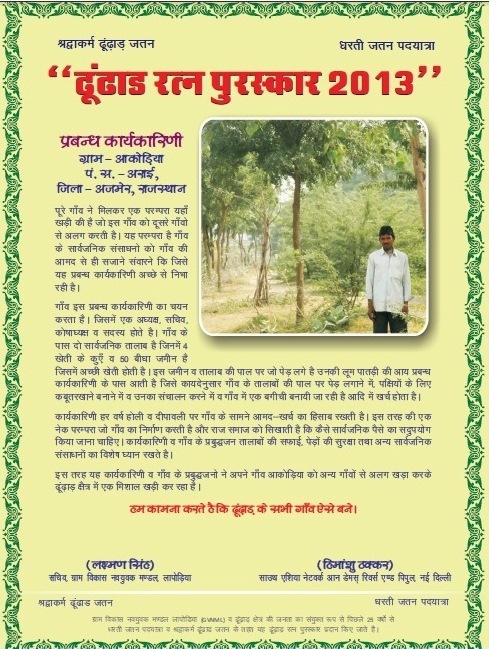
Rajjak Sheikh of village Tikel (Block Dudu in Jaipur district) was honoured for planting long living trees like peepal, Banyan, neem and other local varieties along the tank embankment over the last five years through his own efforts. He also got the fisheries contract given for the village tank canceled and got some of the hunters caught at his own personal risk.
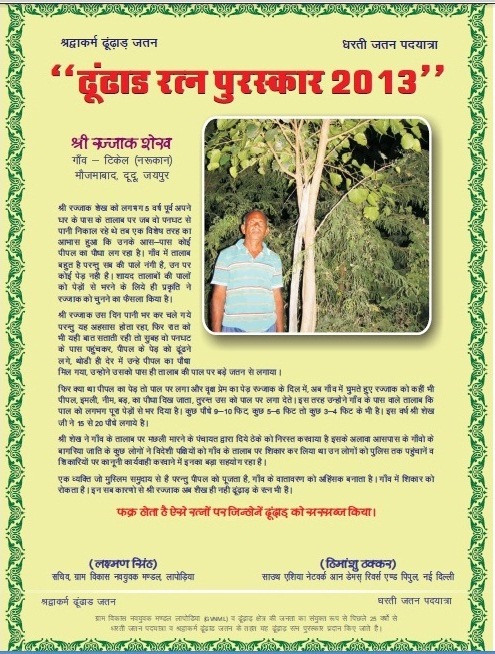
Next, Shravanlal Jaat, a shepherd of village Kalyanpura (Dudu, Jaipur) was given the Dhudhad Ratan prize for consistently planting large number of trees in grazing land and along the village tank with his own personal effort and expenses for more than five years and also taking care of the planted trees.
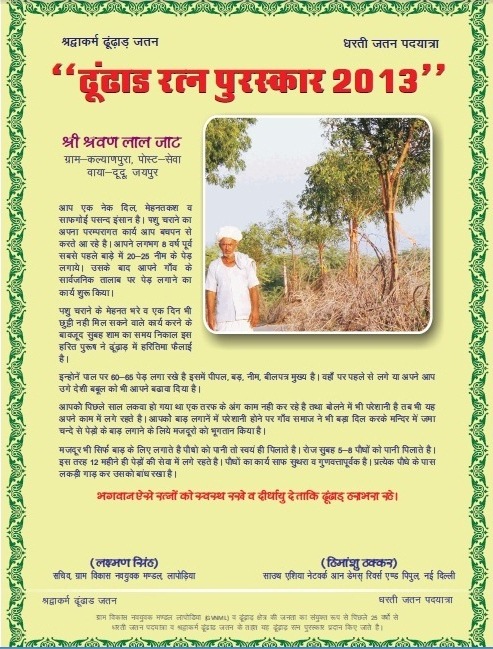
Efforts of Umrao Godha, a relatively rich man of village Jhirota in Ajmer district were recognised for transforming the village with institutions like school, health centre and also for planting and taking care of large number of villages. Enthused villagers elected him as village head.
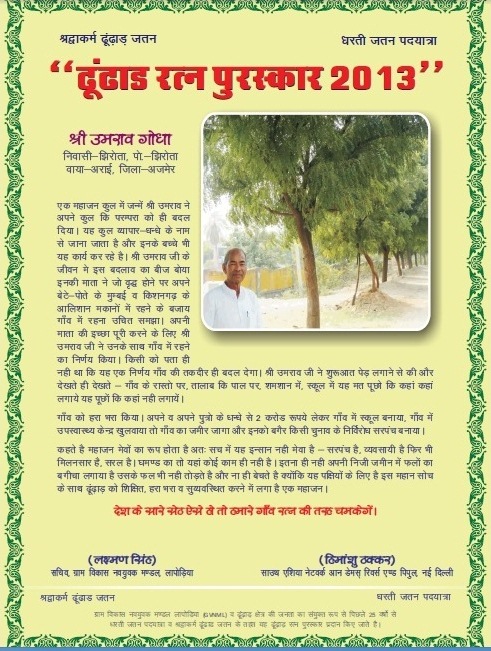
Khivsingh Rajput, an old man of Bikhraniya Kalan village from relatively far off Nagaur district (Marwad area) was also honoured for his 20 year old campaign in the village to plant long living Banyan and other trees in very dry area. He also inspired people to donate money and collected Rs 5 lakhs to deepen, renovate and strengthen the village tank.
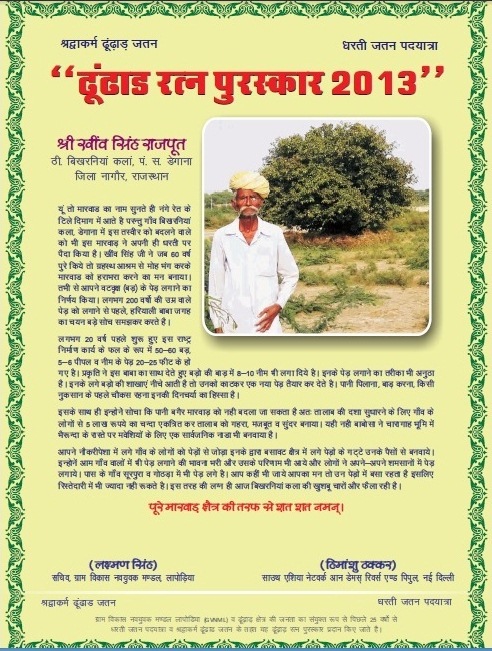
Relevance for climate change The work of GVNML in the region is remarkable in many respects. The water conservation work helps recharge the groundwater and this water is then available in years of deficit rainfall, the frequency of which is bound to increasing in warming climate. Similarly, the whole area has created such a remarkable water conservation system that even when rainfall is excessive, this area will not face any floods since the water will be stored and only slowly released. The soil here has increased carbon content which also helps hold the moisture much longer, thus helping overcome the dry spells which has also increased in recent years. Thus it is clear that the that is underway over the last over three decades under GVNML has huge implications in the climate change context. The COP 19 talks at Warsaw remains deadlocked, waiting for some façade to emerge to show progress, this different COP 27 at Nagar shows so much progress is possible when the communities are at the helm of the affairs. It is doubtful though that the lessons from COP 27 at Nagar will have any impact on COP 19 at far away Warsaw.
Himanshu Thakkar (ht.sandrp@gmail.com)
 SANDRP

