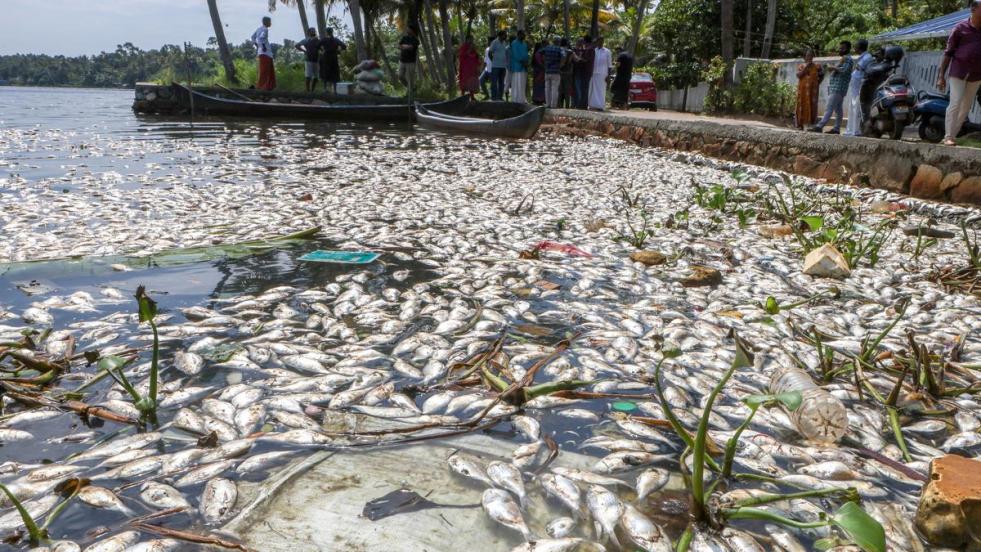
(Feature Image: Dead fish floating on Ashtamudi Lake at Kadavur in Kollam in last week of Oct. 2025)
“Wetlands and traditional knowledge: Celebrating cultural heritage” is theme for global World Wetlands Day (WWD) 2026 celebrated annually on Feb 2. On the occasion, we share reports about 21 Ramsar wetlands from various Indian states underlining the worsening plight of Ramsar sites in India. This does not necessarily mean that the Ramsar wetlands not listed here are in any better state, it only means that media attention has not brought their stories in public domain with sufficient prominence. The state of Ramsar wetlands in India clearly shows complete lack of any governance in place to ensure that the Ramsar sites get protection from degradation, threats and destruction. Worryingly, even Ramsar Convention seems completely disinterested in doing anything to ensure protection of the wetlands that get Ramsar tag.
The Supreme Court (SC) of India, in December 2024 asked the various High Courts (HC) to take up the matter related protection of Ramsar wetlands. A number of HC have taken up suo moto cases for protection of Ramsar wetlands in areas of their states. However, worryingly, two years since that SC order, we have yet to see effective protection of any Ramsar wetland in India following such HC cases.
All the cases in the overview clearly show that though these wetlands serving local people, economy and wildlife in innumerable ways have been subjected to gradual degradation from growing pollution, dumping, other abuse and encroachments. The common link in all the cases is negligence by the concerned govt agencies either in formation or in implementation of integrated management plan. This shows that Ramsar tag does not ensure sustainable management of the wetlands with that tag.
Disturbingly, in most of the cases be it Deepor Beel in Assam, Hokersar wetland in J&K, Sambhar lake in Rajasthan or Pallikaranai marshland in Tamil Nadu, its govt ‘developmental’ plans which are ruining the Ramsar wetlands eco-system. Interestingly, most of such wetlands destructive plans and activities have been subjected to judicial scrutiny in various High Courts and NGT. It’s also great to see that various High Courts have pursued the SC Dec, 2024 direction regarding protection of Ramsar wetlands across the country. But these legal interventions have not resulted in any remarkable outcome so far.
Being signatory to Ramsar Convention 1982, India has so far listed 96 wetlands as Ramsar sites covering an area of 15,37,957 ha. In 2025 itself, the MoEF&CC has secured Ramsar reorganization for 11 wetlands including 3 each from Rajasthan & Bihar; 2 from Tamil Nadu and 1 each from Sikkim, Jharkhand and Chhattisgarh.
The year has also seen plans and demands for Ramsar status in various states including Samanatham Tank in Tamil Nadu, Kinnerasani reservoirs, Pakhal, Ramappa and Ameenpur lake in Telangana, Sangetsar Tso lake in Arunachal Pradesh and Rowmari Donduwa wetlands in Assam. Notably, the Chandigarh UT administration has approved Ramsar proposal for Sukhna lake in Sept. 2025 while the SC in Jan. 2026 has sharply criticized govt for mismanagement of the iconic lake.
Similarly, despite MoEF&CC recommendations in 2019, the Uttar Pradesh govt in Dec. 2025 has dropped plan to declare Dhanauri wetlands as Ramsar site. The brief information on newly declared Ramsar wetlands, new Ramsar wetlands proposals and other Ramsar wetlands related developments in India can be seen here.
1. Pallikaranai Marshland, Tamil Nadu CMDA issues order to ban construction A few days after the southern bench of the National Green Tribunal (NGT) directed the Chennai Metropolitan Development Authority (CMDA) not to grant any building plan approvals in the Pallikaranai marshland and its zone of influence, the planning authority has issued a circular reiterating the Tribunal’s order. According to the circular issued by the chief planner of Master Plan Unit (MPU) on Oct 6, 2025 building permissions will not be issued within the boundary of the Ramsar recognized wetland and its influence zone up to 1 km. Moreover, the circular also instructed the local bodies concerned to comply with the NGT order and the CMDA circular.
‘Officials colluded to clear real estate project’ Anti-corruption NGO Arappor Iyakkam has alleged that various govt departments colluded to grant illegal permissions for a massive real estate project inside the ecologically sensitive Pallikaranai marshland. In a complaint to CM MK Stalin, the Director of the Department of Vigilance and Anti-Corruption, and others on Oct 23, 2025 Arappor alleged that the real estate and property development company Brigade Enterprises was granted permissions in violation of rules.
Arappor demanded an investigation into officials of the CMDA, the State Forest Department, the State Expert Appraisal Committee (SEAC) and the State Level Environment Impact Assessment Authority (SLEIAA) responsible for assessing EC applications. The complaint put forward 5 demands, including the immediate cancellation of EC and plan approval for the project. Arappor has also demanded that all lands within the Ramsar site of Pallikaranai marshland be immediately reclaimed and restored.
Realty firm granted EC to build 1,250 flats The NGO’s allegations pertain to the permission given to the project named Brigade Morgan Heights coming up on the Perumbakkam main road. When contacted, a spokesperson for Brigade Enterprises said that the project has all statutory clearances from relevant authorities.
The firm began the process of applying for EC in August 2022, three months after 1,247 ha of Pallikaranai marshland was notified as a Ramsar site. Construction inside a designated Ramsar site is barred under Section 4 of Wetland Conservation and Management Rules, 2017. The SEIAA issued EC for the project on Jan. 20, 2025, and the CMDA gave its nod for the plan on Jan. 23, 2025.
HC interim stay on luxury project The Madras High Court (HC) restrained Brigade Morgan Enterprises from constructing residential units near the Pallikaranai marshland and sought responses from the Tamil Nadu and Central govts by Nov. 12. The order came in response to a PIL filed by the AIADMK’s Chennai legal wing district secretary.
Days after Arappor Iyakkam allegations, the state govt defended its actions, citing incomplete boundary delineation of the protected area. The real estate developers urged the govt to reconsider curbs on construction within a 1-km buffer zone around the Pallikaranai marshland, with the Builders’ Association of India (BAI) warning that a ‘blanket freeze’ on planning approvals in the buffer zone could disrupt livelihoods and housing prospects for roughly five lakh people. The zone covers 13 villages with approved layouts and major infrastructure, including IT parks, commercial developments and a metro corridor.
Pallikaranai ground truthing going on: Govt Appearing before HC, senior counsel P. Wilson, representing the SWA, on Nov. 12, 2025 said, the ‘ground truthing’ exercise to fix the boundaries of the Pallikaranai was yet to be concluded fully and that the Supreme Court, in a case related to protection of wetlands across the country, had granted time till Dec. 2, 2025 for the SWA to submit its ‘ground truthing’ report. Mr. Wilson urged the Division Bench to take up the present PIL after the Supreme Court hears the related matter next on Dec 2, 2025.
Accepting his submission, the judges directed the HC Registry to list the case before them on Dec. 3, 2025. They also extended, till the next date of hearing, an interim order that they had passed on Oct. 31, 2025 in the PIL restraining private real estate developer Brigade Enterprises Limited from constructing the high-rise towers at its Pallikaranai project.
HC to study ground truth report The Madras HC on Dec. 03, 2025 said it would take a decision on the PIL after perusing the report of the ground truthing exercise, which is aimed at determining the boundaries of the marshland. Next hearing on Dec. 11, 2025.
Digital boundary yet to be fixed: TN to HC The SWA informed the HC on Dec. 03, 2025 that it will identify the zone of influence and decide what activity can be permitted in this area. Once the work is completed, a report will be filed in the court, said P Wilson. Earlier, advocate-general P S Raman said 99.4% of the ground truthing exercise was completed and the remaining work would take just a day’s time.
Ground-truth exercise over The govt on Dec. 11, 2025 informed the HC that the ground truthing exercise was completed and the report has been sent to the Chengalpattu collector for authentication. Advocate General PS Raman also informed that once the authentication is done by the collector, the report will be submitted in the Supreme Court which is seized of the matter. Senior counsel P Wilson told the court if the 1 km radius of zone of influence, as imagined by the petitioner, is accepted, then the entire stretch of OMR and Sholingunallur will go and there wouldn’t be any development in the city.
Residents want CMDA to lift halt on building Residents’ groups in the Sholinganallur Assembly constituency urged the State govt to withdraw the CMDA’s circular that halted all approvals or planning or building permits within 1 km of the Pallikaranai marshland.
Expert warns of irreversible damage The Pallikaranai marshland continues to face intense pressure from urban development, infrastructure projects and real estate expansion. Conservation efforts must be informed by a complete understanding of the marshland’s topography, hydrology, ecology and, more importantly, restricting us from further depleting the non-protected areas of marshland with major projects like high-rise townships or state flagship projects such as sports centres. With strong political will and public participation, the marshland can be rehabilitated into a vibrant ecological asset, guided by scientific principles rather than short-term solutions.
304 survey numbers found in Pallikaranai Marsh There are at least 304 survey numbers, several of them with substantial buildings, within Pallikaranai marsh land, the SWA informed NGT in June 2025. The report, prepared with satellite data and e-governance records, was submitted during a hearing in a suo motu case initiated in July 2023. The case pertained to allegations that a private builder was laying a road by dumping soil and construction debris into Perumbakkam marshland using heavy machinery. During the hearing, NGT sought clarity on whether the disputed road lies within the Ramsar site’s zone of influence.
Meanwhile, the bird watchers spotted an Indian jackal, marking the first-ever recorded sighting of the species in core areas of the Pallikaranai wetland. The arrival of the jackal signals the marshland’s growing role as a sanctuary for urban wildlife & adds urgency for its protection.
Perungudi dump yard makes lives miserable As per this April 2025 report, the dump yard, which has been in use for over 35 years, continues to affect daily life in the neighbourhood such as Thoraipakkam and Pallikaranai. A sample of Mr. Francis’ borewell water was submitted to the Chennai Metropolitan Water Supply and Sewerage Board for testing and results showed, among many parameters, ammoniacal nitrogen levels at 5.5 mg/L – 11 times the permissible limit (0.5 mg/L). “The Pallikaranai Marshland lies close by, and has also been affected by subsurface contamination. Unless all the dumped waste is cleared and rainwater allowed to percolate through the reclaimed soil, the wetland cannot recover. We cannot have a Waste-to-Energy plant, like the one at the Kodungaiyur dumpyard,” he said.
2. Kazhuveli Bird Sanctuary Mining proposed in Ramsar wetland Despite its ecological significance, Tamil Nadu Minerals Ltd has sought to establish an opencast semi-mechanised silica sand mine only 480 metres from the sanctuary boundary, within the ESZ, the designated area around protected sites that acts as a buffer. Curiously, the SEIAA granted EC in 2023, and subsequently, the State govt leased 3.73 ha for a period of 10 years, according to documents available. Around the same period, the Kazhuveli Bird Sanctuary received the coveted Ramsar recognition.
Govt yet to secure NPCA funds for Ramsar sites Tamil Nadu, which has the highest of 20 Ramsar sites in the country, has not availed of funds from the union government under the National Plan for Conservation of Aquatic Ecosystems (NPCA) for the protection of these sites in the last five years, according to official data presented in the Lok Sabha. This is primarily due to the state’s delay in preparing Integrated Management Plans (IMPs) for the sites, a prerequisite for the release of funds.
While the union govt had allocated Rs 44.84 cr over 5 years for conservation and management of 27 Ramsar sites across different states, Tamil Nadu received its last funding in 2019-20, amounting to Rs 1.37 crore. In contrast, states like Odisha (Rs 5.37 cr in 2020-21), Mizoram (Rs 1.54 cr in 2021-22) & J&K (Rs 9 cr in 2022-23) have benefited from the NPCA fund.
3. Ashtamudi Lake, Kerala HC proposes formation of authority The Kerala HC June 19, 2025 proposed the formation of the Ashtamudi Local Wetland Authority (ALWA) to implement the management plan for Ashtamudi Lake in Kollam. The HC was considering a PIL by Adv Boris Paul & others. It highlighted that the depletion & deterioration of the Ashtamudi wetlands are due to multiple factors, including pollution from drainage discharge and encroachments.
Initially, the state govt opposed the suggestion, saying that a separate authority may not be necessary. However, considering the current condition of Ashtamudi Lake the court concurred with the petitioners. The HC observed that, in addition to the general supervision by the SWA, a dedicated authority/ committee for the Ashtamudi wetland is necessary.
The HC also took note of the petitioners’ point that the indiscriminate discharge of sewage and solid waste from residential areas and commercial establishments into the lake has been a major concern. It further directed the state govt to clarify whether an IMP has been prepared for the Ashtamudi wetland. It was also suggested that the members of AWMUmay be drawn from various departments. HC adjourned the petition to July 1.
HC orders formation of wetland body The HC on July 29, 2025 directed the state govt and the SWA to constitute a dedicated Ashtamudi Wetland Management Unit (AWMU) in two months and create a public feedback mechanism for reporting pollution, encroachments and ecological violations affecting the lake. The Court observed that despite the ecological importance of the lake, the State had failed to establish a dedicated authority or implement a site-specific conservation plan. It noted that various govt departments and local bodies were functioning in isolation, resulting in fragmented and ineffective conservation measures.
The HC on Jan 6, 2026 sought instructions from the state govt by in a contempt of court petition alleging non-compliance with the court’s earlier directive to establish AWMU. The direction was given on a PIL filed by Boris Paul, a lawyer which highlighted the continued depletion and deterioration of the Ashtamudi wetland including due to drainage pollution and encroachments. However, even after six months, no action was taken by the state to constitute the unit, HC orally observed that it was a clear case of contempt.
A day after the HC expressed its displeasure over the delay in constituting the AWMU, the State govt informed the court that an order had been issued to constitute the unit. The order dated Jan 7 was issued by the Special Secretary of the Environment Dept. The court on Jan 7 suggested that the member secretary of the SWA can function as the CEO of the AWMU.
Ashtamudi ecosystem gasping for breath The episode of mass fish kill in Ashtamudi Lake in last week of Oct. 2025 has once again brought to the fore the life-threatening issues of sewage contamination, plastic pollution, encroachments, and uncontrolled weed growth stifling the vital lake ecosystem, a protected site of international importance.
Unsustainable waste management A study highlighted major water bodies, such as Vembanad and Ashtamudi Lakes, now exhibit disturbing levels of microplastic contamination, with commonly consumed fish testing positive for these particles.
4. Loktak Lake, Manipur Farce behind govt’s smokescreen events The Loktak lake has been under the watch of the Loktak Development Authority (LDA) since 1986. Since 2006 it has, at least on paper, got more teeth with the Loktak Protection Act. Yet till date it has neither finalized the ‘brief documents’, nor demarcated the boundary of the water body. It has not been able to identify the encroachers either. The LDA’s failure is shameful. Under the Wetland Guidelines of the Union government, the LDA should have been dissolved once the State Wetlands Authority (SWA) was set up. But, in Manipur the latter authority seems to be suffering from lack of political support. In an RTI reply (dated 24 July 2024) to this author, the SWA said it did not even maintain the Brief Document of Loktak and I was asked to approach LDA to obtain it. (Ram Wangheirakpam)
Threats from new project The project – the Loktak Lake Experience – may become the breaking point for this lake. Conceptualized as a part of the Govt of India’s ‘Special Assistance to States for Capital Investment (SASCI)- Development of Iconic Tourist Centers to Global Scale (DITCSC)’, the Loktak Lake Experience will include a full-fledged luxury resort, a “marine” experience zone and a space for adventure activities. Through all of this, the state govt has forgotten to keep in mind what is actually crucial for Manipur’s development – its people and its environment.
If the project is allowed to proceed, it will destroy the wetland ecosystem & restrict fishing areas, reduce the space for migratory birds, and more critically set a legal precedent that will allow more destructive projects. The project must be scrapped. A new thinking must evolve on tourism that revolves around wetlands and the communities. (Ram Wangkheirakpam)
Loktak project fund utilization certificate not submitted Even though Rs 59.05 cr was released for implementation of “Loktak Lake, Experience in Loktak” project, the State Govt has not yet submitted any utilisation certificate. This was stated by Union Minister of Tourism Gajendra Singh Shekhawat in response to a query raised by Dr Angomcha Bimol Akoijam in the Lok Sabha on March 10, 2025. The project with estimated cost of Rs 89.48 cr was sanctioned in 2024-25 under the SASCI-DITCSC.
Study links land use change to Loktak pollution The study by Eliza Khwairakpam of Nagaland University’s Department of Environmental Science, published in the peer-reviewed International Journal of Environment and Pollution pointed out that changes in land use have been deteriorating the water quality of rivers feeding the lake, threatening its biodiversity and the livelihoods of the local communities.
5. Deepor Beel, Assam HC orders halt to construction activities The Guwahati High Court (HC) on Feb 6, 2025 directed state govt to remove earth filling and stop construction activities in the Deepor Beel area. During a hearing, the counsel appearing for the Public Works Department (PWD) submitted that earth filling or other construction activities are being carried out for the proposed elevated corridor project near Dharapur Tiniali. He submitted that since the project is cancelled, therefore, temporary earth filling and other activities will be stopped very soon. The counsel said that around 6-8 weeks will be required for removing the temporary earth filling and other construction activities. The HC directed the PWD to file an affidavit to the effect that the earth filling and other construction activities will be removed by the next date of hearing. The hearing was related to a PIL filed by Pramod Kalita in 2023.
File reply on damage in 2 weeks: NGT The NGT directed the Central Pollution Control Board (CPCB), State Pollution Control Board (SPCB), SWA and Kamrup (Metro) district commissioner to file affidavits within two weeks in response to the suo-motu petition regarding serious environmental damage caused to Deepor Beel, the only Ramsar site in the state.
The NGT’s principal bench in May 2025 took suo-motu cognizance based on a news report about the environmental damage to Deepor Beel and later transferred the case to its eastern zone bench. The tribunal noted that the wetland has been reduced in size from 40 sqkm to less than half, allegedly due to unauthorized settlements, illegal dumping grounds, and the unrestricted dumping of solid waste. Next hearing was on Aug 25, 2025.
Deepor Beel pollution worsens As per this Nov. 20, 2025 report, the water quality of Deepor Beel, has been deteriorating, posing a severe threat to the wetland’s aquatic biodiversity. Expressing grave concern over the declining health of the Deepor Beel Wildlife Sanctuary, internationally acclaimed environmentalist Laxman Teron said that of the wetland’s two parts– eastern and western – the eastern side has suffered the worst damage as it receives polluted water from the Bharalu and Bahini rivers. According to Teron, the contamination has become so acute that wild elephants from the nearby Rani and Gorbhanga forests no longer drink from the eastern segment.
Teron added that the toxic water has significantly reduced aquatic vegetation. He criticized the failure to address pollution from the nearby dumping ground, which continues to pose a major threat. Calling for urgent, comprehensive measures, Teron lamented that for some people, the wetland has become “a milch cow”.
Encroachments block streams Expanding commercial and industrial spaces have blocked more than a dozen streams and rivulets originating from the Rani-Garbhanga hills, which feed Deepor Beel, seriously affecting the Ramsar Site wetland’s ecology mentions this Feb 8, 2025 report. Ongoing large-scale encroachments have disrupted Deepor Beel’s link with these streams – something akin to cutting off the wetland’s oxygen supply. A majority of the streams today stand completely blocked by indiscriminate earth-filling and construction of boundary walls right on the streams. Growing commercial spaces and changes in land use have been impacting Deepor Beel adversely.
“Agricultural land in Deepor Beel’s periphery, which has been sold by locals, is being used for commercial and industrial purposes. Land has been developed and filled up, resulting in growing siltation on the wetland. Mushrooming apartments close to the wetland in areas like Dharapur and Azara are also having disturbing impacts on the wetland. Huge quantities of garbage generated by these apartments are finding their way into the waterbody. The waste including plastics generated by the eateries that have mushroomed right on the bank of the bird sanctuary in Chakardo and Pamohi has defiled the area,” Medhi said.
MoEF proposes Deepor Beel ESZ The MoEF&CC on July 2, 2025 published a draft notification under the Environment (Protection) Act, 1986, proposing an Eco-Sensitive Zone (ESZ) around the Deepar Beel Wildlife Sanctuary. The state govt was directed to prepare a zonal master plan within two years, in consultation with local communities. According to the ministry, the ESZ is to protect the wetland and its wildlife.
The earlier 2021 draft had proposed a wide span of protection ranging from 294 metres to as much as 16.32 kms around the Beel, covering an area of 148.97 sqkm. The new notification, however, reduces the protective cover drastically to 5 km around its boundary, bringing down the area to only 38.84 sqkm. This sharp contraction raises grave concerns about the ecological security of the wetland. By shrinking the protective buffer, the zone now opens itself up to pressures of unregulated construction, infrastructure projects and human settlement that were previously intended to be kept at bay.
The draft notification therefore sparked debate not merely among ecologists but also urban planners, economists, and civil society groups. The earlier failure to finalize the ESZ draft of 2021 created a policy vacuum that allowed rampant industrial growth and human settlements to mushroom around the wetland. This period of regulatory ambiguity severely undermined conservation goals. Now, the revised notification, instead of strengthening protections, appears to dilute them by reducing the area and by proposing that the forthcoming Zonal Master Plan for the ESZ should not impose restrictions on approved land use & infrastructure.
6. Kanwar Lake, Bihar Caste issues affecting protection Kabar Tal’s protection must become the responsibility of the entire society – but society remains deeply divided along caste lines. We must acknowledge that conservation, like land reform or economic policy, is never neutral. It benefits some & disadvantages others. Unless we address who gains & who loses from conservation, we risk deepening the very inequalities that have created Kabartal’s crisis.
Delay in clearing restoration plan Though water is on the verge of drying in Kanwar Lake, locally known as ‘Kabartal’, in early March 2025 itself – not a healthy sign for a large wetland – the state govt had not sanctioned the ecological restoration plan for the lake-cum-bird sanctuary. This indicated the govt’s apathy towards saving the dying lake. The govt has long neglected the land disputes surrounding the lake, exacerbating social tensions as fisherfolk claim fishing rights while farmers assert land ownership for agriculture.
Charting the decline Increasing encroachment, land-use changes and declining water quality & quantity have raised concerns about Asia’s largest freshwater ox-bow lake sustainability. This paper explores the findings of a comprehensive geospatial and physicochemical analysis of Kabartal wetland conducted from 1989 to 2023 and highlights the key indicators of wetland change, driving forces of degradation and necessary conservation measures.
HC seeks report on conservation of 3 Ramsar wetlands The Patna high court on Feb 7, 2025 asked the member secretary of the SWA to submit a report on the steps taken for the preservation and protection of 3 Ramsar wetlands Kabar Taal (Begusarai), Nakti Dam and Nagi Bird Sanctuaries (both in Jamui) in Bihar. The HC passed the order while hearing a suo motu PIL regarding the ecological protection of the wetlands. The court ordered that ground-level reports on these wetlands be submitted in three weeks. This PIL was instituted following a Supreme Court order of Dec 11, 2024. Next hearing on March 7, 2025.
7. Hokersar Wetland, J&K Concerned over unscientific release of water: EPG The Environmental Policy Group (EPG) in July 2025 expressed serious concern and deep anguish over the abrupt and unscientific release of water from the Hokersar Wetland by the Wildlife Department and the Irrigation & Flood Control Department. The EPG said that this action has caused the water level – usually maintained at 4 to 5 feet – to drop sharply, leading to the drying up of vast portions of the wetland and inflicting severe ecological damage.
The immediate consequence of this release is a looming threat to the lives of nearly 10,000 breeding birds currently in the wetland. Many of these birds are newly hatched and lack the ability to fly or migrate to safer habitats. With the wetland drained, these birds now face death by exposure and starvation, marking a distressing ecological crisis.
The EPG has received credible reports that the water release may have been executed to benefit encroachers who have illegally cultivated paddy in large parts of the Hokersar Wetland. The Govt had spent Rs 45 crore for this infrastructure. However, its misuse by vested interests has undermined both the ecological purpose and the public investment.
Experts warn of encroachers “The condition of Hokersar wetland has improved. But the Ramsar site needs continuous presence of 4 to 5 feet of water throughout the year,” said Faiz Ahmad Bakshi, the convener of the EPG.
Encroachment threat The famous wetland is facing various threats including encroachments with govt not taking appropriate measures to protect it. Discharge of domestic waste into the wetland through the inlet streams has resulted into excessive weed growth and eutrophication. Illegal mining coupled with depletion of water from wetland has also been a cause of worry. Despite the intervention of court no proper has been made to identify the encroached land.
Impacts of anthropogenic activities on 4 wetlands Abstract: This study assessed the impact of such disturbances on the soil physico-chemical and microbial properties of four major wetlands – Hokersar, Anchar, Manasbal and Shallabugh – between 2019 and 2021. The investigation reveals that anthropogenic disturbances exert a substantial influence on the soil physicochemical properties of Kashmir’s wetlands. The study makes one thing clear. The future of Kashmir’s wetlands is being shaped not just by climate change, but by everyday human actions. Soil degradation is a slow process, but its impacts are lasting. Protecting wetlands means protecting the invisible life beneath them. Without timely action, Kashmir risks losing ecosystems that have supported water, wildlife, and livelihoods for generations.
8. Wular Lake Lake losing fish From 70 species of fish to just 4. That’s the state of Wullar lake, say worried fisherfolk. 15 species exist, says the Department of Fisheries. But what is indisputable is the terminal decline of the picturesque Wullar lake. Sullied by pollution, throttled by encroachments, and scuffed by sand mining, the lake’s ecosystem is being further ruined by a mafia that kills fish with electric shocks instead of using nets to catch fish, say fisherfolk. The local fisherfolk’s union and the Nature Conservancy Alliance (NCA) have expressed alarm over the state of the lake and of the Jhelum River which feeds it freshwater.
In Oct. 2025, the sight of a large number of dead snow trout (Schizothorax) floating in several stretches of the Jhelum caused widespread alarm. “This cold-water fish species, once abundant, has been declining rapidly due to water pollution, habitat loss and unregulated sand extraction. The Department of Fisheries has failed to conduct or make public a scientific investigation into the cause of this worrying incident,” points out Ghulam Hassan Bhat, president of the Mahigeer and Singhara Association. (By Jehangir Rashid)
Wular needs attention The depletion and degradation of Wular have adversely impacted the efficacy of the lake in retaining flood waters during peak discharge. The lake was declared a Ramsar Site in 1990, but the recognition and conservation that this entails never took off. Recently, the J&K govt requested special funding of Rs 100 cr from the MoEF&CC for the conservation of key water bodies including Wular Lake.
9. Dal Lake Toxic metals contaminating water The Lake in Srinagar is accumulating toxic heavy metals at rates that can raise the concentration of arsenic 239-fold, lead 76-fold, and mercury 100-fold within 35 years, a study has suggested. The study by scientists at the University of Kashmir is among the first to forecast the future concentrations of these toxic metals in the freshwater lake.
10. Sambhar Lake, Rajasthan HC initiates contempt proceedings against 3 PSU officials The Rajasthan HC has taken a stern view of alleged illegal activities linked to a proposed solar power project at the ecologically sensitive Sambhar Lake and initiated suo motu contempt proceedings against three senior officials of public sector undertakings (PSUs). The court has also reiterated strict restraining orders to protect the notified wetland area. The HC passed the order on Jan 22 while hearing a batch of matters, including a PIL filed by Dinesh Kumawat, a resident of Nawa, and an ongoing suo motu writ petition related to wetland protection.
Appearing as Amicus Curiae, senior advocate RB Mathur informed the court that Hindustan Salts Ltd (HSL) had entered into a MoU in Aug, 2023, with SJVN Green Energy Limited for the setting up a solar power project on land forming part of the Sambhar Lake ecosystem. He submitted that the land bank allotted to Sambhar Salts Ltd, an HSL subsidiary, under the MoU was part of the notified Sambhar Lake wetland area.
In its response, the bench observed that the MoU had been executed while the matter was actively pending before the HC, and that it was never informed of the MoU’s existence despite repeated hearings and interim orders. The judges held that applications to the court were moved without disclosing this crucial fact, amounting to an attempt to mislead the court and interfere with the judicial process. Such conduct, prima facie, attracted provisions of the Contempt of Courts Act, 1971, the court noted.
The bench directed the HC registry to file a contempt petition and issue summons asking the three officers to appear in person at the next hearing on Feb 11 and explain why action should not be taken against them. In Dec. 2021 also, the HC had directed Hindustan Salts Limited to stop the work on the project until the court examines the “issues concerning setting up such a large-scale power project near the lake area and its possible impact on the environment and ecosystem of the lake”.
Sambhar festival costing the wetland’s birds their sky Despite a govt order prohibiting drone-flying inside the Sambhar wetland zone, unmanned aerial vehicles buzzed overhead, livestreaming a festival hosted directly in the core lake area (Jhapok Dam). The ban was treated like a suggestion rather than law. The Sambhar Festival 2025 brought powerful sound systems into a fragile ecosystem. Noise readings reached 91.3 dB at 4:15 pm on 27 Dec. 2025, equivalent to standing beside a busy road intersection. Flamingos do not carry noise-cancelling headphones. Their instinctive reaction is simple: fly away.
As a local birding enthusiast, I have noted that flocks expected to roost in the area have already shifted deeper into the wetlands since the event began. Anyone who watches the lake regularly can see the change. A landscape that once echoed with bird calls and rippling water has been replaced with speakers, staging and trend-driven photo shoots. Sambhar Lake never asked to become a drone-racing backdrop or an Instagram reel factory.
Independent ecological reviews and compliance reports to the NGT have already documented that Sambhar is one of the worst-rated wetlands in the country in terms of ecosystem condition. Poor water quality, disrupted hydrology, invasive vegetation, illegal salt extraction and unchecked anthropogenic stress have pushed this wetland close to ecological collapse. Against that backdrop, intensified disturbance through entertainment-oriented events is not harmless; it is harmful. Eco-tourism is not meant to be a buzzword. It requires that nature benefit, not bleed. (Abhishek Vaishnav)
Sambhar in crisis again as fish, birds perish Asia’s largest saltwater lake, Sambhar Lake, is once again in the grip of a grave ecological emergency. Panic spread across the Mohanpur area near Nawa sub-divisional headquarters on Dec. 08, 2025 morning when hundreds of dead fish washed up along the lake’s edge. Coming just weeks after mass deaths of migratory birds, the new wave of fatalities has triggered alarm within the administration and among environmental experts. Preliminary findings point to rapidly rising salinity levels and increasing pollution as the primary causes.
11. Bhoj Lake, Madhya Pradesh NGT orders encroachment removal from Kaliyasot-Bhoj wetland The NGT on Jan. 30, 2026 directed Collector of Bhopal and Bhopal Municipal Commissioner to remove encroachments under their personal supervision. The tribunal also ordered a detailed action report to be submitted with an affidavit within 2 weeks and said departmental inquiries should be conducted against negligent officers to fix responsibility. The NGT expressed concern that sewage treatment plants have not become fully operational even after the stipulated deadline, causing untreated wastewater to be released into reservoirs. The next hearing is scheduled for March 17, 2026.
How long can Upper Lake endure neglect: NGT On Oct. 7, 2025, NGT’s Bhopal bench warned that unchecked encroachments and untreated sewage have turned the Upper Lake, a Ramsar site and Bhopal’s main drinking water source, into what it called a “dumping ground.” The bench said officials had shown “utter neglect of constitutional obligation” and placed the survival of the city’s largest water body in jeopardy.
The tribunal cited 227 encroachments still standing around the lake and more than 41 drains carrying untreated waste into the water. The order noted that despite repeated judicial directions, there has been no effective enforcement of the Wetlands (Conservation and Management) Rules, 2017. Justice Singh observed in the order: “Negligence of those to whom public duties have been entrusted can never be allowed to cause public mischief.” The case has exposed a long record of inaction. The tribunal’s findings highlight both unchecked violations and official apathy, raising questions about whether the state can safeguard a Ramsar site that supplies drinking water to more than 12 lakh people in Bhopal.
Evidence of microplastics sparks concerns A recent study finds evidence of microplastics in Bhoj wetland, a Ramsar site that provides drinking water to about 40% of Bhopal’s residents. The study attributed the microplastic contamination to tourist and fishing activities, effluents from sewage treatment plants, commercial establishments and atmospheric transport.
Another 2025 study by Dinesh Kumar Gupta and colleagues examined 6 major waterbodies in Bhopal, including the upper and lower lakes in Bhoj wetland, Shahpura, and Kaliyasot, across three seasons. They found microplastics at every site, with concentrations ranging from about 540 to 1,410 particles per cubic metre. Even at “low to medium” levels compared with global studies, the researchers warned that microplastic pollution is persistent and increasing. Together with the Bhoj wetland study, these findings show that microplastics are already widespread in Bhopal’s waters and could intensify without stronger safeguards.
Fish found dead in Lower Lake In April 2025, fish were found dead in Khatlapura Ghat (Lower Lake), Shahpura Lake, Munshi Hussain Khan Talab etc. Dead fish were also spotted in Lower Lake, one of two lakes in Bhoj wetland a Ramsar site.
NGT to probe waste dumping in Kaliyasot Taking suo motu cognizance of media reports about dumping of solid waste in the Full Tank Level (FTL) area to facilitate illegal and unauthorized encroachments on the Kaliyasot reservoir land in Bhopal, the NGT in May 2025 constituted a joint committee which will visit and submit an action taken report within six weeks.
As per Bhopal Master Plan of 2005, which is currently enforced, lands and forests up to 33 mts around the Kaliyasot reservoir are to be kept open for a green belt. However, dumpers are allegedly being used to throw solid waste in the wetland’s FTL area, in an attempt to level it up to the surface. This is allegedly being done for the plotting and allotment of land of the catchment area, in complete violation of Wetland Rules, 2017, Environmental (Protection) Act, 1986, and Water Act 1974. In Mahua Kheda village, within the FTL of the wetland of the Kerwa dam, the land has been filled up in the last month.
12. Yashwant Sagar Lake Plan to generate power from lake As per Feb. 2025 report Indore Smart City company was planning to install a 20 Mw floating solar power plant on Yashwant Sagar lake at the cost approximately ₹100 crore.
13. EKW, West Bengal Cannot raze all 500 unauthorized buildings: EKWA to HC South 24 Parganas district administration demolished 10 out of 560 unauthorized constructions in the East Kolkata Wetland (EKW) area, it was submitted before the Calcutta HC on June 24, 2025. However, EKWA counsel informed the bench of Justice Amrita Sinha that they are facing difficulty in identifying the other unauthorized constructions. “The district authority is absolutely lacking the expertise as well as manpower to carry it out… To follow the court’s order, the entire manpower was deployed there. But that does not mean I have the manpower to carry out the 500 demolitions. I cannot,” the counsel informed the HC. Counsel for the administration urged the court to direct expert bodies like the KMC to deploy engineers for the demolition job.
A joint inspection of the area is due on June 26. Justice Sinha directed EKWA to serve notices to all the stakeholders about the inspection and give the time and venue for inspection. The judge also directed the EKWA to place a report on the further action taken as well as a tabular sheet disclosing the premises number, plot number, and mouza where the unauthorised constructions have been made. The matter was to be heard on Aug 5.
Actions against only a handful Power supply to 8 plastic warehouses and processing units built illegally inside the EKW were cut off by the authorities on Dec 18, 2025. There are hundreds of cases of unauthorized construction and illegal conversion of the nature of land inside the notified EKW area, but authorities have acted against only a handful till now.
The EKWMA has filed more than 500 FIRs against such illegal acts, said an official of the state environment department. It was not clear whether the authorities would also pull down the structures. An official of the department said that out of the 500 FIRs filed with police, the wetlands authority has also issued demolition orders on their own in some cases.
EKW degradation continues Over the past few years, the EKW has shrunk at alarming rates. Construction on it has been encouraged by successive govts and now flourishes both legally and illegally. There is also the Eastern Metropolitan Bypass, a 32 km roadway to the east of the city that was made accessible to vehicles by 1982. “The bypass acts as a dam or a dyke, stopping the flow of water into the EKW,” says JU professor Datta. “Culverts were needed but they were not put there.”
Researchers have published multiple studies on the EKW. In one paper published last year at the Journal of Environmental Management, they studied the evolution of the EKW from 1991 to 2023. The dumping ground at the heart of the EKW, which has grown in size between 2011 and 2023, as a symbol of the blatant disregard for the EKW’s health.
EKW & fishers fight for survival The EKW faces severe threats from urbanisation and industrialisation. Small-scale fishers, who rely on these wetlands for their livelihood, are increasingly vulnerable due to encroachment and poor governance. Despite their sustainable practices, these communities struggle against modernisation pressures, risking the collapse of this crucial ecological and economic resource.
KMC mulls tourist centre at EKW The Kolkata Municipal Corporation (KMC) in July 2025 planned to develop a tourist centre around the EKW. The KMC has already sent a proposal to the state govt in this regard.
14. Pong Dam Lake, Himachal Pradesh Ensure no cultivation on wetland area: HC The HC on Jan 7, 2026 directed the DC, Kangra, and the Conservator of Forests (Wildlife), Dharamsala to take immediate and effective steps to remove all fencing from the wetland areas and ensure that no cultivation is carried out there.
Importantly, it directed that no civil court shall grant any injunction in favour of such persons. The Forest Department has also been directed to conduct drone surveys and place photographs on record to show the extent of illegal cultivation over the wetlands. The HC observed, the “use of insecticides and pesticides in such illegally-grown crops has a fatal impact on the wildlife and the cultivators have no authority to occupy or use wetland areas, and are encroachers.”
The court issued these directions to protect the ecologically-sensitive Pong Dam Wildlife Sanctuary and wetland area. Next hearing on April 8, 2026.
Illegal farming menaces migratory birds’ haven Notwithstanding a Supreme Court ban imposed in Feb 2000 on all non-forestry activities inside wildlife sanctuaries, illegal cultivation continues unabated on the Pong Wetland Wildlife Sanctuary land in the lower Kangra region. Even as thousands of exotic and domestic migratory birds arrive with the onset of winter, the state Forest Dept’s repeated attempts to curb the violations have yielded little success. Issuing challans has failed to deter offenders, who continue to plough protected land.
15. Sultanpur National Park, Haryana ‘Illegal dumping site’ near Sultanpur NP As per Aug. 2025 report, an illegal dumping site has surfaced within the ESZ of Sultanpur National Park, raising alarm among environmentalists, residents, and public health experts. The site is just 3 km from the park’s boundary in the revenue estate of Garhi Harsaru and falls under the jurisdiction of the Municipal Corporation of Manesar (MCM). Despite the ecological importance of the region – and the fact that both the DFO (Wildlife) and DFO (Territorial) are members of the ESZ monitoring committee – no immediate action has been taken to halt the dumping.
Illegal structures constructed close to Ramsar site Sultanpur National Park is facing a threat from illegal construction within its ESZ, with the wildlife department having identified 11 violations in April 2025 and 14 violations in March 2025. Despite its 5km no-construction buffer intended to protect its ecological sanctity, numerous farmhouses, banquet halls and other buildings have emerged within just a km of the national park – a renowned birdwatching destination and Ramsar site since 2021.
The violations follow a troubling pattern, with 32 incidents having been reported in Dec 2024 and 78 earlier by a committee formed by National Board for Wildlife (NBWL). So, the overall violations stand at 135. Department of town and country planning (DTCP) has yet to take action against the violators.
16. Kolleru Wetland, Andhra Pradesh Protect Kolleru Wetland EAS Sarma, Former Secretary to Govt of India, in a letter to secretary and DGF-MoEF&CC in June 2025 said the ministry should proactively intervene to protect Ramsar-notified Kolleru wetland system from encroachments, especially chemicals-based aquaculture and ill-advised upstream projects: “At present, there is no mechanism in place to monitor the vital parameters of water quality of Kolleru on scientific lines, necessary to understand the changes that the wetland system is undergoing both on account of anthropogenic interventions and other factors such as the changes in the Kolleru water level vis-a-vis the downstream sea water level. Such monitoring needs to be introduced by your Ministry in the case of all wetland systems.”
SC seeks report on encroachment Acting on a PIL filed by environmentalist K Mruthyunjaya Rao, the Supreme Court on Jan. 16, 2025 directed the state govt to submit a detailed status report by March 19 on the current state of encroachments in the Kolleru Lake and Kolleru Wildlife Sanctuary. The Supreme Court bench asked the govt to explain the steps being taken to remove the encroachments, particularly aquaculture ponds and measures to ensure that no further encroachments take place in the lake, and protect the wildlife sanctuary from further damage.
Mruthyunjaya Rao pointed out that Kolleru lake, India’s largest freshwater lake ecosystem, has been under severe threat due to large-scale encroachment of the lake by aquaculture ponds, thereby putting the flora and fauna of the sanctuary in danger. “According to the forest department officials, nearly 15,000 acres of wetland has been converted into illegal aqua ponds within the Kolleru Wildlife Sanctuary by 2021. The aqua ponds have extended to not less than 50-60% of the sanctuary,” Rao said.
According to EAS Sarma, in the last 15 years, encroachments of Kolleru lake continue to take place and no steps were taken to remove them. The removal of encroachments is easier said than done for the state government, as it is not only an issue of protecting the livelihood of thousands of fishermen, but also a big political issue, as it has always been a source of wealth for political parties.
Following SC directives, officials from the Krishna district Forest Department began a survey of Kolleru Lake to assess encroachments. The lake, located between the Krishna and Godavari deltas, serves as a crucial ecological reservoir. It is fed by the Budameru and Tammileru rivers and connected to the Krishna-Godavari basin through 67 inflowing drains and channels. The survey’s findings are expected to shape future conservation efforts for the lake.
Spread over 901 sqkm and encompassing 144 villages, Kolleru Lake is officially designated as a wildlife sanctuary up to the 5th contour (covering over 308 sq km). Entry beyond this contour is prohibited to protect its ecological value. However, a 2024 RTI response revealed that 6,908.48 hectares of the lake area have been encroached upon. Despite repeated warnings from conservationists, officials are accused of failing to act decisively—largely due to alleged political pressure.
Andhra Forest & Environment Minister in Oct. 2025 said that proposals have been submitted to establish the Kolleru Lake Management Authority for international Ramsar recognition.
17. Thane Flamingo Sanctuary, Maharashtra HC contemplates committee for conservation The division bench of chief justice Alok Aradhe and justice Makarand Karnik in May 2025 expressed the need for such a committee after amicus curiae Janak Dwarkadas called for targeted action on a host of issues to ensure the long-term ecological health of the sanctuary. The senior lawyer is assisting the court in suo motu proceeding to monitor the conservation and preservation of 3 Ramsar sites– Nandur Madhyameshwar Wildlife Sanctuary, Lonar Lake, and Thane Creek Flamingo Sanctuary. The proceeding was initiated pursuant to Supreme Court orders in Dec 2024 to monitor 85 Ramsar sites across the country.
18. Lonar Lake Fresh Water Surge Threatens India’s only meteor crater lake Formed 50,000 years ago, India’s only basaltic meteor impact crater — a geological marvel that scientists study as a rare terrestrial mirror for Mars — is currently being threatened by an unprecedented influx of fresh water. A designated Ramsar wetland in Maharashtra’s Buldhana district, the Lonar lake has historically maintained a chemistry so extreme — characterised by high salinity and a pH level of 11.5 — that it remained a world apart. No fish could survive its caustic embrace; instead, it hosted a unique kingdom of specialised microbes and biodiversity. That uniqueness faced an existential shock last year when fish were spotted in the lake for the first time in recorded history.
But what began as a scientific curiosity has escalated into an environmental emergency. As water levels continue to surge, the Nagpur bench of the Bombay High Court has taken suo motu notice, demanding as to why one of India’s most significant natural monuments is being irreversibly altered. Nine of the 15 ancient temples that dot the shoreline —relics of a medieval architectural era —are now partially or fully underwater. In Nov last year, when forest officials surveyed the site, the water was merely lapping at the steps. Today, the flood threatens to submerge the idol of Kamalja Devi, the village deity whose temple has survived centuries, only to be besieged by 21st-century environmental shifts.
Ashok Tejankar, a veteran hydrogeologist and former pro-vice chancellor of Dr. Babasaheb Ambedkar Marathwada University, recently conducted a survey of the 1,800-meter-diameter crater. He found that the lake level has risen by a staggering 20 feet—a change driven by an inadvertent breach of the crater’s natural plumbing. While the area has seen high rainfall over the past two years, Tejankar’s study points to a more permanent problem: the proliferation of deep borewells.
“Farmers in the surrounding catchment area have drilled borewells to depths of 600–700 feet,” Tejankar said. “These wells have punctured the basaltic rock layers that were once impermeable. By piercing these deep aquifers, they have effectively activated a massive underground drainage system that is now funnelling groundwater into the crater.”
The numbers are alarming. Historically, only two freshwater springs—Dhar (Gomukh) and Sitanahani—fed the lake. Now, two additional springs, Ram Gaya and Papareshwar, have begun flowing with such intensity that their combined discharge is equivalent to a 10-horsepower pump running around the clock. As fresh groundwater slowly percolates through the rock, it dilutes the lake’s concentrated salts and minerals. The pH has plummeted from 11.5 to nearly 8.5. Tejankar said, “This fundamental shift in chemistry will trigger a domino effect across the flora, fauna, and microorganisms that have evolved here over 500 centuries.”
Despite being a Ramsar site, Lonar suffers from a lack of coordinated protection. Atul Jethe, head of the geography department at CT Bora College, said that 40% of Lonar village is built directly on the “ejecta blanket” — the debris field created by the original meteor impact. Jethe argued, “In the US, the Barringer Crater is meticulously protected. In Lonar, we have allowed roads, agriculture, fertilizers, and pesticides to encroach on the ejecta zone. Every time a new road is built or a new field is ploughed on the rim, the crater suffers.” The govt’s attempt to fix this by acquiring 86 hectares of land for research and conservation has stalled. Local farmers, fearing the loss of their livelihoods, are resisting.
Lonar Lake threatened due to sewage The biodiversity of Lonar Lakeis under threat due to unchecked sewage flow leading to increase in its water level, warned a legislator in the Maharashtra Assembly on Dec. 14, 2025. The issue was raised by MLA Manoj Kayande (Sindkhedraja) during the star question hour. He alleged that untreated sewerage from Lonar town was being allowed to flow directly into the lake, disturbing its chemical balance and adversely affecting microorganisms, rare species, and bird conservation. Tourism minister Shambhuraj Desai refuted the allegation in his written reply, stating that no sewage water was being discharged into the lake.
Desai, however, said it was partially true that the water level of Lonar Lake has increased, causing ecological concerns. He attributed the increase primarily to “exceptionally” heavy rainfall between May and Oct. 2025, continuous inflow from nearby freshwater springs, and the absence of any natural outlet for excess water from the crater lake.
19. Kanjli Wetland, Punjab Neglect despite Ramsar status The wetland faces a grim reality marked by pollution, decay and administrative indifference. Despite its Ramsar recognition, Maj Gen Balwinder Singh (Retd), State Convener of INTACH said, there has been no comprehensive management plan implemented for the site. Infrastructure meant for tourists lies broken or missing and the wetland itself is choked with water hyacinth-an invasive species that deprives aquatic life of oxygen.
Residents alleged that untreated waste from local industries and settlements is being dumped into the Kali Bein, with little oversight from the SPCB or local authorities. Tourism, once a source of livelihood for surrounding communities, has sharply declined due to poor maintenance, lack of security and absence of basic amenities. INTACH has urged the Punjab govt to declare an ecological emergency for the Kanjli Wetland. The organization has called for an independent audit of previous restoration promises and strict enforcement of pollution control in the Kali Bein catchment area.
20. Saman Wetland, Uttar Pradesh Reviving an encroached bird haven According to the study, Saman Wetland Complex comprising Saman jheel and its satellite wetlands – Sauj, Sarsai Nawar lake, Kurra jheel and Kuddaiyya marshland in Etawah and Mainpuri districts faces immense pressure from human activities. Agricultural encroachment during the dry seasons has led to substantial habitat loss, while the excessive use of chemical fertilizers and pesticides results in nutrient runoff. This has accelerated the spread of invasive species such as water hyacinth, which reduce open water surfaces and deplete dissolved oxygen (DO) levels, making the wetlands unsuitable for many waterbird species.
Eutrophication has particularly impacted wetlands such as Kurra jheel & Kuddaiyya marshland, where dense vegetation has replaced open water habitats. Other issues, including siltation, livestock grazing, lotus tuber collection & improper waste disposal, exacerbate habitat degradation. “Occasional poaching, disturbances from free-ranging dogs & community conflicts over land compensation create additional challenges,” says Omkar Joshi, senior project fellow at the BHNS. “Moreover, infrastructure such as high-tension wires pose significant risks, especially for large birds like the sarus crane.”
21. Chilika Lake, Odisha Proposed NH over Chilika opposed Environmentalists said the project will potentially damage the rich bio-diversity of Asia’s largest brackish water lake and leave a trail of destruction of the region’s fragile ecosystem. Secretary of Orissa Environmental Society, Jaya Krushna Panigrahi said that the construction of the highway would pose imminent threats to the livelihood of fishing communities, and would also endanger existence of migratory birds, who consider Chilika a safe haven during winter.
Environmentalists, fishermen and a section of local communities strongly opposed the construction of a proposed 4-km bridge over Chilika lake, connecting Satapada town to Janhikuda village. They have warned that the project threatens the lake’s delicate ecosystem, including its rich biodiversity and the livelihoods of over 100,000 people dependent on its resources. The two-lane planned over Chilika drew sharp criticism from environmentalists and conservationists who fear the lake’s fragile ecosystem and its rich biodiversity might face negative consequences of the project.
‘Chilika is not only the source of livelihood for over 1 lakh fishers, but is also of critical importance as a home to threatened species. The proposed 7.8-km connectivity includes 2 bridges of 1.7 km and 1.9 km length likely to interfere with the lake’s sedimentation, breeding migration and salinity. Add to it the threat from light, sound and vehicular pollution to the endangered Irrawaddy dolphins, for which Chilika is the single largest home.
Chilika lake is currently confronting several environmental & socioeconomic challenges & a fresh decision to construct the coastal highway (NH-516A), that will connect Gopalpur-Satpada passing through Krushnaprasad within Chilika, will further degrade the lake ecosystem & its biodiversity by way of increased air, water and noise pollution, said the panellists.
Can risky revival rewrite India’s wetland playbook? Decades of silt and choked sea connections have quietly altered the chemistry of Chilika Lake, hurting fish nurseries and bird habitats. Now, engineers and ecologists are betting that reopening tidal arteries can reset nature’s balance—an experiment watched closely by wetland scientists. The revival push gained momentum inside the boardroom of the Chilika Development Authority, where political will met scientific caution. Officials say what was decided there could redefine how India handles large, living ecosystems under climate pressure.
Are Ramsar sites really protected? Adding wetlands to the Ramsar list does not guarantee protection. Many Ramsar sites in India still face threats like pollution, encroachment, and mismanagement. There is a contradiction in India’s approach. The govt adds sites to the Ramsar list while also permitting harmful activities like mining and land reclamation near wetlands. If destructive activities continue, how can these wetlands be protected?
Furthermore, India’s Ramsar sites are not evenly distributed. Tamil Nadu has 20 Ramsar sites, while Odisha, Chhattisgarh, and Himachal Pradesh have fewer. Odisha and Chhattisgarh have rich wetland ecosystems, yet many of their wetlands lack Ramsar recognition. This leaves them vulnerable to threats like mining, dam construction, and urban expansion.
Local communities have traditionally relied on wetlands for resources and have deep knowledge of these ecosystems. Instead of imposing top-down conservation policies that restrict their livelihoods, conservation efforts should empower local communities to engage in sustainable practices. Ramsar sites should support traditional knowledge alongside modern conservation, ensuring wetlands stay healthy and productive when communities are involved.
The real challenge lies in ensuring protection of Ramsar sites through proper management, monitoring, and enforcement. The govt must prevent mining and industrial activities from damaging these ecosystems. Without strong action, the Ramsar tag will mean little.
The necessity of mainstreaming wetland conservation Identification of Ramsar site does not necessarily contribute to its conservation. The general trends indicate a reduction in natural wetlands and an increase in man-made wetlands across the country. The SAC study showed that natural wetlands along the coast are declining during 2006-07 to 2017-18.
More effective and comprehensive management strategies are required in response to escalating stress from various climatic and anthropogenic factors. The present approach is insufficient to address all these issues. Wetland management warrants an innovative ecosystem-based approach, and it should be mainstreamed within the development plan, as advocated during the Ramsar COP14. (Srikumar Chattopadhyay)
SANDRP

 SANDRP
One thought on “World Wetlands Day 2026: India’s Ramsar Sites Facing Threats”