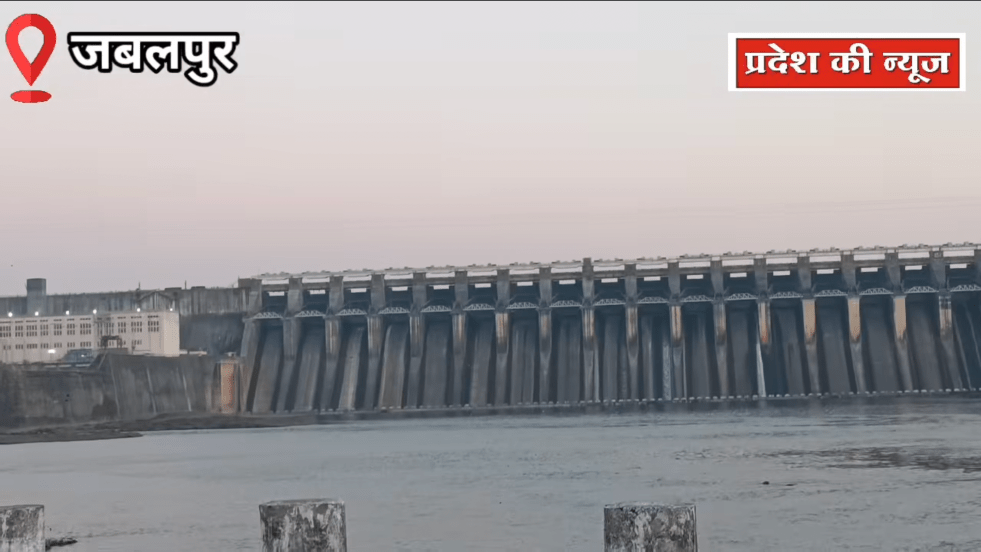
The news this week that the National Dam Safety Authority (NDSA) has issued a show cause notice possibly on Sept 29-30 2025 to the Member (Engg) of Narmada Valley Development Authority (NVDA) regarding violation of the Dam Safety Act (DSA) 2021 in operation and maintenance of the Bargi Dam, pointing out “serious” and “gross” negligence and threatening action under sections 41 and 42 of the DSA.
The NDSA had asked for NVDA response in 30 days, and the news is coming after more than 100 days after the notice, but it seems NVDS has yet to provide any credible response or take remedial measure even till date. No action under the Sections 41 (deals with punishment for obstruction or non-compliance with directions related to dam safety) or 42 (deals with Offences by Departments of Government, holding the head of a government department liable if an offence under the Act occurs within their department).
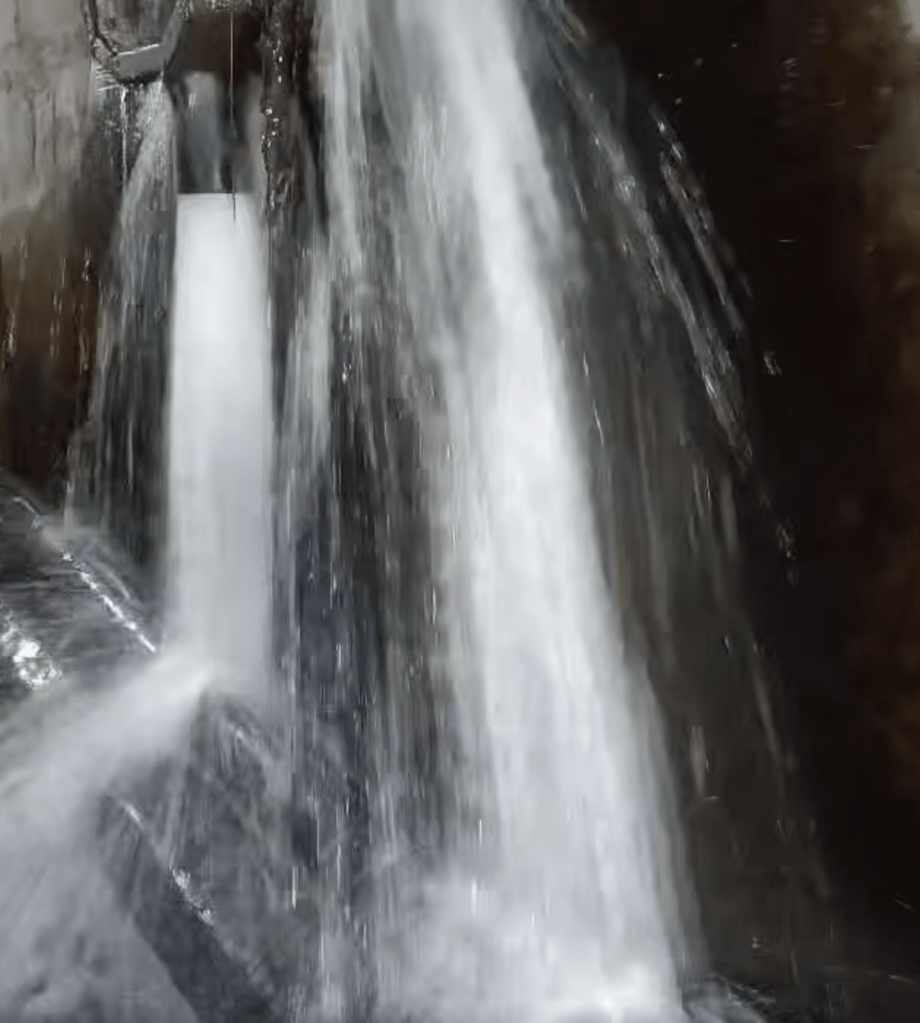
The notice comes after visit to the dam on Sept 7-8 2025 by NDSA and Central Water Commission (CWC), when news reports brought out massive leakage from block 10 of the dam. Incidentally, the water level of the Bargi dam during the visit was higher than the FRL! Interestingly, the Additional Chief Secretary Rajesh Rajora of Madhya Pradesh government was quoted by the media after the visit that the visitors found that “Bargi Dam is safe”. No statement came from NDSA or CWC of Bureau of Designs personnel that visited the dam. Considering the NDSA notice, Mr Rajesh Rajora was clearly misleading the media.
Question arises that if the situation at Bargi dam was found to be so serious and dam operation and maintenance was found to suffering from gross negligence, why did the authority took three weeks to issue the notice? Why there is no action at the dam site for over 100 days since the notice was issued? Why was the NDSA notice not accompanied by a report of the observations, findings and recommendations of the team that visited the dam on Sept 7-8 2025? If the massive leakage has been going on since 1988, why no action has been taken for 37 years? Since when the leakage has increased? According to sources, the leakage has recently increased so much that two pumps have been set up at the gallery to throw out the leaking water to the downstream river.
In fact the whole episode reflects poorly on all the agencies involved and the whole dam safety situation in India. These agencies include: NDSA, CWC, NVDA, Bargi Dam managers at the dam site and Madhya Pradesh’s State Committee on Dam Safety and State Dam Safety Orgnisation (both constituted through a GoMP notification of June 15 2022 as required under the DSA 2021).
NDSA issues notice to NVDA on Bargi Dam Safety The National Dam Safety Authority has issued a show-cause notice to the Narmada Valley Development Authority over safety concerns at Bargi Dam. The notice highlights non-compliance with the Dam Safety Act, 2021, citing persistent leakage and inadequate monitoring systems as major risks. The NVDA has 30 days to respond or face potential legal action. The operation and maintenance of Bargi Dam poses a potential threat to public safety & the downstream population, says the notice.
The Authority issued the notice following a recent inspection and record review by a joint team comprising its officials and those from the Central Water Commission (CWC). The inspection revealed that the Bargi Dam has long suffered from serious technical and management deficiencies. But the required steps have not been taken to address them.
The most serious concern raised during the inspection was the persistent heavy leakage from the dam’s masonry spillway gallery. According to the NDSA, this problem is not new. The CWC first pointed out this leakage in a letter dated April 6, 1988, and recommended necessary corrective measures at that time. Despite this, records show that this leakage has been continuously reported since 2018, but no concrete and effective remedial action has been taken to date.
Terming it as serious negligence, the authority said, “Ignoring such a problem for a long time can weaken the structural strength of the dam. If the leakage is not controlled, it can cause a major disaster by increasing the pressure on the foundation and structure, which will directly impact the population living in the downstream areas.”
Another significant shortcoming is the absence of an adequate instrumentation system at the dam. According to the inspection team, the Bargi Dam lacks a robust system to regularly and scientifically monitor structural health, seepage behaviour, and stress parameters. The NDSA clarified that instrumentation systems are crucial, and their lack further increases risks. The authority also raised serious concerns about security arrangements. The report stated, “There is a lack of access control in sensitive areas such as the gallery, and unauthorised people continue to move freely. The NDSA describes this as a serious breach of security and operational discipline, which is unacceptable for any critical infrastructure.”
Despite this, the Bargi Dam was classified as Safety Category III, meaning “minor deficiencies,” during pre-monsoon and post-monsoon inspections. The NDSA has described this classification as inconsistent with the actual situation, calling it “gross negligence” in reporting the safety status. The authority says this amounts to downplaying the risk. The NDSA warned that if the mandatory provisions of the Dam Safety Act, 2021, are not followed and conditions endangering public safety persist, legal action may be initiated under Sections 41 and 42 of the Act. These sections also include penal provisions for responsible officials.
Bargi Dam safe: MP govt On Sept 7, a video purportedly showing seepage from the Bargi Dam went viral, raising concerns over its safety. “On Sept 8, the dam was jointly inspected by a team from the Central Water Commission from Bhopal and the Bureau of Designs. After the technical examination, the dam was found to be completely safe,” Additional Chief Secretary (ACS) Dr Rajesh Rajora said. “National Dam Safety Authority (NDSA) consultant U S Vidyarthi, Director the Central Water Commission Kayyin Mohammad, other senior officials and experts visited the site and according to all of them, the Bargi Dam is safe,” Rajora said.
“The dam has attained its full capacity level (following heavy rains in the upper catchment areas). There is seepage in a part of the dam”: Jabalpur district collector Deepak Saxena. The breach was found in the Block 3/10 (out of total 30 blocks) of the 5,357-metre-long dam, Jabalpur district collector Deepak Saxena said. The full reservoir level of the dam is 422.76 metres, water level has reached 423.05 m, with inflow of 1775 cumecs. With dam running full, nine gates were opened on Sept 3 and six more later on when the dam was to be literally overflowing, officials said.
HYDRO POWER PROJECTS
Tripura plans 185 MW Hydrokinetic capacity The Tripura govt plans to install hydro kinetic projects in six rivers to generate 185 MW power. Ten sites have already been identified and work at one location will start next month.
DAMS
Goutam Ghose on making of Parikrama: feature film on displacement due to Narmada dam In this interview, director Goutam Ghose of the feature film Parikrama discusses the making of the film. The filmmaker warns against letting catastrophic projects like the Narmada dam become mere mournful memories, urging action to halt destructive ‘development’.
Ken Betwa Project: Development or Disaster? Summary of this commentary article in Economic & Political Weekly of January 10 2026 by Sudeshna Ghosh: “The engineering-dominated, technology-driven Ken–Betwa River Linking Project, the first of 30 such projects planned to be undertaken in India, intends to improve the socio-economic condition of farmers and empower them by channelling the so-called surplus water from the Ken river to the water-deficient Betwa river. A look into the pros and cons of this project raises questions about the very concept and efficacy of interlinking rivers. The solution this article suggests is that the need of the hour is to relearn from the grassroots, logically blending tradition with science and technology.”
INTER STATE WATER DISPUTES
SC doubts maintainability of Telangana petition against AP on Godavari The Supreme Court on Jan 5 2026 raised doubts over the maintainability of a writ petition filed by the Telangana government seeking to restrain Andhra Pradesh and its agencies from proceeding with preparatory and project-related activities for the Polavaram–Banakacherla/ Nallamalasagar Link Project (PBLP/PNLP). A bench comprising Chief Justice of India Surya Kant and Justice Joymalya Bagchi observed that a suit under Article 131 of the Constitution would be a “more comprehensive and effective” remedy since an inter-state water dispute lay at the heart of the controversy.
“Ultimately, at the end of the day, it is a water dispute…and you apprehend that their project might affect your share of the Godavari water,” the bench told senior advocate Abhishek Manu Singhvi, appearing for the Telangana government. The bench emphasised that where the constitutional scheme envisages a specific remedy for inter-state disputes, the court ought to be slow in entertaining a writ petition under Article 32. “Our issue is maintainability. If the constitutional scheme envisages a different remedy, should we not resort to that?” the bench asked.
Singhvi, however, attempted to persuade the court that the present case warranted interference under Article 32, pointing out that the Union government had already permitted the constitution of a high-powered committee to examine the project. “I have no other remedy to stop the committee from going into the issue,” submitted the senior counsel, arguing that the formation of the committee itself justified the court’s intervention. Singhvi sought time, stating that if the court was inclined to take that view, Telangana would consider its options. He requested that the matter be taken up after instructions on two aspects as to whether the court could direct the high-powered committee to halt the project, and whether Telangana should institute a suit under Article 131. The court adjourned the matter for a week.
AP CM calls for unity among Telugu states The Andhra Pradesh Chief Minister Chandrababu Naidu appealed for cooperation between Andhra Pradesh and Telangana, he was speaking in the context of Telangana opposition in SC to AP’s Godavari Krishna water transfer proposals.
GROUNDWATER
Celebrating the legacy and reflecting on the future of India’s groundwater India is the world’s largest user of groundwater, with over 21.9 million wells and tubewells extracting an estimated 247 billion cubic metres annually. This invisible resource supports most of the country’s drinking water needs and sustains the livelihoods of millions of small and marginal farmers. Yet despite its centrality to India’s water security, groundwater has long been poorly understood and weakly governed. Over the past few decades, civil society organisations, scientists, and community institutions have worked to challenge this paradigm. Organisations such as the Advanced Centre for Water Resources Development and Management (ACWADAM), networks like the Revitalising Rainfed Agriculture Network (RRA), and numerous grassroots groups have advanced Participatory Groundwater Management (PGWM), an approach rooted in aquifer literacy, collective decision-making, and equitable use.
It was against this backdrop that a diverse group of researchers, practitioners, and policy thinkers gathered in Pune to reflect on the state of groundwater governance in India. The occasion also marked the conferring of the University of Oklahoma International Water Prize on Dr Himanshu Kulkarni, founder of ACWADAM and a leading hydrogeologist.
RIVER POLLUTION
Protests against non-implementation of NGT orders on Buddha Nala Pollution in Punjab Members of Kale Pani Da Morcha on Jan 8 gathered outside Punjab pollution control board office to register their protest against the alleged pollution caused by dying industry in the Buddha Nullah, also stated to be the toxic vein of Ludhiana as per this Tribune video report of Jan 8 2026. Activists are demanding the implementation of NGT orders. The protesters are demanding that untreated water being discharged from the polluting dying units must be stopped at the earliest which is causing lot of health issues in the Malwa region.
URBAN WATER
Let them drink Sewage? Yet some critical areas have not received the attention they deserve. One of them is certainly municipal governance, and drinking water falls under its purview. Considerable investments have been made in expanding access to water through the Rajiv Gandhi National Drinking Water Mission (1986) and the current Jal Jeevan Mission (2019), focusing on universal rural tap water access. However, last-mile delivery comes under the local administration and involves maintenance of pump houses, filtration plants and distribution pipelines.
Protocols for surveillance and preventive measures should be in place for monitoring water quality from source through various intermediate stages to the point of delivery. Coming back to Indore, while there are estimates of the number of admitted cases and deaths, there is little public information on laboratory findings or the precise causes of death. What public health protocols were in place for testing the water quality? Where was the failure? Only a scientific investigation can lead to robust solutions.
Ensuring free potable water for all its citizens should be the mantra of every govt. It is not a luxury, nor should it be outsourced to private solutions. It is a fundamental public health responsibility, and one that municipal systems must be held accountable for delivering. (Dr. Sita Naik)
WATER SECTOR
State of Water Quality Wherever one looks in the water department, there lie big toxic gaps between the policy on paper and state of water on the ground. The consequence of this misrepresentation is of course dead children and a diseased society and ecosystem. Currently it appears that from the political to the judiciary, all are hell bent on destruction of our water.
The deaths in Indore are a brutal reminder of our failed water policy and mismanaged water… perhaps the government needs to adopt a decentralised community-driven water management approach, and not a centralised one… In Amrit Kaal, amrit (elixir) or at least clean water should flow through our taps, and not poison, right? (Indra Shekhar Singh)
MONSOON
Post Monsoon 2025 Rainfall in India India received 134.2 mm rainfall during just concluded Post Monsoon 2025 (Oct-Dec 2025) rainfall, 11% above normal. This blog provides district wise rainfall during the Post Monsoon 2025 across India.
But what was most striking was that in Dec 2025 India received the Lowest rainfall since 2001 and fifth lowest since 1901. In Central and E-NE regions (IMD divided country into four regions) the rainfall was the lowest and sixth lowest since 1901 respectively. The trends for the dry winter seem to to continue since then, till date, all across India. Some predictions for a strong El Nino are also trickling in for the summer 2026.
Prediction: El Nino could develop rapidly, strongly and affect rainfall in India The El Niño conditions in the Equatorial Pacific Ocean could develop rapidly with the possible quick collapse of the current La Niña conditions. The 2026 El Niño during the northern hemisphere summer season could be a strong event, according to experts. The El Niño phase of the El Niño Southern Oscillation (ENSO) phenomenon in the Equatorial Pacific Ocean brings much warmer than normal temperatures to many places around the world, increasing annual and monthly global average temperatures and causes enhancement or suppression of rainfall in different regions.
“New ECMWF guidance aggressively predicts the development of a planet-warming El Niño this year, with changes in Pacific wind patterns signaling that a transition is underway,” wrote Ben Noll, meteorologist for Washington Post. “I can confidently say that this is the biggest mid-winter collapse of La Nina that I’ve ever seen in real-time,” wrote Eric Webb, meteorologist and an ENSO expert on X. “It’s incredible to see westerly wind bursts out to the International Dateline this early in winter”, he added.
SOUTH ASIA
China’s Medog dam This report of Jan 8 2026 provides a step by step process of how the project will be built, without providing a single bit of information about the project and what is happening on ground!
Indus Treaty
REST OF ASIA
How Seoul removed elevated expressway for a river By demolishing the Cheonggyecheon elevated expressway, Seoul transformed asphalt into a river, reduced traffic, cut pollution, and created a linear park that became a global benchmark for urban rebirth. Seoul demolished an elevated highway in the city center, ignored warnings of traffic collapse, reduced the number of cars, tackled pollution, and transformed the asphalt into a river, an urban park, and a global symbol of urban renaissance. And the traffic evaporated instead of exploding, while the urban space gained life, shade, walking opportunities, tourism, and environmental recovery.
Elsewhere in Seoul, an elevated roadway, Seoullo 7017, has been converted into a pedestrian walkway, connecting areas near Seoul Station. The structure gained plants, identified trees, rest areas, cafes, and connections to buildings, reinforcing the same logic: Less priority for cars, more value for people and commerce. The project was expensive and faced resistance, but the reported results suggest a broad positive outcome: less traffic, less pollution, less heat, more walking, more urban life, and more economic activity.
SANDRP

 SANDRP